




Advanced Dust Test Chambers: Engineering Reliability Through Controlled Contamination
Introduction to Particulate Ingress Protection Testing
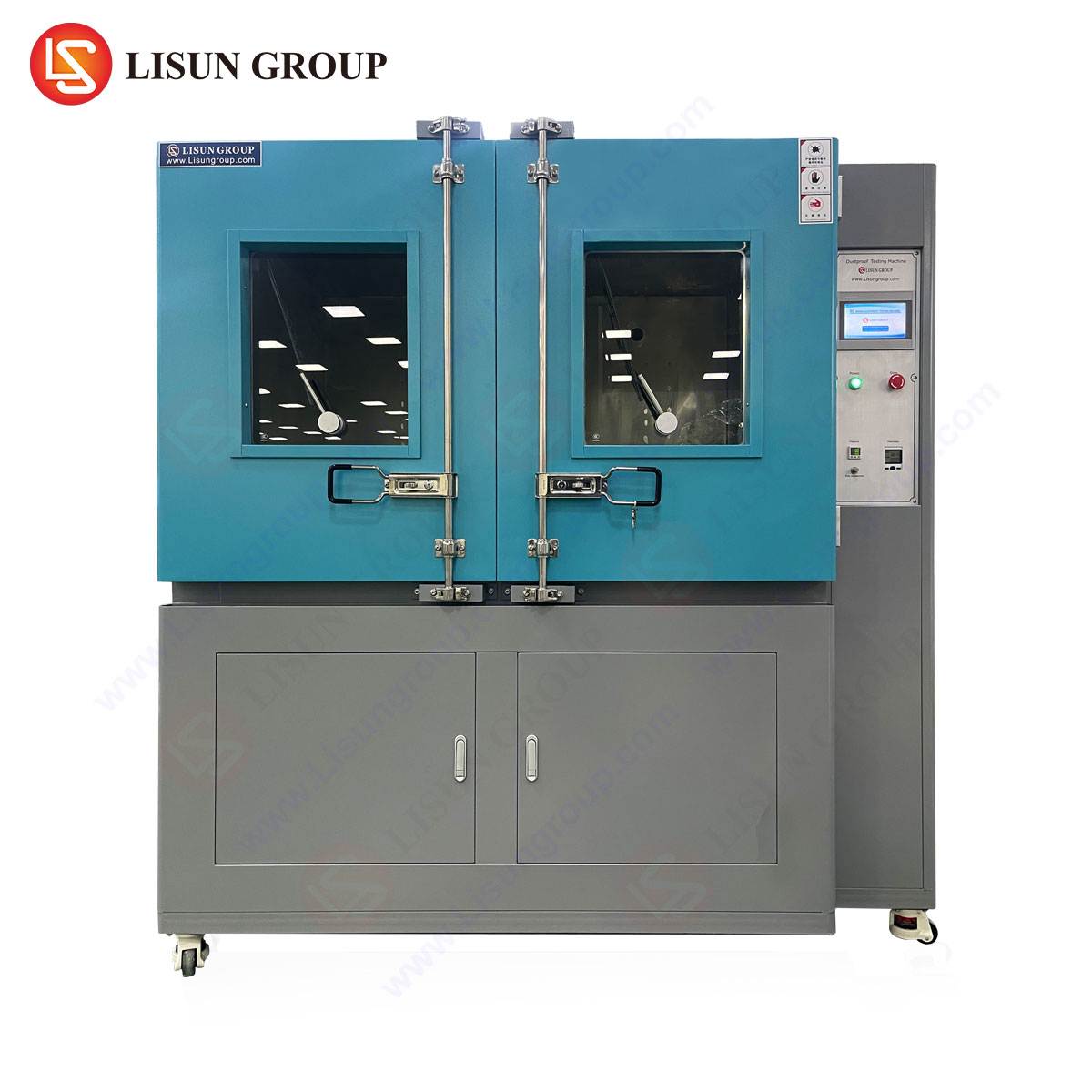
The operational longevity and functional integrity of electromechanical systems across diverse industrial sectors are perpetually challenged by environmental contaminants, with particulate matter representing a pervasive and insidious threat. Dust, sand, and other fine solids can infiltrate enclosures, leading to a cascade of failure modes including abrasive wear, electrical short circuits, thermal insulation, connector fouling, and mechanical seizure. To quantify and validate a product’s resilience against such ingress, standardized testing within controlled environmental chambers is indispensable. Advanced dust test chambers, such as the LISUN SC-015 Dust Sand Test Chamber, have evolved from simple agitation devices into sophisticated systems that replicate real-world particulate exposure with high fidelity, repeatability, and measurable accuracy. This technical analysis delineates the critical features, operational principles, and applications of contemporary dust test chambers, with particular emphasis on their role in ensuring compliance with international protection (IP) codes and sector-specific durability standards.
Fundamental Principles of Dust Ingress Simulation
The core objective of dust testing is not merely to expose a device to dust, but to simulate specific environmental conditions that drive particulate ingress. The primary mechanisms are pressure differential and particulate suspension. According to IEC 60529 and its derivative standards (e.g., MIL-STD-810G Method 510.5, ISO 20653), dust testing for IP5X (dust-protected) and IP6X (dust-tight) ratings involves creating a partial vacuum inside the test specimen relative to the chamber atmosphere. This negative pressure differential, typically maintained at 2 kPa or as specified, draws airborne dust particles toward potential entry points—seals, gaskets, vents, and mating surfaces. Concurrently, the chamber must maintain a homogenous cloud of test dust (most commonly Arizona Road Dust per ISO 12103-1, A2 Fine or A4 Coarse) at a prescribed concentration, often 2-10 g/m³, for a duration of 2 to 8 hours. The advanced chamber’s role is to generate, sustain, and monitor this environment with precision, ensuring that test results are attributable to the specimen’s design rather than test apparatus variability.
Architectural Design and Material Considerations for Chamber Integrity
The efficacy of a dust test chamber is fundamentally constrained by its structural and material design. High-grade stainless steel (SUS 304 or 316) is the material of choice for interior surfaces, providing corrosion resistance, smoothness to prevent particle adhesion, and structural robustness. A critical design feature is the integration of a return air duct system. This closed-loop architecture ensures that dust agitated by the chamber’s circulation system is continuously reintroduced into the test volume, maintaining consistent concentration without wasteful settling. The sealing of the main test chamber door is paramount; large-section silicone rubber gaskets with pneumatic or mechanical compression locking mechanisms are employed to achieve an airtight seal, preventing external contamination and maintaining the critical internal vacuum. Viewing windows, typically constructed from multi-layer tempered glass with anti-static coatings, allow for visual monitoring without compromising the sealed environment or suffering from abrasive scratching.
Advanced Particulate Fluidization and Circulation Systems
Generating a stable, uniform dust cloud is the most technically demanding aspect of chamber operation. Primitive methods using simple fans are insufficient for modern standards. Advanced systems utilize a dedicated fluidized bed dust injection apparatus. In this subsystem, compressed dry air is forced through a porous plate beneath a reservoir of test dust, causing the powder to behave like a fluid. This aerated dust is then precisely metered and injected into the primary airstream of the chamber’s circulation blower. The blower itself must be a centrifugal type with variable frequency drive (VFD) control, capable of generating sufficient air velocity to keep particles suspended (typically > 2 m/s within the test volume) while withstanding the abrasive nature of the dust. The ducting layout is engineered to minimize dead zones where dust can accumulate, often employing computational fluid dynamics (CFD) modeling to optimize airflow patterns for maximum homogeneity across the entire workspace.
Precision Environmental Conditioning and Vacuum Control
While dust concentration is key, the environmental conditions that influence ingress are equally critical. Many advanced chambers incorporate conditioning capabilities for temperature and humidity. Testing a seal at -30°C versus +60°C yields profoundly different results due to material contraction/expansion and elastomer property changes. Integrated refrigeration and heating systems, coupled with desiccant or steam humidifiers, allow testing across a wide climatic range (e.g., -70°C to +180°C, 10% to 98% RH) as per IEC 60068-2-68. The vacuum system is equally sophisticated. It consists of a vacuum pump, a precision digital pressure sensor (often with 0.1% full-scale accuracy), and a servo-controlled bleed valve. This system dynamically regulates the pressure differential across the test specimen, maintaining the setpoint (e.g., 2.0 kPa ±5%) despite potential leaks from the specimen itself. Data loggers record pressure, temperature, and humidity throughout the test cycle, providing an immutable audit trail for certification.
Instrumentation, Control, and Data Acquisition Integration
The transition from a passive test box to an intelligent validation platform is enabled by integrated Programmable Logic Controller (PLC) and Human-Machine Interface (HMI) systems. The HMI, typically a color touchscreen, provides centralized command for all parameters: test duration, vacuum level, dust feed rate, blower speed, and environmental setpoints. Pre-programmed test profiles for common standards (IP5X, IP6X, MIL-STD) allow for one-touch initiation, reducing operator error. Real-time graphical displays show trends for all monitored variables. Advanced data acquisition (DAQ) modules record these parameters at high frequency, allowing for post-test analysis to correlate any internal specimen failure (detected via external monitoring of its electrical functions) with specific moments of environmental stress. Connectivity options like Ethernet, USB, or RS-232 facilitate integration into factory-level quality management systems for automated report generation.
The LISUN SC-015 Dust Sand Test Chamber: A Technical Exemplar
The LISUN SC-015 embodies the advanced features described, configured specifically for rigorous compliance testing. Its design specifications and operational capabilities make it a pertinent solution for high-demand laboratory environments.
Key Specifications:
- Test Volume: 0.5 m³ (customizable variants available).
- Dust Concentration: Adjustable up to 10 g/m³, with continuous monitoring via optical sensor feedback.
- Vacuum Range: 0 to -5 kPa, controllable resolution ±0.1 kPa.
- Temperature Range: -40°C to +150°C (with optional climatic system).
- Airflow Velocity: Continuously variable up to 5 m/s within test zone.
- Dust Type: Compatible with ISO 12103-A2, A4, and other proprietary dusts.
- Control System: 10.4-inch color HMI with PLC, featuring 100+ programmable test profiles.
- Standards Compliance: IEC 60529, GB/T 4208, ISO 20653, MIL-STD-810G, IEC 60068-2-68.
Testing Principle: The SC-015 utilizes a closed-loop, forced circulation design. Its screw-feeder dust injection system, coupled with a high-volume centrifugal blower, ensures a rapid and consistent dust cloud formation within 30 seconds of initiation. The independent vacuum system applies and maintains the required pressure differential on the test specimen via a dedicated port, while the main chamber pressure remains atmospheric. This separation allows for precise control regardless of specimen volume or leak rate.
Competitive Advantages: Distinctive features include a dual-layer HEPA filtration system on the exhaust, ensuring zero environmental contamination during chamber purge cycles. Its abrasive-resistant blower impeller is coated with a tungsten carbide composite, dramatically extending service life. Furthermore, the chamber incorporates a self-diagnostic system that monitors filter saturation, blower bearing wear, and dust hopper levels, preempting test interruptions and ensuring consistent repeatability.
Industry-Specific Applications and Use Cases
The application of advanced dust testing spans sectors where equipment reliability is non-negotiable.
- Automotive Electronics & Aerospace: Validating engine control units (ECUs), LiDAR sensors, and cockpit avionics against desert driving or runway operation conditions (per ISO 20653, MIL-STD-810).
- Telecommunications & Industrial Control: Ensuring base station routers, PLCs, and fieldbus modules remain operational in mining, manufacturing, or agricultural settings where conductive metallic dust poses additional risks.
- Medical Devices & Electrical Components: Testing the ingress protection of surgical power tools, patient monitors, sealed switches, and connectors to prevent failures in clinical or industrial environments.
- Lighting Fixtures & Consumer Electronics: Verifying the durability of outdoor LED luminaires (IP65/66) and the robustness of smartphone seals against fine particulate exposure.
- Household Appliances & Office Equipment: Assessing the longevity of robotic vacuum cleaners, printers, and kitchen appliance controls subjected to flour, dust, or toner particles.
Interpreting Test Results and Correlation to Field Performance
A successful test conclusion, where no dust penetration is detected for an IP6X rating, is a binary pass/fail metric. However, advanced chambers enable more nuanced analysis. Post-test examination under controlled lighting and microscopy can reveal dust deposition patterns around seals, indicating potential weak points even if full ingress did not occur. Quantitative analysis is possible by weighing the specimen before and after test to measure dust mass accumulation, or by using internal particle counters for functional specimens. Correlating chamber test parameters—such as specific combinations of thermal cycling with dust exposure—to field failure data allows engineers to develop accelerated test profiles that more accurately predict a product’s service life in harsh environments.
Future Trajectories in Contaminant Immunity Testing
The frontier of dust testing is expanding towards multi-stress synergy and smarter monitoring. Future chambers will likely integrate cyclic corrosion (salt fog) capabilities with dust phases to simulate coastal industrial environments. The incorporation of real-time particle size distribution analyzers within the test cloud will provide unprecedented control over the contaminant profile. Furthermore, the integration of Industry 4.0 protocols will enable predictive maintenance of the test chamber itself and direct interoperability with digital twin models of the test specimen, allowing simulation to guide physical testing for greater efficiency.
Frequently Asked Questions (FAQ)
Q1: What is the significance of using Arizona Road Dust (ISO 12103-1) instead of generic talcum powder?
A1: Arizona Road Dust is a calibrated, standardized test medium with a defined particle size distribution (e.g., 0-80μm for Fine grade). Its composition, including a specific fraction of silica, mimics the abrasive and invasive properties of naturally occurring dusts encountered in real-world environments. Using non-standardized powders invalidates tests against IEC/ISO standards and prevents meaningful comparison of results across different laboratories or product generations.
Q2: For an IP5X test, our product has a cooling fan that creates an internal positive pressure. How does the chamber test account for this?
A2: The IP5X test method in IEC 60529 is primarily conducted with a pressure differential favoring ingress (i.e., vacuum inside the specimen). This tests the protective seals under a worst-case static scenario. For devices with operational fans, a separate dynamic test is often required, where the device operates normally within the dust cloud without an external vacuum applied. The LISUN SC-015 can accommodate this by disabling its vacuum system while maintaining the dust cloud, allowing evaluation of the fan’s own pressurization as an ingress barrier.
Q3: How is the internal dust concentration of 2 g/m³ calibrated and verified within the chamber?
A3: Calibration is a two-stage process. Primarily, the dust feed rate (mg/sec) from the injection system is calibrated against the known volumetric airflow rate (m³/sec) of the circulation blower to achieve the target concentration. This is then verified empirically using a gravimetric method: a known volume of air is isokinetically sampled from the test zone during operation through a pre-weighed absolute filter. The filter is weighed post-sampling, and the collected mass is used to calculate the actual concentration, allowing for fine-tuning of the feed system.
Q4: Can the LISUN SC-015 chamber test for water ingress (IPX ratings) as well?
A4: No, the SC-015 is designed specifically for dry particulate testing. Water ingress testing (IPX1 to IPX9K) requires fundamentally different apparatus with controlled water spray nozzles, pressure pumps, and water management systems. While some combined environmental chambers exist, dedicated chambers like the SC-015 are optimized for the precise and contamination-sensitive requirements of dust testing. Integrated dust/water testing often compromises the performance and cleanliness required for stringent dust validation.
Q5: What is the typical maintenance regimen for an advanced dust chamber to ensure ongoing accuracy?
A5: Critical maintenance includes regular replacement of HEPA exhaust filters (based on pressure drop indicators), inspection and cleaning of the dust circulation ductwork to prevent caking, and verification of the vacuum system’s leak integrity. The dust injection mechanism’s feed rate should be recalibrated quarterly. Annually, a full performance qualification (PQ) is recommended, involving gravimetric concentration verification and airflow velocity mapping across the test volume to ensure continued compliance with the tolerances stipulated in the relevant testing standards.