

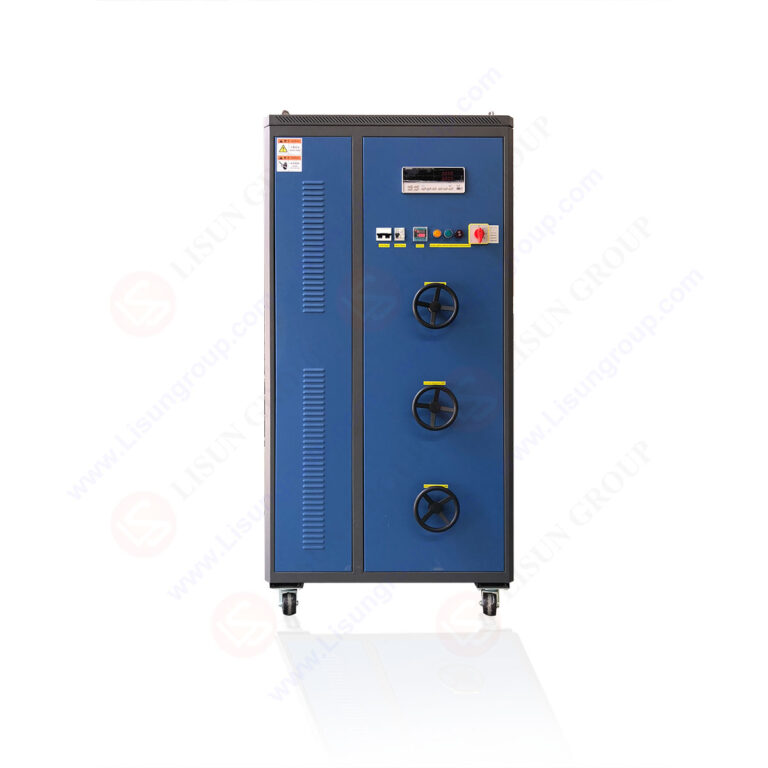



Advanced Fire Testing Methodologies for Enhanced Material Safety and Quality Assurance
The relentless advancement of technology across sectors—from miniaturized consumer electronics to complex aerospace systems—has precipitated a parallel evolution in material science. Polymers, composites, and insulating materials now serve in increasingly demanding thermal and electrical environments. Consequently, the risk of fire ignition from small internal faults, such as overheated components, arcing contacts, or failed insulation, remains a critical concern for product safety engineers and regulatory bodies. Traditional large-scale flammability tests, while essential for assessing fully developed fires, often fail to simulate the incipient stages of a fire originating from a discrete, localized energy source. This gap in testing protocols necessitates advanced, precision-based solutions that can evaluate a material’s or component’s resistance to ignition and flame propagation from such specific, small-scale faults. Implementing these advanced fire testing methodologies is not merely a compliance exercise; it is a fundamental pillar of proactive risk mitigation, product integrity assurance, and the safeguarding of end-users and critical infrastructure.
The Imperative of Simulating Incipient Fire Scenarios
A significant proportion of electrical fires originate not from external conflagrations but from internal failures. A deteriorating insulation layer on a wire within an appliance, a faulty solder joint on a printed circuit board (PCB), a degraded seal in an automotive connector, or an overloaded relay in industrial control gear can generate sufficient localized thermal energy to act as an ignition source. This source, often analogous to a small flame or glowing element, may impinge upon adjacent materials. The critical question for safety engineering is whether this localized thermal insult will cause the material to ignite, sustain combustion, and propagate flame to other parts of the assembly, or if it will self-extinguish once the initiating source is removed.
Standard horizontal or vertical flame tests, governed by norms such as UL 94 or IEC 60695-11-10, provide valuable comparative data on a material’s general flammability. However, they typically employ a larger Bunsen burner flame applied to a standardized specimen under controlled laboratory conditions. While effective for material screening, these tests may not accurately replicate the thermal transfer dynamics, flame size, and impingement angle of a real-world fault within a confined product housing. Therefore, a testing paradigm that utilizes a smaller, more precise flame source—a needle flame—has been developed and standardized to bridge this simulation gap. This approach allows for the direct assessment of a product’s vulnerability to fires initiated by small electrical components, overheated parts, or malfunctioning elements.
Principles and Standardization of the Needle Flame Test
The needle flame test is a highly specialized fire hazard assessment technique designed to investigate the ignition susceptibility and flame spread propensity of materials and sub-assemblies when subjected to a small, defined flame. The core principle involves the controlled application of a calibrated needle flame, typically generated by a specific burner using butane gas, to a test specimen. The flame’s dimensions (approximately 12mm in height), temperature profile (exceeding 1000°C at its tip), and application duration (typically 5 to 30 seconds, as per standard requirements) are meticulously defined to simulate the thermal effects of a small, errant flame from an electrical fault.
The test procedure is codified in international safety standards, most notably IEC 60695-11-5: “Fire hazard testing – Part 11-5: Test flames – Needle-flame test method – Apparatus, confirmatory test arrangement and guidance” and its related norms, including IEC 60335-1 (Household appliances), IEC 60950-1 (IT equipment, now superseded but historically relevant), IEC 62368-1 (Audio/video, information and communication technology equipment), and various automotive (ISO 20653) and aerospace specifications. The test evaluates several key failure criteria:
- Ignition Time: The duration of flame application required for the specimen to ignite.
- Flame Duration: The time the specimen continues to burn after the removal of the needle flame.
- Flame Spread: The extent to which flames propagate across the specimen or drip flaming particles onto a prescribed layer of surgical cotton (simulating nearby flammable materials).
- Structural Integrity: Assessment of any burning or glowing debris that may fall from the specimen.
Compliance is generally judged by limiting the after-flame time, preventing the ignition of the indicator cotton, and ensuring flames do not reach specified boundaries. The test’s value lies in its applicability to finished products, sub-assemblies, and materials in their end-use configuration, providing a more realistic assessment of fire risk than tests on raw material plaques alone.
The LISUN ZY-3 Needle Flame Test Apparatus: A Technical Exposition
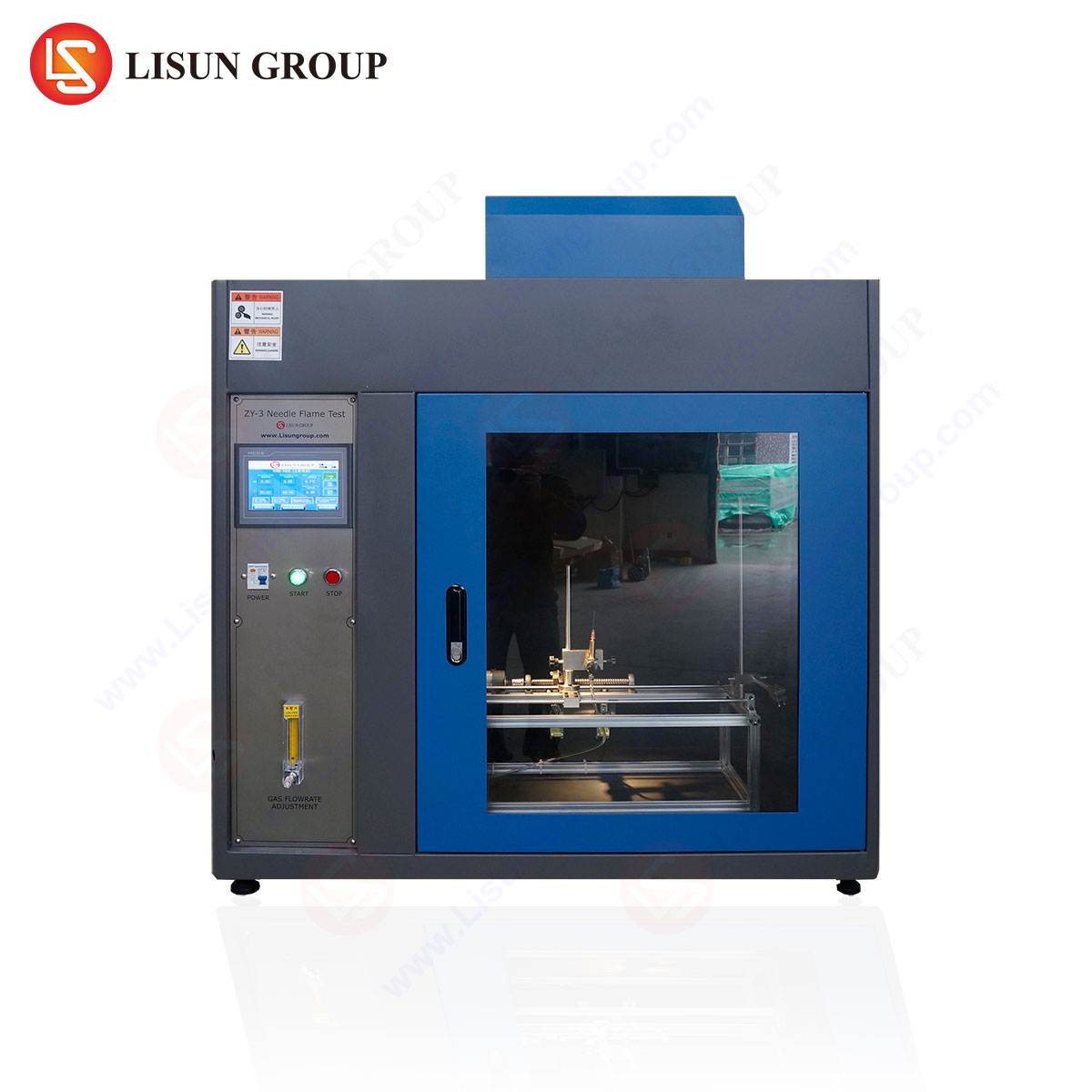
To execute the needle flame test with the repeatability and precision demanded by international standards, specialized apparatus is required. The LISUN ZY-3 Needle Flame Test Chamber represents a sophisticated implementation of this testing methodology, engineered to deliver reliable, consistent, and fully compliant results. Its design integrates critical features that address the nuanced requirements of the test standard while enhancing operational safety and data accuracy.
Core Specifications and Design Philosophy:
The LISUN ZY-3 is a fully enclosed test chamber constructed from stainless steel and fortified glass, ensuring operator protection from flames and fumes while providing clear observational access. Its fundamental design parameters are aligned with IEC 60695-11-5. The apparatus incorporates a microprocessor-based control system for managing test timing, flame application duration, and gas flow regulation. A key component is the precision needle flame burner, which utilizes high-purity butane to generate the standardized test flame. The gas supply system includes a pressure regulator and flow meter, allowing for fine-tuning to achieve the exact flame dimensions (12 ±1 mm height) required for calibration using a dedicated thermocouple and temperature indicator, as stipulated by the confirmatory test procedure.
Automated and Safety-Centric Operation:
The ZY-3 distinguishes itself through features that minimize operator variability and risk. It often includes an automated ignition system and a mechanized specimen holder or burner movement system. This automation ensures the flame is applied at the correct angle (typically 45°) and distance from the specimen with high repeatability. Integrated safety features, such as flame-out detection and automatic gas shut-off valves, prevent uncontrolled gas release. An internal exhaust system, often connectable to external laboratory ventilation, efficiently removes combustion products, maintaining a clear test environment and protecting internal components from soot accumulation.
Table 1: Key Technical Specifications of the LISUN ZY-3 Needle Flame Tester
| Parameter | Specification |
| :— | :— |
| Test Standard | IEC 60695-11-5, GB/T 5169.5, and related clauses in appliance/equipment safety standards |
| Chamber Dimensions | Typically > 0.5 m³ volume, constructed from stainless steel & viewing windows |
| Flame Source | Needle burner, butane fuel (≥95% purity) |
| Flame Calibration | Confirmatory test capable; adjustable gas flow & pressure |
| Timer Range | 0-999.9 seconds, accuracy ±0.1s |
| Application Time | Programmable, typically 5-30 seconds as per standard requirement |
| Safety Features | Automatic gas shut-off, flame failure protection, ventilation interface |
| Control System | Microprocessor-based with digital display and keypad input |
Industry-Specific Applications and Risk Mitigation
The utility of the needle flame test, and by extension apparatus like the LISUN ZY-3, spans a vast array of industries where electrical and electronic components are ubiquitous. Its application is crucial in identifying design flaws and material weaknesses before products reach the market.
Electrical & Electronic Components and Household Appliances: For switches, relays, sockets, and connectors, the test evaluates whether arcing or overheating within the component can ignite its housing. In household appliances (toasters, kettles, washing machine control modules), it assesses the risk from failed heating elements or motor controllers. A failing thermostat could generate a localized hot spot, simulating the exact scenario the needle flame test is designed to probe.
Automotive Electronics and Aerospace Components: The automotive environment is particularly harsh, with exposure to vibration, thermal cycling, and potential fluid ingress. Automotive electronics like engine control units (ECUs), wiring harness connectors, and infotainment systems must not propagate flame from an internal short circuit. Similarly, in aerospace, where weight reduction pushes material limits, every non-metallic component in avionics bays or cabin systems must be validated against fault-induced ignition. The needle flame test provides a critical verification step for compliance with stringent automotive (e.g., ISO 20653) and aerospace (e.g., DO-160) standards.
Lighting Fixtures, Telecommunications, and Industrial Control: LED drivers and power supplies for lighting can contain capacitors and transformers that may fail catastrophically. The test checks the flammability of their enclosures and internal PCB materials. Telecommunications equipment in data centers and industrial control systems (PLCs, motor drives) operate continuously; a fault in a power supply unit or a communication module must not lead to a cabinet fire. Testing sub-assemblies with the needle flame helps ensure a single point of failure remains contained.
Medical Devices and Cable Systems: The stakes are exceptionally high for medical electrical equipment. A malfunction in a patient monitor, infusion pump, or diagnostic device must not create a fire hazard in an oxygen-enriched clinical environment. Testing internal components and enclosures is paramount. For cables and wiring systems, the test is not typically performed on long cable runs but on cable insulation materials, connectors, and cable glands to see if a fault at a termination point could lead to flame propagation along the cable jacket.
Integrating Needle Flame Testing into a Comprehensive QA Framework
Deploying a needle flame tester like the LISUN ZY-3 should not be an isolated activity. Its maximum value is realized when integrated into a holistic Quality Assurance (QA) and product safety engineering workflow. This integration follows a logical sequence:
- Material Screening: Use the test to compare and select component materials (e.g., PCB substrates, connector housings, insulating films) early in the R&D phase.
- Design Verification: Test prototype sub-assemblies (e.g., a populated PCB, a complete switch assembly) to identify potential ignition risks from component layout, heat sinks, or material interactions.
- Production Lot Validation: Periodically sample finished products or critical sub-assemblies from production lines to ensure manufacturing consistency (e.g., correct grade of plastic, proper curing of adhesives) has not adversely altered fire performance.
- Failure Analysis & Root Cause Investigation: When a field failure or thermal fault is identified, the needle flame test can be used to replicate the scenario on retained samples or redesigned components to verify the effectiveness of corrective actions.
Data derived from the ZY-3—precise after-flame times, observations of flame spread, and photographic evidence of test results—becomes an integral part of the product’s technical construction file. This documentation is essential for demonstrating due diligence to notified bodies, certification organizations (like UL, TÜV, Intertek), and regulatory authorities.
Comparative Advantages in Precision and Compliance
The technical merits of a well-engineered needle flame test apparatus translate directly into tangible advantages for the testing laboratory or manufacturing facility. The LISUN ZY-3 exemplifies these advantages through its design focus on measurement consistency and procedural fidelity. The automated timing and flame application mechanisms drastically reduce the inter-operator variability inherent in manual testing methods. This repeatability is the cornerstone of generating reliable, defensible data that can withstand technical audit.
Furthermore, the apparatus’s built-in calibration readiness—with provisions for conducting the confirmatory test per IEC 60695-11-5—ensures the fundamental test parameter (the flame itself) is correct. A test performed with a non-compliant flame is invalid, potentially leading to false passes or unnecessary failures. The ZY-3’s design facilitates this essential calibration routine, thereby upholding the integrity of the entire testing process. From a practical standpoint, its self-contained, safety-focused design reduces laboratory space requirements and simplifies operator training compared to more rudimentary or bespoke test setups. The result is a lower total cost of ownership over time, driven by reduced re-test rates, fewer compliance challenges, and efficient laboratory workflow integration.
Conclusion
As technological complexity grows and safety regulations evolve, the demand for precise, predictive fire hazard assessment tools will only intensify. The needle flame test, as a simulation of a critical but specific ignition scenario, fills an indispensable niche in the product safety landscape. Advanced apparatus, such as the LISUN ZY-3 Needle Flame Test Chamber, provide the technological means to execute this test with the rigor, repeatability, and compliance demanded by global standards. By adopting such solutions, manufacturers across the electrical, electronic, automotive, aerospace, and medical sectors can move beyond basic compliance to a state of proactive fire risk management. This commitment not only fortifies product quality and brand reputation but also contributes fundamentally to the overarching goal of preventing fire-related incidents, thereby protecting property, infrastructure, and human life.
FAQ: Needle Flame Testing and the LISUN ZY-3 Apparatus
Q1: Can the LISUN ZY-3 be used to test finished products, or is it only for material samples?
A1: The ZY-3 is explicitly designed to test both material samples in standardized form-factors and finished products or sub-assemblies. The test chamber is sufficiently large to accommodate small appliances, control modules, or wiring assemblies. The standard encourages testing in the “end-use” configuration to most accurately assess real-world fire risk, making the ZY-3 suitable for final product qualification checks.
Q2: How often does the needle flame burner or apparatus require calibration, and what does it involve?
A2: Regular calibration is critical for compliance. The primary calibration involves the “confirmatory test” described in IEC 60695-11-5. This should be performed when the apparatus is first installed, after any maintenance on the burner or gas system, and at regular periodic intervals (e.g., every 6 or 12 months, as per the laboratory’s quality manual). The process involves using a specified thermocouple to measure the temperature rise of a copper block when subjected to the flame for a set time, ensuring the flame’s thermal output meets the standard’s stringent requirements.
Q3: Our product contains multiple material types (e.g., plastic housing, silicone gaskets, PCB). Do we need to test each material separately?
A3: While testing individual materials provides baseline data, the most relevant assessment comes from testing the assembled component or product. The interaction between materials can significantly affect fire behavior—a flame-retardant plastic housing may be compromised by a dripping, flammable silicone sealant. The needle flame test is ideally suited for this integrated assessment. You may test individual materials for screening, but the final verification should be on a representative assembly.
Q4: What are the pass/fail criteria for the needle flame test, and who defines them?
A4: The specific pass/fail criteria are not defined in the test method standard (IEC 60695-11-5) itself. Instead, they are prescribed by the end-product safety standard applicable to your device. For example, IEC 62368-1 for IT/AV equipment or IEC 60335-1 for household appliances will contain a clause referencing the needle flame test and state the exact requirements (e.g., “After-flame time shall not exceed 30 seconds, and the indicator paper shall not ignite.”). It is the manufacturer’s responsibility to apply the correct end-product standard criteria.
Q5: Does the ZY-3 apparatus include the necessary accessories to perform a complete test according to the standard?
A5: A fully compliant test requires more than just the chamber and burner. Key accessories include the calibration thermocouple and block, surgical cotton for the flame spread indicator, a specified grid for supporting this cotton, a foil pan, and often a specimen holder. While the core ZY-3 unit includes the primary apparatus, laboratories must verify that the complete accessory kit as mandated by the standard is provided or sourced separately to ensure a fully compliant test setup.