




Advanced Salt Spray Testing: A Critical Methodology for Assessing Material Durability in Corrosive Environments
Introduction to Accelerated Corrosion Testing
The long-term reliability and functional integrity of materials and components across a vast spectrum of industries are perpetually challenged by environmental corrosion. Among the most pervasive and aggressive forms of environmental degradation is atmospheric corrosion induced by chloride ions, prevalent in coastal regions, urban environments with de-icing salts, and industrial atmospheres. To predict material performance and validate protective coatings and designs, the salt spray (fog) test stands as a fundamental, standardized method of accelerated corrosion testing. This article delineates the advanced methodologies, standards, and technological implementations of modern salt spray testing, with a specific examination of its critical role in ensuring the durability of electrical, electronic, and precision mechanical components.
Fundamental Principles and Electrochemical Mechanisms
At its core, salt spray testing is an accelerated corrosion test designed to simulate, in a controlled and repeatable manner, the damaging effects of a saline atmosphere. The test does not precisely replicate natural environmental conditions, which involve complex cycles of wetness, drying, UV exposure, and pollutant variation. Instead, it provides a severe, constant corrosive environment that induces predictable failure modes, allowing for comparative ranking of materials and finishes. The primary mechanism is electrochemical corrosion. When a thin, continuous electrolyte film (the salt solution) forms on the metallic surface, it facilitates the establishment of anodic and cathodic sites.
At the anode, oxidation occurs, leading to metal dissolution (e.g., Fe → Fe²⁺ + 2e⁻). At the cathode, reduction takes place, typically involving oxygen dissolved in the electrolyte film (O₂ + 2H₂O + 4e⁻ → 4OH⁻). The chloride ions (Cl⁻) are particularly aggressive due to their small ionic radius and high mobility. They penetrate protective oxide layers, destabilize passivation films, and form soluble complexes with metal ions, preventing repassivation and thereby perpetuating the corrosion process. For coated substrates, the test evaluates the coating’s ability to act as a barrier, assessing failures such as blistering, cracking, underfilm creepage from scribes, and loss of adhesion.
Evolution Beyond Basic ASTM B117: Contemporary Testing Regimes
While ASTM B117 (Standard Practice for Operating Salt Spray (Fog) Apparatus) remains the foundational reference, its limitations for modern materials, especially those used in electronics, have driven the development of more sophisticated cyclic corrosion tests (CCT). A continuous salt spray environment represents a constant wet state, which is not representative of real-world service conditions for many products. Advanced testing regimes incorporate multi-step cycles to better simulate environmental phases.
These CCT profiles may sequentially include phases of salt spray, controlled humidity condensation, dry-off periods, and sometimes temperature ramps or static holds. For instance, a profile might involve 1 hour of salt spray deposition followed by 1 hour of dry air purge and 2 hours of high humidity condensation, repeated continuously. This cycling induces more realistic corrosion mechanisms, including galvanic effects, differential aeration cell formation, and stress-corrosion cracking tendencies. Standards such as IEC 60068-2-52 (Environmental testing – Part 2-52: Tests – Test Kb: Salt mist, cyclic (sodium chloride solution)) and automotive specifications like SAE J2334 provide structured profiles for these purposes. The move towards CCT reflects an industry demand for correlation, where test results show improved predictive alignment with actual field performance data.
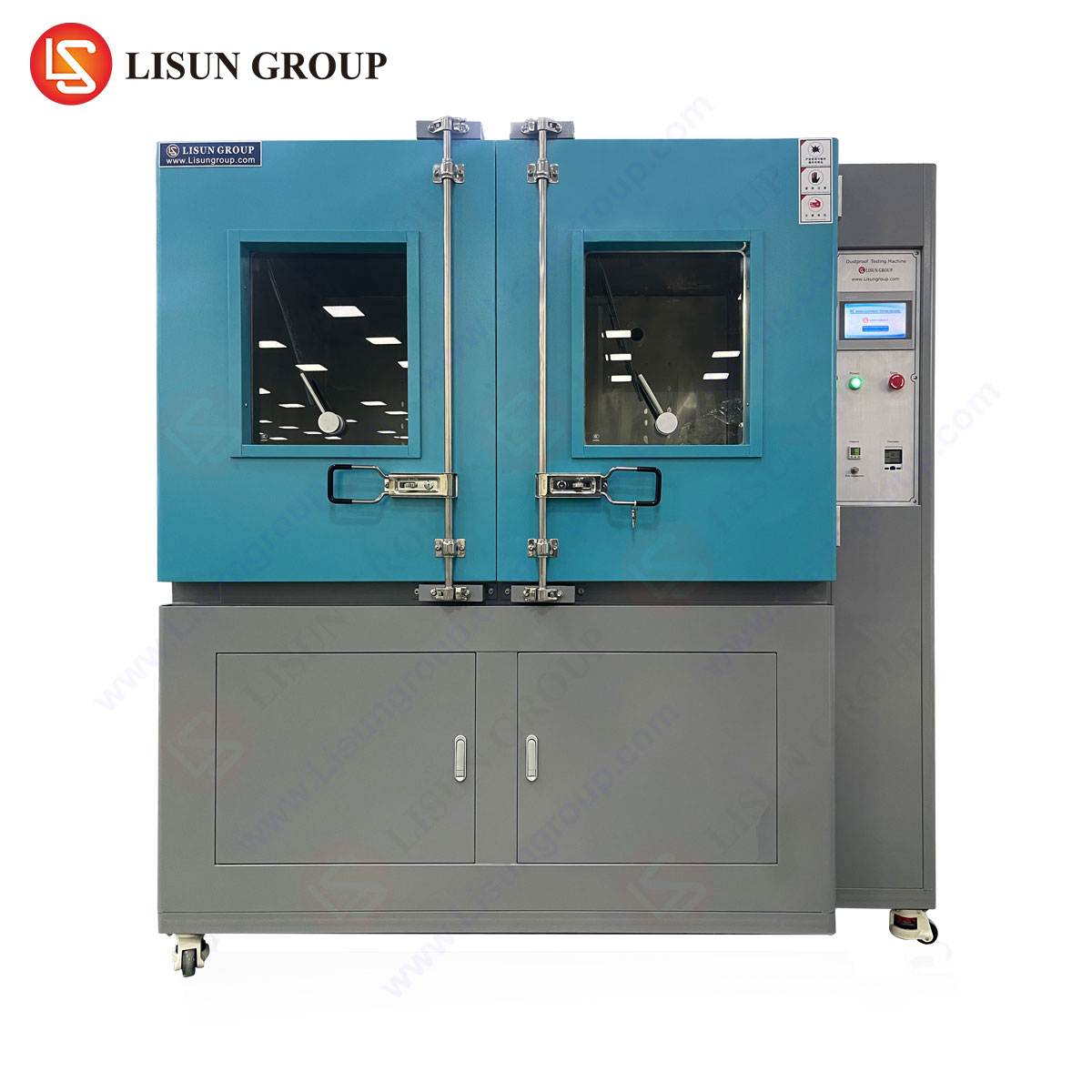
The YWX/Q-010X Cyclic Corrosion Test Chamber: System Architecture and Precision Control
To execute these advanced, repeatable test protocols, modern instrumentation must offer exceptional control fidelity and operational robustness. The LISUN YWX/Q-010X Cyclic Corrosion Test Chamber exemplifies this technological progression. This system is engineered to perform not only traditional neutral salt spray (NSS) tests but also acetic acid salt spray (AASS), copper-accelerated acetic acid salt spray (CASS), and most critically, fully programmable cyclic corrosion tests.
The chamber’s architecture is designed for precise environmental regulation. A compressed air saturator tower conditions the incoming air, heating and humidifying it to prevent solution concentration drift within the reservoir. The spray system utilizes high-purity, inert nozzles to generate a consistent, finely dispersed fog. Independent control systems manage the chamber temperature, pressure equilibrium, and humidity levels with high accuracy, a prerequisite for transitioning seamlessly between the distinct phases of a CCT profile. The chamber construction employs corrosion-resistant polymers and composite materials for the chamber liner, tower, and reservoir, ensuring long-term system integrity against the corrosive media and minimizing contamination risks.
Key Specifications of the YWX/Q-010X:
- Test Modes: NSS, AASS, CASS, Cyclic Corrosion Test (CCT).
- Temperature Range: Ambient +5°C to +55°C (with uniformity of ±2°C).
- Humidity Range: 30% to 98% RH (for humidity/condensation phases).
- Solution Reservoir: Constructed from fiber-reinforced polymer composite.
- Spray Nozzle: Crystal-grade polymer, resistant to crystallization and clogging.
- Control Interface: Programmable logic controller (PLC) with touch-screen HMI for multi-segment profile programming and real-time data logging.
- Compliance: Designed to meet the core parameters of ASTM B117, ISO 9227, IEC 60068-2-11, IEC 60068-2-52, JIS Z 2371, and other related standards.
Industry-Specific Applications and Failure Mode Analysis
The application of advanced salt spray testing is critical in sectors where component failure due to corrosion can lead to significant safety risks, financial loss, or system-wide malfunctions.
-
Automotive Electronics & Electrical Components: Connectors, sensor housings, engine control units (ECUs), and wiring harness terminals are subjected to road salt splash and underhood atmospheres. Testing evaluates the performance of conformal coatings on PCBs, the corrosion resistance of plated contacts (e.g., tin, silver, or gold over nickel), and the sealing integrity of housings. Failure modes include contact resistance increase, short circuits from dendritic growth, and mechanical seizure of moving parts.
-
Aerospace and Aviation Components: While materials are often high-grade, testing is vital for avionics boxes, antenna elements, and electrical grounding points exposed to de-icing fluids and coastal airport environments. Tests often specify stringent CCT profiles to validate anodized aluminum, cadmium plating, and specialized primer/paint systems.
-
Telecommunications Equipment & Outdoor Lighting Fixtures: Enclosures for 5G antennas, street lighting control gear, and outdoor junction boxes must withstand decades of exposure. Testing assesses powder coating adhesion, gasket sealing performance, and the corrosion resistance of heatsink materials. Creepage from scribed lines is a key evaluation metric.
-
Medical Devices and Industrial Control Systems: Devices used in sterilizing environments or handheld surgical tools exposed to saline bodily fluids require validation. For industrial PLCs and motor drives in harsh environments, testing ensures that internal components remain protected from corrosive ingress that could disrupt sensitive signal paths or power circuits.
-
Consumer Electronics and Household Appliances: From the internal boards of a washing machine’s control panel to the USB-C ports on a smartphone, testing verifies the durability of finishes and coatings against perspiration and incidental moisture exposure. This is often linked to specifications for “resistance to sweat” or “damp heat” testing.
Interpreting Test Results and Correlation to Service Life
A significant challenge in accelerated testing is establishing a quantitative correlation between test hours and actual years of service life. This correlation is non-linear and highly dependent on the specific geographic environment (e.g., mild inland vs. severe marine industrial). The primary value of standardized salt spray testing lies in comparative ranking and quality control.
Test results are evaluated against pass/fail criteria defined in product specifications. Common evaluation methods include:
- Visual Inspection: Time to first red rust, percentage of surface area corroded, blister size and density (ASTM D714), degree of scribe creepage (ASTM D1654).
- Metrological Analysis: Measurement of corrosion pit depth using profilometers.
- Functional Testing: Post-test verification of electrical continuity, insulation resistance, and mechanical operation for components like switches and connectors.
For example, a specification for an automotive connector may require “no red rust on critical contact surfaces after 96 hours of NSS testing per ASTM B117” or “scribe creepage less than 2.0 mm after completion of a 15-cycle SAE J2334 test.” The YWX/Q-010X facilitates this by providing a stable, auditable test environment, with data logging that records temperature, humidity, and spray status throughout the test duration, ensuring the results are defensible and repeatable.
Methodological Considerations and Testing Limitations
Practitioners must acknowledge the constraints of the method. Salt spray testing is a tool for relative comparison, not an absolute predictor. The constant wetting can produce corrosion products and failure modes that differ from those formed under cyclic outdoor conditions. For example, some zinc plating formulations may outperform others in a continuous salt spray but underperform in a cyclic test with dry periods. Furthermore, the test is predominantly applicable to inorganic coatings and metallic substrates; many organic materials degrade via other pathways (e.g., UV polymer breakdown) not addressed here.
Proper sample preparation, including cleaning and, if applicable, scribing, is paramount. The orientation of samples in the chamber (typically at 15° to 30° from vertical) must be consistent to ensure uniform fog settlement. The purity of the sodium chloride solution (≥95% dry weight NaCl, with limits on impurities like copper and nickel) and the pH of the collected spray are critical parameters that must be monitored and controlled, as per the relevant standard. Advanced chambers like the YWX/Q-010X incorporate features such as automatic pH monitoring and level sensing to maintain test consistency over extended durations, which can run for hundreds or even thousands of hours.
Conclusion: The Role of Advanced Testing in Product Validation
In an era of global supply chains and demanding product reliability expectations, advanced salt spray testing remains an indispensable component of the product validation toolkit. The transition from simple static tests to sophisticated cyclic protocols represents a maturation of the technique, aligning it more closely with real-world failure mechanisms. The deployment of precise, programmable, and robust testing instrumentation, such as the cyclic corrosion test chamber discussed, is fundamental to generating reliable, comparable, and actionable data. By subjecting components from automotive electronics to medical devices to these rigorously controlled corrosive environments, engineers can identify material and design vulnerabilities, qualify alternative finishes, and ultimately deliver products with enhanced durability and long-term performance assurance in the face of corrosive challenges.
Frequently Asked Questions (FAQ)
Q1: What is the primary functional difference between a standard salt spray chamber and a cyclic corrosion test (CCT) chamber like the YWX/Q-010X?
A standard salt spray chamber primarily maintains a continuous saline fog environment at a constant temperature, as defined by ASTM B117. A CCT chamber, such as the YWX/Q-010X, incorporates advanced control systems to automatically cycle between different environmental phases—including salt spray, high humidity condensation, dry-off periods, and controlled temperature ramps—according to programmed profiles. This allows for simulation of more realistic environmental sequences, often leading to better correlation with field performance data.
Q2: For testing a printed circuit board assembly (PCBA) with a conformal coating, which test method is more appropriate: NSS or a cyclic test?
While a Neutral Salt Spray (NSS) test can provide a basic assessment of coating integrity, a cyclic corrosion test is generally more appropriate and severe. The dry and humidity cycles within a CCT profile can stress the coating-to-substrate adhesion more effectively and promote the formation of corrosion under the coating via “breathing” effects, which better simulates thermal and humidity cycling in real-world applications. Standards like IEC 60068-2-52 contain specific test profiles (e.g., Test Kb) suitable for electronic assemblies.
Q3: How critical is air saturation in the salt spray testing process, and how does the YWX/Q-010X address it?
Air saturation is a critical parameter. Unsaturated air, when bubbled through the heated salt solution reservoir, will cause evaporation within the saturator tower, gradually increasing the salinity of the test solution and invalidating the test. The YWX/Q-010X employs a dedicated compressed air saturator tower, which heats and humidifies the air to 100% relative humidity at the chamber temperature before it enters the solution reservoir. This prevents concentration drift and ensures the sprayed fog maintains the specified 5% NaCl concentration.
Q4: Can the YWX/Q-010X chamber be used for testing non-metallic materials, such as plastics or composites?
Yes, though the evaluation criteria differ. For non-metallics, the test may be used to assess effects such as surface degradation, blistering of painted or plated surfaces on plastic substrates, corrosion of embedded metal inserts, changes in electrical insulation properties, or the integrity of seals and gaskets. The chamber’s controlled environment is suitable for these assessments, but the pass/fail criteria must be defined by the relevant material or product specification.
Q5: What maintenance is required to ensure the long-term accuracy and reliability of a cyclic corrosion test chamber?
Regular maintenance is essential. Key tasks include: periodic cleaning of the chamber interior and nozzles to prevent salt accumulation and clogging; calibration of temperature and humidity sensors at intervals defined by quality procedures; checking and cleaning the saturator tower water level and heating elements; monitoring and adjusting the pH of the reservoir solution as required by the test standard; and inspecting all seals and gaskets for integrity to prevent environmental leakage and maintain precise control.