




Advancements in Accelerated Corrosion Testing: Methodologies, Applications, and Technological Integration
The relentless pursuit of product durability and reliability across industrial sectors necessitates robust predictive testing methodologies. Among these, salt spray (fog) testing remains a cornerstone for evaluating the corrosion resistance of materials and surface coatings. However, the traditional, standardized salt spray test, while valuable, presents limitations in simulating real-world environmental complexities. This has catalyzed the development of advanced salt spray testing solutions that offer enhanced control, reproducibility, and correlation to actual service conditions. These sophisticated systems are indispensable for industries where component failure due to corrosion can lead to significant financial loss, safety hazards, or operational downtime.
The Evolution from Standardized Tests to Cyclic Corrosion Protocols
Historically, salt spray testing has been governed by standards such as ASTM B117 and ISO 9227, which prescribe a continuous exposure to a neutral (pH 6.5 to 7.2) 5% sodium chloride fog at 35°C. This constant-state test provides a useful, if somewhat simplistic, comparative benchmark. Its primary output is the time to the first appearance of corrosion, offering a pass/fail criterion for coating quality. Nevertheless, a critical industry realization is that constant exposure rarely mirrors natural environments, which are characterized by cyclic variations—periods of wetness, drying, and often, contamination from other compounds.
This understanding has driven the adoption of Cyclic Corrosion Testing (CCT). Advanced CCT chambers replicate complex environmental sequences, such as salt spray, dry-off, humidity condensation, and static or dynamic air drying phases. Some protocols, like those outlined in automotive standards SAE J2334 or GM 9540P, incorporate immersion or humidity cycling to better simulate conditions encountered in wheel wells or underbody components. The fundamental principle is that the electrochemical processes driving corrosion—anodic metal dissolution and cathodic oxygen reduction—are profoundly influenced by wet/dry transitions. Drying phases can concentrate electrolytes, accelerate oxygen diffusion, and alter the stability of protective oxide layers, often accelerating degradation more effectively than constant wetness. For electrical and electronic equipment, these cycles can also provoke capillary action, drawing corrosive electrolytes into connectors and under conformal coatings, leading to conductive anodic filament (CAF) formation or short circuits.
Integration of Multi-Factor Stress Testing in Modern Chambers
The most significant leap in advanced testing is the integration of multiple, programmable environmental stressors beyond salt fog. Contemporary solutions are no longer mere “salt spray chambers” but are more accurately described as combined environmental corrosion test systems. Key integrated factors include:
Temperature and Humidity Profiling: Precise control over temperature (often spanning a range from ambient to +60°C or higher) and relative humidity (from 20% to 98% RH or more) is fundamental. For household appliances and automotive electronics, testing may involve high-temperature, high-humidity storage cycles (e.g., 85°C/85% RH) derived from standards like IEC 60068-2-78, interspersed with salt spray phases to simulate thermal cycling in coastal or high-humidity environments.
Gas Introduction for Mixed Flowing Gas Testing: Certain applications, particularly in telecommunications equipment and industrial control systems deployed in polluted urban or industrial atmospheres, require exposure to corrosive gases (e.g., H₂S, SO₂, NO₂, Cl₂) at parts-per-billion concentrations. Advanced chambers can incorporate gas injection systems to perform Mixed Flowing Gas (MFG) tests per standards like IEC 60068-2-60, either as a standalone test or in a sequence with salt spray. This is critical for assessing the corrosion of silver-plated contacts (tarnishing) or the degradation of protective polymer housings.
UV Radiation Exposure: For exterior components such as automotive electronics housings, lighting fixtures, and aerospace composite panels, synergistic degradation from ultraviolet radiation and salt is a primary concern. UV exposure can photo-oxidize and craze polymer surfaces, creating micro-cracks that facilitate salt ingress and underfilm corrosion. Chambers with integrated UV lamps allow for sequential or simultaneous exposure, aligning with test methods like ASTM G154.
Mechanical Stress Simulation: Some frontier systems incorporate the ability to apply mechanical loads, vibration, or strain during corrosion exposure. This is particularly relevant for cable and wiring systems, aerospace components, and medical implant devices, where stress corrosion cracking (SCC) or corrosion fatigue are potential failure modes.
The YWX/Q-010X Series: A Paradigm of Programmable Corrosion Testing
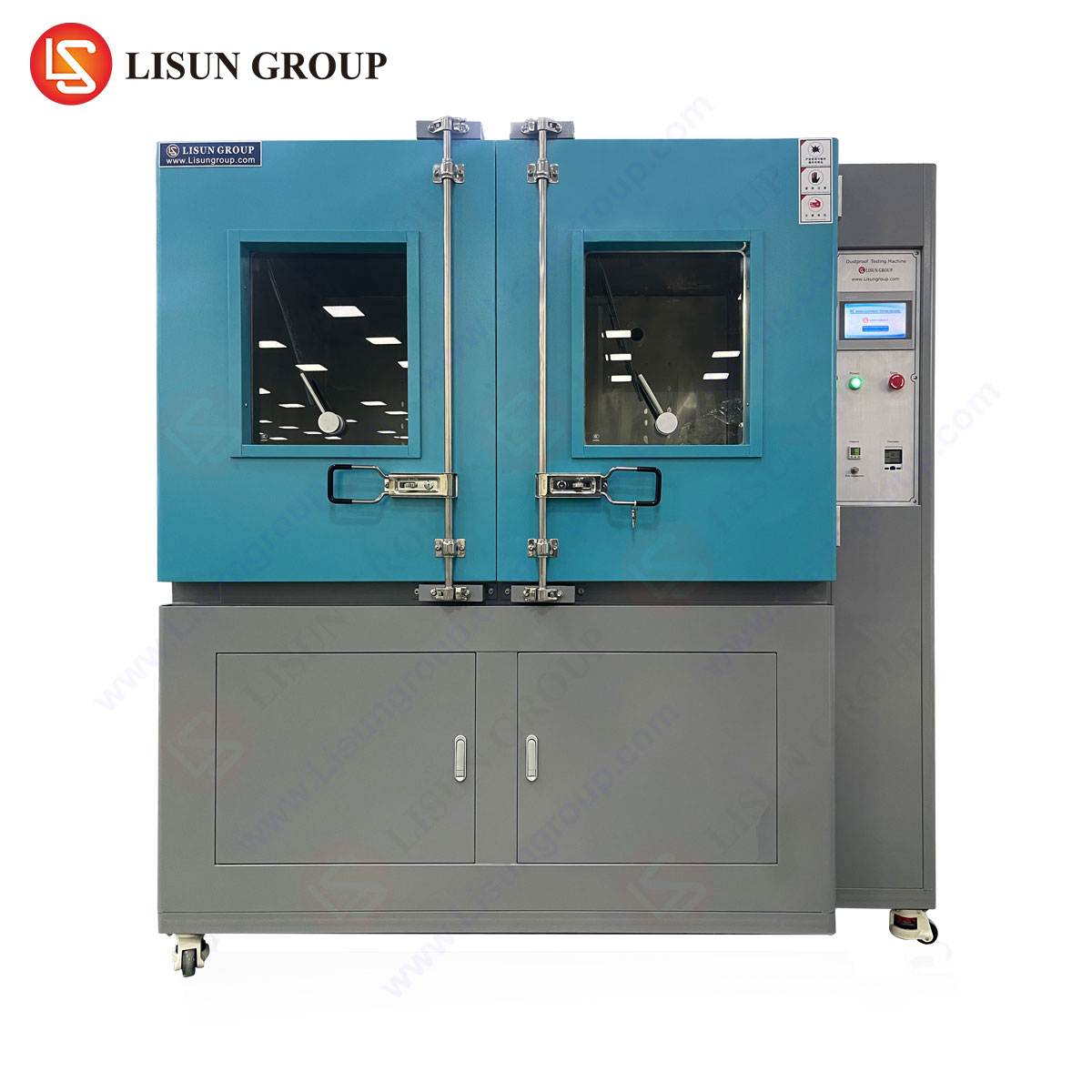
Exemplifying this technological integration is the LISUN YWX/Q-010X series of programmable salt spray test chambers. This system is engineered to transcend basic compliance testing, offering a platform for developing and validating materials against complex, user-defined environmental sequences.
Core Testing Principles and Architecture: The YWX/Q-010X operates on the principle of precise environmental compartmentalization and sequencing. Its architecture typically includes a main test chamber, a saturated air barrel (for humidifying and heating the compressed air used for atomization), a salt solution reservoir, and a sophisticated microcontroller. The system’s programmable logic controller (PLC) allows for the creation of multi-step test profiles. A single profile might initiate with a 4-hour salt spray phase at 35°C, transition to a 2-hour dry-off period at 40°C with 30% RH, followed by an 18-hour humidity condensation phase at 50°C and 100% RH, and finally a static recovery period. This sequence could be looped for hundreds or thousands of hours.
Technical Specifications and Capabilities:
- Temperature Range: Typically -10°C to +70°C (test area), allowing for sub-ambient testing to simulate freezing/thawing effects on coatings.
- Humidity Range: 30% to 98% RH, controllable with precision for dedicated damp heat or cyclic humidity tests.
- Test Chamber Volume: Available in standardized volumes (e.g., 90L, 120L, 200L) to accommodate various product sizes, from small electrical components like switches and sockets to larger assemblies such as printed circuit board (PCB) assemblies for office equipment or consumer electronics.
- Construction: Employing corrosion-resistant materials like PVC or polypropylene for the chamber liner and titanium or quartz for the salt solution heater and atomizer nozzle to ensure longevity and prevent contamination.
- Compliance: Designed to meet the core parameters of ASTM B117, ISO 9227, JIS Z 2371, and other standards, while providing the flexibility to construct profiles for DIN 50021, ASTM G85, and proprietary OEM cycles.
Industry-Specific Use Cases:
- Automotive Electronics: Validating the resilience of engine control unit (ECU) housings, sensor connectors, and infotainment system components against cyclic corrosion profiles simulating under-hood and exterior exposure.
- Aerospace and Aviation: Testing the corrosion resistance of aluminum alloys, titanium fasteners, and composite structures with protective coatings, using profiles that incorporate humidity, salt spray, and temperature excursions.
- Medical Devices: Ensuring the longevity of stainless-steel surgical instruments or external housing of diagnostic equipment against repeated disinfection (simulated by saline exposure) and environmental storage.
- Lighting Fixtures: Evaluating the integrity of LED driver electronics and outdoor fixture housings against salt fog and high humidity to prevent premature lumen depreciation or catastrophic failure.
- Electrical Components: Assessing the performance of plated contacts in relays and sockets, where cyclic conditions can accelerate pore corrosion and increase contact resistance.
Competitive Advantages: The YWX/Q-010X differentiates itself through its emphasis on programmability and control stability. The precision of its temperature and humidity sensors, coupled with a responsive heating and humidification system, ensures that the defined environmental transitions are sharp and repeatable. This repeatability is paramount for comparative material studies and quality assurance. Furthermore, its robust data logging capabilities allow for the meticulous recording of all chamber parameters throughout a lengthy test, providing an auditable trail essential for certification and failure analysis. The chamber’s design minimizes salt sedimentation and ensures consistent fog distribution, key factors in achieving uniform exposure across the test specimen population.
Correlation to Real-World Performance and Data Interpretation
The ultimate value of any accelerated test lies in its correlation to actual field performance. Advanced cyclic tests, like those enabled by the YWX/Q-010X, generally offer improved correlation over traditional constant salt spray. However, correlation is not guaranteed and must be established empirically for each material-system and application environment. This involves conducting parallel studies: exposing matched samples to both the accelerated laboratory cycle and real-world outdoor or in-service conditions (e.g., on a vehicle fleet or a coastal rack).
Data interpretation also evolves with advanced testing. Beyond simple visual inspection for red rust or blistering per ASTM D610/D714, analysis may include:
- Electrochemical Measurements: Monitoring open-circuit potential or electrochemical impedance spectroscopy (EIS) during dry/wet cycles to quantify coating degradation.
- Post-Test Functional Analysis: For electronic items, verifying operational parameters—insulation resistance, dielectric withstand voltage, signal integrity—after exposure.
- Cross-Sectional Analysis: Using microscopy to measure underfilm corrosion creepage from a scribe, per ASTM D1654, or to examine intergranular attack.
- Surface Analysis: Techniques like X-ray Photoelectron Spectroscopy (XPS) or Energy-Dispersive X-ray Spectroscopy (EDS) to identify corrosion products and contaminant species.
Standards, Validation, and Future Trajectories
The development of advanced salt spray testing occurs in tandem with the evolution of international standards. While classic standards remain, new protocols are continually under development within organizations like ASTM, ISO, and major automotive (e.g., BMW, Volvo) and aerospace (e.g., Airbus, Boeing) OEMs. These often specify exact cyclic profiles. Chamber validation, through the use of calibrated reference panels and the measurement of collection rate, pH, and fog uniformity, is non-negotiable for maintaining test credibility.
The future trajectory points toward even greater integration. This includes the incorporation of real-time corrosion monitoring sensors within the chamber, machine learning algorithms to optimize test profiles for maximum acceleration while preserving failure mechanism fidelity, and the seamless integration of corrosion test data into broader Product Lifecycle Management (PLM) and digital twin frameworks. The goal is a closed-loop system where field failure data directly informs and refines the accelerated test protocols used in future design iterations.
Frequently Asked Questions (FAQ)
Q1: How does cyclic corrosion testing (CCT) in a chamber like the YWX/Q-010X provide better results than traditional continuous salt spray?
A1: CCT introduces periodic drying and humidity phases, which more accurately replicate natural environmental cycles. These transitions often accelerate corrosion by concentrating electrolytes, promoting oxygen diffusion, and mechanically stressing coatings through repeated swelling and contraction. This can lead to different, and often more service-relevant, failure modes (e.g., filiform corrosion, coating delamination) compared to the uniform general corrosion often seen in continuous spray tests.
Q2: Can the YWX/Q-010X be used to test compliance with basic standards like ASTM B117?
A2: Absolutely. While engineered for complex cyclic tests, the chamber is fully capable of operating in a standard, continuous salt spray mode as specified by ASTM B117, ISO 9227, and similar standards. The key advantage is that a single platform can handle both routine compliance checks and advanced developmental testing.
Q3: What are the critical factors in preparing a salt solution for testing, and how does the chamber manage solution consistency?
A3: The solution must be prepared using distilled or deionized water and high-purity sodium chloride (NaCl), typically at a concentration of 5% ±1% by mass. The pH must be adjusted to the neutral range (6.5 to 7.2) when collected from the chamber’s fog outlet. Advanced chambers feature large-capacity, temperature-controlled reservoirs with level sensors and are constructed of inert materials to prevent contamination and concentration drift over long-duration tests.
Q4: For testing printed circuit board assemblies (PCBAs), what considerations are necessary beyond the chamber profile?
A4: PCBA testing requires careful attention to the test specimen’s orientation (typically to minimize direct droplet impingement), the use of operational or dummy loads to simulate thermal cycling, and the implementation of in-situ monitoring for parameters like insulation resistance. The test profile may need to include extended humidity phases to assess the hygroscopic nature of flux residues and their role in promoting electrochemical migration.
Q5: How is the corrosivity of the test environment validated to ensure consistency between tests?
A5: Consistency is validated using control reference panels. Standardized cold-rolled steel panels, cleaned and weighed, are exposed alongside the test specimens. After a prescribed period (often 24, 48, or 96 hours), the panels are cleaned of corrosion products per a defined method (e.g., ASTM D610 Appendix) and re-weighed. The mass loss per unit area per unit time provides a quantitative measure of the chamber’s corrosivity, ensuring it falls within the acceptable range specified by the relevant test standard.