




Advanced Thermal Chamber Features Explained: Precision, Control, and Application in Modern Product Validation
The relentless drive for miniaturization, increased functional density, and global market deployment of electrical and electronic equipment has elevated the criticality of environmental stress screening. Within this domain, thermal testing stands as a fundamental pillar, simulating the thermal stresses a product will encounter throughout its lifecycle. While basic temperature chambers have long been a laboratory staple, advanced thermal chambers now incorporate a suite of sophisticated features that transcend simple temperature cycling. These features enable unprecedented levels of precision, realism, and analytical depth in product validation, directly correlating to enhanced field reliability and reduced warranty costs. This article delineates the key advanced features of modern thermal test equipment, their underlying principles, and their practical implications across high-stakes industries.
The Imperative of Dynamic Thermal Profiling
Traditional steady-state soak testing, while useful for certain material evaluations, fails to replicate the transient thermal conditions most products experience in real-world operation. Advanced chambers now prioritize dynamic thermal profiling, characterized by precisely controlled ramp rates and complex dwell sequences. The capability to execute rapid temperature transitions—with rates exceeding 10°C per minute and, in specialized chambers, reaching 30°C/min or higher—is paramount. This induces mechanical stresses due to differential coefficients of thermal expansion (CTE) between bonded materials, such as silicon dies, underfill epoxy, solder joints, and printed circuit board (PCB) laminates.
For instance, in Automotive Electronics, a power control unit (PCU) for an electric vehicle may experience rapid heat generation during acceleration, followed by convective cooling at highway speeds. A dynamic profile with a sharp ramp-up from -40°C to 125°C, followed by a controlled dwell and rapid cool-down, can more accurately precipitate latent defects like solder fatigue or delamination than a slow, linear cycle. Similarly, Aerospace and Aviation Components must endure extreme transitions during ascent and descent profiles, making high-fidelity dynamic simulation non-negotiable for compliance with standards like DO-160.
Integration of Multi-Axis Vibration and Thermal Stress
A significant advancement is the synchronized application of thermal and vibrational stress, known as combined environmental testing. Isolated testing of these stressors can overlook failure modes that only manifest under their concurrent application. Advanced systems integrate an electrodynamic vibration system within the thermal chamber workspace. This allows for simultaneous temperature cycling and vibration according to profiles defined in standards such as MIL-STD-810 or IEC 60068-2-64.
The technical challenge is substantial, requiring the vibration shaker to maintain performance across the entire thermal range and the chamber’s refrigeration system to compensate for the heat load generated by the shaker. The payoff, however, is a dramatically more accurate reliability assessment. A Telecommunications Equipment router mounted in a vehicle or aircraft is subjected to engine vibration while its internal processors heat the chassis. Testing these stressors in tandem can reveal interconnect failures, connector fretting, or loosening of mechanical fasteners that would remain undetected in sequential tests. This approach is equally critical for Industrial Control Systems deployed in manufacturing plants, where machinery vibration coincides with ambient temperature fluctuations.
Advanced Humidity Conditioning and Climatic Sequencing
Beyond temperature, humidity is a potent agent of degradation, particularly when combined with thermal cycles. Advanced humidity conditioning involves far more than simple relative humidity (RH) setpoints. Features such as dew point simulation, low-humidity generation (<10% RH), and precise control of humidity during temperature ramps are essential. The condensation that forms during temperature transitions—simulating a product being powered on in a cold, damp environment—can lead to electrochemical migration, dendritic growth, and short circuits on PCBs.
Climatic sequencing, or the programmed execution of temperature-humidity cycles like Temperature-Humidity-Bias (THB) or Highly Accelerated Stress Testing (HAST), is a cornerstone for Electrical Components validation. A Household Appliances control board for a dishwasher must withstand a humid, hot environment during operation and a cooler, condensing environment during idle periods. Advanced chambers enable complex sequences where 85°C/85% RH conditions are cycled with sub-zero temperatures, all while the unit under test (UUT) is electrically biased. This accelerates the diffusion of moisture through package seals and into die interfaces, providing predictive data on long-term reliability.
Real-Time Monitoring and In-Situ Measurement Capabilities
The value of a stress test is not merely in its execution but in the data captured during the process. Advanced chambers are equipped with a plethora of ports and interfaces for in-situ monitoring. These allow for continuous measurement of the UUT’s performance parameters—voltage, current, signal integrity, resistance—while the test is ongoing. This real-time data acquisition enables the precise identification of the thermal or humidity threshold at which a failure occurs.
For Medical Devices, such as an implantable sensor’s electronics, functional monitoring during a thermal cycle can verify that signal output remains within specification at body temperature extremes. In Lighting Fixtures, particularly LED-based systems, in-situ measurement of luminous flux and chromaticity coordinates during temperature cycling is critical to validate performance claims and predict lumen maintenance. The integration of these measurement systems directly into the chamber’s control software allows for automated failure logging, directly correlating environmental conditions with performance degradation.
Sophisticated Airflow Management and Spatial Uniformity
Thermal uniformity, often specified as a tolerance (e.g., ±0.5°C) across the workspace, is a classic metric. Advanced chambers address the more complex challenge of airflow management. Adjustable baffles, multi-fan systems, and computational fluid dynamics (CFD)-optimized ductwork ensure that the UUT, regardless of its geometry and thermal mass, is subjected to consistent, predictable convective heat transfer. This is vital when testing non-homogenous products like a Consumer Electronics laptop, which contains a high-heat CPU, a cooler battery pack, and passive components.
Some systems offer selectable airflow modes—horizontal, vertical, or customized patterns—to match real-world installation scenarios. Testing a Cable and Wiring System harness for an automotive application requires simulating under-hood airflow patterns, which may differ significantly from the still-air conditions of a basic chamber. Precise airflow control ensures that temperature sensors on the UUT report accurate, representative data, eliminating false passes or failures due to chamber artifacts.
Case Study: The HLST-500D Thermal Shock Test Chamber in Component Validation
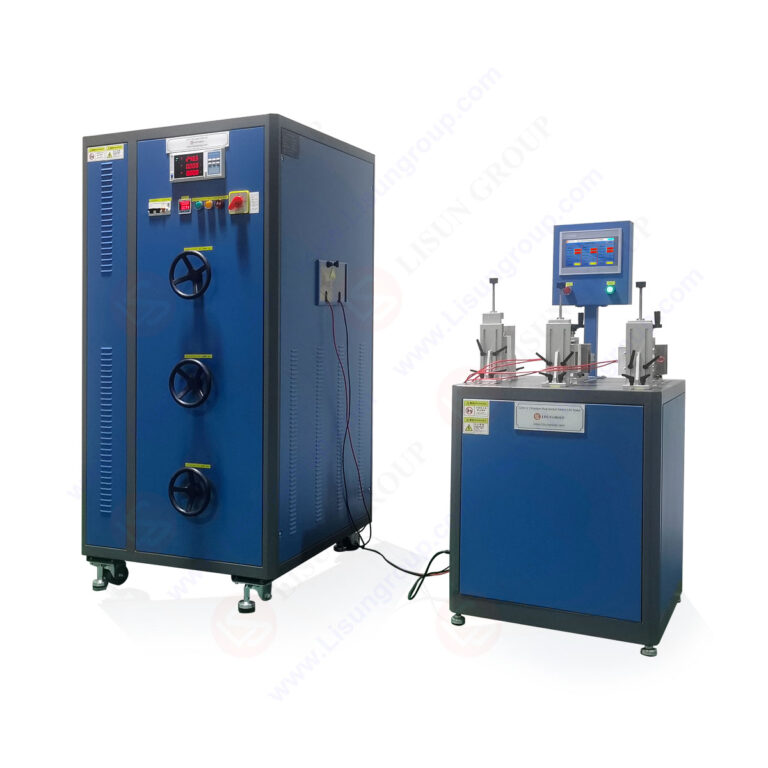
To contextualize these advanced features, we examine the LISUN HLST-500D Thermal Shock Test Chamber. This system embodies the principle of extreme thermal transition testing through a two- or three-zone (high-temperature zone, low-temperature zone, and ambient transition zone) basket transfer mechanism.
Testing Principle and Specifications:
The HLST-500D operates on the principle of rapid transfer between independently controlled extreme temperature zones. A basket containing the UUT is mechanically shuttled between a high-temperature chamber (typically rated up to +200°C) and a low-temperature chamber (rated down to -70°C) with a transition time of less than 10 seconds. This induces severe thermal shock, primarily a surface phenomenon that tests the integrity of materials, seals, and solder joints against crack initiation and propagation. Key specifications often include a temperature recovery time of less than 5 minutes after specimen transfer, ensuring the UUT’s surface temperature reaches the target setpoint rapidly.
Industry Use Cases:
- Electrical Components (Switches, Sockets, Connectors): Validates the resilience of plastic housings, metal contacts, and spring mechanisms to cracking or loss of mechanical tension after repeated expansion and contraction.
- Automotive Electronics: Essential for testing engine control modules (ECMs) and sensors that may be splashed with cold water on a hot engine block. It correlates to SAE J1211 and similar automotive environmental test requirements.
- Aerospace and Aviation Components: Simulates the extreme thermal shocks experienced by avionics during high-altitude flight or rapid deployment from a controlled environment.
- Semiconductor Packaging: Precipitates failures in die attach, wire bonds, and package molding compound interfaces, per JESD22-A104 and MIL-STD-883 methods.
- Lighting Fixtures (LED Assemblies): Tests the bond between the LED chip, substrate, and heat sink, which is critical for long-term optical performance and longevity.
Competitive Advantages of the HLST-500D Approach:
The primary advantage lies in the severity and controllability of the shock stimulus. Compared to single-chamber ramp-based cycling, the transfer system provides a near-instantaneous application of extreme delta-T. This makes it a highly accelerated life test (HALT) tool, efficiently uncovering workmanship flaws and weak design margins. The physical separation of the hot and cold zones also improves temperature stability and reduces thermal cross-talk, enhancing test repeatability. Furthermore, the system’s ability to program complex sequences of dwell times and number of cycles allows for the creation of tailored test profiles that match specific mission profiles, such as those for satellite components that cycle between sun exposure and Earth shadow.
Data Integrity, Compliance, and System Interoperability
Modern advanced chambers are network-enabled data nodes. Features include comprehensive audit trails, 21 CFR Part 11-compliant electronic signatures for regulated industries like Medical Devices, and seamless interoperability with Manufacturing Execution Systems (MES) or Laboratory Information Management Systems (LIMS). Calibration data, sensor histories, and test profile executions are logged in secure, time-stamped databases. This traceability is not merely a regulatory convenience but a quality imperative, allowing for the forensic analysis of test conditions should a field failure later occur.
Conclusion
The evolution of thermal testing from basic ovens to sophisticated environmental simulation platforms reflects the increasing complexity and reliability demands of modern technology. Advanced features—dynamic profiling, combined stress, precise humidity control, in-situ monitoring, and intelligent airflow—transform the test chamber from a simple stress application device into an analytical instrument. As exemplified by specialized equipment like thermal shock chambers, these capabilities enable engineers to move beyond pass/fail criteria towards a deeper understanding of product failure mechanisms and operational limits. This, in turn, drives more robust design, accurate qualification, and ultimately, the delivery of reliable products to the global market.
Frequently Asked Questions (FAQ)
Q1: What is the fundamental difference between a thermal shock test chamber (like the HLST-500D) and a standard temperature cycling chamber?
A: The core difference lies in the rate of temperature change applied to the specimen. A standard chamber uses a single workspace and controls ramp rates, which are limited by the thermal mass of the chamber and product. A thermal shock chamber uses separate hot and cold zones and a mechanical transfer system to subject the product to an extreme temperature change in seconds, applying a more severe “shock” stress focused on material interfaces and seals.
Q2: When should combined temperature and vibration testing be specified over sequential testing?
A: Combined testing should be specified when the product’s real-world operational environment involves concurrent exposure to both stressors. This is typical for transportation and mobile applications (automotive, aerospace, portable electronics). Combined testing can uncover failure modes—such as solder joint cracking accelerated by vibration under thermal strain—that may not manifest if vibration is applied at a constant, benign temperature.
Q3: How critical is spatial temperature uniformity when testing a large or high-power product?
A: It is critically important. Poor uniformity can lead to “hot spots” on the product being underestimated or “cold spots” being over-stressed, resulting in non-representative test data. Advanced airflow management is required to ensure the chamber’s air temperature accurately represents the stress applied to all critical points of the unit under test, especially for products with significant internal heat dissipation.
Q4: For a medical device requiring IEC 60601-1 testing, what advanced chamber features are most relevant?
A: Beyond basic temperature and humidity ranges, key features include precise humidity control for condensation testing, real-time functional monitoring ports to check device operation during tests, and data logging/audit trail capabilities that comply with quality management system (QMS) requirements for traceability and validation of the test process itself.
Q5: Can thermal shock testing damage otherwise reliable components?
A: Thermal shock is a highly accelerated, overstress test. Its purpose is to reveal latent weaknesses, design margins, and workmanship flaws by applying stresses beyond normal operational limits. A well-designed and manufactured component should withstand a specified number of shock cycles without failure. A failure during a properly specified shock test typically indicates a vulnerability that could lead to a field failure under less severe but repeated thermal cycling over time.