




A Technical and Economic Analysis of Salt Fog Corrosion Testing: Evaluating Cost-Effective Compliance Solutions
Introduction to Accelerated Corrosion Testing and Its Industrial Imperative
Corrosion represents a fundamental and persistent challenge to the integrity, functionality, and safety of materials and components across virtually every manufacturing sector. The economic impact of corrosion is staggering, with global costs estimated in the trillions of dollars annually, encompassing direct replacement expenses, unplanned downtime, and catastrophic failures. To mitigate these risks, industries rely on standardized accelerated corrosion tests, with salt fog (spray) testing being the most universally recognized methodology. This test simulates and accelerates the corrosive effects of marine and de-icing salt environments within a controlled laboratory setting, providing critical predictive data on a material’s or coating’s protective capabilities.
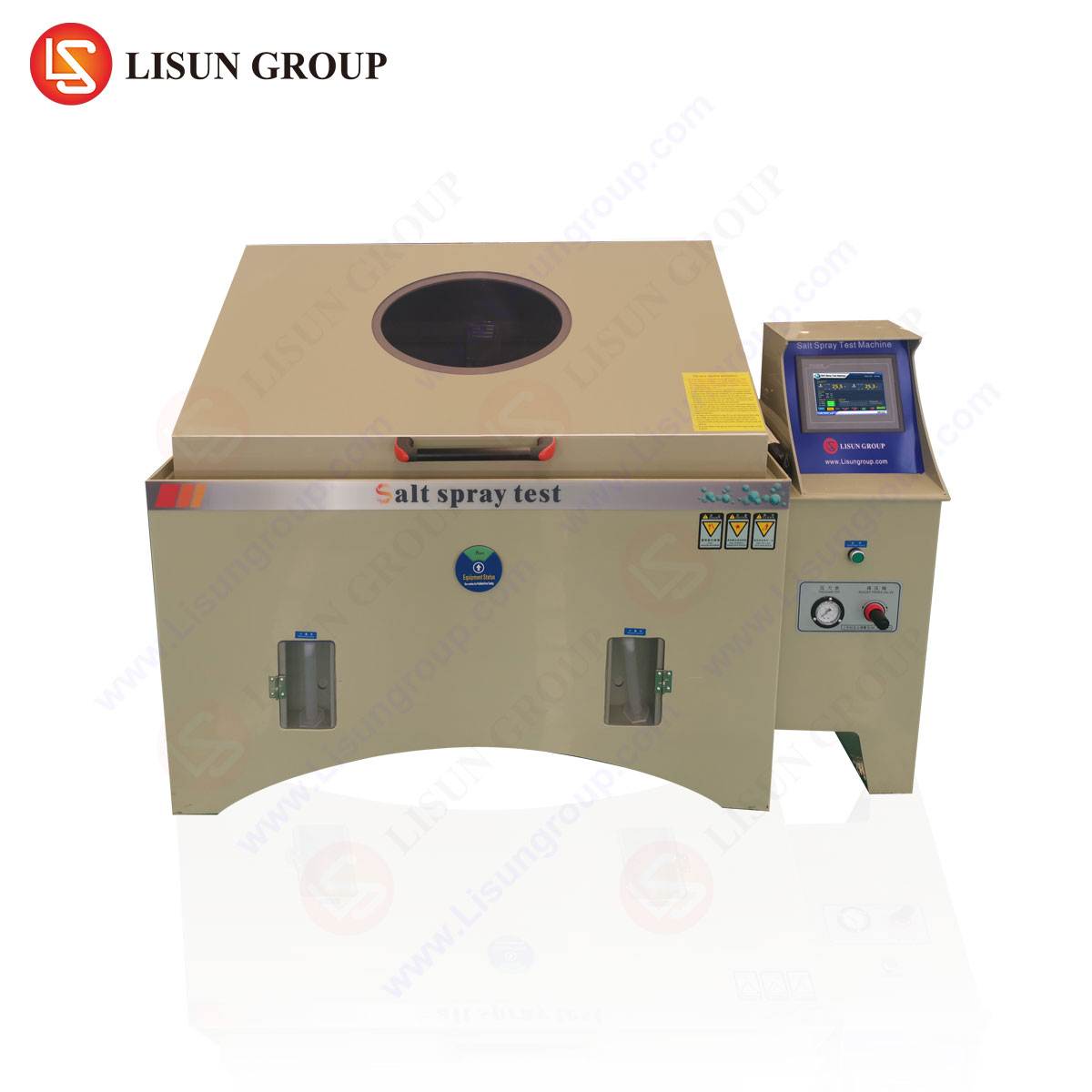
The procurement of salt fog testing equipment, however, presents a significant consideration for quality assurance laboratories, research institutions, and manufacturing facilities. Capital expenditure must be balanced against technical requirements, regulatory compliance, and operational throughput. This article provides a detailed technical examination of salt fog testing principles and explores the economic and engineering factors that define affordable pricing models, with a specific analysis of a representative solution: the LISUN YWX/Q-010 Salt Spray Test Chamber.
Deconstructing the Salt Fog Test: Principles and Governing Standards
The salt fog test is not a mere simulation of a saline environment; it is a precisely controlled, repeatable acceleration of specific corrosion mechanisms. The fundamental principle involves the atomization of a prepared sodium chloride solution (typically 5% ± 1% by mass, per most standards) into a fine fog within a sealed environmental chamber. This fog settles uniformly onto test specimens, creating a continuous, corrosive electrolyte film. The primary corrosive agent is the chloride ion (Cl⁻), which is highly aggressive in penetrating protective oxide layers, initiating pitting, and facilitating galvanic corrosion.
Test conditions are rigorously defined by international standards to ensure reproducibility and cross-industry comparability. The most prevalent standard is ASTM B117, “Standard Practice for Operating Salt Spray (Fog) Apparatus.” Equivalent or derived standards include ISO 9227, JIS Z 2371, and various MIL-STD-810 methods. These standards specify critical parameters:
- Solution Composition: pH, purity, and concentration of NaCl.
- Chamber Temperature: Maintained at 35°C ± 2°C (for neutral tests) or other values for acidified tests (e.g., ASTM G85).
- Fog Collection Rate: A specified volume of solution must collect per horizontal unit area per hour (e.g., 1.0 to 2.0 ml/80cm²/h).
- Saturation Tower Conditions: The compressed air used for atomization must be humidified and heated to prevent cooling of the fog and ensure consistency.
Deviation from these parameters invalidates test results, making the precision and stability of the test chamber’s control systems paramount. Affordable testers must not compromise on this fundamental compliance.
Economic Drivers in Salt Fog Tester Procurement: Beyond Initial Purchase Price
The concept of “affordable pricing” extends beyond the initial capital outlay. A comprehensive total cost of ownership (TCO) analysis must be conducted, encompassing several key factors that influence long-term value and operational efficiency.
Capital Expenditure (CapEx): This is the most visible cost, encompassing the base unit, optional accessories, and installation. Pricing tiers typically correlate with chamber volume (e.g., 90L, 270L, 600L), construction quality, and the sophistication of the control system.
Operational Expenditure (OpEx): Recurring costs include:
- Consumables: High-purity sodium chloride, distilled or deionized water.
- Utilities: Electrical power for heating, refrigeration (for certain models), and controls.
- Maintenance: Regular cleaning to prevent salt accumulation, nozzle inspection/replacement, and sensor calibration.
- Labor: Technician time for sample rotation, solution preparation, and data logging.
Compliance and Validation Costs: A tester that cannot maintain parameters within standard tolerances necessitates costly test repeats and risks product certification failures. Investment in a chamber with robust calibration, data logging, and stable control loops mitigates this risk.
Throughput and Scalability: A smaller, lower-cost chamber may suffice for R&D but become a bottleneck for production quality control. The cost of delayed testing or the need for a secondary unit must be factored into affordability calculations.
Technical Specifications and Architecture of a Cost-Optimized Test Chamber: The LISUN YWX/Q-010
As a case study in balancing cost and capability, we examine the LISUN YWX/Q-010 Salt Spray Test Chamber. This model represents a class of testers designed to deliver standard-compliant performance for small to medium batch testing, common in component manufacturing and laboratory settings.
Construction and Materials: The chamber interior is constructed from corrosion-resistant Polyvinyl Chloride (PVC) plastic, providing inherent resistance to the saline environment and eliminating the cost and potential failure points of coated metallic interiors. The outer housing is typically made of steel with a powder-coated finish. The chamber cover is engineered with a steeply angled profile to prevent condensate drip onto specimens, a critical detail for test integrity.
Control and Monitoring Systems: The unit employs a digital microprocessor-based controller for temperature regulation. Key specifications include:
- Temperature Range: Ambient +5°C to +55°C.
- Temperature Uniformity: ≤ ±2°C (a critical metric for ASTM/ISO compliance).
- Temperature Fluctuation: ≤ ±0.5°C.
- Heating System: Titanium alloy or quartz sheathed electric heaters for rapid heat-up and corrosion resistance.
- Atomization System: Utilizes a pneumatic nozzle fed by compressed air, which is preconditioned in a saturated tower (as per standard requirements) to maintain consistent humidity and temperature.
Standard Compliance: The YWX/Q-010 is designed to meet the core operational parameters of ASTM B117, ISO 9227, and JIS Z 2371 for Neutral Salt Spray (NSS) testing. This ensures its applicability for a wide range of industrial qualification procedures.
Industry-Specific Applications and Testing Protocols
The utility of a salt fog chamber like the YWX/Q-010 is demonstrated through its application across diverse sectors, each with unique failure modes and standards.
- Automotive Electronics & Components: Electronic control units (ECUs), connectors, sensors, and lighting assemblies are tested per standards such as ISO 16750-4. Testing evaluates the corrosion resistance of conformal coatings, terminal finishes (e.g., tin, gold), and housing seals. Failure modes include short circuits from dendritic growth and increased contact resistance.
- Electrical & Electronic Equipment / Industrial Control Systems: Printed circuit board assemblies (PCBAs), relays, switches, and industrial HMI panels undergo testing to assess the efficacy of protective coatings against conductive anodic filament (CAF) formation and corrosion-induced open circuits.
- Telecommunications Equipment: Outdoor enclosures, antennas, and coaxial connectors are subjected to prolonged salt fog exposure to simulate coastal deployment, verifying gasket integrity and the corrosion resistance of aluminum alloys and plated surfaces.
- Lighting Fixtures (Indoor & Outdoor): LED drivers, housings, and heat sinks are tested to prevent corrosion-induced thermal degradation, optical surface tarnishing, and electrical insulation breakdown.
- Aerospace and Aviation Components: While often requiring more stringent tests (e.g., exfoliation corrosion tests), basic salt fog screening is used for non-critical metallic components, fasteners, and ground support equipment finishes.
- Medical Devices: Devices intended for use in clinical environments (which may be exposed to saline solutions) or portable equipment used in varied climates may utilize salt fog testing to validate housing integrity and connector reliability.
Strategic Advantages of a Purpose-Built, Compact Tester
For organizations where high-volume, continuous testing is not the primary requirement, a model like the YWX/Q-010 offers distinct strategic advantages that contribute to its affordable value proposition.
Focused Compliance: It delivers precise control over the essential parameters mandated by the most referenced international standards (ASTM B117, ISO 9227), avoiding the cost overhead associated with features required only for more niche or cyclic corrosion tests.
Reduced Footprint and Utility Demand: Its compact design conserves valuable laboratory floor space. The simpler, single-temperature operating mode typically results in lower electrical consumption compared to larger, full-featured chambers with refrigeration units for cyclic testing.
Operational Simplicity and Reliability: The use of a non-metallic PVC interior eliminates a major corrosion vector for the chamber itself, reducing maintenance frequency and longevity concerns. The straightforward control interface minimizes training requirements and operator error.
Scalable Quality Assurance: It serves as an ideal tool for incoming material inspection, prototype validation, and small-batch production checks. This allows manufacturers to decentralize testing or implement cost-effective quality gates without over-investing in excessive capacity.
Integrating Test Results into Product Development and Quality Frameworks
The data generated from a salt fog tester must be actionable. A typical test involves visual inspection at predetermined intervals (e.g., 24, 48, 96, 240 hours) and post-test analysis. Evaluation criteria are often defined by product-specific standards and can include:
- Time to first red rust (for steel substrates).
- Percentage of surface area corroded or blistered (per ASTM D1654, ISO 4628).
- Measurement of corrosion creep from a scribe (for coated samples).
- Functional testing of electrical components post-exposure (e.g., insulation resistance, contact continuity).
Integrating these results into a Failure Mode and Effects Analysis (FMEA) or a Design for Reliability (DfR) process allows engineers to make informed decisions about material selection, coating thickness, sealing design, and manufacturing processes. An affordable, accessible tester facilitates more frequent iterative testing, enabling a faster, more robust development cycle.
Conclusion: Defining Value in Corrosion Test Equipment
Affordability in salt fog testing equipment is a multidimensional metric, defined not solely by purchase price but by the total cost of ownership, compliance assurance, and operational fit. A technically sound chamber that reliably meets core international standards, like the LISUN YWX/Q-010, provides a viable and strategic solution for a vast segment of the manufacturing and R&D landscape. By delivering the essential controlled corrosive environment in a reliable, maintainable, and space-efficient package, such instruments democratize access to critical accelerated corrosion data. This enables organizations across electronics, automotive, aerospace, and industrial sectors to proactively enhance product durability, meet regulatory and customer requirements, and ultimately reduce the life-cycle costs associated with corrosion failure, thereby converting a modest capital investment into significant long-term economic and reputational returns.
Frequently Asked Questions (FAQ)
Q1: Can the YWX/Q-010 chamber perform Acidified Salt Spray (ASS) or Cyclic Corrosion Tests (CCT)?
A: The standard YWX/Q-010 configuration is designed specifically for Neutral Salt Spray (NSS) testing per ASTM B117. ASS tests (e.g., ASTM G85) require precise acid addition and pH control systems, while CCT profiles demand programmable control of humidity, drying, and temperature cycles—features typically found in more advanced, higher-cost chambers. The YWX/Q-010 is optimized for the most widely specified constant-condition salt fog test.
Q2: What is the required infrastructure for installing a basic salt spray chamber?
A: Essential requirements include: a stable, level floor; a standard electrical supply (specifications vary by model, e.g., 220V/50Hz or 110V/60Hz); a source of clean, dry compressed air (typically 2-3 bar pressure); and access to distilled or deionized water for solution preparation. Adequate ventilation in the test laboratory is also recommended.
Q3: How is the critical “fog collection rate” calibrated and verified?
A: The standard mandates the use of at least two clean fog collectors, placed within the exposure zone near the test specimens. These collectors are graduated vessels with a specific funnel area (e.g., 80 cm²). The volume of solution collected per hour is measured. The chamber’s atomization pressure, nozzle condition, and saturation tower temperature are adjusted to achieve a collection rate within the standard’s specified range (e.g., 1.0-2.0 mL/hr). This calibration must be performed periodically as part of apparatus maintenance.
Q4: For electronic components, is visual inspection after salt spray testing sufficient?
A: No. For functional electronic components, a visual inspection is only the first step. It identifies gross corrosion, blistering, or coating failure. Mandatory post-test evaluation includes electrical functional testing—measuring insulation resistance, dielectric withstand voltage, contact resistance, and operational functionality—to determine if latent or parametric failures have occurred due to corrosion.
Q5: What is the typical lifespan of a salt spray chamber, and what are the key maintenance items?
A: With proper maintenance, a well-constructed chamber can operate reliably for 10-15 years or more. Critical maintenance includes: weekly chamber flushing to remove salt deposits; monthly inspection and cleaning of the nozzle to ensure proper fog dispersion; periodic verification and calibration of temperature sensors and controllers; and regular cleaning of the saturated tower to prevent blockages. The corrosion-resistant PVC interior significantly reduces maintenance burden compared to metallic linings.