




Corrosion Simulation and Material Durability Evaluation via Cyclic Salt Spray Testing
Introduction to Accelerated Corrosion Testing Methodologies
The relentless degradation of materials through corrosion represents a persistent and economically significant challenge across the global manufacturing sector. Unchecked, this electrochemical process compromises structural integrity, impairs functional performance, and diminishes the service life of components and finished products. To preemptively quantify material resilience and coating efficacy, industry relies upon accelerated corrosion testing, a suite of laboratory methodologies designed to simulate, within a compressed timeframe, the damaging effects of years of environmental exposure. Among these techniques, cyclic corrosion testing (CCT) has emerged as the preeminent standard, offering a far more sophisticated and representative simulation of real-world conditions compared to traditional, continuous salt fog applications. By subjecting specimens to a repeating sequence of varying environmental phases—such as salt spray, humidity, drying, and static conditioning—CCT provokes failure modes that closely mirror those observed in actual service environments. This article provides a technical examination of the principles, standards, and implementation of cyclic salt spray testing, with a specific focus on the LISUN YWX/Q-010X model, an advanced apparatus engineered to meet the rigorous demands of modern quality assurance protocols.
Fundamental Principles of Cyclic Corrosive Chamber Operation
The operational paradigm of a cyclic corrosion chamber extends beyond the simplistic generation of a saline mist. The core principle involves the programmable, automated alternation of distinct environmental states to replicate the complex kinetics of atmospheric corrosion. This cyclical approach is predicated on the understanding that corrosion propagation is not a linear process but is instead accelerated by wet-dry cycles. During the wet phase, typically a salt spray or high humidity period, an electrolyte layer forms on the specimen surface, initiating electrochemical anodic and cathodic reactions. The subsequent drying phase concentrates the corrosive electrolytes and allows oxygen diffusion to the metal surface, which is a rate-limiting step in the corrosion process, thereby accelerating the degradation. This repeated cycling between initiation and propagation phases induces stresses at coating interfaces, promotes the formation of crevice and galvanic corrosion, and more accurately reproduces the cosmetic and structural failures—such as blistering, filiform corrosion, and red rust—that are characteristic of field failures. The precision with which a chamber can control and transition between these states—managing temperature ramps, humidity saturation, and spray dispersion—is a direct determinant of test reproducibility and correlation to real-world performance.
Technical Specifications of the LISUN YWX/Q-010X Cyclic Corrosion Chamber
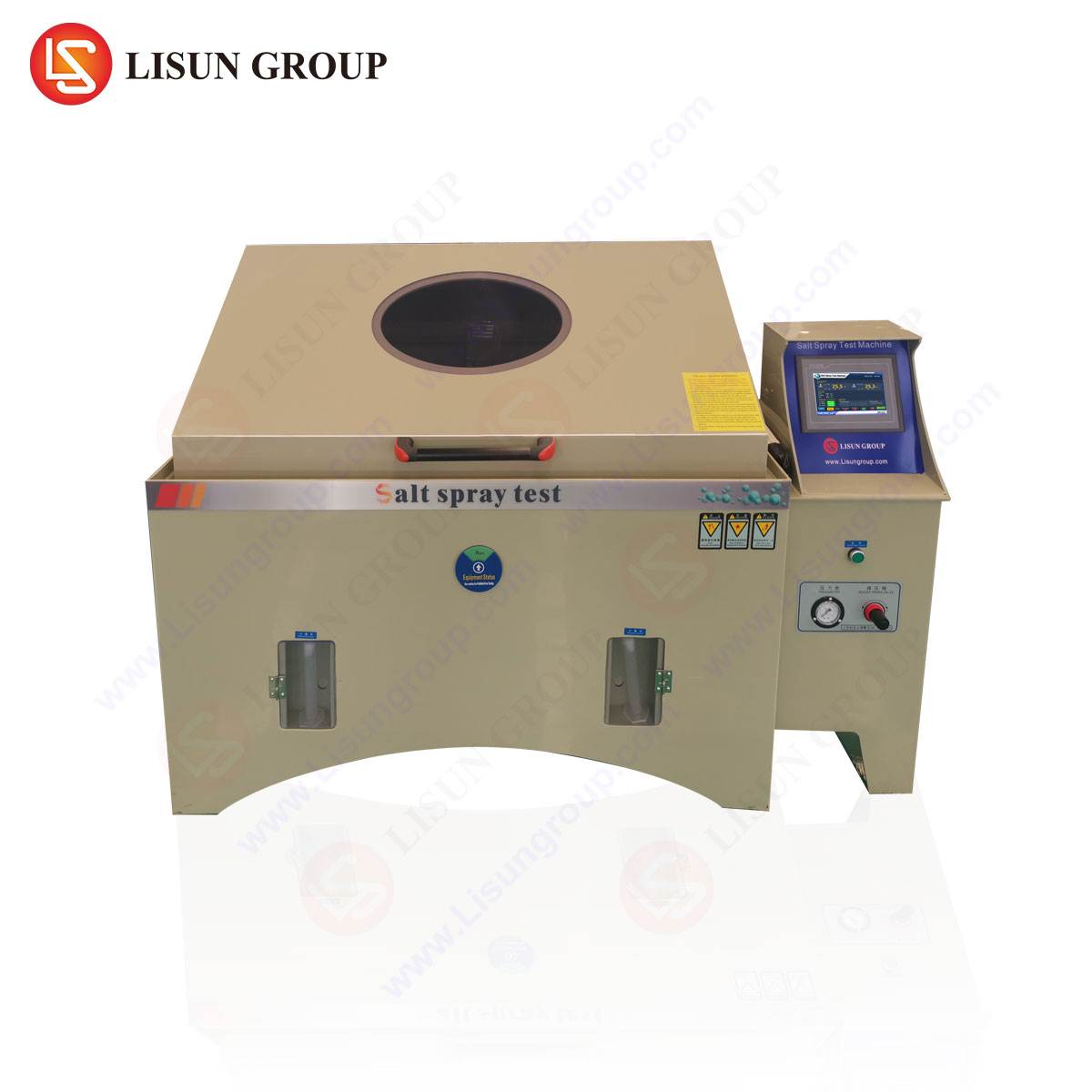
The LISUN YWX/Q-010X is a state-of-the-art testing instrument designed to execute a wide array of standardized and user-defined cyclic corrosion tests. Its construction and control systems are engineered for precision, reliability, and operational longevity.
Chamber Construction: The interior is fabricated from reinforced, corrosion-resistant polymer materials, ensuring inertness to the test environment and long-term structural stability. Exterior panels consist of cold-rolled steel with a powder-coated finish for durability.
Climate Control System: The chamber incorporates a forced-air circulation system coupled with high-capacity heating elements and a refrigeration unit to achieve a broad temperature range, typically from ambient +10°C to +60°C. Control tolerance is maintained within ±1.0°C.
Humidity Control: Relative humidity (RH) is precisely regulated from 30% to 98% RH, with a tolerance of ±3% RH. This is achieved through a combination of steam humidification and a dehumidification system linked to the refrigeration circuit.
Salt Spray System: The apparatus includes a compressed-air-driven atomization system with a saturated tower (also known as a fog tower) for consistent and even distribution of the salt solution. The solution reservoir is temperature-controlled to prevent crystallization, and the air is pre-conditioned through a bubbler to ensure saturation and consistent droplet size.
Control and Programming: A programmable logic controller (PLC) with a color touch-screen human-machine interface (HMI) provides centralized command. The system allows for the creation of complex multi-step test profiles, with each step defining parameters for temperature, humidity, spray cycle, and duration. Data logging of all critical parameters is a standard feature.
Table 1: Key Technical Specifications of the YWX/Q-010X
| Parameter | Specification |
| :— | :— |
| Temperature Range | Ambient +10°C to +60°C |
| Temperature Tolerance | ±1.0°C |
| Humidity Range | 30% to 98% RH |
| Humidity Tolerance | ±3% RH |
| Test Chamber Volume | Standard 300L (other volumes available) |
| Salt Spray Settlement Rate | 1.0 ~ 2.0ml/80cm²/h (adjustable) |
| pH Range of Salt Solution | 6.5 ~ 7.2 (automatically maintained) |
| Power Supply | AC220V 50Hz or AC120V 60Hz |
Alignment with International Testing Standards and Protocols
Compliance with internationally recognized test standards is non-negotiable for ensuring the validity and acceptance of test results. The YWX/Q-010X is engineered to meet the stringent requirements of numerous global standards, which prescribe specific cyclic profiles to simulate different environmental conditions.
- Automotive Industry: The chamber is fully compliant with CCT-I, CCT-IV, and CCT-VI profiles as per SAE J2333, which are widely adopted for evaluating the cosmetic corrosion resistance of automotive body panels. It also supports GMW 14872 and various OEM-specific cycles from manufacturers like Ford, Chrysler, and General Motors.
- General Engineering & Coatings: The apparatus can execute tests per ISO 11997-1 & -2 (Paints and varnishes), ASTM D5894 (Cyclic UV/Prohesion), and ASTM G85 (Annex A5, which covers a dilute electrolyte cyclic fog/dry test).
- Aerospace and Defense: Profiles from standards such as AIRBUS AITM2-0033 and BOEING BSS 7047 can be programmed to validate the performance of aerospace components and materials.
This multi-standard capability ensures that a single YWX/Q-010X unit can serve the diverse testing needs of a multinational corporation or a third-party laboratory serving multiple industries, thereby consolidating testing infrastructure and simplifying protocol management.
Application in Electrical and Electronic Component Validation
The miniaturization and increased complexity of electrical and electronic systems have rendered them exceptionally vulnerable to corrosive failure. Even nanoscale corrosion on printed circuit boards (PCBs), connectors, or integrated circuit (IC) leads can lead to intermittent faults, increased resistivity, or catastrophic short circuits. The YWX/Q-010X is critically employed to assess the protective qualities of conformal coatings, the effectiveness of terminal platings (e.g., gold over nickel), and the inherent corrosion resistance of substrate materials like FR4. For instance, a telecommunications base station power supply unit may be subjected to a 60-cycle test per a modified ASTM standard. Post-test analysis would involve measuring insulation resistance, checking for dendritic growth between circuit traces, and inspecting for corrosion on silver-plated contacts or solder joints, failures of which could lead to signal degradation or complete system outage.
Assessing Durability in Automotive Electronics and Lighting Systems
Modern vehicles are essentially networks of electronic control units (ECUs), sensors, and lighting systems, many of which are located in underbody, wheel-well, or engine-bay environments exposed to road salts, slush, and high temperatures. The failure of an anti-lock braking system (ABS) sensor or an engine control module (ECM) due to corrosion is a critical safety concern. The YWX/Q-010X simulates the harsh under-hood and under-body environment, testing components like wire harness connectors, LED headlamp assemblies, and radar sensors. A typical validation might involve a 4-week test simulating winter driving conditions, after which connectors are tested for contact resistance and sealing gaskets are inspected for electrolyte ingress. For automotive lighting, the test evaluates not only the housing’s corrosion resistance but also the potential for salt fog to obscure the lens, thereby reducing light output and compromising safety.
Quality Assurance for Aerospace and Medical Device Components
In aerospace and medical device manufacturing, the margin for error is virtually zero. Aerospace components, from aluminum alloy structural members to titanium turbine blades, must withstand highly corrosive marine and industrial atmospheres. The YWX/Q-010X can run extended, highly aggressive cycles to validate anodizing processes, alodine coatings, and primer/paint systems on aviation components. In the medical sector, devices ranging from portable diagnostic equipment to surgical instruments are frequently exposed to disinfectants and bodily fluids, creating a chloride-rich environment. Testing a surgical stapler’s housing or the internal chassis of an infusion pump ensures that no corrosive byproducts can contaminate the sterile field and that the device’s mechanical function remains unimpaired after repeated cleaning cycles, a simulation for which cyclic corrosion testing is uniquely suited.
Comparative Analysis: Cyclic Versus Traditional Neutral Salt Spray (NSS)
The limitations of the traditional Neutral Salt Spray (NSS) test, as defined by standards like ASTM B117, are well-documented in scientific literature. While NSS provides a consistent and severe corrosive environment, its continuous, static nature often produces failure modes that do not correlate well with real-world performance. It is prone to over-testing certain types of coatings and under-testing others. In contrast, the cyclic methodology employed by the YWX/Q-010X introduces the critical element of dynamic environmental stress.
Table 2: Cyclic Corrosion Test (CCT) vs. Neutral Salt Spray (NSS)
| Parameter | Cyclic Corrosion Test (CCT) | Traditional Neutral Salt Spray (NSS) |
| :— | :— | :— |
| Test Environment | Dynamic, multi-phase (spray, humid, dry) | Static, continuous salt fog |
| Correlation to Field Data | High, due to simulation of wet/dry cycles | Low to Moderate, often poor for coated systems |
| Failure Modes Induced | Cosmetic blistering, filiform corrosion, substrate rust, coating delamination | Often uniform surface rust, less coating-specific |
| Test Duration | Shorter duration to achieve comparable degradation | Longer duration required |
| Application | Suited for modern coatings, assemblies, and electronics | Best for rapid quality comparison of similar materials |
Operational Advantages of the YWX/Q-010X Chamber Design
The YWX/Q-010X incorporates several design features that translate directly into operational benefits for the testing laboratory. Its automated control system eliminates manual intervention during phase transitions, enhancing reproducibility and freeing technician time. The large-capacity, temperature-controlled salt reservoir minimizes the need for frequent solution preparation and reduces the risk of nozzle clogging. The chamber’s robust construction and use of corrosion-resistant materials minimize maintenance downtime and extend the operational lifespan of the equipment, providing a lower total cost of ownership. Furthermore, its compliance with a wide spectrum of international standards future-proofs the investment, allowing laboratories to adapt to evolving industry requirements without capital expenditure on new, specialized equipment.
Integrating Corrosion Test Data into Product Lifecycle Management
The data generated by the YWX/Q-010X is not merely a pass/fail metric for quality control. When integrated into a broader Product Lifecycle Management (PLM) or Enterprise Resource Planning (ERP) system, this data becomes a valuable asset. Quantitative results, such as time-to-first-rust, creepage from a scribe, or percentage of surface area affected, can be correlated with field failure data to refine predictive maintenance schedules and warranty period calculations. For R&D, the test results provide rapid feedback on new material formulations or coating processes, enabling iterative improvement and reducing time-to-market for more durable products. This closed-loop feedback system, powered by reliable accelerated testing data, is fundamental to a proactive, data-driven reliability engineering strategy.
Frequently Asked Questions (FAQ)
Q1: What is the primary distinction between the YWX/Q-010 and the YWX/Q-010X model?
The YWX/Q-010 represents a standard salt spray (fog) corrosion test chamber, designed primarily for traditional continuous tests like ASTM B117. The YWX/Q-010X is an advanced cyclic corrosion chamber. Its key differentiator is the integrated capability to program and automatically execute complex multi-phase test cycles that include salt spray, high humidity, low humidity, and drying stages, in addition to standard salt spray functionality. The “X” variant is equipped with more sophisticated humidity control and programming logic to meet the demands of modern CCT standards.
Q2: How do we determine the appropriate test cycle duration and standards to apply for a new electronic component?
The selection is primarily driven by the component’s intended end-use application and the relevant industry specifications. For automotive electronics, one would typically reference the OEM’s specific specification or a general standard like SAE J2333. For consumer electronics, internal company standards or references to IEC 60068-2-52 might be used. The expected service life and the geographic environment of deployment are also critical factors. It is advisable to begin with the most relevant industry standard and then, through correlation studies with field returns, refine the test duration to establish a validated acceleration factor for your specific product.
Q3: Can the chamber simulate specific environmental conditions, such as a coastal marine atmosphere or an industrial setting?
Yes, this is a core capability of cyclic testing. Different corrosive environments are simulated by modifying the test parameters. A coastal environment might be simulated using a salt solution based on synthetic seawater and incorporating UV exposure cycles to simulate sunlight. An industrial environment could involve the addition of acidic pollutants, such as sulfur dioxide (SO2), to the salt spray cycle, as outlined in standards like ASTM G85. The programmability of the YWX/Q-010X allows for the customization of the corrosive electrolyte, temperature, humidity, and cycle timing to model these specific conditions.
Q4: What are the critical maintenance procedures to ensure the long-term accuracy and repeatability of the tests?
Regular maintenance is paramount. Key procedures include: weekly cleaning of the chamber interior and atomization nozzles to prevent salt buildup; monthly calibration of temperature and humidity sensors against NIST-traceable references; periodic checking and cleaning of the air saturator (bubbler) to ensure consistent droplet size and settlement rate; and regular replacement of the saturated brine solution to prevent contamination or biological growth. A comprehensive preventive maintenance schedule, as outlined in the equipment manual, should be strictly adhered to.
Q5: For a product with multiple coating layers, how does cyclic testing provide more insightful failure analysis compared to a simple NSS test?
A cyclic test’s wet-dry phases induce mechanical stresses at the interfaces between coating layers due to differential expansion and contraction. This often leads to failure modes like inter-coat adhesion loss (delamination) or filiform corrosion that initiates at a micro-defect and propagates underneath the coating—failures rarely seen in a continuous NSS test. By replicating these complex, real-world failure mechanisms, the YWX/Q-010X provides a more accurate assessment of the entire coating system’s integrity and pinpoints specific weaknesses, such as an inadequate primer or an incompatible topcoat, guiding more effective corrective actions.