




ASTM B117 Salt Spray Test Chamber Guide: Principles, Applications, and Technological Implementation
Introduction to Accelerated Corrosion Testing
The evaluation of material and component resistance to corrosive environments represents a critical phase in product development and quality assurance across numerous industrial sectors. Among standardized methodologies, ASTM B117, “Standard Practice for Operating Salt Spray (Fog) Apparatus,” stands as a foundational and globally recognized test. This procedure simulates and accelerates the corrosive effects of marine and coastal atmospheres within a controlled laboratory setting. The primary objective is not to precisely replicate field performance but to provide a reproducible, comparative assessment of the protective qualities of metallic coatings, platings, paints, and surface treatments. The consistent generation of a corrosive salt fog environment is achieved through specialized apparatus: the salt spray test chamber. This guide details the operational principles, standardized parameters, and industrial applications of these chambers, with a specific examination of the technological execution as embodied by the LISUN YWX/Q-010X model.
Fundamental Principles of the Salt Fog Corrosion Environment
The efficacy of the ASTM B117 test hinges on the creation of a homogeneous, settling fog of sodium chloride solution within an enclosed chamber. The underlying principle involves the electrochemical nature of corrosion, which is drastically accelerated in the presence of a continuous electrolyte film provided by the salt-laden fog. The dissolved sodium chloride (NaCl) facilitates ionic conductivity, promoting anodic metal dissolution and cathodic reduction reactions, typically of oxygen. The test does not introduce cyclic stresses such as humidity variation or drying; it maintains a constant state of wetness, which is particularly aggressive for many coating systems. The chamber’s design ensures the fog is produced by atomizing a prepared salt solution (5% NaCl by mass, with specific purity and pH requirements) using compressed, conditioned air. This fog is then dispersed evenly throughout the test zone, where it settles on specimens positioned at designated angles. The temperature is maintained at a constant 35°C ± 2°C (95°F ± 3°F), as thermal energy further accelerates chemical reaction kinetics. The resulting corrosion products—primarily ferrous oxides (rust) for steel, or white corrosion products for zinc and aluminum—are evaluated against acceptance criteria after a predetermined exposure period, which can range from 24 to over 1000 hours depending on the specification.
Critical Design and Operational Parameters of a Test Chamber
A compliant salt spray chamber must adhere to stringent design criteria to satisfy ASTM B117’s reproducibility mandate. Key parameters encompass chamber construction, fog generation, temperature uniformity, and collection rate verification.
Construction Materials: Interior surfaces and fixtures must be constructed from non-reactive materials impervious to salt fog corrosion. This typically includes polymers like polypropylene, PVC, or glass-reinforced plastics. Metallic components within the test space are prohibited, as their corrosion would contaminate the fog and compromise test validity.
Fog Generation and Dispersion: The heart of the system is the atomizer, which uses compressed air, humidified and heated to prevent cooling the solution, to aspirate and nebulize the salt solution. The YWX/Q-010X chamber, for instance, employs a precision pneumatic nozzle system designed to produce a dense, uniform fog with droplet sizes optimized for suspension and settling. Baffles or towers are integrated to prevent direct impingement of large droplets onto specimens and to facilitate even distribution.
Temperature Control and Uniformity: A constant chamber temperature of 35°C is maintained via a closed-loop controlled heating system, often using immersion heaters or air heaters with proportional-integral-derivative (PID) logic. Uniformity across the test zone is critical; the standard permits a variation of only ±2°C. Advanced chambers feature multiple sensors and strategically placed heaters to minimize thermal gradients.
Salt Solution Preparation and pH Management: The solution must be prepared using reagent-grade sodium chloride and deionized water to achieve a concentration of 5% ± 1% by mass. Its pH is critical: when atomized at 35°C, the collected solution must measure between 6.5 and 7.2. The YWX/Q-010X incorporates automated pH monitoring and conditioning systems in some configurations to maintain this parameter, reducing manual intervention.
Fog Collection Rate Verification: ASTM B117 defines a mandatory collection rate of 1.0 to 2.0 mL of solution per hour for each 80 cm² of horizontal collecting area. Chambers include built-in graduated cylinders or funnels to perform this daily verification, ensuring the corrosive environment’s intensity remains consistent.
The LISUN YWX/Q-010X: A Technological Implementation
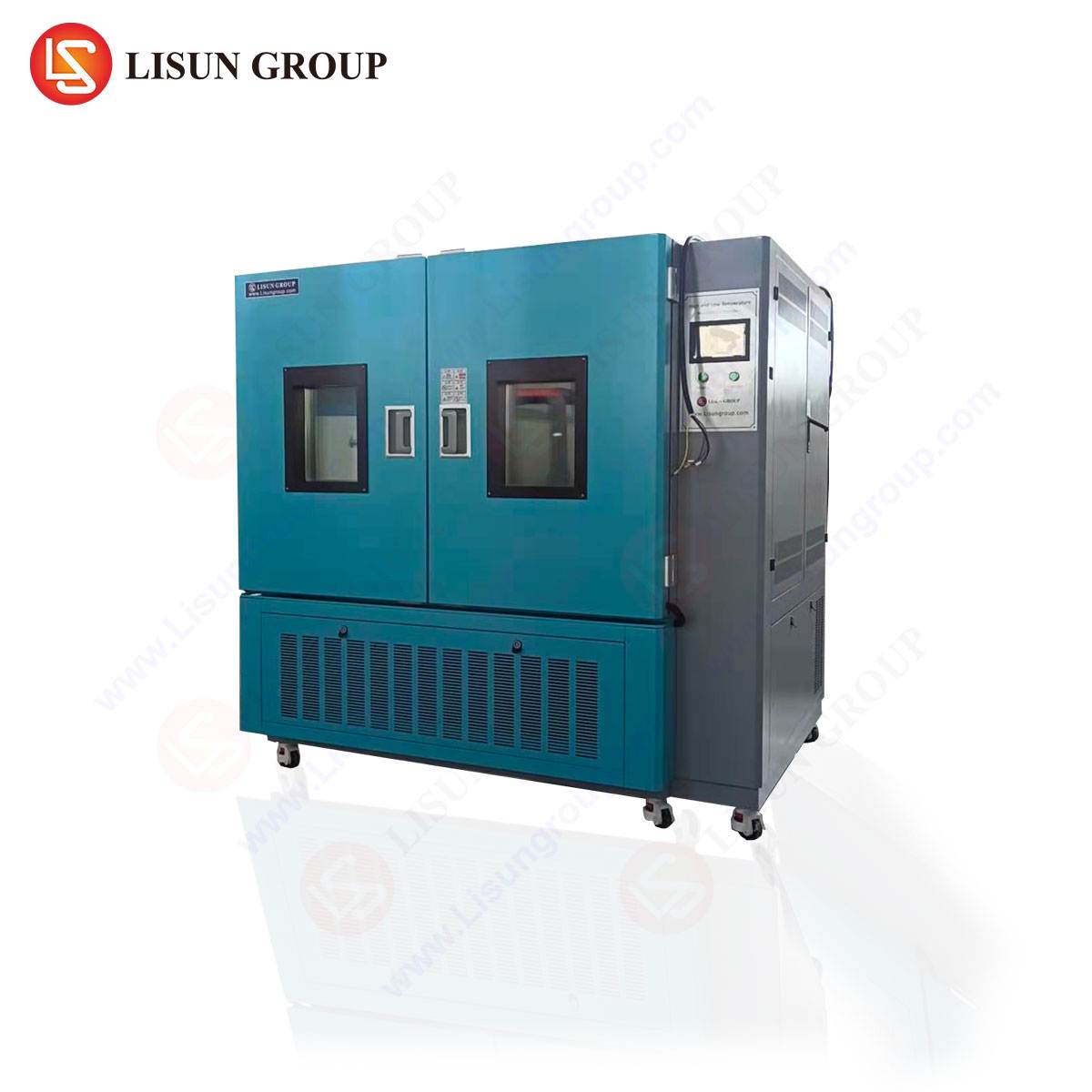
The LISUN YWX/Q-010X salt spray test chamber exemplifies the integration of these fundamental parameters with modern control and usability features. Designed for rigorous compliance with ASTM B117, as well as related standards like ISO 9227 and JIS Z 2371, it serves as a representative model for high-reliability testing.
Specifications and Core Architecture: The chamber features a fully welded PP (polypropylene) tank construction, ensuring structural integrity and long-term resistance to the corrosive environment. The test volume is standardized, with internal dimensions suitable for accommodating a range of specimen sizes. A transparent PVC cover allows for visual inspection without disturbing the test environment. The fog generation system utilizes a tower-type dispersion method with adjustable nozzles, promoting an even fog settlement.
Control and Monitoring Systems: Operational parameters are managed via a digital programmable controller with a touch-screen interface. This allows for the precise setting and logging of test duration, temperature, and spray cycles. Data logging capabilities are integral, providing an audit trail for quality documentation. The system includes alarms for low solution level, chamber over-temperature, and other fault conditions.
Competitive Advantages in Industrial Context: Beyond basic compliance, the YWX/Q-010X offers advantages pertinent to high-throughput laboratories. Its enhanced corrosion-resistant pneumatic system components extend maintenance intervals. The refined air saturation system ensures the compressed air is fully humidified and heated to the chamber temperature prior to atomization, a critical step for maintaining correct collection rate and pH. Furthermore, its modular design facilitates easier cleaning and maintenance, reducing downtime between tests—a significant operational cost factor.
Industry-Specific Applications and Use Cases
The universality of corrosion as a failure mode makes salt spray testing indispensable across a diverse industrial landscape.
Automotive Electronics and Components: Connectors, wiring harness terminals, sensor housings, and electronic control unit (ECU) casings are subjected to salt spray to validate the performance of zinc, nickel, or tin platings, as well as conformal coatings. Failure here can lead to intermittent signals, short circuits, or complete system failure, with severe safety implications in brake or steering systems.
Electrical and Electronic Equipment & Industrial Control Systems: Printed circuit board assemblies (PCBAs) with protective conformal coatings, busbar connections, relay housings, and switchgear components are tested. The test assesses the coating’s ability to prevent dendritic growth and corrosion under the coating, which can cause insulation resistance breakdown or increased contact resistance in critical control circuits.
Aerospace and Aviation Components: While often subject to more stringent tests (e.g., acidified salt fog per ASTM G85), standard B117 testing is used for non-critical interior metallic components, fasteners, and ground support equipment to ensure basic corrosion resistance in potentially saline environments.
Lighting Fixtures and Outdoor Telecommunications Equipment: Aluminum housings for LED streetlights, cellular antenna enclosures, and junction boxes are tested to evaluate the performance of anodized layers or powder coatings. Corrosion can lead to aesthetic degradation, loss of sealing integrity, and ultimately, water ingress causing electrical failure.
Medical Devices and Consumer Electronics: Metallic components within devices, from surgical instrument hinges to the internal chassis of smartphones or laptops, undergo testing. The goal is to ensure cosmetic integrity and functional reliability over the product’s lifespan, particularly for devices used in varied environmental conditions.
Cable and Wiring Systems: Connectors and the termination points of cables are vulnerable. Testing validates the plating on brass or copper contacts, ensuring stable electrical conductivity is maintained despite exposure to corrosive atmospheres.
Interpretation of Results and Correlation to Service Life
A critical and often misunderstood aspect of ASTM B117 is the interpretation of results. It is explicitly a comparative, qualitative test, not an absolute predictor of service life. The appearance of white rust on zinc-plated parts after 96 hours, for example, is a pass/fail metric defined by a separate product specification, not the B117 standard itself. Correlation to real-world performance is complex and depends on the specific failure mechanism. For some systems, a strong correlation exists; a part that fails rapidly in salt spray will likely perform poorly in a marine environment. For others, especially where cyclic wet/dry conditions or other stressors are dominant, salt spray results must be part of a broader test suite including cyclic corrosion tests (e.g., ASTM G85, SAE J2334). The value of the test lies in its harsh, reproducible nature, effectively screening out inferior materials or processes during quality control and competitive benchmarking.
Procedural Integrity and Common Sources of Test Variability
To ensure valid results, meticulous attention must be paid to procedural details. Specimen preparation is paramount: edges must be properly masked or protected if they are not representative of the service condition, and surfaces must be clean and free of contaminants. Placement within the chamber must avoid contact and ensure consistent fog exposure, typically at a 15° to 30° angle from vertical. Regular calibration and maintenance of the chamber are non-negotiable. Variability often stems from:
- Solution Contamination: Use of impure salts or water, or corrosion of internal fixtures.
- Improper pH Control: Drifting pH significantly alters corrosivity.
- Inconsistent Temperature: Hot or cold spots affect corrosion rates.
- Faulty Atomization: Leading to incorrect droplet size and collection rate.
- Chamber Overcrowding: Disrupting fog circulation and settlement patterns.
Modern chambers like the YWX/Q-010X mitigate these through automated controls and robust design, but operator diligence remains essential.
Future Directions and Complementary Test Methodologies
While ASTM B117 remains a pillar, industry trends are moving towards more sophisticated cyclic corrosion tests that incorporate humidity, drying, and sometimes UV exposure phases to better simulate real-world environmental cycling. However, the salt spray chamber remains the workhorse for baseline qualification and high-volume quality surveillance. Its evolution lies in enhanced connectivity for Laboratory Information Management System (LIMS) integration, more sophisticated environmental parameter logging, and reduced resource consumption (water, salt). The fundamental principle it embodies—the accelerated simulation of a corrosive chloride environment—will continue to be a cornerstone of material and coating evaluation for the foreseeable future.
Frequently Asked Questions (FAQ)
Q1: How often should the salt solution be replaced in the reservoir of a chamber like the YWX/Q-010X?
A: There is no fixed interval mandated by ASTM B117; it is based on consumption and contamination. The solution should be replaced whenever it becomes visibly contaminated or if the pH of the collected fog cannot be adjusted back into the 6.5-7.2 range. For continuous testing, proactive replacement every 1-2 weeks is a common practice to ensure consistency.
Q2: Can the ASTM B117 test be used to reliably predict the lifespan of an automotive connector in a coastal region?
A: Not directly in terms of absolute years. ASTM B117 provides an accelerated comparative assessment. If Connector A shows significant corrosion after 240 hours of testing while Connector B shows none, B can be reliably judged as having superior corrosion resistance. However, translating 240 test hours to a 5-year or 10-year field life requires correlation studies specific to the material, geometry, and local environment, often using more complex cyclic tests.
Q3: What is the significance of maintaining the pH of the collected fog, and why does it drift?
A: The pH directly influences the aggressiveness and mechanism of the corrosion. An acidic fog will generally be more corrosive to most metals. pH can drift due to absorption of atmospheric carbon dioxide (forming carbonic acid) or, more problematically, from contamination introduced by the test specimens themselves or from corrosion of non-compliant chamber fixtures. Automated pH conditioning systems help stabilize this critical parameter.
Q4: Our specifications call for testing per “ASTM B117.” Are results from a chamber also designed to ISO 9227 considered acceptable?
A: Generally, yes. The core parameters (concentration, temperature, collection rate) between ASTM B117 and ISO 9227 (Neutral Salt Spray test) are essentially identical. The primary differences lie in some preparatory procedures and reporting requirements. A chamber compliant with ISO 9227, such as the YWX/Q-010X which is built to multiple standards, will produce a compliant ASTM B117 environment. However, the governing product specification should always be consulted for any unique requirements.
Q5: Why is compressed air preparation (saturation) so critical in the salt spray test process?
A: If cool, dry compressed air is used directly for atomization, it will evaporate and cool the salt solution droplets, altering the concentration and temperature of the fog. This leads to an incorrect collection rate and potentially a non-uniform, less corrosive fog. The air saturation tower heats and humidifies the air to chamber temperature and near-100% relative humidity, ensuring the atomization process is isothermal and the resulting fog meets the standard’s defined characteristics.