





The Critical Imperative of Electrostatic Discharge Immunity in Modern Automotive Electronics
The automotive industry’s relentless progression towards electrification, connectivity, and autonomous functionality has precipitated a profound transformation in vehicle architecture. Contemporary automobiles are no longer merely mechanical systems but complex networks of electronic control units (ECUs), sensors, and high-speed data buses. This proliferation of sensitive semiconductor devices within an electrically harsh and physically dynamic environment renders electrostatic discharge (ESD) immunity not merely a design consideration but a foundational pillar of functional safety, reliability, and regulatory compliance. The consequences of ESD-induced failures range from transient glitches and latent damage to catastrophic system lockups, directly impacting vehicle performance and occupant safety.
Fundamental ESD Threat Mechanisms in Vehicle Ecosystems
Electrostatic discharge events within an automotive context are bifurcated into two primary categories: system-level and component-level. System-level ESD pertains to transient surges introduced into the vehicle’s electrical network via external coupling or direct human interaction with accessible components, such as plugs, sockets, switches, and infotainment interfaces. Component-level ESD addresses discharges that occur during manufacturing, handling, or assembly before integration. This article focuses predominantly on the former, as it represents an ongoing, operational threat throughout the vehicle’s lifecycle.
The threat mechanism is multifaceted. A direct ESD strike to an exposed conductive part, such as a charging port pin or a USB socket, can inject high-current transients directly into printed circuit boards (PCBs). More insidiously, indirect ESD, where a discharge occurs to a nearby surface, can generate intense electromagnetic fields that couple parasitically into wiring harnesses and PCB traces. These transients induce overvoltage conditions, latch-up in CMOS devices, gate oxide breakdown, and logic state corruption. In systems controlling powertrain, braking, or steering, such disruptions are intolerable.
Testing Standards and Methodologies for Automotive Ports and Connectors
Robust validation against ESD threats is mandated by international automotive standards, primarily the ISO 10605 and the more recent, stringent requirements derived from IEC 61000-4-2 as adapted by OEMs. These standards define test levels, which specify the discharge voltage (e.g., ±4kV for contact discharge, ±8kV, ±15kV for air discharge), waveform characteristics (the rise time and decay of the current pulse), and application procedures. Testing is performed under both powered operational and unpowered states to assess immunity and potential latent damage.
The testing methodology for plugs and sockets—critical entry points for ESD—requires precise application of discharges to each pin in multiple configurations: pin-to-ground, pin-to-pin, and with various series resistances to simulate different discharge scenarios. This necessitates not only a high-precision ESD simulator but also a sophisticated means of applying the discharge to the miniature, often densely packed pins of modern automotive connectors (e.g., USB-C, Ethernet, or proprietary charging sockets) without causing mechanical shorting or inconsistent coupling.
Introducing the LISUN ESD Test Fixture for Plugs and Sockets
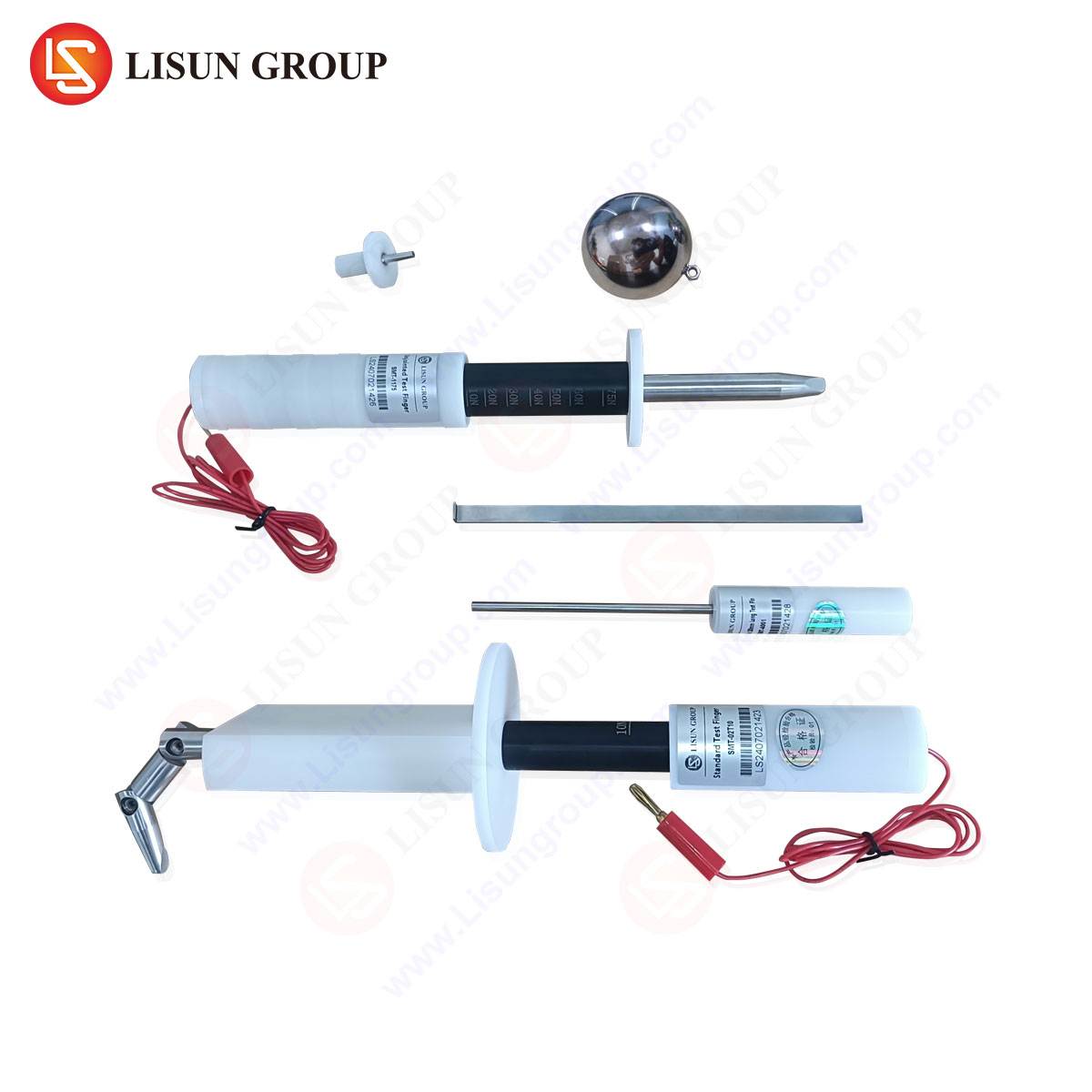
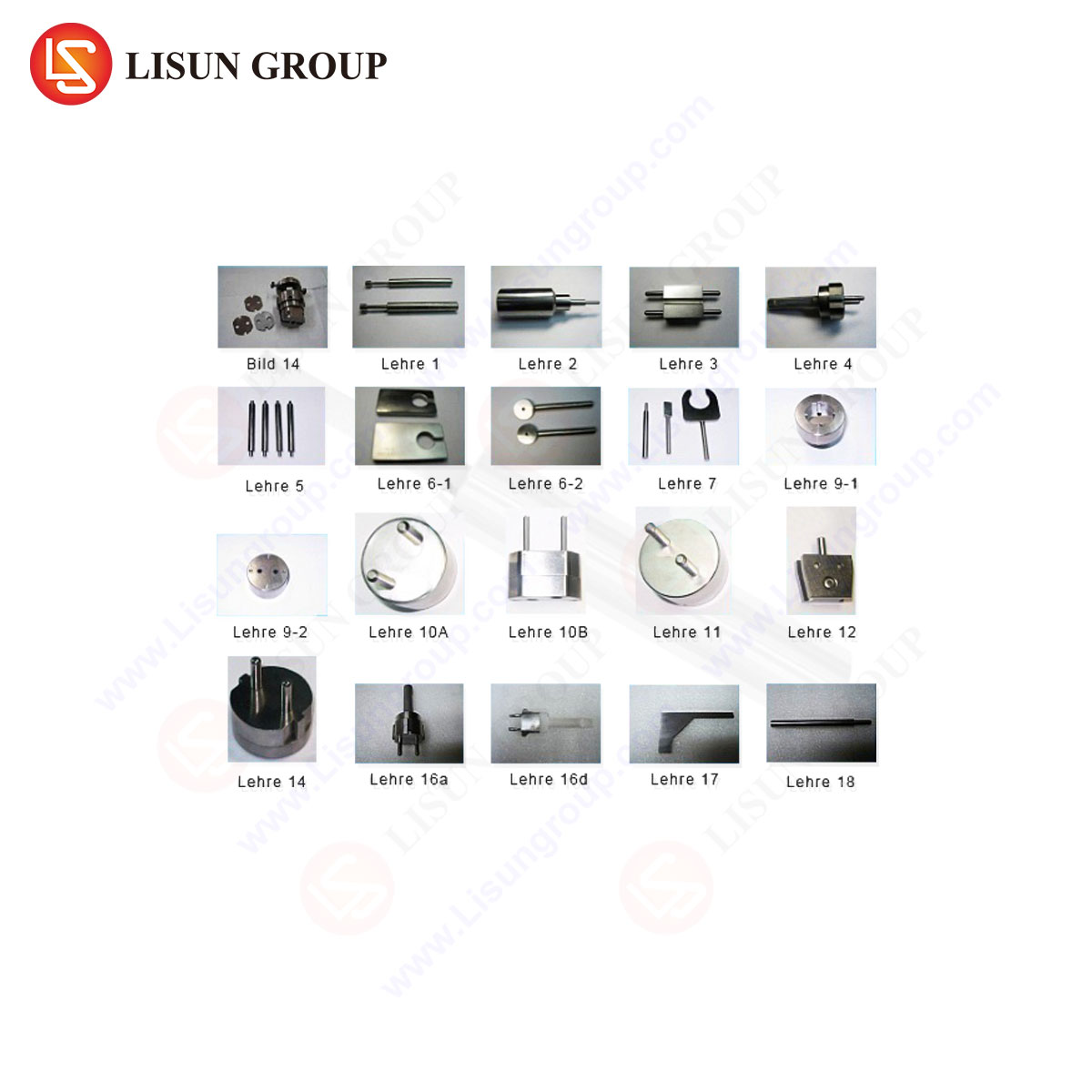
To address the exacting challenge of applying repeatable and standardized ESD pulses to the pins of automotive connectors, specialized test fixtures are indispensable. The LISUN Gauges for Plugs and Sockets represent a category of purpose-engineered accessories designed to interface an ESD simulator’s discharge tip directly and reliably with individual connector terminals.
These fixtures are not passive adapters; they are calibrated tools that ensure the discharge path’s impedance is controlled and consistent with the test standard’s requirements. A typical LISUN gauge is constructed from a high-grade insulating substrate, such as polycarbonate or PEEK, which houses a precisely machined metallic discharge tip. This tip is engineered to mate securely with a specific socket type or to present a defined contact surface for plug pins. The gauge is mounted to the ESD simulator’s gun via a standardized interface, ensuring the discharge network’s electrical parameters remain within specification.
Technical Specifications and Operational Principles
The efficacy of a LISUN gauge is defined by several critical specifications. First is its mechanical compatibility: it must be designed for a specific connector series (e.g., USB-A, USB-C, RJ45, or a proprietary automotive charging inlet). The gauge provides a foolproof physical guide, aligning the ESD gun’s discharge tip coaxially with the target pin. This eliminates operator variability and prevents accidental discharge to adjacent pins or the connector shell.
Second is its electrical integrity. The internal conduction path from the simulator’s storage capacitor to the point of contact must have minimal parasitic inductance and a well-defined resistance. This ensures the injected current waveform’s rise time (typically 0.7–1ns) and peak amplitude conform to the mandated waveform of ISO 10605 or IEC 61000-4-2. Any deviation can render test results non-comparable and non-compliant.
Third is its durability and safety. Given the high-voltage, high-current nature of ESD testing, the insulating body must have a high dielectric strength and tracking resistance to prevent surface arcing. The metallic contact elements must resist pitting and corrosion from repeated arcs to maintain consistent contact resistance over thousands of test cycles.
Industry Application in Component and Vehicle Validation
Within automotive qualification laboratories, LISUN gauges are deployed across multiple validation phases. During the component qualification phase, a Tier-1 supplier of an infotainment module will use the appropriate USB socket gauge to subject every data and power pin of the connector to a comprehensive ESD test matrix. This validates the on-board TVS (Transient Voltage Suppression) diodes and the PCB layout’s robustness.
In vehicle-level integration testing, engineers assess the entire system’s immunity. For instance, testing a Combined Charging System (CCS) Type 2 inlet requires a specific gauge set to apply discharges to the DC+/- pins, communication pins (CP, PP), and protective earth. This evaluates not just the charging control module but the entire propagation path, including wiring harnesses and the vehicle’s grounding strategy. The use of a dedicated gauge ensures the discharge is applied correctly to the small communication pins without shorting to the large power terminals—a task nearly impossible with a free-hand discharge tip.
Competitive Advantages in Precision and Compliance
The primary advantage offered by dedicated fixtures like the LISUN gauges lies in test repeatability and reproducibility. Manual application of an ESD tip to a sub-millimeter pin is highly operator-dependent, leading to result scatter that obscures true design margin. The gauge enforces a consistent angle, pressure, and alignment, a critical factor for air discharge tests where distance is a key variable.
Furthermore, they enhance testing efficiency and safety. Technicians can perform exhaustive test sequences—often involving hundreds of discharges per device under test (DUT)—more rapidly and with reduced risk of accidental damage to the DUT connector or injury from slipping discharge probes. This accelerates the validation cycle and reduces costs.
Finally, their use strengthens compliance documentation. Providing evidence to OEMs or certification bodies that testing was performed using calibrated, connector-specific fixtures adds credibility to the test report, demonstrating a rigorous and standardized approach to immunity validation.
Integration with a Holistic ESD Protection Strategy
It is paramount to recognize that ESD testing fixtures are a measurement and application tool, not a protection solution. Their role is to accurately stress the device to validate the underlying protection strategy. This strategy is a multi-layered approach involving:
- Board-Level TVS Diodes: Selected for low clamping voltage and fast response time, placed immediately adjacent to connector pins.
- Careful PCB Layout: Minimizing loop areas for high-frequency return currents, using ground planes, and implementing robust filtering.
- Connector and Housing Design: Utilizing shielded connectors and ensuring metallic shells are bonded to the vehicle chassis to provide a low-impedance shunt path for ESD currents away from sensitive circuits.
The LISUN gauge is the instrument that proves the efficacy of this entire chain. By delivering a consistent, standards-compliant threat, it allows engineers to quantify design margins, identify weaknesses, and ultimately deliver automotive-grade electronics capable of surviving the electrostatic environment of real-world use.
Conclusion
As automotive interfaces become more numerous and electrically complex, the demand for precise, reliable, and standardized ESD immunity testing will only intensify. The move towards higher-voltage architectures in electric vehicles, with 400V and 800V systems, introduces new coupling and potential difference challenges. Specialized test accessories, such as LISUN Gauges for Plugs and Sockets, transition from being convenient tools to essential components of a credible automotive validation laboratory. They bridge the gap between the theoretical waveform defined in a standard and the practical, repeatable application of that waveform to the miniature, complex interfaces that define the modern automobile. Their use underpins the rigorous engineering required to achieve the “zero-defect” reliability expectations of the automotive industry, ensuring that transient electrical disturbances do not compromise the safety and functionality of the vehicle’s electronic nervous system.
FAQ Section
Q1: Can a single LISUN gauge be used for multiple connector types, such as both USB-A and USB-C?
No. Due to the critical importance of precise mechanical alignment and pin-specific targeting, each gauge is designed for a specific connector family and often for a specific gender (socket or plug). Using an incorrect gauge can result in improper discharge application, damage to the connector, and invalid, non-compliant test results.
Q2: How does using a dedicated gauge improve test results compared to a handheld tip?
The gauge eliminates three major sources of error: Alignment Error (ensuring discharge hits the exact center of the target pin), Angle Error (maintaining a perpendicular discharge path as required by standards), and Distance Error (critical for air discharge, where the gap must be precisely increased until discharge occurs). This dramatically improves repeatability, reducing scatter in data and providing a true assessment of the DUT’s immunity threshold.
Q3: Are these gauges only used for compliance testing to ISO 10605?
While essential for formal compliance testing, they are equally valuable in engineering development and failure analysis. During design, engineers use them to perform margin testing, pushing beyond standard levels to determine the design’s actual breakdown point. In failure analysis, they allow for the precise re-creation of ESD events to diagnose weak points in the protection scheme.
Q4: What maintenance or calibration is required for an ESD test gauge?
Regular visual inspection for arc damage, pitting, or contamination on the contact tip is necessary. The insulating body should be checked for carbon tracking or cracks. While the gauge itself is a passive accessory, its performance is predicated on being used with a calibrated ESD simulator. The simulator’s waveform and voltage output should be verified periodically per ISO 17025 or internal quality procedures. A damaged or worn contact tip should be replaced to maintain test integrity.
Q5: For a proprietary automotive connector, can custom gauges be sourced?
Yes. Many manufacturers, including LISUN, offer custom gauge design and manufacturing services. This requires providing the connector manufacturer’s detailed drawings or physical samples. A custom gauge is often a necessary investment for Tier-1 suppliers developing modules with OEM-specific connectors to conduct valid, repeatable ESD immunity testing.