

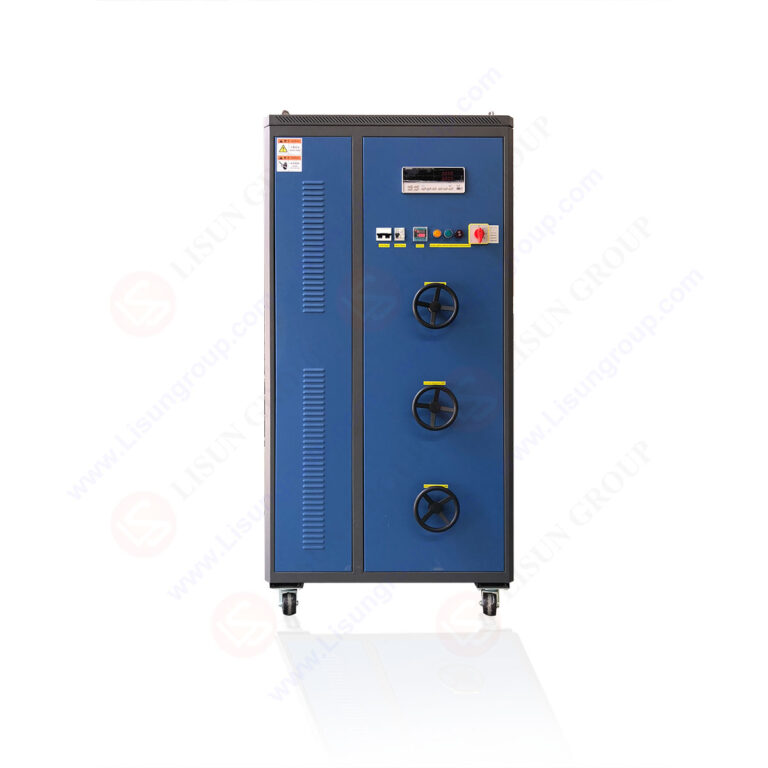



A Comprehensive Framework for Evaluating Flammability in Automotive Interior Materials
The modern automotive interior is a complex assembly of polymeric compounds, composite textiles, and electronic sub-assemblies. This convergence of materials, while enabling advanced comfort, connectivity, and safety features, introduces a significant and non-negotiable challenge: the management of fire risk. The confined volume of a passenger cabin, combined with the presence of potential ignition sources from electrical systems and the abundance of combustible materials, necessitates a rigorous, multi-faceted testing regimen. Flammability testing, therefore, transcends simple compliance; it is a fundamental pillar of vehicle safety engineering, directly impacting occupant survival probabilities and post-collision outcomes. This article delineates the critical methodologies, standards, and instrumental technologies employed to ensure automotive interior materials meet the stringent fire safety requirements demanded by global regulatory bodies and OEM specifications.
The Regulatory Landscape and Standardized Test Methodologies
Global automotive markets are governed by a mosaic of flammability standards, though a core set of principles remains consistent. In the United States, the Federal Motor Vehicle Safety Standard (FMVSS) 302, “Flammability of Interior Materials,” serves as the foundational benchmark. This horizontal burn test evaluates the linear burn rate of materials when exposed to a small flame. While FMVSS 302 is a critical baseline, it is often considered a minimum threshold. Original Equipment Manufacturers (OEMs) typically enforce far more stringent internal specifications that incorporate additional, more severe tests to simulate real-world failure scenarios.
The International Organization for Standardization (ISO) and Society of Automotive Engineers (SAE) provide a suite of complementary standards. For instance, ISO 3795 aligns closely with FMVSS 302, while SAE J369 prescribes methodologies for evaluating the flammability of polymeric materials in interior compartments. Beyond these, specific tests target unique components. The glowing wire test (e.g., IEC 60695-2-10), for instance, assesses a material’s resistance to ignition from overheated electrical elements, a common failure mode in Automotive Electronics such as seat heater elements or wire harness connectors. Similarly, tests measuring heat release rate (HRR) and smoke density, such as those outlined in ISO 5660-1 (cone calorimeter), provide data critical for modeling fire growth and toxic fume generation within a cabin.
Simulating Fault Conditions: The Role of Needle-Flame Testing
A particularly insidious fire risk originates from small, persistent flames arising from electrical fault conditions. A short circuit in a wiring loom, a failing capacitor in an Industrial Control System module, or an overloaded connection in a Lighting Fixture can generate arcs or localized overheating sufficient to ignite adjacent materials. These faults may not instantly blow a fuse and can sustain a small, needle-like flame for extended periods. Standard horizontal burn tests are inadequate for simulating this hazard, as they apply a larger Bunsen burner flame to the edge of a sample under controlled laboratory airflow.
Needle-flame testing was developed to address this precise scenario. It subjects a test specimen to a small, defined flame (typically 12mm ± 1mm in height) applied at a 45-degree angle, often to the most vulnerable or representative part of a finished component. The test evaluates whether the component ignites, how long it burns if it does ignite (flame duration), and whether it drips burning particles that could propagate fire to other materials—a key concern for overhead components like headliners or overhead consoles containing Telecommunications Equipment. This method is exceptionally relevant for assessing the safety of Electrical Components (e.g., switches, sockets, relay housings), connectors within Cable and Wiring Systems, and the plastic enclosures of infotainment units or control panels.
Instrumentation for Precision: The LISUN ZY-3 Needle Flame Test Apparatus
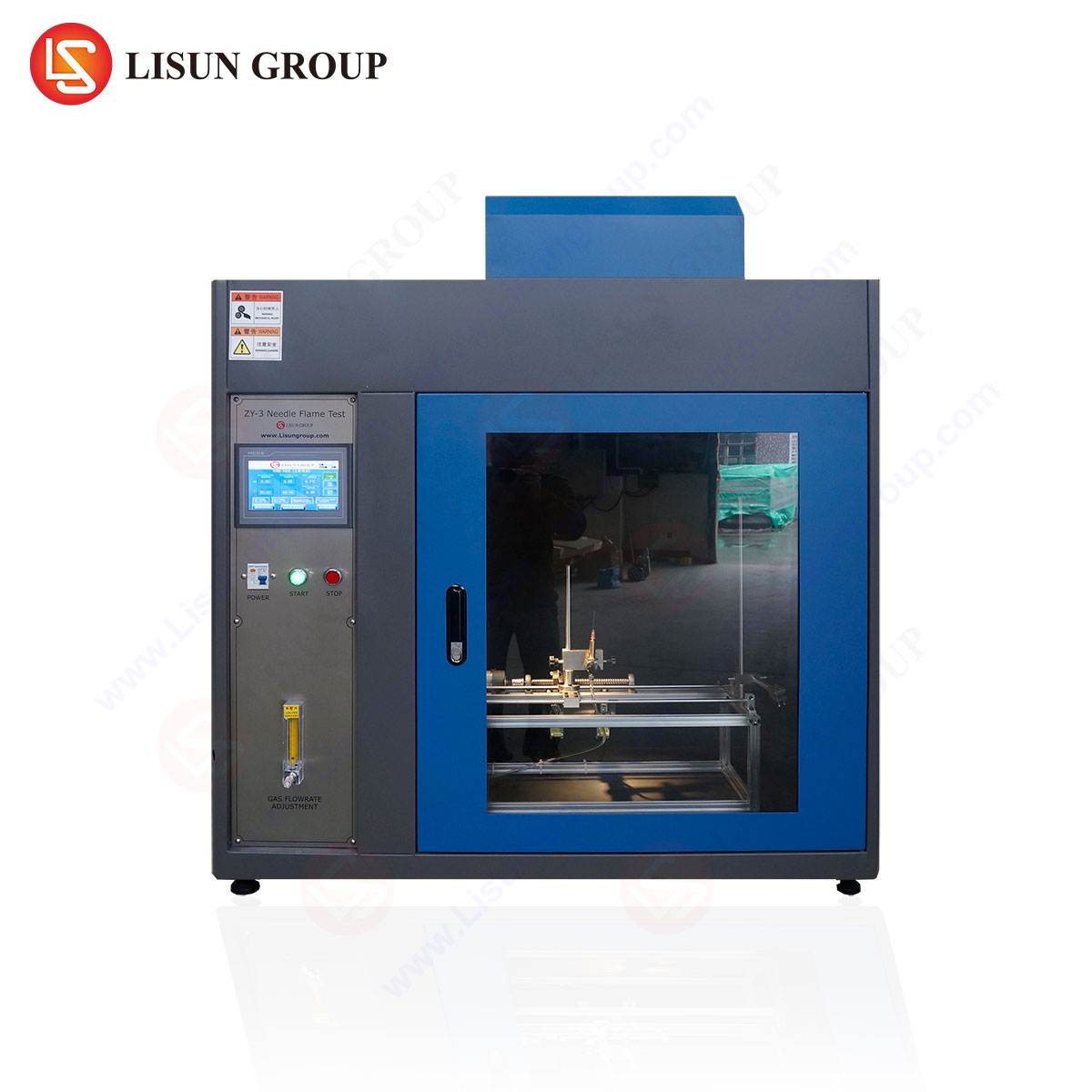
The accuracy and repeatability of needle-flame testing are contingent upon the precision of the apparatus employed. The LISUN ZY-3 Needle Flame Test Chamber represents a specialized instrument engineered to conduct tests in full compliance with IEC 60695-11-5, GB/T 5169.5, and related standards that are frequently invoked in automotive, appliance, and electronics industries.
The operating principle of the ZY-3 centers on the controlled generation and application of a standardized needle flame. A high-purity methane or propane gas supply feeds a specific burner nozzle, producing a flame with a strictly regulated temperature profile. The test specimen is mounted within a sealed, draft-free chamber lined with heat-resistant and often dark-colored material to facilitate observation. A sophisticated timing mechanism automatically controls the duration of flame application, typically configurable between 5 and 30 seconds. Following flame removal, the apparatus allows for the manual recording of subsequent flame persistence (t1) and glowing combustion (t2) times. Critical safety features include flame-out protection and gas leakage detection, ensuring operational security.
Key Technical Specifications of the LISUN ZY-3:
- Test Flame: Methane or propane needle flame, with a nominal height of 12mm adjustable via flow control.
- Flame Application Time: Digitally programmable from 0 to 999.9 seconds.
- Chamber Dimensions: Constructed to provide sufficient volume to prevent oxygen depletion, typically exceeding 0.5 cubic meters.
- Observation Window: High-temperature glass with optional measurement scale for assessing flame height and spread.
- Compliance: Designed to meet the stringent geometrical and procedural requirements of IEC 60695-11-5.
- Safety Systems: Integrated gas flow monitoring, automatic shut-off, and ventilation.
The competitive advantage of a dedicated system like the ZY-3 lies in its specialization. Unlike attempting to adapt a generic horizontal burn tester, the ZY-3 ensures the flame geometry, application angle, and environmental conditions (draft-free chamber) are perfectly aligned with the standard’s mandates. This eliminates a significant source of inter-laboratory variation and provides OEMs and suppliers with high-confidence, auditable data. Its utility extends beyond the automotive sector, being equally critical for validating materials in Household Appliances, Medical Devices enclosures, Aerospace and Aviation Components (for non-critical interior panels), and Office Equipment such as printers or power strips.
Integrating Needle-Flame Data into a Holistic Safety Assessment
Data derived from the LISUN ZY-3 or equivalent apparatus is not viewed in isolation. It forms one critical data point within a material’s or component’s overall fire safety dossier. A comprehensive assessment follows a hierarchical logic:
- Material Screening: Base polymers, composites, and textiles are first subjected to basic combustibility tests (e.g., Limiting Oxygen Index per ASTM D2863) and FMVSS 302.
- Component-Level Validation: Finished components—a steering column shroud, a fuse box housing, a wire harness grommet—undergo applied tests like the needle-flame or glowing wire. Here, design geometry (wall thickness, ribbing), assembly methods (adhesives, ultrasonic welding), and the presence of other materials (metal inserts, labels) all influence performance.
- System-Level Evaluation: In advanced validation phases, entire sub-assemblies may be tested under fault conditions. The needle-flame test on a single connector informs the safety of the larger Cable and Wiring System.
- Correlation with Real-World Scenarios: Test results are correlated with failure mode and effects analysis (FMEA) from electrical engineering teams. For example, a needle-flame test on the plastic housing of a Consumer Electronics charger port integrated into a vehicle’s dashboard directly assesses a identified potential fault mode.
The pass/fail criteria are typically defined by the OEM standard. Common requirements are that the component does not ignite, or if it does, that flaming ceases within a specified time (e.g., 30 seconds) after removal of the test flame, and that any burning drops or particles do not ignite a surgical cotton indicator placed below the specimen.
Advanced Considerations: Smoke Toxicity and Environmental Factors
While ignition resistance is paramount, modern safety philosophy also heavily weights the dangers posed by smoke and toxic gases. Many fire-related fatalities are attributable to inhalation of toxic combustion products, not direct flame contact. Materials that perform adequately in a needle-flame test may still produce copious, opaque smoke or lethal gases like hydrogen cyanide (from certain nylons) or hydrogen chloride (from PVC). Consequently, advanced material specifications increasingly couple flammability tests with smoke density (ASTM E662) and gas toxicity analyses (using FTIR or chemical titration methods). The selection of flame retardants is thus a careful balance: achieving the necessary ignition resistance without exacerbating smoke toxicity or compromising other material properties such as mechanical strength or long-term UV stability.
Furthermore, testing must account for environmental conditioning that simulates a vehicle’s lifespan. Materials may be subjected to temperature cycling, UV aging, humidity exposure, and chemical cleaning agents prior to flammability assessment. A plastic component may pass a needle-flame test in its virgin state but fail after being thermally cycled, as this can cause polymer degradation or stress-cracking that alters its fire behavior.
Conclusion: An Indispensable Element of Product Validation
The needle-flame test, as exemplified by the precise execution enabled by the LISUN ZY-3 apparatus, addresses a very specific but critically important ignition scenario rooted in electrical and electronic failures. Its role in the validation of Automotive Electronics, interior trim components adjacent to wiring, and a vast array of Electrical Components is indispensable. As automotive interiors evolve to incorporate more Consumer Electronics, larger format displays, and higher-power Lighting Fixtures, the density of potential ignition sources increases. In parallel, the industry’s drive towards sustainability introduces new bio-based and recycled materials with potentially novel fire behaviors. This landscape ensures that rigorous, standardized, and precisely instrumented flammability testing—of which needle-flame evaluation is a key component—will remain a non-negotiable cornerstone of automotive safety engineering, product integrity, and regulatory compliance for the foreseeable future.
FAQ: Needle-Flame Testing and the LISUN ZY-3 Apparatus
Q1: How does needle-flame testing differ from a standard UL94 V-0 test?
A1: While both assess flammability, they simulate different threats. UL94 V-0 is a vertical burn test primarily for material screening, using a larger Bunsen burner flame and focusing on after-flame time and dripping. The needle-flame test uses a smaller, needle-like flame applied at a specific angle to simulate a fault-induced flame from an electrical component. It is a component-level test focused on ignition propensity and the risk of fire propagation via droplets under fault conditions.
Q2: What industries, besides automotive, require needle-flame testing?
A2: The test is mandated or strongly recommended across any industry where electrical faults could ignite surrounding materials. This includes Household Appliances (control boards, connectors), Telecommunications Equipment (router/modem housings), Medical Devices (power supply enclosures), Aerospace (interior non-structural panels), and Office Equipment (power supplies, printer internal components). The IEC 60695-11-5 standard is broadly referenced across these sectors.
Q3: Why is a dedicated test chamber like the LISUN ZY-3 necessary? Can’t this test be done in a fume hood?
A3: A standard fume hood is unsuitable. The needle-flame test standard (IEC 60695-11-5) requires a draft-free environment to prevent the test flame from being disturbed, which would invalidate results. The ZY-3’s sealed chamber provides this controlled atmosphere. Furthermore, it incorporates calibrated gas flow controls for precise flame geometry, integrated timers, and safety features (gas leak detection) that a fume hood lacks.
Q4: What are the typical pass/fail criteria for a needle-flame test in an automotive context?
A4: Specific criteria are set by the OEM or tier-1 supplier’s internal standard. Commonly, a component passes if: a) it does not ignite, or b) if flames self-extinguish within a defined period (e.g., ≤30 seconds) after the test flame is removed, and c) any burning droplets or particles do not ignite a layer of dry surgical cotton placed 200mm ± 5mm below the test specimen.
Q5: How often should the LISUN ZY-3 apparatus be calibrated, and what does calibration involve?
A5: Calibration should be performed at least annually, or as dictated by quality accreditation (e.g., ISO/IEC 17025). Key calibration steps include: verifying the gas flow rate to ensure correct flame height (12mm ± 1mm), validating the temperature of the flame using a calibrated thermocouple at a specified reference point (e.g., 1000°C ± 50°C at a set distance), and checking the accuracy of the application and observation timers. Using a traceable calibration gas (e.g., 99.5% purity methane) is also essential.