

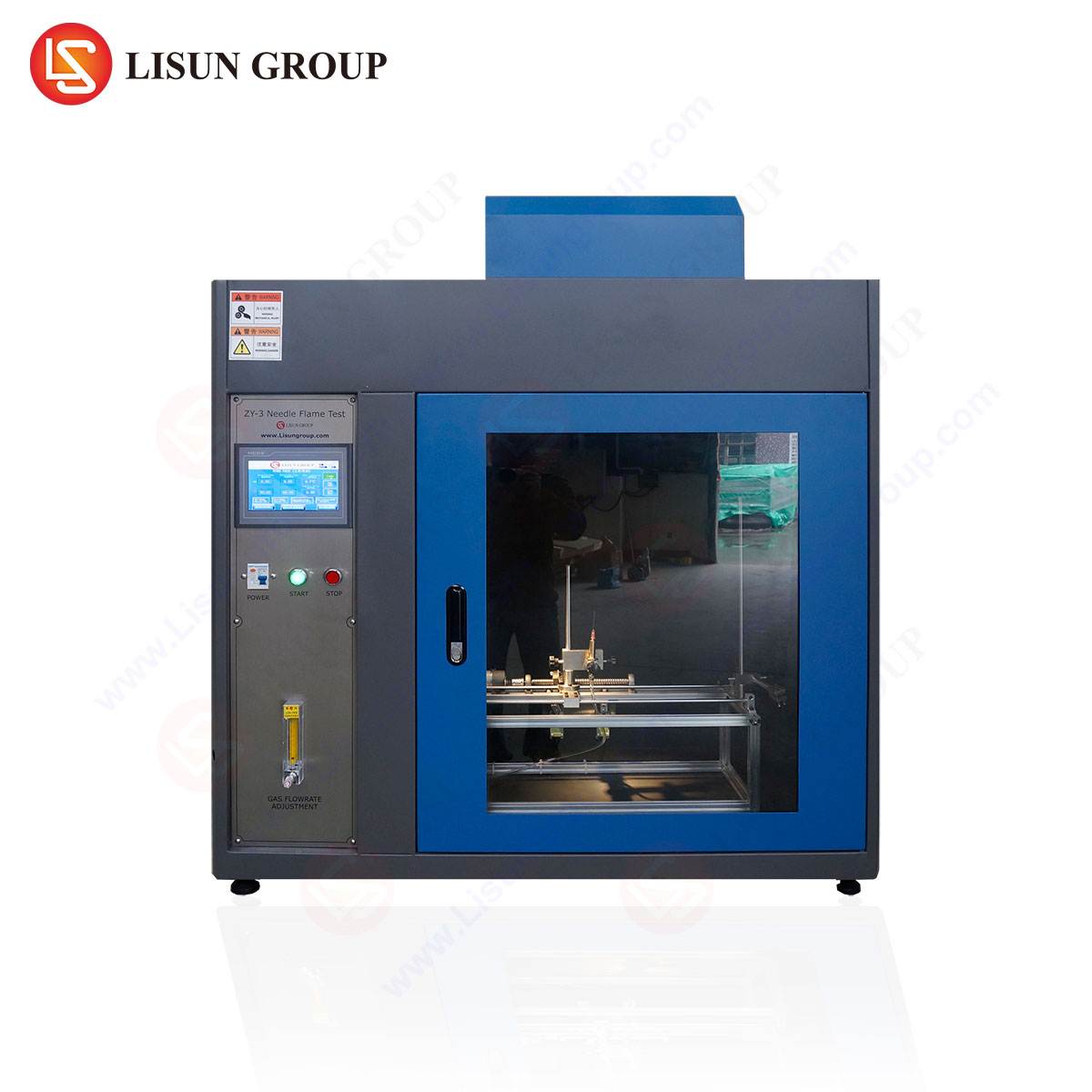



Advancements in Accelerated Corrosion Testing for Enhanced Product Reliability
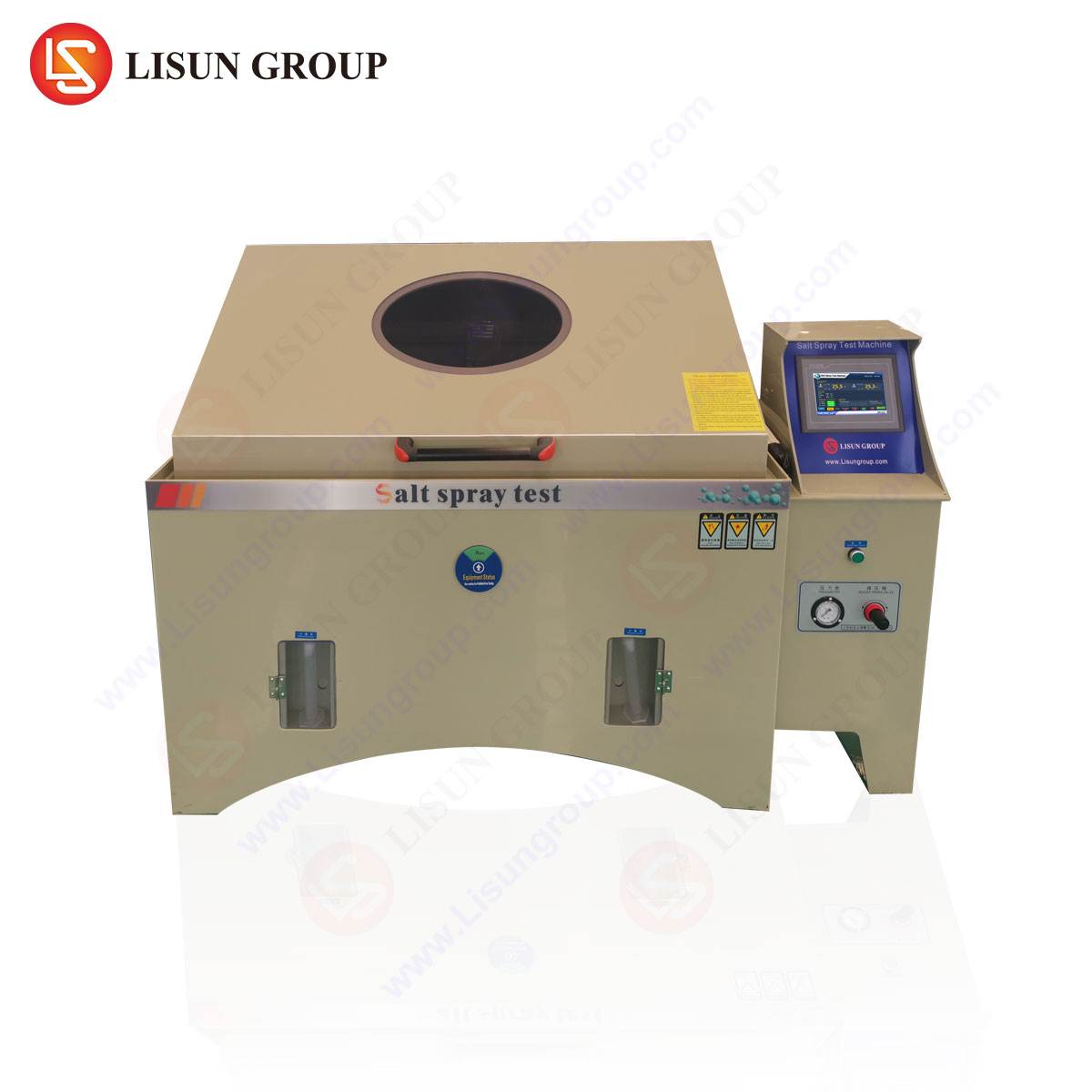
The relentless pursuit of product durability and longevity remains a cornerstone of modern manufacturing, particularly for components and finished goods destined for harsh or variable environmental conditions. Among the most pervasive threats to product integrity is corrosion, an electrochemical process that leads to the gradual degradation of materials, primarily metals. To preemptively evaluate and mitigate this threat, the salt spray (fog) test, an accelerated corrosion testing methodology, has become an indispensable tool within quality assurance and research and development laboratories globally. This article examines the critical role of standardized salt spray testing, with a specific focus on the technological implementation and benefits afforded by advanced testing apparatus such as the LISUN YWX/Q-010 salt spray test chamber.
The Electrochemical Foundations of Salt Spray Testing
At its core, salt spray testing is a form of accelerated corrosion designed to simulate and condense years of environmental exposure into a manageable timeframe. The fundamental principle leverages the creation of a controlled, highly aggressive corrosive environment. A prepared 5% sodium chloride (NaCl) solution is atomized into a fine mist within an enclosed chamber, maintaining a constant temperature, typically at 35°C ± 2°C as stipulated by standards like ASTM B117 and ISO 9227. This environment drastically accelerates the corrosion process through several interconnected mechanisms.
The primary driver is the establishment of oxygen concentration cells on the metal surface. Areas with varying access to oxygen, such as under a salt droplet versus a clean surface, develop anodic and cathodic sites. The anodic sites undergo oxidation, leading to metal loss, while the cathodic sites facilitate the reduction of oxygen. The presence of chloride ions (Cl⁻) is particularly aggressive; these ions are small, highly mobile, and penetrate passive oxide layers that would otherwise protect the metal, such as on aluminum or stainless steel. They form soluble chlorides with the metal cations, preventing the reformation of a stable protective layer and perpetuating the corrosion cycle. This process effectively simulates the effects of marine and coastal atmospheres, as well as de-icing salt-laden environments, providing a comparative measure of a material’s or coating’s relative corrosion resistance.
Technical Specifications of the LISUN YWX/Q-010 Test Chamber
The efficacy of any accelerated corrosion test is wholly dependent on the precision, stability, and reproducibility of the test chamber’s environment. The LISUN YWX/Q-010 salt spray test chamber is engineered to meet these demands through a suite of robust technical specifications and control systems. Constructed from reinforced polymer materials resistant to the corrosive brine solution, the chamber ensures long-term structural integrity. The temperature control system employs a direct-steam heating method or an electric heating system with high-precision PID (Proportional-Integral-Derivative) controllers, maintaining the chamber temperature within the stringent ±2°C tolerance required by international standards.
The atomization system is a critical component, responsible for generating a consistent and uniform salt fog. The YWX/Q-010 utilizes a nozzle-based atomizer fed from a saturated brine reservoir. The air supplied for atomization is preconditioned through a series of filters and a humidifying tower to ensure it is clean, oil-free, and saturated with moisture, preventing crystallization at the nozzle and ensuring the correct size and distribution of the salt fog droplets. The chamber’s capacity, often defined by internal dimensions (e.g., 600L, 900L), allows for the simultaneous testing of multiple samples, facilitating high-throughput comparative analysis. Integrated safety features, including low solution level alerts, over-temperature protection, and chamber overpressure safeguards, ensure operational security and test integrity over extended durations, which can range from 24 hours to several thousand hours.
Quantifying Corrosion Resistance Across Industrial Sectors
The application of salt spray testing data provides quantifiable metrics for material selection, process validation, and supplier qualification. The most common evaluation method involves visual inspection against standardized pictorial standards, such as those provided in ASTM D610 (for rust grade), ASTM D714 (for blistering), and ASTM D1654 (for evaluating corroscribed scribes). More quantitative analyses may include mass loss measurements, measurement of the extent of corrosion creep from a scribed line, or electrochemical impedance spectroscopy (EIS) on tested samples.
Table 1: Representative Salt Spray Test Performance Criteria by Industry Sector
| Industry Sector | Component Example | Typical Test Duration | Acceptance Criteria |
| :— | :— | :— | :— |
| Automotive Electronics | Engine Control Unit (ECU) housing | 96 – 240 hours | No white or red corrosion on aluminum housings; no functional degradation. |
| Electrical Components | Copper busbars, electrical switches | 48 – 144 hours | Minimal corrosion products; maintained electrical conductivity. |
| Aerospace & Aviation | Aluminum alloy structural brackets | 336 – 1000+ hours | No pitting corrosion; corrosion creep from scribe < 2mm. |
| Lighting Fixtures | Outdoor LED housing & heat sink | 144 – 480 hours | No corrosion-induced delamination of paint; no failure of sealants. |
| Medical Devices | Surgical instrument casings | 96 – 168 hours | No visible corrosion; no compromise to sterility or mechanical function. |
| Telecommunications | 5G outdoor antenna radome | 240 – 500 hours | Coating intact; no blistering; signal transmission properties unaffected. |
Strategic Implementation in Product Development Lifecycles
Integrating salt spray testing into the product development lifecycle moves beyond mere compliance, transforming it into a strategic asset. During the initial design and material selection phase, comparative testing of different substrate materials, plating finishes (e.g., zinc, nickel, chromium), and organic coatings (e.g., powder coating, e-coat) provides empirical data to guide engineers toward the most cost-effective and durable solution. For instance, an automotive supplier may test several grades of zinc-nickel alloy plating on brake components against a standard zinc plating to justify the investment in a more advanced, corrosion-resistant material.
In the process validation stage, the test chamber serves as a crucial tool for qualifying manufacturing parameters. Variations in coating thickness, pre-treatment chemistry, curing temperature, or application technique can have a profound impact on corrosion performance. A manufacturer of household appliance control panels can use the YWX/Q-010 to validate that a new powder coating line consistently produces parts that meet 500-hour salt spray requirements without blistering or under-film corrosion. Furthermore, for incoming quality control (IQC), periodic audits of sourced components—such as connectors from the telecommunications industry or cable glands from industrial control systems—ensure that supplier quality remains consistent, preventing field failures and associated warranty claims.
Operational Advantages of Modernized Test Chamber Design
The transition from basic salt spray cabinets to sophisticated systems like the LISUN YWX/Q-010 introduces significant operational advantages that enhance data reliability and laboratory efficiency. A primary benefit is the reduction of test variability. Fluctuations in chamber temperature, salt concentration, or fog settlement rate can lead to inconsistent results, rendering comparative data useless. The precision control systems in advanced chambers mitigate these variables, ensuring that the only factor changing between tests is the sample itself.
Operational efficiency is also markedly improved. Features such as automated brine replenishment systems prevent test abortion due to solution depletion, which is critical for long-duration tests common in the aerospace and automotive sectors. Digital data logging allows for the continuous recording of chamber parameters (temperature, pressure, runtime), creating an auditable trail for compliance with ISO/IEC 17025 accredited testing procedures. The ergonomic design, including large, corrosion-resistant viewing windows and internally accessible sample racks, simplifies daily monitoring and sample rotation without compromising the test environment. For laboratories testing a wide range of materials, the ability to reliably reproduce test conditions day after day, year after year, is a fundamental requirement that modern equipment is designed to fulfill.
Correlation of Accelerated Testing to Real-World Service Life
A persistent challenge in accelerated testing is establishing a credible correlation between test hours and actual years of service life. It is a critical misconception to assume a direct, linear relationship (e.g., 1000 test hours equals 10 years of service). The correlation is highly dependent on the specific real-world environment. A component on a coastal offshore oil rig will corrode far faster than one in an arid, inland climate.
However, the value of the salt spray test lies not in its absolute predictive power but in its function as a powerful comparative and qualitative tool. It is exceptionally effective at identifying weaknesses—poor coating adhesion, inadequate sealing, susceptible microstructures, or suboptimal pre-treatment. When a new design or process demonstrates a statistically significant improvement in salt spray performance over a known, field-validated benchmark, a high degree of confidence in its superior real-world performance can be established. For example, if a legacy electrical socket design consistently passes 72 hours of testing and has a field history of 15 years without corrosion failure in a moderate environment, a new design that passes 144 hours under identical test conditions can be reasonably expected to offer enhanced durability.
Ensuring Compliance with International Standards and Protocols
The global nature of supply chains necessitates adherence to internationally recognized test standards. Reproducibility of results between different laboratories, whether in-house at a manufacturer or at an independent third-party facility, is paramount. The LISUN YWX/Q-010 chamber is designed to facilitate compliance with a comprehensive suite of these standards, including but not limited to ASTM B117, ISO 9227, JIS Z 2371, and various OEM-specific specifications from automotive and aerospace giants.
Adherence to these standards governs every aspect of the test, from the purity of the sodium chloride and the pH of the collected solution (6.5 to 7.2) to the specific placement of samples within the chamber to ensure uniform fog settlement. The calibration and maintenance of the chamber itself are also dictated by these protocols. Regular checks of fog collection rate, typically mandated at 1.0 to 2.0 ml per hour per 80cm², are essential to confirm the test’s severity is within the specified range. Utilizing a chamber that is inherently designed to meet these rigorous requirements simplifies the accreditation process for laboratories and ensures that the resulting data carries weight in international markets.
Frequently Asked Questions (FAQ)
Q1: What is the critical difference between the neutral salt spray (NSS) test and the more severe CASS (Copper-Accelerated Acetic Acid Salt Spray) test?
The primary difference lies in the test solution and its aggressiveness. The NSS test uses a 5% NaCl solution with a neutral pH and is the most widely used general test. The CASS test, designed primarily for decorative copper-nickel-chromium plating, acidifies the salt solution with acetic acid and adds copper chloride to dramatically accelerate the corrosion process, specifically to quickly identify pores and defects in thin coatings. The CASS test is significantly more corrosive and provides results in a much shorter time frame than NSS for certain material systems.
Q2: How should test samples be prepared and positioned to ensure valid, reproducible results?
Sample preparation is critical. Samples must be clean and free of contaminants. Coatings should be fully cured. A scribe is often made through the coating to the substrate to evaluate undercutting or “creep.” Positioning is standardized; samples should be placed at an angle of 15° to 30° from vertical, typically on non-metallic supports, and arranged so that condensation from one sample does not drip onto another. The specific orientation and spacing are detailed in standards like ASTM B117.
Q3: Our company manufactures plastic-housed consumer electronics. Is salt spray testing still relevant?
Yes, absolutely. While the plastic housing itself may not corrode, the test is vital for evaluating the metallic components within, such as printed circuit boards (PCBs), connectors, shields, and fasteners. It assesses the effectiveness of the conformal coatings on PCBs and the corrosion resistance of the plated finishes on connectors. Furthermore, it can test the integrity of seals and gaskets designed to prevent salt-laden atmosphere from penetrating the housing and damaging internal circuitry.
Q4: What are the most common causes of invalid salt spray test data, and how can they be avoided?
Invalid data often stems from chamber-related issues: incorrect salt concentration or pH, unstable chamber temperature, clogged or malfunctioning atomization nozzles leading to inconsistent fog density, or contamination of the salt solution. These can be avoided through a rigorous preventative maintenance schedule, regular calibration of sensors, using high-purity water and salt, and diligent daily monitoring and logging of all chamber parameters as per the relevant standard.