




A Technical Evaluation of Accelerated Corrosion Testing: The Critical Role and Benefits of ASTM B117 Salt Spray Testing in Modern Manufacturing
Introduction
The pervasive threat of corrosion represents a fundamental engineering challenge across the global manufacturing sector. As a spontaneous electrochemical degradation process, corrosion compromises material integrity, diminishes functional performance, and leads to significant economic losses through premature product failure, warranty claims, and reputational damage. In an era defined by increasingly complex supply chains and stringent reliability expectations, the ability to predict and quantify a material or component’s resistance to corrosive environments is not merely advantageous—it is imperative. Among the suite of standardized evaluation methods, ASTM B117, “Standard Practice for Operating Salt Spray (Fog) Apparatus,” stands as a foundational and extensively validated protocol for accelerated corrosion testing. This article provides a detailed technical analysis of the benefits conferred by ASTM B117 testing, examining its role in quality assurance, comparative analysis, and specification compliance. Furthermore, it will detail the implementation of this standard through advanced instrumentation, using the LISUN YWX/Q-010 series salt spray test chambers as a representative model of contemporary testing technology.
Establishing a Controlled and Reproducible Corrosive Environment
The primary utility of ASTM B117 lies in its capacity to generate a consistent, standardized corrosive atmosphere. The practice meticulously defines the parameters for creating and maintaining a salt fog within an enclosed testing chamber: a 5% ± 1% sodium chloride (NaCl) solution by mass, atomized using conditioned compressed air at specific pressures and temperatures, and maintained at a constant chamber temperature of 35°C (+1.7°C, -1.1°C). This rigorous specification eliminates the variables inherent in real-world atmospheric exposure, which can fluctuate wildly due to geographical location, seasonal changes, and pollution levels. For manufacturers of electrical components, such as printed circuit board (PCB) assemblies, connectors, or switchgear housings, this controlled environment allows for the direct comparison of different protective coatings, plating thicknesses (e.g., nickel underplating, gold or tin finishes), or conformal coating formulations. A test duration of 96, 240, or 500 hours under ASTM B117 provides a accelerated, yet standardized, benchmark that correlates with years of service in mild, moderate, or severe industrial or coastal environments, respectively.
Facilitating Comparative Material and Coating Performance Analysis
A critical application of salt spray testing is its function as a comparative tool. The methodology is exceptionally effective for conducting head-to-head evaluations of substrate materials, pretreatment processes, and final finish systems. For instance, in the automotive electronics sector, where components like engine control units (ECUs), sensors, and wiring harnesses are exposed to road salts, humidity, and thermal cycling, selecting the optimal protection strategy is paramount. Engineers can mount identical brass or copper alloy terminals, treated with different combinations of electroless nickel immersion gold (ENIG) and immersion silver, within the same YWX/Q-010 chamber. The subsequent exposure provides quantifiable data on the time to first red rust, the extent of white corrosion products (e.g., zinc carbonate), or the integrity of the coating at edges and scribes. This data-driven approach moves material selection beyond theoretical datasheets into the realm of empirical, comparative performance, directly informing design-for-manufacturability and cost-reliability trade-off decisions.
Validating Compliance with Industry-Specific Specifications
ASTM B117 serves as the referenced accelerated test condition in a vast ecosystem of product-specific and industry-wide specifications. Compliance with these specifications is often a non-negotiable requirement for market entry and supply chain qualification. In aerospace and aviation (governed by standards such as MIL-STD-810 and specific OEM specifications), every component, from aluminum alloy structural brackets to titanium fasteners with anodized coatings, must demonstrate a minimum salt spray resistance to ensure safety and longevity in saline atmospheres. Similarly, the telecommunications equipment industry, adhering to Telcordia GR-63-CORE or IEC 60068-2-52, mandates salt fog testing for outdoor enclosures, base station hardware, and connectors to guarantee network reliability in diverse climatic zones. The test provides a pass/fail criterion that is universally recognized by procurement departments, quality auditors, and certification bodies, thereby streamlining the approval process and providing a clear, objective measure of contractual compliance.
Enhancing Product Reliability and Predicting Service Life
While not a direct 1:1 predictor of exact field service life due to the absence of factors like UV radiation, mechanical wear, and complex cyclic conditions, ASTM B117 testing is a powerful tool for reliability assessment and failure mode analysis. By accelerating the corrosion process, it reveals inherent weaknesses in product design and manufacturing that might take years to manifest in the field. A common example is found in lighting fixtures for outdoor or industrial use. A fixture housing fabricated from coated steel may perform adequately in a dry environment but, when subjected to salt fog, may exhibit rapid creep corrosion from cut edges, leading to premature failure of internal LED drivers or electrical insulation. Identifying this failure mode during the design validation phase allows for corrective action, such as modifying the coating application process, adding sealants, or redesigning the housing to eliminate moisture traps. This proactive use of testing mitigates the risk of latent field failures, reduces potential liability, and protects brand equity.
Instrumentation for Precision Testing: The LISUN YWX/Q-010 Series Chamber
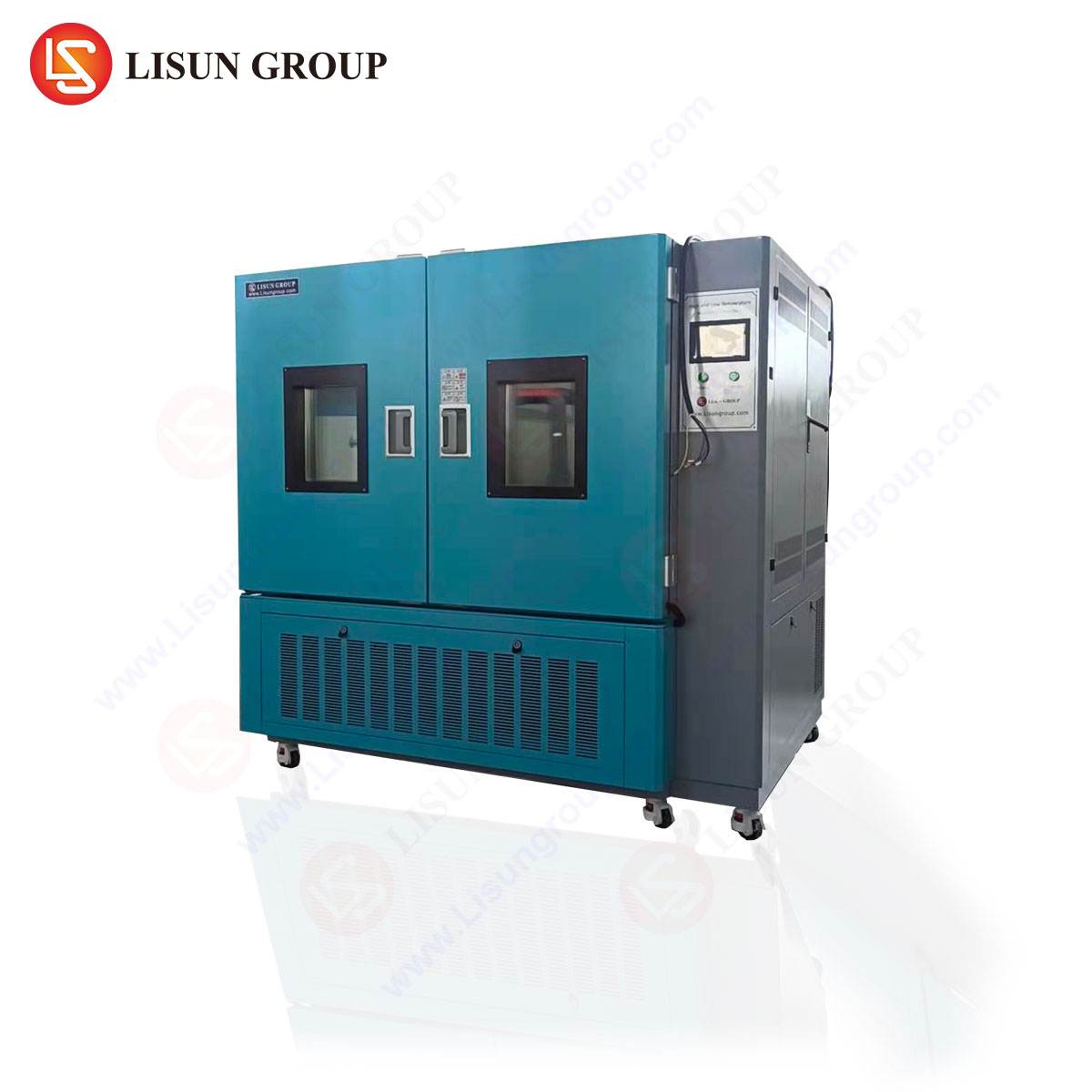
The fidelity of ASTM B117 testing is wholly dependent on the precision and reliability of the test chamber itself. The LISUN YWX/Q-010 series salt spray test chambers are engineered to meet and exceed the stringent requirements of the standard, providing the controlled environment necessary for generating valid, reproducible data.
Testing Principles and Chamber Specifications
The operational principle of the YWX/Q-010 chamber centers on the precise creation and maintenance of a salt fog. A reservoir contains the prepared NaCl solution, which is pumped to a nozzle system where it is atomized by filtered, humidified, and pressurized air. The saturated fog is then dispersed evenly throughout the chamber’s test workspace. The chamber is constructed from corrosion-resistant materials, typically thick-grade PVC or polypropylene, with critical components like the reservoir, air saturator, and nozzles made from inert materials to prevent contamination of the test solution.
Key specifications of the YWX/Q-010 that ensure compliance with ASTM B117 include:
- Temperature Control: A high-precision PID temperature controller maintains the chamber air temperature at 35°C ± 1°C, with a built-in over-temperature protection circuit.
- Fog Collection Rate: The chamber is designed to ensure a consistent fog settlement rate within the specified range of 1.0 to 2.0 ml per 80cm² per hour, verified by the use of standardized collection funnels.
- Solution pH Regulation: The apparatus includes provisions for monitoring and adjusting the pH of the collected solution to remain between 6.5 and 7.2, as required by the standard.
- Construction: The chamber features a triple-wall insulated design for temperature stability, a transparent lid for in-test observation, and a large-capacity reservoir to enable extended unattended testing cycles.
Industry Use Cases and Application Examples
The YWX/Q-010 chamber finds application across the breadth of industries requiring corrosion validation:
- Medical Devices: Testing the corrosion resistance of stainless-steel surgical instrument housings, external casings for diagnostic equipment, and the hermeticity of sealed electronic implants’ containers.
- Electrical Components & Industrial Control Systems: Evaluating the performance of galvanized steel enclosures for programmable logic controllers (PLCs), the surface finish on copper busbars, and the effectiveness of anti-corrosive coatings on industrial sensor housings.
- Consumer Electronics & Office Equipment: Assessing the durability of metallic finishes on laptop chassis, the integrity of shielded connectors on external hard drives, and the coating on steel frames inside printers and copiers.
- Cable and Wiring Systems: Testing the jacket materials of cables, the corrosion resistance of metallic braiding, and the performance of waterproof connectors used in outdoor installations.
Competitive Advantages of the YWX/Q-010 Design
The YWX/Q-010 series incorporates several design features that translate to operational benefits and data integrity. The use of a modular, tower-type atomization system, as found in the YWX/Q-010X variant, often provides a more uniform fog distribution and easier maintenance compared to traditional nozzle-in-ceiling designs. Advanced models feature digital touch-screen controllers for intuitive programming of complex test cycles (including salt spray, dry-off, and humidity dwell periods, aligning with more advanced standards like IEC 60068-2-52). Automated solution level monitoring and low-level alerts prevent test interruption. Furthermore, robust data logging capabilities allow for the unattended recording of temperature, runtime, and cycle data, creating an immutable audit trail for quality documentation and regulatory submissions.
Quantifying Economic Impact through Preventative Quality Control
The economic argument for integrating ASTM B117 testing into a quality management system is compelling. The direct cost of testing—encompassing chamber procurement, consumables, and labor—is typically negligible when compared to the potential costs associated with a corrosion-related product recall. For an automotive supplier, a single recall campaign for corroded electronic throttle body connectors could run into tens of millions of dollars, not including the incalculable damage to supplier-OEM relationships. Similarly, for a manufacturer of household appliances, widespread failure of control panels in coastal regions can lead to massive warranty service outlays and loss of market share. Salt spray testing acts as a financial risk mitigation tool, identifying substandard materials or processes before they are scaled into full production, thereby safeguarding profitability and ensuring a consistent, reliable product output that meets global market demands.
Conclusion
ASTM B117 salt spray testing remains an indispensable methodology in the materials engineering and quality assurance lexicon. Its benefits—providing a reproducible corrosive environment, enabling comparative analysis, validating specification compliance, enhancing reliability, and mitigating economic risk—are foundational to the development and production of durable goods across critical industries. The effective execution of this standard is contingent upon precise, reliable instrumentation. Test chambers like the LISUN YWX/Q-010 series, with their emphasis on control accuracy, operational robustness, and user-centric design, provide the necessary technological platform to realize the full value of accelerated corrosion testing. As product lifecycles accelerate and reliability expectations intensify, the role of such standardized, data-driven evaluation techniques will only grow in significance for manufacturers committed to excellence.
FAQ Section
Q1: What is the key difference between a standard salt spray test (ASTM B117) and a cyclic corrosion test (e.g., ASTM G85)?
A1: ASTM B117 is a continuous exposure test, maintaining a constant salt fog at 35°C. Cyclic corrosion tests, such as those in ASTM G85 annexes, incorporate alternating phases—typically salt spray, humidity, and dry-off periods—and often include temperature variations. These cycles are designed to better simulate real-world environmental sequences (like daytime drying and nighttime wetting) and can be more aggressive and correlative for certain failure mechanisms, particularly for organic coatings and assembled products.
Q2: For a product destined for an indoor office environment, is salt spray testing still relevant?
A2: While less severe than for outdoor products, it can still be relevant. It serves as a stringent quality assurance check for metallic components and finishes. It can identify poor adhesion of platings, the presence of pores in coatings, or susceptible base metals that could corrode if exposed to occasional condensation, cleaning agents, or the slightly elevated chloride levels present in some indoor atmospheres. It is often specified to ensure a baseline level of finish quality and durability.
Q3: How do I prepare test specimens for ASTM B117 testing in a chamber like the YWX/Q-010?
A3: Preparation is critical. Specimens should be clean and free of contaminants. They are typically mounted on non-conductive, inert racks at an angle of 15° to 30° from vertical to optimize fog settlement and minimize drip patterns. For coated samples, a deliberate scribe or “X” cut is often made through the coating to the substrate to evaluate undercutting corrosion and coating adhesion. Each specimen must be properly identified with corrosion-resistant tags.
Q4: Can the YWX/Q-010 chamber be used for tests other than ASTM B117?
A4: Yes, many modern chambers, including the YWX/Q-010 series, are designed to be adaptable. With programmable controllers, they can often run other related standards that use a sodium chloride solution, such as ISO 9227, JIS Z 2371, and certain cyclic tests defined in standards like IEC 60068-2-52 (Test Kb) or automotive specifications like SAE J2334. The key requirements are the ability to control temperature, fog generation, and, for cyclic tests, to manage different environmental phases.
Q5: What are the most common causes of invalid ASTM B117 test results, and how can they be avoided?
A5: Invalid results often stem from chamber-related issues: an incorrect salt solution concentration or pH, an improper fog collection rate, temperature deviations outside the tolerance, or contamination of the chamber or solution from previous tests or poor cleaning. Consistent calibration and maintenance of the chamber, strict adherence to solution preparation protocols using distilled or deionized water, and thorough chamber cleaning between tests are essential to avoid these pitfalls and ensure data validity.