




Advancements in Accelerated Corrosion Testing: The Technical and Economic Benefits of Cyclic Corrosion Test Chambers
Abstract
The imperative to predict and enhance the corrosion resistance of materials and components is a fundamental concern across the manufacturing spectrum. While traditional salt spray (fog) testing, as defined by standards such as ASTM B117, provides a foundational constant-state exposure, it often fails to replicate the complex, variable environmental sequences encountered in real-world service. Cyclic Corrosion Test (CCT) chambers have emerged as a technologically superior methodology, offering a controlled, programmable simulation of natural atmospheric conditions. This article delineates the multifaceted benefits of CCT chambers, detailing their operational principles, industry-specific applications, and the resultant improvements in product reliability, design validation, and time-to-market. A focused examination of the LISUN YWX/Q-010X cyclic corrosion test chamber will serve as a contemporary exemplar of this technology.
The Limitations of Constant-State Corrosion Testing
Traditional salt spray testing operates on a principle of continuous exposure to a saline fog at elevated temperatures. This method, while standardized and useful for comparative quality control, presents a significant phenomenological gap. In service, materials are seldom subjected to unremitting wetness and salt deposition. Instead, they experience cyclic patterns: wetting from precipitation or condensation, drying phases, periods of high humidity, and exposures to varying temperatures and pollutants. The constant salt spray environment can produce corrosion mechanisms and rates that diverge from field performance, potentially leading to optimistic test results for some materials and unnecessarily conservative ones for others. It often fails to accurately stimulate corrosion creep from scribes, galvanic effects, and the degradation of complex multi-material assemblies, which are critical failure modes in modern engineered systems.
Fundamental Principles of Cyclic Corrosion Testing
Cyclic Corrosion Test chambers address these limitations by automating multi-stage environmental profiles. A typical CCT cycle may sequentially incorporate phases of salt spray, controlled humidity condensation (often at elevated temperature), dry-off periods, and static soaking at specified humidity levels. This programmable alternation between corrosive, wet, and dry states more accurately replicates the kinetic processes of atmospheric corrosion. The wet phase allows for electrolyte formation and electrochemical corrosion reactions to initiate. Subsequent drying phases concentrate contaminants and oxygen diffusion rates change, often accelerating corrosion propagation. The reintroduction of humidity can then restart the process, effectively simulating the diurnal or seasonal cycles that drive long-term degradation in the field. This approach induces failure modes—such as blistering, filiform corrosion, galvanic corrosion, and substrate degradation under coatings—that are more representative of actual service life.
Enhancing Predictive Accuracy for Product Service Life
The paramount benefit of CCT methodology is its substantially improved correlation with outdoor exposure data. Studies across industries have demonstrated that a well-constructed CCT profile can accelerate real-world corrosion phenomena by a factor of 4 to 10 times or more, while maintaining a strong mechanistic fidelity. For instance, a 500-hour CCT test might correlate to several years of exposure in a marine or industrial-urban environment. This enhanced predictive accuracy allows engineers to make more confident material selections, coating system validations, and design decisions early in the product development cycle. The ability to uncover latent design flaws, such as crevices that trap electrolyte or incompatible material pairings, before mass production prevents costly field failures and warranty claims. The data derived from CCT testing provides a robust empirical foundation for forecasting mean time between failures (MTBF) and establishing credible warranty periods.
Simulating Complex Multi-Stress Environments
Beyond basic wet-dry-salt cycles, advanced CCT chambers can integrate additional environmental stressors, creating a truly multi-factorial test regime. This capability is critical for modern electronic and electromechanical devices. Profiles can include sub-zero freezing cycles to evaluate the combined effects of thermal shock and corrosion on seals and enclosures. Periods of high temperature and low humidity can assess the stability of corrosion products and the potential for drying-induced stress. The incorporation of gaseous pollutants, such as sulfur dioxide (SO₂) for acid rain simulation or hydrogen sulfide (H₂S) for industrial atmosphere replication, within a cyclic framework further expands the test’s applicability. This holistic simulation is indispensable for products destined for global markets with diverse climatic and environmental challenges.
Industry-Specific Applications and Validation Protocols
The utility of CCT chambers is evidenced by their adoption in a wide array of industry-specific and international standards.
- Automotive Electronics & Components: Standards such as SAE J2334 and Volkswagen PV1210 are quintessential CCT profiles. They are rigorously applied to test everything from body panels and fasteners to critical electronic control units (ECUs), sensor housings, and wiring harness connectors. The cycles validate the integrity of conformal coatings on printed circuit boards (PCBs) and the corrosion resistance of plated contacts in sealed and unsealed connectors.
- Electrical & Electronic Equipment, Industrial Control Systems: For industrial PCs, programmable logic controller (PLC) housings, motor drives, and switchgear, CCT testing per IEC 60068-2-52 (Test Kb) is prevalent. It assesses the ability of enclosures (often rated IP65 or higher) to protect internal components from corrosive atmospheres over time, ensuring operational reliability in harsh industrial or coastal settings.
- Aerospace and Aviation Components: Specifications like Airbus AITM 2-0005 and Boeing BSS 7253 define stringent CCT sequences for both structural and avionic components. Testing validates materials used in landing gear, fuselage fittings, and critical electrical junction boxes against the combined effects of altitude-induced humidity cycles and runway de-icing salts.
- Lighting Fixtures, Telecommunications & Outdoor Infrastructure: Luminaires for street lighting, telecommunications base station cabinets, and outdoor power supplies are subjected to CCT to ensure that gaskets, heat sinks, optical lenses, and painted finishes can withstand decades of weather cycling without functional or aesthetic degradation.
- Medical Devices & Consumer Electronics: Portable medical devices, surgical tool housings, and high-end consumer electronics (e.g., smartphones, wearables) undergo CCT to verify the durability of metal finishes, the efficacy of seals against sweat and incidental moisture, and the long-term reliability of external ports and switches.
The LISUN YWX/Q-010X: A Technical Exemplar of Modern CCT Capability
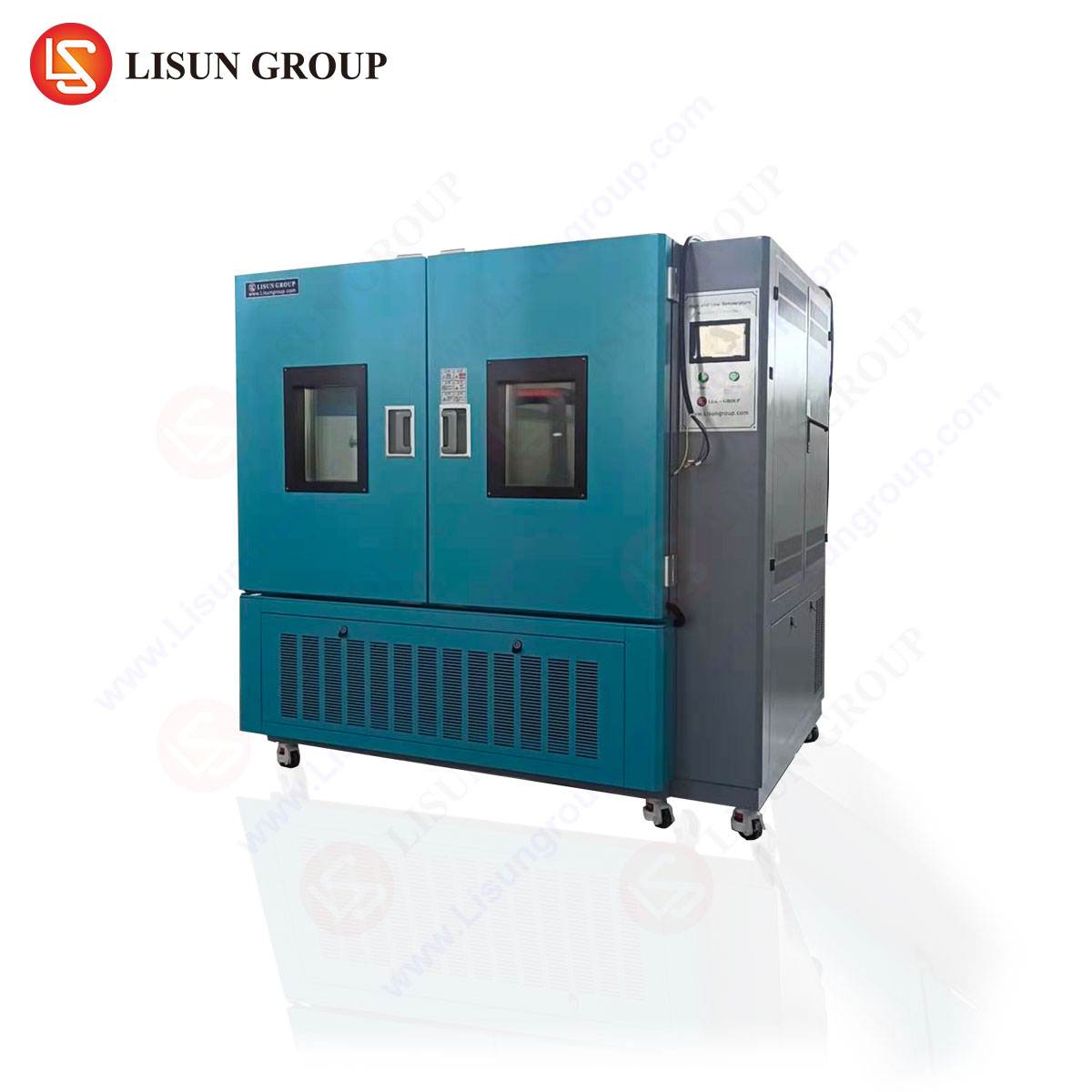
The LISUN YWX/Q-010X cyclic corrosion test chamber embodies the technological advancements required to execute the complex testing regimes described above. It is engineered to provide precise, repeatable control over all critical test parameters.
- Testing Principles & Chamber Design: The chamber utilizes a microprocessor-based programmable controller to orchestrate precise transitions between its operational modes: salt spray, humidity (constant or cyclic), dry-off, and storage (constant temperature/humidity). It features a corrosion-resistant PVC interior, a temperature-controlled saturated air barrel for consistent salt fog generation, and an air preheating system to ensure chamber temperature stability during transitions. Separate reservoirs and nebulizers for salt solution and distilled water prevent cross-contamination between test phases.
- Key Specifications:
- Temperature Range: Ambient +10°C to +60°C (salt spray/humidity); ambient +10°C to +50°C (dry-off).
- Humidity Range: 30% to 98% RH.
- Salt Spray Settlement Rate: Adjustable to comply with 1.0~2.0ml/80cm²/h per ASTM B117.
- Heating Rate: Approximately 3°C per minute from ambient to +50°C.
- Programming Capacity: Capable of storing complex multi-step, multi-cycle profiles with up to 1200 program segments, allowing for the automation of tests lasting weeks or months.
- Industry Use Cases: The YWX/Q-010X is deployed for qualification testing across the stipulated industries. An automotive supplier uses it to validate SAE J2334 compliance for a new electric vehicle’s battery management system enclosure. A manufacturer of marine-grade lighting fixtures employs it to simulate a 10-year coastal exposure in a 6-week accelerated test. A contract manufacturer for telecommunications hardware utilizes it to perform IEC 60068-2-52 testing on 5G radio unit housings.
- Competitive Advantages: The chamber’s design emphasizes uniformity and repeatability. Its air-sealed construction and advanced mist dispersal system ensure an even distribution of salt fog. The independent control of drying and humidification systems allows for rapid, precise transitions between phases, a critical factor in achieving accurate cycle replication. Furthermore, its user interface facilitates both the execution of standard pre-loaded test profiles and the custom programming of proprietary cycles, offering flexibility for research and development purposes.
Economic and Operational Advantages for Manufacturing Enterprises
The implementation of CCT chambers delivers tangible return on investment beyond technical validation. By front-loading reliability testing, companies significantly reduce the risk of post-launch product recalls, which carry enormous financial and reputational costs. The accelerated nature of CCT compresses development timelines, enabling faster iteration of prototypes and earlier market entry. In-house testing capability reduces dependence on external test laboratories, lowering per-test costs and improving security of intellectual property. Furthermore, the objective, standards-based data generated supports compliance with global regulatory and customer-specific requirements, streamlining the supply chain qualification process.
Conclusion
The transition from constant-state corrosion testing to cyclic corrosion testing represents a significant evolution in materials and product validation science. CCT chambers, through their ability to simulate the dynamic, multi-factor nature of real-world environments, provide a far more accurate and reliable predictor of long-term performance and durability. As products become more complex and global supply chains demand universally reliable components, the role of advanced testing equipment like the LISUN YWX/Q-010X becomes increasingly central to ensuring quality, safety, and commercial success across the electrical, electronic, automotive, and industrial manufacturing sectors.
FAQ Section
Q1: How does the corrosion mechanism in a CCT test differ from a standard salt spray test?
A standard salt spray test maintains a constant, saturated environment, which can lead to the continuous formation of a wet, oxygen-depleted electrolyte layer. This often produces generalized surface rust. A CCT test, by introducing drying phases, allows oxygen concentration to increase and the electrolyte to concentrate, promoting deeper pitting, corrosion under coatings, and galvanic corrosion at junctions—mechanisms that are far more representative of field failures.
Q2: Can the LISUN YWX/Q-010X chamber perform traditional ASTM B117 testing?
Yes. The YWX/Q-010X is fully capable of operating in a constant salt spray mode, meeting all the requirements of ASTM B117, ISO 9227, and similar standards. Its programmable controller allows the user to select a standard salt spray profile or create a custom one, making it a versatile tool for both traditional QC checks and advanced cyclic testing.
Q3: What factors are critical when developing a custom CCT profile for a new product?
Developing a correlative profile requires analysis of the product’s intended service environment. Key factors include: geographic climate data (temperature, humidity, rainfall cycles), specific corrosive agents present (chlorides, sulfates, industrial pollutants), the product’s operational cycles (e.g., daily use generating heat), and the materials and protective systems used. The profile should aim to replicate the sequence and severity of these environmental stresses in an accelerated timeframe.
Q4: How is test specimen preparation different for a CCT test compared to a simple salt spray test?
Preparation is often more rigorous for CCT. While both require clean specimens, CCT testing of coated assemblies frequently mandates the inclusion of a standardized scribe (per ASTM D1654 or ISO 17872) through the coating to the substrate to evaluate corrosion creep. Careful masking of critical surfaces and precise orientation of specimens to control drainage are also more critical due to the varying phases of the test.
Q5: What maintenance is required for a CCT chamber like the YWX/Q-010X to ensure consistent results?
Regular maintenance is essential. This includes: periodic cleaning of the chamber interior and nozzles to prevent salt buildup; calibration of temperature and humidity sensors at defined intervals; checking and cleaning the saturated air barrel and humidification water reservoir; and ensuring the compressed air supply is clean, dry, and at the specified pressure. Adherence to the manufacturer’s maintenance schedule is crucial for test repeatability and chamber longevity.