




The Critical Role of Water Testing Chambers in Modern Product Validation and Reliability Engineering
Abstract
In an era defined by the proliferation of electronics across every facet of industrial and consumer life, the imperative for unwavering reliability under diverse environmental conditions has never been greater. Among these conditions, exposure to water and moisture represents a paramount threat to product integrity, safety, and longevity. Water testing chambers, specialized environmental simulation apparatus, have thus evolved from niche quality assurance tools to fundamental pillars of modern design validation, compliance testing, and failure analysis. This technical treatise delineates the multifaceted benefits of these systems, examining their operational principles, application across critical industries, and the tangible impact on product lifecycle. A detailed analysis of a representative advanced system, the LISUN JL-XC Series waterproof test chamber, is incorporated to illustrate contemporary technological capabilities and implementation paradigms.
Introduction: The Ubiquitous Challenge of Moisture Ingress
The deleterious effects of water and high-humidity environments on electrical and electronic systems are well-documented in reliability engineering literature. Failure modes induced by moisture ingress are multifaceted, encompassing immediate catastrophic failure due to short-circuiting, latent corrosion of metallic components and PCB traces, electrochemical migration, delamination of materials, and fungal growth. These failures not only result in direct financial loss but also carry significant risks to user safety, brand reputation, and regulatory compliance. Consequently, simulating and evaluating a product’s resistance to water exposure is not merely a procedural step but a critical engineering discipline. Water testing chambers provide the controlled, reproducible, and standardized environment necessary to conduct this evaluation, enabling engineers to quantify performance, identify design vulnerabilities, and verify protection ratings long before field deployment.
Methodological Foundations: Principles of Controlled Water Ingress Simulation
Modern water testing chambers operate on well-defined physical principles to replicate specific real-world aqueous exposure scenarios. The methodology is governed by international standards, primarily the IEC 60529 standard (equivalent to ISO 20653 and DIN 40050), which defines Ingress Protection (IP) codes. The simulation techniques are categorized by the nature of the water threat:
- Drip and Spray Testing: Utilizing calibrated nozzles or drip boxes to simulate falling water (e.g., rain, condensation). This assesses protection against vertically falling droplets (IPX1, IPX2) and water sprayed at various angles (IPX3, IPX4).
- Water Jet and Powerful Water Jet Testing: Employing high-pressure nozzles to direct focused streams of water at the test specimen, simulating exposure to heavy seaside spray, vehicle wheel wash, or industrial cleaning processes (IPX5, IPX6).
- Immersion Testing: Submerging the product in water at specified depths and durations to evaluate protection against temporary or prolonged flooding (IPX7, IPX8). This requires precise control of immersion depth and time.
- High-Pressure, High-Temperature Water Jet Testing: A more severe test combining elevated water temperature and pressure, often specified for automotive and aerospace components to simulate extreme operational environments.
The scientific rigor of these tests hinges on the chamber’s ability to maintain exacting control over variables: water pressure (kPa), flow rate (L/min), nozzle distance and angle, water temperature, test duration, and sample rotation speed for uniform exposure. Deviation from these parameters invalidates the test’s correlation to the standard and compromises the predictive value of the results.
Quantifying Resilience: Direct Benefits for Product Development and Compliance
Validating Ingress Protection (IP) Ratings with Empirical Certainty
The primary and most explicit benefit of a water testing chamber is the empirical validation of a product’s claimed IP rating. For manufacturers of electrical enclosures, connectors, lighting fixtures, and outdoor telecommunications equipment, an IP rating is a key market differentiator and a contractual obligation. Chambers like the LISUN JL-XC Series provide the calibrated apparatus necessary to perform tests from IPX1 to IPX8, generating auditable evidence for certification bodies such as UL, TÜV, and CSA. This moves product claims from theoretical design assessments to proven, repeatable performance data.
Accelerating Failure Mode and Effects Analysis (FMEA)
Proactive reliability engineering relies on identifying potential failure modes before mass production. Water testing chambers serve as accelerated stress-testing platforms, forcibly introducing water ingress scenarios to precipitate failures in a controlled laboratory setting. For instance, testing an automotive control unit (ECU) housing seal under IPX6 conditions can reveal microscopic leak paths or material weaknesses that might take years to manifest in field use but can be discovered in a 30-minute test. This enables targeted design iterations—such as modifying gasket geometry, applying conformal coatings, or relocating vent ports—thereby reducing costly recalls and warranty claims.
Ensuring Long-Term Reliability Through Corrosion and Material Degradation Studies
Beyond immediate electrical failure, moisture acts as an electrolyte, accelerating galvanic corrosion between dissimilar metals on printed circuit boards (PCBs) and within connectors. Chambers that facilitate prolonged damp heat testing (often combined in climate chambers) or cyclic immersion tests allow materials scientists and engineers to study these long-term degradation processes. Evaluating the performance of a medical device’s sealed housing after repeated sterilization-like spray exposures (IPX4) provides critical data on the longevity of polymers and adhesives, directly informing maintenance schedules and expected service life.
Case Study: The LISUN JL-XC Series in Industrial Application
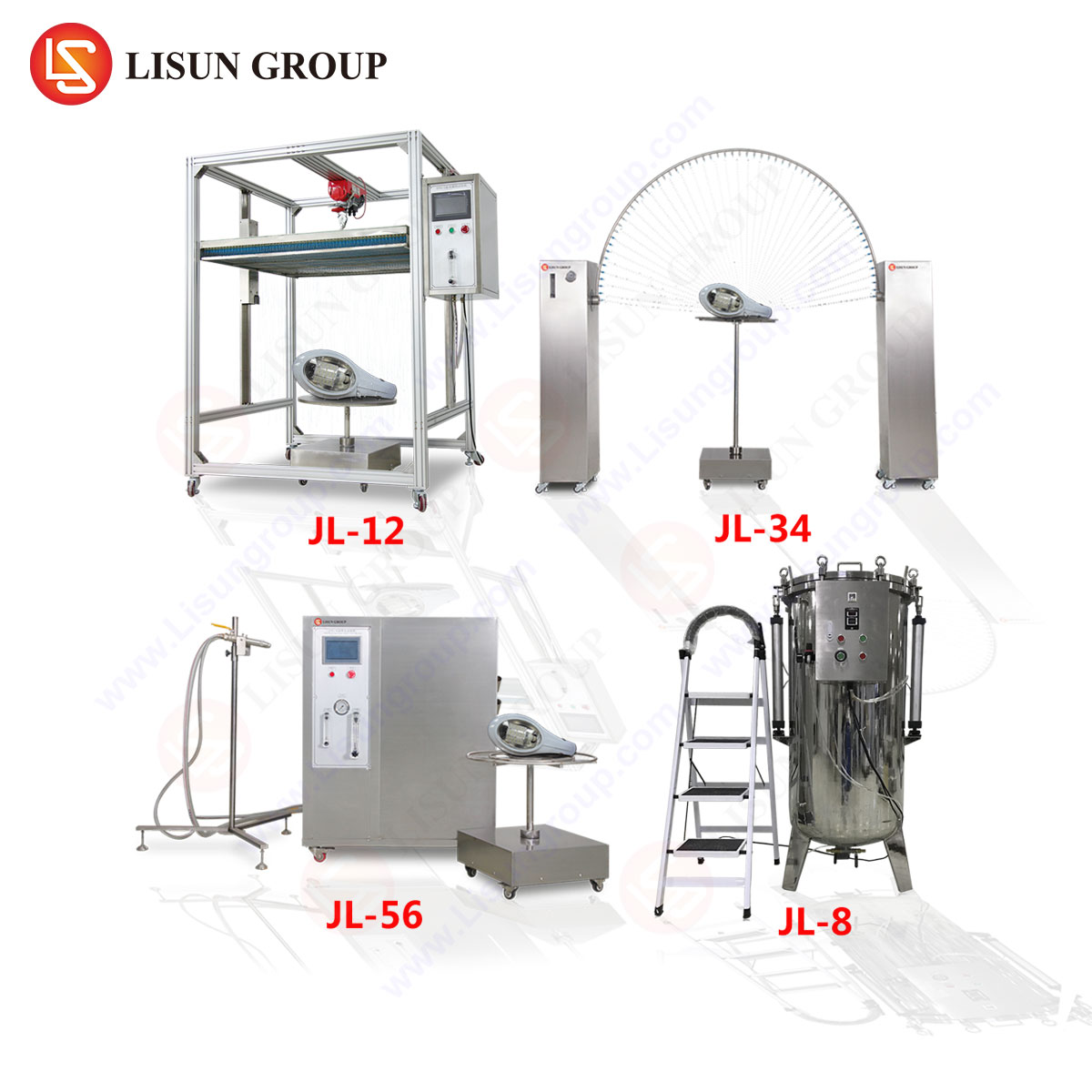
The LISUN JL-XC Series waterproof test chamber exemplifies the integration of these methodological principles into a robust, user-configurable testing platform. Designed for comprehensive IPX1 to IPX8 verification, its architecture addresses the core requirements of modern multidisciplinary testing laboratories.
Technical Specifications and Operational Framework
The JL-XC Series typically features a stainless-steel test chamber constructed from SUS304 grade steel for corrosion resistance. Its core capabilities are segmented into distinct testing modes, each with precise controls:
- Drip Test (IPX1/X2): A programmable drip box with standardized hole patterns and flow control.
- Spray Test (IPX3/X4): A oscillating spray system with adjustable swing frequency and angle, ensuring even coverage of the test specimen from multiple directions.
- Water Jet Test (IPX5/X6): Equipped with dedicated nozzles (6.3mm for IPX5, 12.5mm for IPX6) fed by a high-pressure pump system capable of delivering flows of 12.5 L/min and 100 L/min at specified distances (2.5-3m), with pressure regulated to 100kPa and 1000kPa respectively.
- Immersion Test (IPX7/X8): A separate or integrated tank for submersion testing, with programmable control over immersion depth (up to 2 meters for IPX8, as specified by the user) and test duration.
The system is governed by a programmable logic controller (PLC) and touch-screen Human-Machine Interface (HMI), allowing for the creation, storage, and automatic execution of complex test profiles that combine different phases (e.g., spray followed by immersion). Safety interlocks, water filtration systems, and automatic drainage are standard, ensuring operational safety and consistency.
Industry-Specific Use Cases
- Automotive Electronics: Validating IPX6 and IPX7 ratings for door control modules, sensor housings (LiDAR, radar), and under-hood connectors against high-pressure wash and temporary flooding.
- Lighting Fixtures: Testing IP65 and IP67 ratings for outdoor LED streetlights, architectural floodlights, and underwater pool lights to ensure performance in driving rain and submerged conditions.
- Telecommunications Equipment: Verifying IP55 or IP65 ratings for 5G outdoor radio units (RRUs), fiber optic terminal enclosures, and satellite communication terminals against wind-driven rain.
- Medical Devices: Ensuring IPX4 or higher ratings for portable diagnostic equipment, surgical tool handles, and bedside monitors that may be subjected to cleaning fluids or accidental spills.
- Aerospace and Aviation: Performing customized testing on cockpit display panels, external antenna housings, and black box enclosures to meet stringent DO-160 or MIL-STD-810 standards for water and humidity resistance.
Competitive Advantages in Engineering Context
The JL-XC Series demonstrates several advantages that translate directly to testing efficacy and laboratory efficiency. Its modular design allows a single platform to conduct the full spectrum of IP tests, reducing capital expenditure and laboratory footprint. The precision of its pressure and flow control systems ensures strict adherence to IEC 60529, eliminating a major source of test variability. Furthermore, its automated operation minimizes technician intervention, standardizing the test process and freeing engineering staff for analytical tasks rather than manual procedure execution. The robust data logging functionality provides a complete digital record of test parameters and outcomes, essential for audit trails and technical documentation.
Strategic Implications for Supply Chain and Quality Management
Standardizing Component Qualification Across Vendors
Original Equipment Manufacturers (OEMs) in sectors like consumer electronics and industrial control systems source components from a global supplier network. By mandating that critical external housings, connectors, and seals be validated using a defined test protocol on a chamber with known performance characteristics (like the JL-XC), OEMs can impose a uniform quality benchmark. This reduces incoming inspection overhead and mitigates the risk of substandard components causing assembly-line failures or field returns.
Supporting Regulatory Compliance and Market Access
Products destined for global markets must satisfy a complex web of regional and sector-specific regulations. The European CE marking, for instance, often requires compliance with the Low Voltage Directive (LVD) and Electromagnetic Compatibility (EMC) Directive, where moisture ingress protection can be a critical safety factor. Comprehensive test reports generated from accredited laboratories using calibrated equipment like advanced water test chambers are indispensable for demonstrating conformity, facilitating faster time-to-market, and reducing legal liability.
Enhancing Brand Equity Through Demonstrated Durability
In competitive markets for household appliances, office equipment, and consumer electronics, product durability is a powerful marketing tool. Data derived from rigorous IP testing provides the substantiation for marketing claims of “water-resistant,” “outdoor-ready,” or “ruggedized.” This evidence-based marketing builds consumer trust and brand loyalty, as products are perceived to deliver on their promised performance in real-world conditions.
Conclusion
Water testing chambers represent a critical nexus between product design theory and proven field reliability. Their benefits extend far beyond simple pass/fail compliance checks, permeating the entire product development lifecycle. From enabling precise FMEA and guiding material science decisions to standardizing global supply chains and underpinning regulatory submissions, these instruments are foundational to modern manufacturing quality. As products continue to evolve—becoming more interconnected, deployed in harsher environments, and subject to higher consumer expectations—the role of precise, reliable, and comprehensive water ingress testing will only grow in significance. The technological sophistication embodied in systems such as the LISUN JL-XC Series provides the engineering community with the necessary tools to meet these challenges, ensuring that the electronic infrastructure of modern society remains secure, reliable, and resilient against the pervasive challenge of moisture.
Frequently Asked Questions (FAQ)
Q1: What is the critical difference between IPX7 and IPX8 testing, and can one chamber perform both?
A1: Both IPX7 and IPX8 involve immersion, but the key differentiators are depth, duration, and the manufacturer-specified conditions. IPX7 defines temporary immersion (30 minutes) at a depth of 1 meter. IPX8 is for continuous immersion under conditions specified by the manufacturer, which are typically more severe (e.g., deeper than 1 meter and/or longer than 30 minutes). A comprehensive chamber like the LISUN JL-XC Series can be configured for both, but IPX8 testing requires the chamber’s immersion tank and control system to be capable of achieving and maintaining the specific, often higher, pressure/depth profile agreed upon between manufacturer and client.
Q2: How often should the nozzles and flow meters of a water testing chamber be calibrated to ensure compliance with IEC 60529?
A2: Calibration frequency is dictated by laboratory accreditation standards (e.g., ISO/IEC 17025) and internal quality procedures. Typically, critical components such as flow meters, pressure gauges, and timer controls should undergo annual calibration by a certified body. Nozzles, especially for IPX5 and IPX6 testing, should be inspected regularly for wear or blockage, with dimensional checks against the standard’s specifications performed at least annually or as per a defined usage-based schedule. Consistent deviation in test results often triggers an unscheduled calibration check.
Q3: When testing a large, non-portable product like an industrial control cabinet, how is the test administered?
A3: For large-scale equipment, the standard (IEC 60529, section 13.2) allows for the test to be performed on a representative sample or a separate identical enclosure. If the complete unit must be tested, it is not placed inside a chamber. Instead, the chamber’s spray/jet apparatus is brought to the specimen. This involves using a portable test rig or a fixed installation where the product is positioned on a turntable, and the standardized nozzles are mounted at the prescribed distance. The core principles—nozzle type, pressure, flow rate, distance, duration, and coverage—remain inviolate.
Q4: Does water temperature factor into IP Code testing per IEC 60529?
A4: For standard IPX1 to IPX8 tests defined in IEC 60529, the specified water temperature is typically within a range close to ambient, often noted as not exceeding 5°C difference from the test specimen’s temperature to avoid thermal shock. However, certain industry-specific standards derived from or related to IP testing, such as those in automotive (ISO 20653) or aerospace (DO-160), may prescribe tests with elevated water temperatures (e.g., 80°C ±5°C for high-pressure jet tests) to simulate specific severe conditions. It is crucial to reference the applicable product standard.
Q5: Can a water test chamber be used to validate resistance to other liquids, such as chemicals or fuels?
A5: While the mechanical principles of spray, jet, and immersion are similar, standard IP testing chambers are designed for water. Testing with corrosive chemicals, solvents, or fuels requires significant modifications: construction from compatible materials (e.g., specific stainless-steel grades, specialized seals), integrated solvent recovery or special drainage systems, and enhanced ventilation and explosion-proofing for volatile fluids. Such testing falls under separate standards for chemical resistance and should only be attempted in a chamber explicitly designed and certified for that purpose.