




Methodological Rigor in Accelerated Corrosion Testing: Best Practices for Salt Spray Chamber Operation and Specimen Evaluation
Introduction to Accelerated Atmospheric Corrosion Simulation
The salt spray (fog) test, standardized internationally as ASTM B117, ISO 9227, and other analogous national standards, remains a cornerstone of accelerated corrosion testing. Its primary function is not to predict exact service life in years, but to provide a controlled, severely corrosive environment for the comparative evaluation of metallic materials and protective coatings. When executed with methodological precision, it serves as a vital quality assurance and research tool across a vast spectrum of industries. The test subjects specimens to a continuous, indirect spray of a neutral (pH 6.5 to 7.2) 5% sodium chloride solution within a sealed chamber maintained at a constant elevated temperature, typically 35°C ± 2°C. This environment accelerates the onset and progression of corrosion mechanisms—primarily galvanic, pitting, and crevice corrosion—that would occur over extended periods in marine or de-icing salt-laden atmospheres. The reliability of the data generated is intrinsically linked to strict adherence to best practices in chamber design, calibration, specimen preparation, and post-test analysis.
Chamber Selection and Critical Performance Specifications
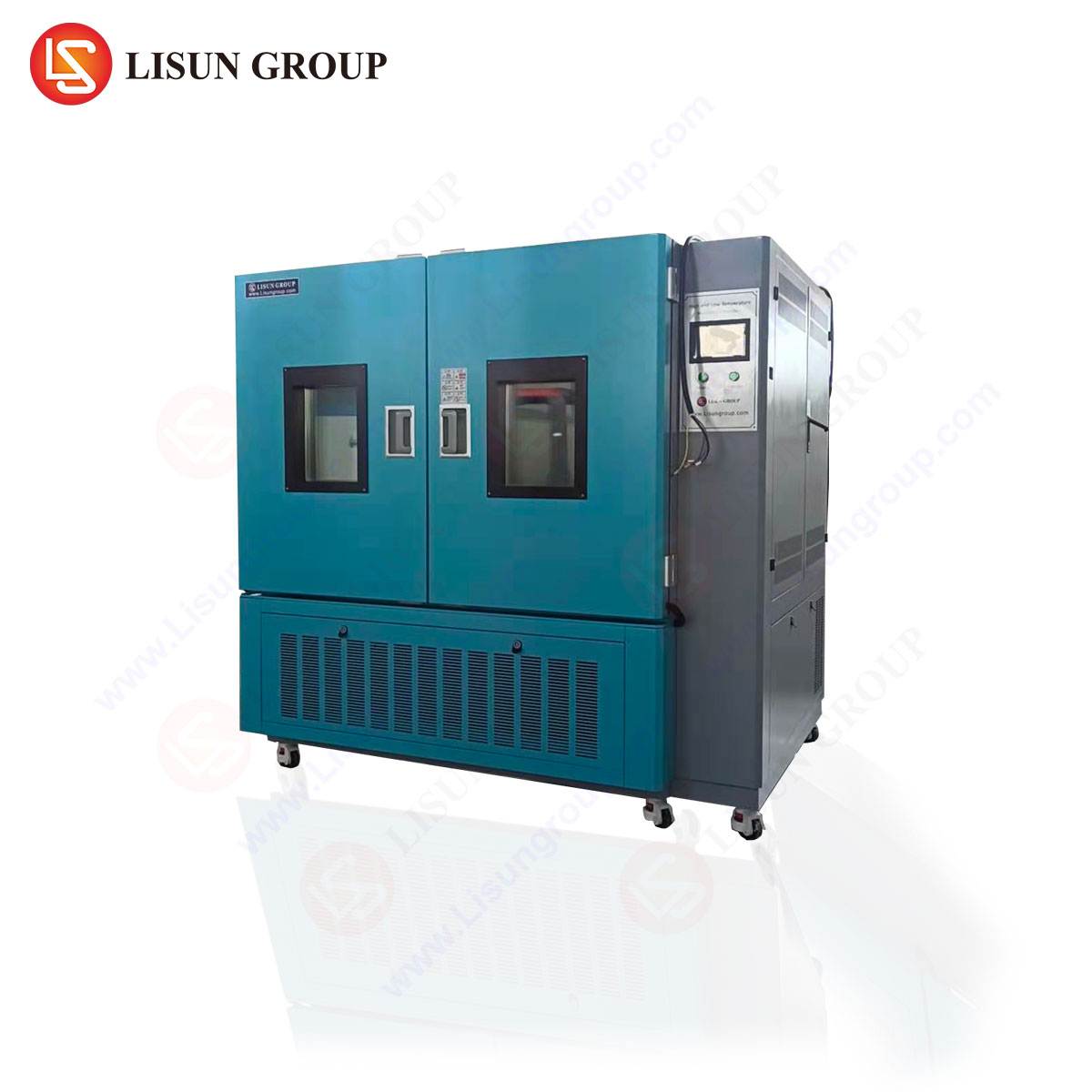
The foundational element of reproducible testing is the selection of a chamber engineered to meet and maintain the exacting parameters stipulated by relevant standards. A chamber must provide uniform temperature distribution, consistent salt fog settlement, and resistance to the corrosive environment it creates. The LISUN YWX/Q-010 Salt Spray Test Chamber exemplifies this engineering requirement. Its design incorporates a temperature-controlled saturated tower (bubble tower) for heating and humidifying the compressed air before it atomizes the salt solution, a critical step in achieving a consistent fog of the correct droplet size and preventing solution concentration drift.
Key specifications of the YWX/Q-010 that directly impact test integrity include its precise temperature control system, capable of maintaining the chamber workspace at 35°C ± 1°C, and its integrated air pre-saturation module. The chamber is constructed from corrosion-resistant polymeric materials, such as polyvinyl chloride (PVC), for the main body, and acrylic for the transparent canopy, ensuring long-term structural stability and visual inspection capability. The atomization system, comprising a precision nozzle and regulated air supply, is designed to deliver a consistent settlement rate of 1.0 to 2.0 ml/80cm²/hour, as verified by collection funnel measurement—a parameter non-negotiable for standard compliance.
Pre-Test Protocol: Specimen Preparation and Strategic Placement
Specimen preparation is a frequent source of inter-laboratory variation and must be meticulously controlled. All test pieces must be cleaned to remove contaminants—oils, fingerprints, oxidation layers—that could artificially inhibit or promote corrosion. A sequence of solvent cleaning (e.g., with acetone or ethanol) followed by drying with clean, lint-free cloths is standard. Care must be taken not to abrade or damage the surface coating under evaluation. For coated specimens, edges, cut sections, or intentionally scribed lines (per ASTM D1654) must be properly prepared, as these are focal points for assessing underfilm creepage.
Placement within the chamber is governed by the principle of uniform environmental exposure. Specimens should be positioned on non-conductive, inert supports at an angle of 15° to 30° from vertical, typically 20°, to allow condensate to run off without pooling. A critical best practice is to ensure that no specimen drips onto another, as run-off from a less corrosion-resistant material can contaminate and protect a more resistant one beneath it, invalidating results. The spatial arrangement should allow free circulation of the salt fog around all specimens. The large internal volume of a chamber like the YWX/Q-010 facilitates organized racking for high-volume testing common in automotive electronics or electrical component manufacturing.
Solution Formulation, pH Management, and Chamber Calibration
The test solution must be prepared from reagent-grade sodium chloride (NaCl) and deionized or distilled water with a conductivity of < 20 µS/cm to prevent impurity-induced catalytic effects. The concentration is 5% by mass (5g NaCl per 95g water). The pH of the collected solution, measured at 25°C, must be adjusted to remain between 6.5 and 7.2. This is a dynamic parameter; the pH will tend to rise as the test progresses due to carbon dioxide absorption loss in the pressurized system. Regular monitoring and adjustment using dilute hydrochloric acid (HCl) or sodium hydroxide (NaOH) are mandatory.
Calibration is not a one-time event but a recurring verification process. Prior to each test series, the chamber must be validated for:
- Settlement Rate: Measured using at least two clean collection funnels with a diameter of 80-100cm², placed in the specimen zone, run for a minimum of 16 hours.
- Temperature Uniformity: Verified by multiple calibrated sensors placed throughout the workspace, including the chamber corners.
- Solution and Chamber Saturation Tower Temperature: These must be held at specific setpoints (e.g., 47°C ± 1°C for the saturation tower in ASTM B117) to ensure proper fog generation and humidity.
Advanced chambers automate much of this monitoring. The LISUN YWX/Q-010X model, for instance, builds upon the base YWX/Q-010 with enhanced digital control systems that provide real-time logging of temperature, settlement rate (via integrated collection measurement), and pH, significantly reducing manual calibration overhead and improving traceability.
Industry-Specific Application and Test Duration Considerations
The salt spray test is applied with different pass/fail criteria and durations depending on the industry and component function.
- Automotive Electronics & Electrical Components: Connectors, switch housings, sensor bodies, and control unit casings are tested to verify the corrosion resistance of platings (e.g., zinc, nickel, tin) and conformal coatings. Test durations may range from 48 to 500 hours, with criteria specifying maximum allowable white rust (zinc corrosion products) or red rust on basis metal. A brake light socket, for example, must withstand salt exposure without corrosion that would increase electrical resistance.
- Aerospace & Aviation Components: While often superseded by more complex exfoliation or stress corrosion cracking tests for structural parts, salt spray is used for non-critical hardware, electrical enclosures, and lighting fixtures. Specifications like MIL-STD-810 may call for a modified salt fog profile.
- Telecommunications & Industrial Control Systems: Outdoor cabinets, heat sinks, cable management systems, and PCB assemblies with protective coatings are subjected to testing. The focus is on the integrity of anodized layers, powder coatings, and the performance of sacrificial anodes.
- Medical Devices & Consumer Electronics: For devices that may encounter cleaning agents or incidental environmental exposure, thin decorative or protective coatings on housings, hinges, or internal metallic parts are evaluated. Even minor corrosion that could generate particulate matter is unacceptable in sterile fields.
- Lighting Fixtures & Outdoor Electrical Equipment: Luminaires, junction boxes, and cable conduits for outdoor use undergo extended testing (e.g., 1000+ hours) to validate that gaskets, finishes, and dissimilar metal interfaces will not fail prematurely in coastal environments.
Post-Test Analysis: Evaluation Techniques and Objective Reporting
Upon test completion, specimens must be handled carefully to preserve corrosion products for evaluation. A gentle rinse under lukewarm running water to remove salt deposits is recommended, followed by drying with cool air. Abrasive cleaning is prohibited. Evaluation is both quantitative and qualitative.
Quantitative metrics include measuring the extent of corrosion from a scribe line (underfilm creepage in mm) or calculating the percentage of surface area affected by red rust or blistering using standardized grids. Qualitative assessment involves describing the type of corrosion (uniform, pitting, galvanic), the color and morphology of corrosion products, and any coating defects. All evaluations should be conducted relative to a control specimen of known performance if possible. Documentation must be exhaustive, including pre-test condition, exact test parameters (chamber model, temperature, settlement rate logs), duration, and high-resolution photographic evidence. The data output capability of an instrument like the YWX/Q-010X directly supports this rigorous documentation requirement.
Limitations of the Salt Spray Method and Complementary Testing
A critical best practice is understanding the method’s inherent limitations. The continuous salt fog is a constant, severe condition that does not replicate natural wet-dry cycles, UV exposure, or pollution variations. It is primarily a comparative, quality control test. Materials that perform well in salt spray may not perform well in real-world cyclic corrosion tests (CCT), which incorporate humidity, drying, and sometimes UV or freeze phases. For a comprehensive corrosion assessment, a testing regimen may include salt spray as a baseline screening, followed by more sophisticated cyclic tests such as those defined by ASTM G85 or automotive standards like SAE J2334. The chamber’s role is thus as one essential tool in a broader materials qualification toolkit.
Operational Safety, Maintenance, and Environmental Controls
Safe operation requires chambers to be installed in well-ventilated areas, with proper drainage for the corrosive effluent. Regular maintenance is paramount for consistent performance. This includes cleaning of the chamber interior and nozzles to prevent salt buildup, inspecting and replacing saturated tower water, checking air filters and pressure regulators, and validating all sensors annually against NIST-traceable standards. The use of automated systems for solution level management and pH adjustment, as seen in the YWX/Q-010X, reduces operator exposure to the test environment and enhances procedural consistency.
Integrating Advanced Chamber Features for Enhanced Data Fidelity
Modern test chambers offer features that move beyond basic compliance to enhance data reliability. Programmable logic controllers (PLCs) with touchscreen interfaces allow for precise parameter setting and multi-profile testing. Remote monitoring capabilities enable technicians to oversee long-duration tests without disturbing the chamber environment. The LISUN YWX/Q-010X incorporates such advancements, providing not only control but also data logging of all critical parameters. This creates an immutable audit trail, which is particularly valuable for ISO/IEC 17025 accredited testing laboratories and for manufacturers in regulated industries like medical devices or automotive supply, where proof of validation testing is required for part approval.
Conclusion: The Imperative of Standardized Execution
The value of the salt spray test is wholly dependent on the rigor of its execution. From the selection of a chamber capable of stable, uniform parameter control—such as the LISUN YWX/Q-010 series—through the meticulous preparation, placement, and calibration phases, to the objective post-test analysis, each step introduces potential variables. Adherence to published international standards provides the essential framework, but it is the implementation of these detailed best practices within the laboratory that ensures the generation of comparable, reliable, and actionable corrosion performance data. In an era of global supply chains and demanding performance specifications, such methodological consistency is not merely a technical preference but a commercial and regulatory necessity.
Frequently Asked Questions (FAQ)
Q1: What is the primary difference between the LISUN YWX/Q-010 and the YWX/Q-010X salt spray chambers?
The YWX/Q-010 is a fully compliant neutral salt spray test chamber meeting core standards like ASTM B117. The YWX/Q-010X is an advanced model that includes enhanced digital control systems, automated data logging of temperature and settlement rate, and often features more sophisticated pH monitoring and control. The “X” model is designed for laboratories requiring higher levels of automation, traceability, and reduced manual intervention for audit purposes.
Q2: How often should the salt spray chamber be calibrated, and what does calibration entail?
Calibration should be performed prior to initiating a new test series and at regular intervals defined by the laboratory’s quality schedule (e.g., quarterly). Critical calibration activities include verifying the temperature uniformity across the specimen zone using independent sensors, measuring the salt fog settlement rate using collection funnels for a minimum 16-hour period, and checking the accuracy of the chamber’s own temperature and pH sensors against calibrated reference instruments.
Q3: Can the salt spray test be used to predict the exact service life of a coated component in years?
No. The salt spray test is an accelerated, comparative corrosion test. It is highly effective for ranking materials, qualifying coatings, and conducting quality control checks against a known standard. However, the constant, severe conditions do not accurately simulate real-world environmental cycles (drying, UV, pollution). It should not be used to extrapolate a specific service life in years without correlation to field data from similar materials in similar environments.
Q4: Why is the pH of the collected salt solution so critical, and why does it tend to change during testing?
The pH must be maintained between 6.5 and 7.2 to ensure a “neutral” salt spray test as defined by standards. A shift outside this range can drastically alter corrosion mechanisms, making results non-comparable. The pH tends to increase (become more alkaline) during operation because carbon dioxide (CO₂) is stripped from the solution as air is bubbled through the heated saturation tower. This loss of dissolved CO₂ reduces carbonic acid, causing the pH to rise. Regular monitoring and adjustment are therefore essential.
Q5: For testing printed circuit board assemblies (PCBAs), what special considerations apply?
PCBAs require careful consideration. The test is typically used to evaluate the effectiveness of conformal coatings. Specimens must be clean and dry. Components that could trap solution (e.g., under connectors) may need masking or special orientation. The evaluation criteria focus on metallic corrosion on exposed terminals, solder joints, or at intentional coating defects, as well as any coating delamination or blistering. Electrical testing post-exposure may also be required to verify no short circuits or increased leakage currents have occurred.