







Title: Engineering Safety: Defining Blunt Probe Requirements for Hazardous Parts Across Industries
Abstract
The prevention of access to hazardous live parts and dangerous mechanical components constitutes a fundamental pillar of product safety engineering. This technical article delineates the comprehensive requirements for blunt probe testing, a critical evaluation method mandated by international safety standards. We examine the underlying principles, dimensional and force specifications, and application protocols across diverse industrial sectors. The discourse incorporates a detailed analysis of standardized test equipment, specifically the LISUN series of test fingers, probes, and pins, elucidating their role in verifying compliance and ensuring user protection against electrical shock, energy hazards, and physical injury.
Introduction to Accessibility and Hazard Mitigation
Product safety standards universally mandate that certain hazardous parts remain inaccessible to the user under normal and single-fault conditions. The definition of “accessible,” however, is not left to subjective interpretation. It is quantitatively defined through the application of standardized test probes, which simulate the interaction of human body parts—fingers, hands, tools, or wires—with equipment. The blunt probe, distinct from its articulated or jointed counterparts, serves as a primary tool for assessing protection against access to hazardous live parts, moving components, and other dangers. Its design is predicated on simulating a child’s finger or a rigid object that might be inserted into an opening, thereby testing the efficacy of enclosures, barriers, and spacing (creepage and clearance) within a product. Failure to withstand probe ingress indicates a non-compliance that could lead to severe injury, electric shock, or fire, carrying significant legal and liability implications for manufacturers.
Anatomic Simulation and Standardized Dimensional Tolerances
The geometry of a blunt probe is not arbitrary; it is derived from anthropometric data representing the dimensions of the human finger, particularly that of a young child, who represents a vulnerable user group. International standards, including IEC 61032, IEC 60529 (IP Code), and UL/EN 62368-1, provide precise specifications for these test tools. The classic “test finger” is defined as a cylindrical metal rod with a hemispherical end of specific radius, often with articulated joints to simulate articulation. However, for many accessibility checks, a rigid, non-articulated blunt probe—a “test pin” or rigid “test probe”—is specified.
Key dimensional parameters are strictly controlled. For instance, the diameter of the probe shaft and the radius of its hemispherical tip are defined to replicate the smallest finger dimensions considered a risk. A common specification for a test probe simulating a finger is a 12mm diameter shaft with a 20mm radius hemispherical end. For smaller openings intended to prevent access to more hazardous parts, a “test pin” with a 1.0mm, 2.5mm, or 3.0mm diameter may be required. These dimensions are calibrated to verify that openings, vents, or gaps in an enclosure do not permit dangerous contact. The manufacturing tolerances for these tools are exceptionally tight, typically within ±0.05mm, to ensure repeatable and globally accepted test results. Any deviation beyond these tolerances invalidates the test, as it no longer represents the standardized simulation.
Applied Force and Mechanical Integrity Parameters
Dimensional simulation alone is insufficient. The probe must be applied with a defined force to assess whether a barrier will yield under plausible pressure. Standards prescribe exact force values and application angles. A standard test finger is often applied with a force of 10 N ± 1 N. For smaller, rigid test probes (pins), the force may be 1 N, 3 N, or higher, depending on the simulated scenario—be it a probing child’s finger or a dropped tool.
This force application is not a simple push; it involves probing around openings, attempting to lever or pry open covers, and applying the force in every possible direction without using excessive violence that would not represent realistic use or foreseeable misuse. The test evaluates both the static strength of the barrier and the dynamic safety of internal components. For example, in a household appliance like a food processor, the probe must not be able to depress an interlock switch, bypass safety mechanisms, or contact the blade assembly. In automotive electronics, a probe must not access terminal blocks carrying 60V DC from the vehicle’s electrical system, even when pushed against wire seals or connector housings.
Material Composition and Electrical Properties
The material specification for blunt probes is critical for both mechanical durability and test validity. Probes are typically manufactured from hardened steel, brass, or other metals with sufficient structural integrity to resist deformation during testing. The surface must be conductive and connected to a detection circuit during electrical safety testing. When the probe is used to check for accessibility to hazardous live parts, it is often part of a “touch current” or “accessible parts” test circuit. If the probe makes contact with a live part, a detection system—often a voltmeter, current meter, or indicator lamp in a circuit representing human body impedance—will signal a failure.
The probe’s conductivity ensures it accurately simulates a human finger making electrical contact. Insulated handles are provided for operator safety, but the business end of the tool is bare metal. For certain tests, such as those verifying clearance distances, a non-conductive probe may be specified to avoid arc-over during the test itself. The choice of material and its electrical properties are therefore directly tied to the specific test clause being executed.
The LISUN Test Finger, Test Probe, and Test Pin System
The LISUN series of test equipment provides a standardized, calibrated solution for meeting the rigorous demands of international safety testing. Engineered to exacting specifications, these tools are designed for reliability and repeatability in laboratory and production line environments.
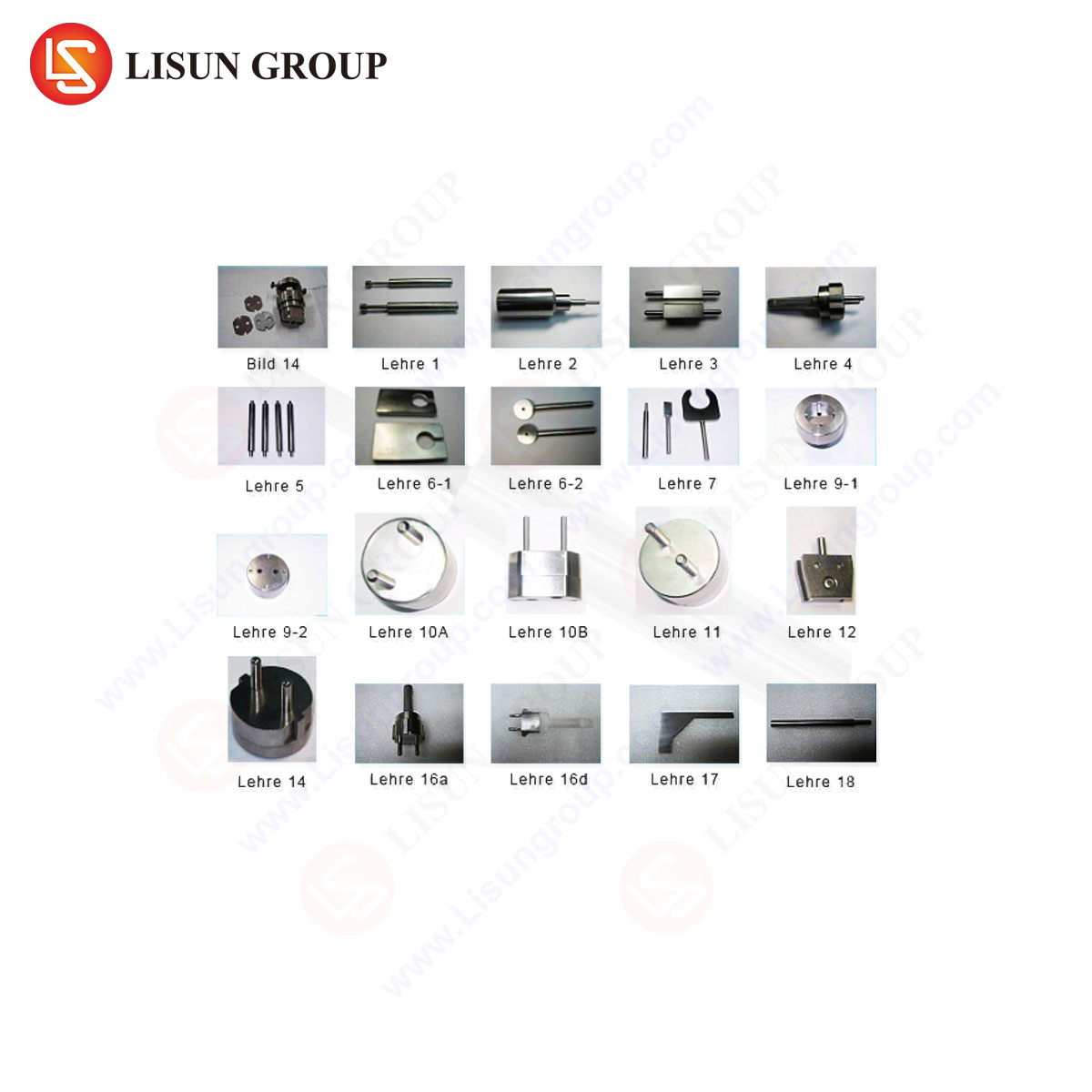
Specifications and Design Philosophy: The LISUN test finger (e.g., Model LS-F) conforms to the dimensional requirements of IEC 61032 Figure 2, with an articulated triple-joint design allowing it to mimic the natural articulation of a human finger. It is constructed from aluminum alloy and brass, with a conductive surface and an insulated handle. The LISUN rigid test probes and pins (e.g., Models LS-P series) are precision-machined from hardened steel, available in the standard diameters of 1.0mm, 2.5mm, 3.0mm, 4.0mm, and 12mm, each with corresponding hemispherical ends of specified radii. Each unit is supplied with a certificate of calibration, tracing its dimensions and geometry to national measurement standards.
Testing Principles Enabled: The LISUN system enables multiple test protocols. For IP rating verification (IEC 60529), the 12mm probe checks for object ingress (IP2X). For accessibility of hazardous parts (IEC 62368-1, IEC 60335-1), the articulated finger and various pins are applied with specified forces to openings. In the “probe test” for live parts, the conductive probe is connected to a measuring network. If contact is made and the detected voltage or current exceeds the safe limit defined by the standard (e.g., > 30 Vrms, 42.4 Vpeak, or 60 V DC for SELV limits), the product fails.
Industry Use Cases and Application
- Electrical and Electronic Equipment & Industrial Control Systems: Verification that cabinet openings, ventilation slots, and removable panel gaps do not allow a 12mm probe to contact busbars, terminal blocks, or PCB-mounted components at hazardous voltages (>50V AC). Testing of emergency stop button shrouds and actuator openings.
- Household Appliances: Ensuring the gap between the housing and beaters of a hand mixer cannot be accessed by a test finger, preventing contact with live wiring or the drive mechanism. Checking the openings on a washing machine’s soap dispenser.
- Automotive Electronics: Assessing high-voltage component enclosures in electric vehicles (e.g., battery management systems, DC-DC converters) for probe accessibility to connectors carrying >60V DC, as per LV 214 or ISO 6469.
- Lighting Fixtures: Testing the accessibility of live parts through diffuser lenses, end caps of LED tubes, or openings in outdoor fixture housings. Verifying that a suspended fixture’s wiring compartment is secure.
- Telecommunications Equipment: Ensuring user-accessible ports on routers, switches, or base station units are isolated from hazardous telecom network voltages (TNV circuits) as per IEC 62368-1.
- Medical Devices: Critical for patient-connected equipment (e.g., dialysis machines, monitors). Probes verify that even under fault conditions, accessible parts do not exceed patient leakage current limits, using the standardized probe to test all applied parts and nearby metal surfaces.
- Aerospace and Aviation Components: Testing in-flight entertainment system housings, control panel assemblies, and junction boxes to ensure they remain secure and non-hazardous under vibration and pressure changes, simulated by attempted probe ingress.
- Electrical Components: Direct testing of switches, sockets, and connectors. A test pin may be used to verify that a safety shutter in a socket outlet successfully blocks access to live contacts, or that a switch’s actuator cannot be bypassed.
- Cable and Wiring Systems: Testing connector housings and strain relief entries to ensure a cable cannot be pushed aside to expose live terminals.
- Office Equipment & Consumer Electronics: Checking openings on power supplies, printers, gaming consoles, and USB chargers. A 1.0mm test pin is often used to verify that openings are small enough to prevent access to basic insulation.
- Toy and Children’s Products Industry: Paramount for safety. Rigorous probe testing ensures battery compartments are secure, gaps in plastic shells cannot trap or contact small parts, and any electronic components are fully enclosed against a child’s probing fingers.
Competitive Advantages of Standardized Probe Systems
Utilizing a certified system like LISUN’s mitigates significant risk for manufacturers. First, it ensures regulatory acceptance. Test reports generated using uncertified or out-of-tolerance tools can be rejected by certification bodies (UL, TÜV, Intertek), causing costly delays. Second, it guarantees repeatability. Precision manufacturing means a test performed in a factory in Asia yields the same result as one in a European certification lab, essential for quality control. Third, it enhances testing efficiency. The robust construction and clear calibration status of professional tools reduce downtime and false failures. Finally, it provides a defensible legal standing. In the event of a product liability claim, demonstrating compliance using internationally recognized, calibrated equipment forms a robust technical defense.
Integration with Broader Safety Testing Regimes
Blunt probe testing is rarely an isolated activity. It is integrated into a holistic safety engineering process. Its results inform design choices for enclosure molding, PCB layout (to increase creepage/clearance), and the selection of interlocks or shrouds. Data from probe tests often feed into risk assessments required by hazard-based standards like IEC 62368-1, providing objective evidence for the effectiveness of energy source safeguards. Furthermore, probe testing is frequently followed by or combined with dielectric strength testing; if a probe can access a part, that part may then be tested for insulation breakdown.
Conclusion
The specification and application of blunt probes for hazardous parts accessibility testing represent a precise, non-negotiable element of product safety validation. The requirements, governed by strict dimensional, force, and material parameters, translate abstract safety principles into quantifiable, repeatable engineering tests. As products across all sectors become more compact and complex, the role of standardized, reliable test equipment—such as the calibrated LISUN test finger, probe, and pin system—becomes ever more critical. Their use provides manufacturers with the objective data needed to certify compliance, mitigate user risk, and fulfill their fundamental obligation to produce safe goods for the global market.
FAQ Section
Q1: What is the difference between a “test finger” and a “test probe” or “test pin”?
A test finger is typically an articulated, jointed device designed to simulate the full range of motion of a human finger, used for larger openings. A test probe or test pin is generally a rigid, straight rod with a hemispherical end, used for testing smaller, specific openings where articulation is not a factor. The “pin” designation often refers to the smallest diameters (e.g., 1mm). The appropriate tool is specified by the relevant safety standard for each test.
Q2: How often should test probes be recalibrated?
Recalibration intervals depend on usage frequency, laboratory accreditation requirements (e.g., ISO 17025), and internal quality procedures. For high-use compliance laboratories, annual recalibration is typical. The calibration checks for dimensional wear on the tip and shaft, as well as verification of the applied force mechanism if integrated. A certificate of calibration should always be current and traceable to a national metrology institute.
Q3: Can a 3D-printed probe be used for compliance testing?
No. While useful for early-stage design verification, 3D-printed probes lack the required material strength, dimensional stability, precise surface finish, and conductive properties mandated by standards. They cannot be certified or traced to a measurement standard. Compliance testing for certification must be performed using professionally manufactured, calibrated metal tools like the LISUN series to be accepted by regulatory bodies.
Q4: In the test circuit for accessible live parts, what does the probe connect to?
The conductive probe is connected to a measuring instrument via a network that models human body impedance. This is often called a “touch current” network or measuring circuit, defined in standards like IEC 60990. It typically includes resistors and capacitors to simulate the frequency-dependent impedance of the human body. The instrument measures the voltage or current that would flow through a person making that contact.
Q5: If my product passes the blunt probe test, does it automatically meet all accessibility requirements?
Not necessarily. The blunt probe test is a primary method, but standards often specify a hierarchy of probes (finger, probe, pin, wire) and may include additional tests for mesh openings or slots of specific geometries. Furthermore, accessibility is also defined by safety distances (creepage and clearance) behind barriers, which may require evaluation even if the probe does not make direct contact. The probe test is a crucial first step, but it is part of a broader suite of accessibility evaluations.