








A Technical Examination of BS 546 Figure 3 Plug Gauge Specifications and Verification Methodologies
Introduction to Dimensional Verification in Electrical Accessory Compliance
The integrity of electrical connections within plugs and sockets is a non-negotiable prerequisite for operational safety, reliability, and long-term performance. Dimensional conformity, as stipulated by national and international standards, serves as the foundational parameter ensuring mechanical compatibility, correct electrical engagement, and the mitigation of hazardous conditions such as arcing, overheating, or incorrect pin insertion. Among the suite of tools employed for this verification, plug gauges represent a critical class of inspection instruments. This article provides a detailed technical analysis of the specifications and application of plug gauges designed for the verification of BS 546: 1950, Figure 3 sockets—a standard historically prevalent in the United Kingdom and remaining in use within specific legacy installations and certain international markets, including regions of Africa and Asia. The focus herein is on the precise metrological requirements for these gauges and the implementation of rigorous testing protocols, with specific reference to the implementation by manufacturers such as LISUN Gauges for Plugs and Sockets.
Architectural Overview of the BS 546 Figure 3 Socket Configuration
To contextualize the gauge specifications, a clear understanding of the socket geometry is essential. BS 546: 1950 defines several plug and socket types; Figure 3 specifically denotes a 5-ampere, 250-volt, three-pin configuration. Its key dimensional characteristics include a circular socket body with three contact apertures arranged in a triangular pattern: a larger earth pin aperture positioned centrally at the top, flanked symmetrically below by two smaller apertures for the line and neutral pins. The critical dimensions governing gauge design include the centre-to-centre distances between the pin apertures, the diameters and profiles of each aperture (which are not simple circles but include keyways or shaped entries to enforce correct polarization), the depth of the contact chambers, and the recess profile of the socket face. Any deviation from these prescribed tolerances can compromise the mating plug’s insertion force, contact pressure, and ultimately, the electrical safety of the connection.
Metrological Design Parameters for Figure 3 Plug Gauges
A compliant plug gauge is not a functional plug but a precision tool machined to the “Go” and “No-Go” limits derived from the socket’s maximum and minimum material conditions. The gauge embodies the virtual worst-case permissible plug within the standard’s tolerance stack. Its design parameters are multifaceted.
Primary among these are the pin diameters and their spatial relationship. The gauge pins are manufactured to the maximum allowable plug pin dimensions (the “Go” side) to verify that a socket will accept a plug at the upper limit of its pin size. Conversely, a separate “No-Go” gauge, or specific features on a combined gauge, represent the minimum socket aperture dimensions to ensure the socket is not so oversized as to lose adequate contact grip. The pins must also incorporate the precise cross-sectional profiles—including the rectangular earth pin shape and the semi-circular key on the line and neutral pins—to validate the socket’s polarization features are correctly formed and will prevent inverted insertion of a non-compliant plug.
Furthermore, the gauge must accurately replicate the plug’s body profile and its critical dimensions, such as the distance from the face of the plug to the shoulder of the pins. This verifies the socket’s contact depth, ensuring live pins are fully shrouded before making contact and that the earth pin makes first contact. The materials used, typically high-grade, wear-resistant tool steel or carbide, are selected for dimensional stability, corrosion resistance, and longevity under repeated use. Surface finish is paramount; a finely ground finish reduces friction during insertion, provides a more accurate assessment of fit, and prevents gauge wear from adversely affecting calibration.
The LISUN Implementation: Precision Engineering for Compliance Assurance
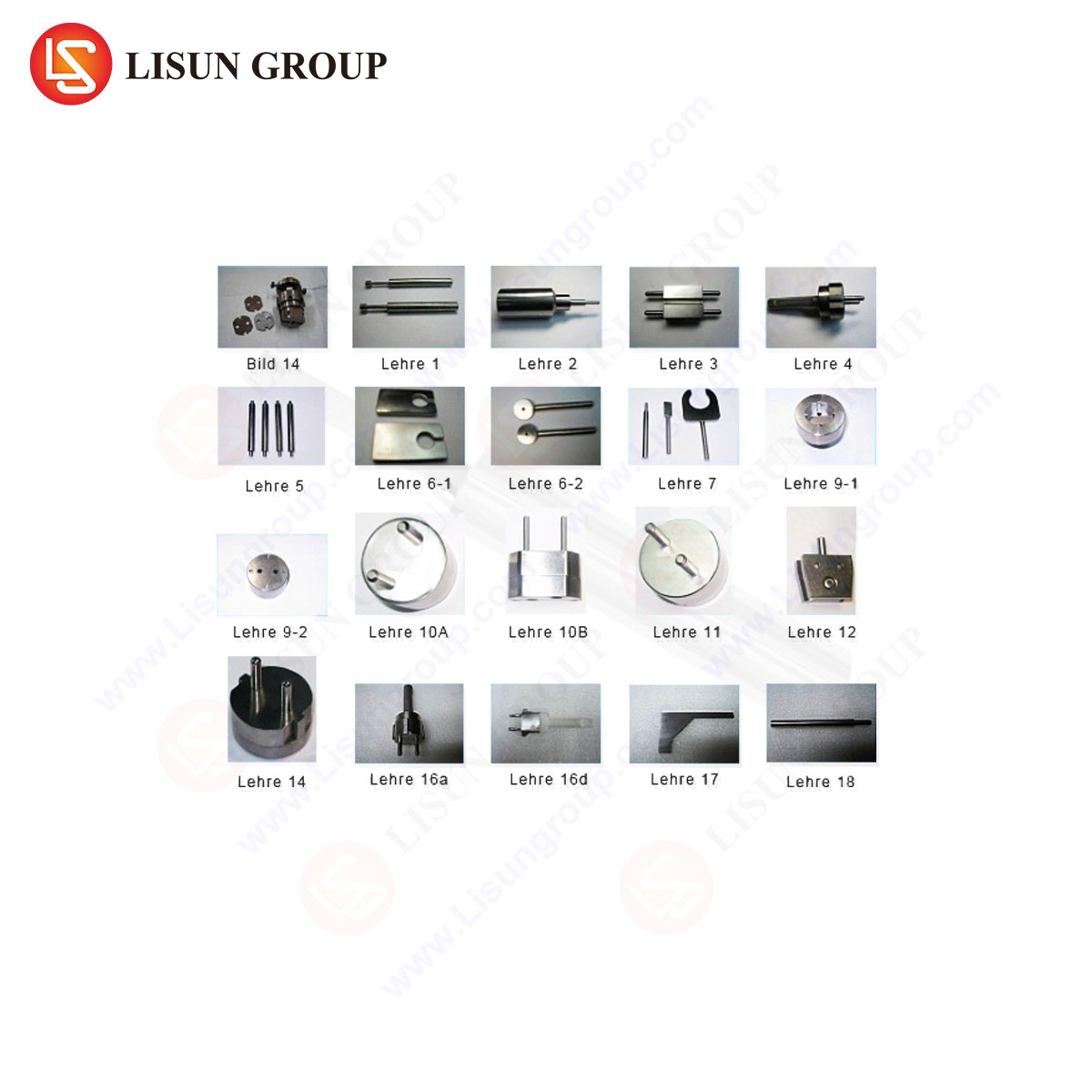
LISUN Gauges for Plugs and Sockets produces a dedicated BS 546 Figure 3 plug gauge engineered to these exacting principles. The LISUN gauge is constructed as a single, robust instrument integrating both “Go” and “No-Go” functions, facilitating efficient inspection. The “Go” section, painted green, must enter the socket under its own weight or with minimal manual pressure, confirming the socket’s minimum acceptable size. The “No-Go” section, typically painted red, must not enter the socket under gentle hand pressure; its admission would indicate excessive wear or out-of-tolerance manufacturing of the socket apertures.
The LISUN gauge specification sheet details exact pin dimensions held to tolerances often tighter than those of the socket standard itself, a practice essential for maintaining gauge integrity. For instance, the earth pin dimension is controlled to a tolerance of ±0.01mm on the nominal maximum material condition, ensuring a definitive pass/fail assessment. The gauge body includes precision-ground reference surfaces that align with the socket face, guaranteeing the pins are presented at the correct insertion angle. Each gauge is supplied with a certificate of calibration traceable to national standards, documenting its as-manufactured dimensions against a master reference. This traceability is a cornerstone of metrological validity in quality assurance processes.
Operational Principles and Procedural Application in Quality Control
The testing principle is one of comparative dimensional analysis. The gauge serves as a physical embodiment of the specification limits. In a production or incoming quality control (IQC) setting, the procedure is systematic. The inspector first visually checks the socket for obvious defects before applying the gauge. The “Go” end is carefully offered to the socket, ensuring proper alignment with the polarization features. It should engage fully, with the gauge body seating flush against the socket face without binding or excessive force. This test confirms the socket is not undersized.
Subsequently, the “No-Go” end is applied. Correct application involves a defined test force, often stipulated as not exceeding a few newtons, to prevent false failures from elastic deformation. The “No-Go” pins, or the specific “No-Go” ring on a combined gauge, must not enter the socket apertures. If they do, the socket is rejected as oversized. This two-stage test validates that the socket’s critical dimensions lie within the acceptable tolerance zone, ensuring it will securely mate with any plug manufactured within its own permissible limits.
Industry Use Cases and Application Environments
The application of BS 546 Figure 3 plug gauges spans several critical domains within the electrical manufacturing and regulatory ecosystem. Primary use is within socket manufacturing facilities, where they are employed for first-article inspection, random sampling during production runs, and 100% inspection of high-reliability product lines. They are indispensable tools for quality engineers tasked with preventing non-conforming products from entering the supply chain.
A second major application is within certification bodies and testing laboratories, such as those providing approval to standards like BS EN 60884-1 or specific national regulations. Here, gauges are used during type-testing and surveillance audits to verify product compliance as part of a broader suite of electrical, mechanical, and thermal tests. A third, vital use case is within facilities management and maintenance operations for legacy installations in buildings, factories, or infrastructure where BS 546 sockets remain in service. Periodic verification with plug gauges can identify worn or damaged sockets that pose a safety risk and require replacement, forming part of a proactive electrical safety maintenance program.
Competitive Advantages of a Dedicated Gauge System
Utilizing a purpose-built gauge system, such as that offered by LISUN, presents distinct advantages over ad-hoc or less precise verification methods. The foremost advantage is objectivity and repeatability. The gauge provides a binary, operator-independent result, eliminating the subjectivity associated with visual checks or using an actual plug for fit assessment. This reduces human error and ensures consistent quality decisions.
Secondly, it protects against liability. By using a calibrated, traceable instrument, a manufacturer or tester can demonstrate due diligence in verifying compliance with a recognized standard. This documented evidence is crucial during audits, in the event of a product recall, or for legal defensibility. Thirdly, it enhances efficiency. A well-designed gauge allows for rapid testing—often a matter of seconds per socket—which is essential for maintaining throughput in production environments without compromising on safety checks. The durability of professionally manufactured gauges from hardened materials ensures a long service life and a lower total cost of ownership compared to improvised tools that wear quickly and lose accuracy.
Integration with Broader Electrical Safety Testing Regimes
It is crucial to position dimensional gauge testing within the holistic context of product validation. While a plug gauge verifies mechanical conformity, it is a single element in a comprehensive testing regimen. A fully compliant socket must also undergo rigorous electrical testing, including but not limited to: dielectric strength testing (high-potential or hipot tests) to verify insulation integrity, earth continuity resistance measurements, temperature rise tests under load, and mechanical endurance tests (insertion and withdrawal cycles). The plug gauge ensures that subsequent electrical tests are performed on a dimensionally representative sample, and that the socket’s safety in the field will not be compromised by poor mating geometry. As such, the gauge is the first, critical gate in a multi-stage verification process.
Conclusion: The Indispensable Role of Precision Metrology
In conclusion, the specification and application of BS 546 Figure 3 plug gauges represent a fundamental exercise in applied metrology for electrical safety. The precise translation of standard dimensional requirements into a physical tool requires meticulous engineering and an understanding of tolerance stacking and functional fit. Instruments like the LISUN Gauges for Plugs and Sockets provide the necessary precision, reliability, and traceability to empower manufacturers, test labs, and maintenance professionals to enforce compliance confidently. In an industry where marginal deviations can have significant consequences, such dedicated verification tools are not merely convenient but are essential components in safeguarding the integrity of electrical connections and, by extension, public and property safety.
Frequently Asked Questions (FAQ)
Q1: Can a LISUN BS 546 Figure 3 gauge be used to test sockets from other standards, such as BS 1363 or IEC types?
A1: No, it cannot. Plug gauges are highly specific to the geometric configuration defined by a particular standard. The pin arrangement, sizes, shapes, and polarization features of BS 546 Figure 3 are unique. Testing a BS 1363 (UK 13A) or an IEC Type G socket with this gauge would be physically impossible and would yield no meaningful result. A dedicated gauge must be used for each distinct socket pattern.
Q2: How often should a plug gauge be recalibrated to ensure ongoing accuracy?
A2: Recalibration frequency depends on usage intensity and the quality control environment. For high-volume production line use, an annual recalibration is typically recommended. For periodic laboratory or audit use, a biennial cycle may suffice. However, the gauge should be inspected for visible damage or wear before each use, and recalibrated immediately if dropped or subjected to impact. The calibration certificate will often suggest a maximum interval.
Q3: What is the consequence if a socket accepts the “No-Go” gauge?
A3: If a socket fully admits the “No-Go” gauge under specified gentle pressure, it indicates that one or more of its contact apertures have exceeded the maximum allowable wear limit or were manufactured oversized. This condition is a critical failure. An oversized socket will not provide sufficient contact pressure on a standard plug pin, leading to a high-resistance connection. This can result in localized overheating, energy loss, potential melting of the socket housing, and a significant fire risk. The socket must be rejected and replaced.
Q4: Does the LISUN gauge test all aspects of a socket’s safety?
A4: No, it does not. As emphasized, the plug gauge is a dimensional verification tool. It assesses mechanical conformity only. It does not test electrical insulation, earth continuity, thermal performance, or mechanical durability. A socket that passes the gauge test is dimensionally compliant but must still pass the full suite of electrical safety tests defined by the relevant product standards to be deemed safe for service.
Q5: In a legacy building, if existing sockets pass the gauge test, are they guaranteed to be safe?
A5: Passing the gauge test is a positive indicator of dimensional integrity but is not a guarantee of overall safety. Legacy sockets may have degraded internal contacts, cracked insulation, or loose terminal connections that the gauge cannot detect. A full electrical inspection by a qualified professional, including earth loop impedance and insulation resistance testing, is required to certify the safety of an existing installation. The gauge test is a useful preliminary check for obvious mechanical wear.