




Methodological Framework for Accelerated Corrosion Evaluation: Establishing a Controlled Cass Test Environment
The Cass Corrosion Test, formally standardized as ASTM B368 / ISO 9227 (Method C), represents a critical accelerated weathering procedure designed to evaluate the relative resistance of materials, components, and protective coatings to corrosive degradation. Unlike the neutral salt spray (NSS) test, the Cass test incorporates an acidifying agent—copper(II) chloride—and elevated temperature to create a more aggressive environment that simulates and accelerates the effects of industrial and urban atmospheric corrosion. This article delineates the precise procedural methodology for establishing a compliant Cass test environment, with particular emphasis on the instrumental rigor required for reproducible, standards-aligned results. The configuration and calibration of the test apparatus are foundational; even minor deviations in environmental parameters can invalidate data and lead to erroneous comparative conclusions regarding product durability.
Fundamental Principles of the Copper-Accelerated Acetic Acid Salt Spray Test
The Cass test operates on the principle of creating a consistently aggressive corrosive fog within an enclosed chamber. The test solution is a 5% sodium chloride (NaCl) brine, acidified to a pH of 3.1–3.3 using glacial acetic acid, with the addition of 0.26 g/L of copper(II) chloride dihydrate (CuCl₂·2H₂O). The presence of copper ions acts as a cathodic depolarizer, significantly accelerating the corrosion process, particularly for decorative copper-nickel-chromium or nickel-chromium electroplated systems. The test is conducted at an elevated chamber temperature of 49°C ± 2°C (120°F ± 3°F). This combination of acidic chloride mist, catalytic copper ions, and thermal energy provides a severe but controlled acceleration factor, making it a preferred method for rapid quality assurance checks and comparative rankings of substrate-coating systems intended for harsh service environments.
Instrumentation Prerequisites: The YWX/Q-010X Cyclic Corrosion Test Chamber
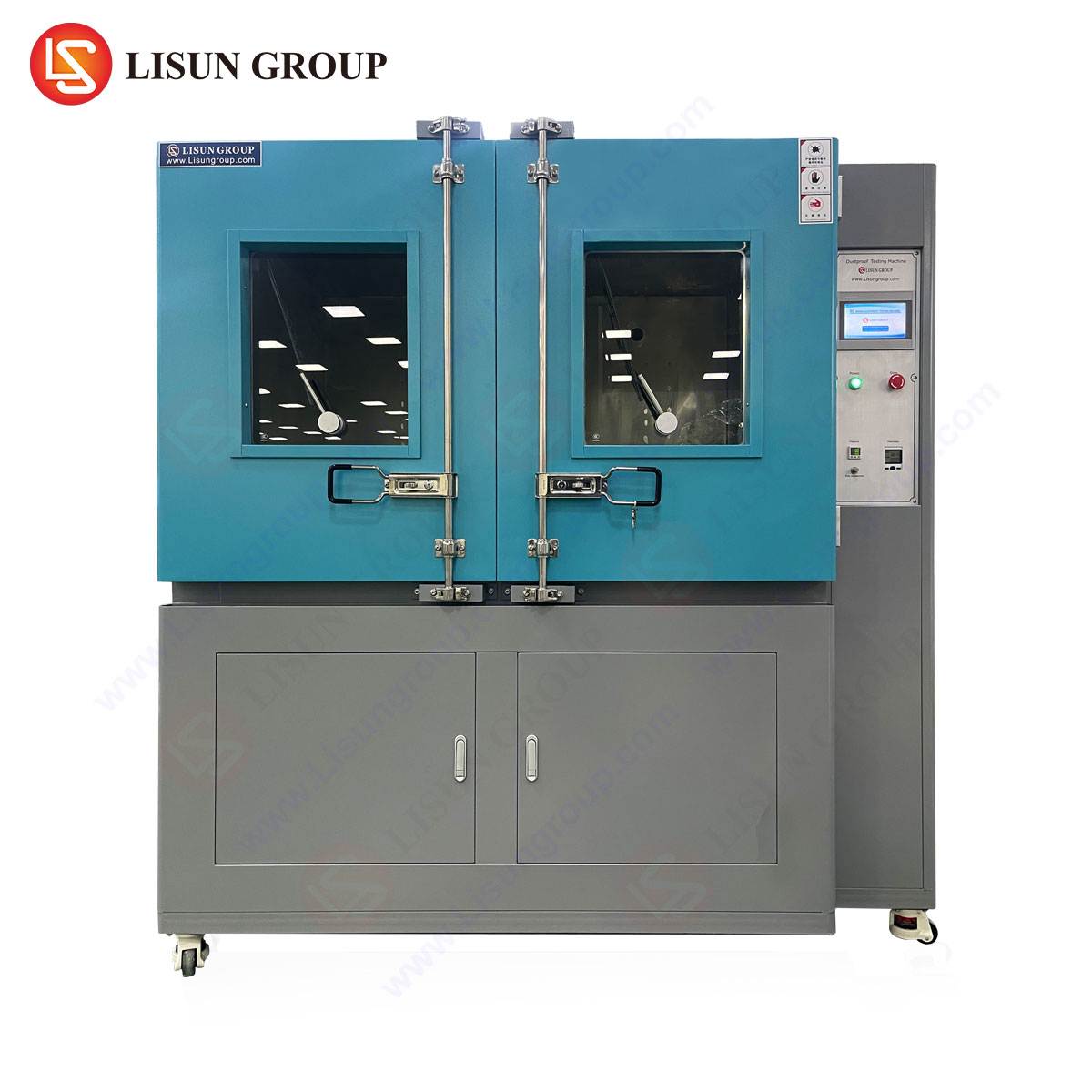
Achieving the stringent environmental controls mandated by ASTM B368 and ISO 9227 necessitates specialized instrumentation. The LISUN YWX/Q-010X Salt Spray Test Chamber is engineered to meet these exacting requirements for Cass testing, among other standardized protocols. Its design philosophy centers on spatial homogeneity of the corrosive mist, thermal stability, and precise chemical dosing.
Core Specifications and Operational Principles:
The chamber features a double-wall, temperature-controlled enclosure constructed from corrosion-resistant polymer materials. A digitally programmable controller manages all critical parameters. The heart of the system is its atomization system, which utilizes a compressed air-driven nozzle to generate a fine, uniform fog from the prepared Cass test solution. The air supply is preconditioned through a series of saturator towers to heat and humidity the air prior to atomization, preventing evaporation of the droplets and ensuring a consistent settlement rate. The chamber includes a transparent canopy for specimen observation without disrupting the test environment. Integral heating elements and air circulation fans maintain the specified temperature uniformity across the entire workspace.
Competitive Advantages in Cass Testing Setup:
The YWX/Q-010X incorporates several features that directly address common pitfalls in Cass test setup. Its automatic pH monitoring and dosing system (optional) is a significant differentiator, allowing for continuous regulation of the test solution’s acidity, which is prone to drift due to atmospheric carbon dioxide absorption. Furthermore, its precision temperature controller, with a resolution of 0.1°C, ensures the 49°C setpoint is maintained within the ±2°C tolerance. The chamber’s mist settlement collection apparatus is designed per standard geometry, facilitating easy verification that the settlement rate falls within the required 1.0 to 2.0 mL per 80 cm² per hour—a critical and often overlooked validation step.
Preparation of the Standardized Cass Test Solution
The chemical composition of the test solution is non-negotiable. Deviations here constitute a fundamental procedural failure. The solution must be prepared using reagent-grade chemicals and deionized or distilled water with a conductivity below 20 µS/cm to prevent contamination.
A standard preparation involves dissolving 5 parts by mass of sodium chloride in 95 parts of water. To this, 0.26 grams of copper(II) chloride dihydrate is added per liter of total solution. Finally, glacial acetic acid is used to adjust the pH to 3.2, as measured at 25°C ± 2°C. It is imperative that the pH is checked and adjusted after the addition of all components and at the specified temperature, as pH is temperature-dependent. The solution should be filtered before introduction into the chamber’s reservoir to prevent nozzle clogging.
Calibration and Validation of Chamber Parameters Prior to Testing
Before introducing test specimens, the empty chamber must be validated to ensure it operates within the specified tolerances. This pre-test calibration is a multi-step process.
1. Temperature Calibration: Independent, calibrated temperature sensors should be placed at multiple locations within the chamber workspace, including the geometric center and near the corners. The chamber is run at the 49°C setpoint until stabilized, and readings are compared against the chamber’s internal sensor. All readings must fall within the 47–51°C range.
2. Settlement Rate Verification: This quantifies the volume of corrosive fog settling on the specimens per unit area per hour. Clean, graduated collection funnels with an 80 cm² collection area (diameter ~10 cm) are placed at a minimum of two locations within the specimen zone. The chamber is run for a minimum of 16 hours, after which the collected solution in each funnel is measured. The average collection rate across all funnels must be between 1.0 and 2.0 mL per hour per 80 cm². A rate outside this range indicates improper atomizer pressure, incorrect solution level, or compromised nozzle integrity.
3. Solution pH Verification: The pH of the collected solution from the settlement test must be measured at 25°C and confirmed to be within 3.1–3.3. This validates that the chamber environment maintains the required acidity.
Specimen Preparation, Placement, and Orientation Protocols
Test specimens must be prepared in a manner representative of their end-use condition. For coated parts, edges, cut faces, or drilled holes that expose the substrate often require masking with a chemically inert wax or tape, provided the masking does not creep onto the test surface. Specimens must be clean and free of fingerprints or other contaminants.
Placement within the chamber is governed by standards to prevent cross-contamination and ensure uniform exposure. Specimens should be arranged so they do not contact each other or any metallic part of the chamber. The recommended orientation is between 15° and 30° from vertical, depending on the product form, to allow condensate to run off without pooling excessively. For components like electrical connectors, printed circuit board assemblies (PCBAs), or automotive sensor housings, the orientation should simulate their service position where possible. All specimens should be labeled with a corrosion-resistant material.
Industry-Specific Application Contexts for Cass Testing
The aggressive nature of the Cass test makes it suitable for evaluating high-reliability components and finishes.
- Automotive Electronics & Aerospace Components: Used to test the corrosion resistance of aluminum alloy chassis, electrical connector pin plating (e.g., gold over nickel), and protective conformal coatings on engine control units (ECUs) or avionics boxes, where exposure to de-icing salts and industrial atmospheres is a concern.
- Electrical & Electronic Equipment: Validating the durability of plated finishes on switches, sockets, and industrial control system housings, as well as the seals on medical device enclosures that must withstand repeated disinfection with chloride-containing agents.
- Lighting Fixtures & Telecommunications Equipment: Assessing the performance of exterior finishes on streetlight housings, antenna radomes, and outdoor cabinet coatings, where long-term aesthetic integrity and protection against coastal or road-salt environments are critical.
- Consumer Electronics & Office Equipment: While less common for benign indoor use, Cass testing may be applied to portable device chassis or connector ports intended for global markets with varied climatic conditions, ensuring no premature cosmetic or functional failure.
Monitoring, Documentation, and Termination of Test Cycles
During the test, chamber temperature and pressure should be logged at least daily. For extended tests, periodic checks of the solution level and pH are necessary. The test duration is not fixed by the standard but is defined by the material specification or testing objective. Common durations range from 6 to 96 hours for many plated finishes. Termination involves carefully removing specimens, gently rinsing them with lukewarm running water to remove salt deposits, and then drying immediately with clean, compressed air or blotting with a lint-free cloth. The evaluation of corrosion, blistering, adhesion loss, or other failure modes is conducted according to relevant standards (e.g., ASTM D1654, ISO 4628) and must be performed promptly after drying to prevent the continuation of corrosive activity.
Data Interpretation and Correlation to Service Life
It is paramount to recognize that the Cass test is an accelerated, comparative tool, not a precise predictor of service life. A 96-hour Cass test pass does not equate to a 10-year field life in a specific environment. Its value lies in batch-to-batch consistency checks, comparative ranking of different coating systems or plating processes, and as a quality gate in manufacturing. Correlation to real-world performance requires historical data pairing specific Cass test results with field performance in known environments.
Frequently Asked Questions (FAQ)
Q1: Why is the pH control so critical in the Cass test compared to the NSS test?
The acidic environment (pH ~3.2) in the Cass test actively attacks many protective oxide layers and accelerates the anodic dissolution of metals. In NSS tests (pH ~6.5-7.2), corrosion is driven primarily by chloride ion penetration. A drift in Cass solution pH towards neutrality would invalidate the test’s intended acceleration mechanism and severity, yielding non-comparable and overly optimistic results.
Q2: Can the YWX/Q-010X chamber be used for tests other than the standard Cass test?
Yes. The LISUN YWX/Q-010X is a versatile cyclic corrosion test chamber. While configured here for the continuous Cass test, it can be programmed for Neutral Salt Spray (NSS), Acetic Acid Salt Spray (AASS), and cyclic tests involving alternating phases of salt spray, humidity, drying, and static storage, as required by standards like SAE J2334 or custom automotive OEM specifications.
Q3: How often should the Cass test solution be replaced in the reservoir?
The test solution should be replaced at the start of each new test series. For tests exceeding 48 hours, it is advisable to monitor the reservoir pH and chemistry. Solution should be discarded immediately if it becomes contaminated with foreign matter, shows visible precipitation, or cannot maintain the correct pH, as this indicates exhaustion or contamination.
Q4: What is the significance of the copper(II) chloride addition?
Copper ions act as a cathodic depolarizer. During corrosion, they are reduced at cathodic sites on the metal surface, effectively removing the hydrogen film that can polarize and slow the corrosion reaction. This catalytic action dramatically accelerates the corrosion rate, particularly for cathodic coatings like chromium, allowing for defects in underlying nickel layers to be revealed quickly.
Q5: For a new product with no historical test data, how is an appropriate Cass test duration determined?
Initial duration selection is typically based on the relevant industry or material specification. For example, an automotive specification for decorative plating may mandate 96 hours. In the absence of such a standard, a comparative approach is used: testing the new product alongside a known benchmark product with established field performance. The duration is set to induce a defined, measurable level of corrosion (e.g., first red rust) on the benchmark, providing a relative performance metric for the new item.