




A Methodological Framework for Selecting Salt Fog Corrosion Test Equipment
The evaluation of material and component resistance to corrosive environments remains a cornerstone of reliability engineering across a multitude of industries. Among accelerated corrosion test methodologies, salt fog (spray) testing, standardized in protocols such as ASTM B117, ISO 9227, and JIS Z 2371, is a fundamental and widely mandated procedure. Its primary function is to provide a controlled, reproducible, and severely corrosive atmosphere to rapidly assess the protective qualities of coatings, platings, and material compositions. The selection of an appropriate salt fog corrosion tester, however, is not a trivial exercise. It requires a systematic analysis of test standards, application-specific requirements, chamber capabilities, and long-term operational integrity. An ill-suited apparatus can yield non-compliant data, leading to costly design missteps, premature field failures, or non-conformance in regulated sectors.
Deconstructing the Salt Fog Test Principle and Governing Standards
At its core, the salt fog test simulates a marine or de-icing salt-laden atmosphere. A prepared 5% sodium chloride solution is atomized into a fine fog within a sealed test chamber maintained at elevated temperature (typically 35°C ± 2°C for neutral salt spray tests). The settled fog forms a continuous, corrosive electrolyte film on specimens. The test does not precisely replicate real-world corrosion rates but provides a controlled comparative ranking. Specimens are evaluated periodically for the appearance of corrosion products (e.g., white or red rust), coating blistering, or loss of adhesion after a predetermined exposure period.
Compliance with international standards is non-negotiable for test validity. These standards meticulously define parameters including:
- Solution pH, Concentration, and Purity: ASTM B117 specifies a pH of 6.5 to 7.2 for the collected solution at 35°C.
- Chamber Temperature Stability and Uniformity: Critical for consistent condensation and corrosion kinetics.
- Fog Collection Rate: Typically mandated at 1.0 to 2.0 ml per 80cm² per hour, ensuring a consistent corrosive load.
- Saturation Tower Conditions: The compressed air used for atomization must be humidified and heated to prevent solution concentration drift within the reservoir.
- Chamber Construction Materials: Must be inherently resistant to the corrosive environment to prevent contamination.
Deviation from these controlled parameters invalidates test results, rendering data useless for comparative analysis or compliance certification.
Critical Technical Specifications for Chamber Selection
Selecting a tester necessitates a forensic examination of its technical specifications against both standard mandates and user-specific needs.
Chamber Volume and Spatial Dynamics: Test volume must accommodate the largest anticipated specimens or test racks while ensuring uniform fog distribution. Oversized chambers running with small loads waste energy and may struggle with humidity stability. Internal geometry should minimize dead zones where fog circulation is poor. Baffles and optimized nozzle placement are design features that enhance uniformity.
Construction Integrity and Material Science: Chamber linings, typically from glass-reinforced polyester (GRP), polyvinyl chloride (PVC), or polypropylene (PP), must exhibit zero permeability and high structural strength under continuous thermal and chemical stress. Seals, gaskets, and heating elements require specialized, corrosion-resistant designs. The longevity of the chamber is directly tied to the quality of these materials.
Precision Climate Control Systems: A high-performance tester integrates a multi-layered control system. This includes:
- Air Saturation System: A tower where compressed air is bubbled through heated distilled water, achieving near 100% relative humidity before atomizing the salt solution.
- Redundant Heating: Often employing separate heating circuits for the chamber air and the saturation tower, controlled by PID (Proportional-Integral-Derivative) algorithms for stability within ±0.5°C.
- Advanced Fog Dispersion: Nozzle design, often using sapphire orifices for wear resistance, and air pressure regulation are crucial for achieving the mandated, consistent fog collection rate.
Instrumentation and Data Integrity: Modern testers transcend simple analog controllers. Digital touchscreen interfaces facilitating programmable test profiles, real-time graphing of temperature and collection rate, and alarm logging are essential for audit trails. Data logging capabilities, including USB or Ethernet export, support quality management systems like ISO 17025.
Application-Specific Demands Across Industrial Sectors
The test regimen and chamber features must align with the failure modes relevant to the end-use industry.
- Automotive Electronics & Aerospace Components: These sectors often employ cyclic corrosion tests (CCT) that alternate between salt fog, humidity, drying, and sometimes freezing. A basic neutral salt spray chamber is insufficient. Selection must consider chambers with programmable humidity control, dry air purge capabilities, and rapid transition times between phases.
- Electrical & Electronic Equipment, Telecommunications: For printed circuit board assemblies (PCBAs), connectors, and enclosures, testing often evaluates electrochemical migration and corrosion-induced short circuits. Test standards may involve acidic or copper-accelerated acetic acid salt spray (CASS, per ASTM B368) for faster results on decorative coatings, requiring chambers resistant to more aggressive chemistries.
- Lighting Fixtures & Outdoor Industrial Control Systems: Here, resistance to corrosion is critical for maintaining waterproof integrity (IP ratings) and mechanical function of housings, heat sinks, and moving parts. Test duration may be extended (500-1000+ hours), demanding exceptional chamber reliability and low maintenance.
- Medical Devices & Implantable Components: Beyond external housing tests, some applications may involve testing the corrosion resistance of metallic biomaterials. This demands chambers capable of precise pH control and the use of specialized synthetic body fluids, alongside impeccable cleanliness to avoid contaminant introduction.
- Cable, Wiring Systems, and Electrical Components: Tests focus on insulation degradation, connector corrosion, and the integrity of sealing grommets. Chamber racking must accommodate long, flexible samples without compromising fog circulation.
The LISUN YWX/Q-010X Salt Spray Test Chamber: A Technical Analysis
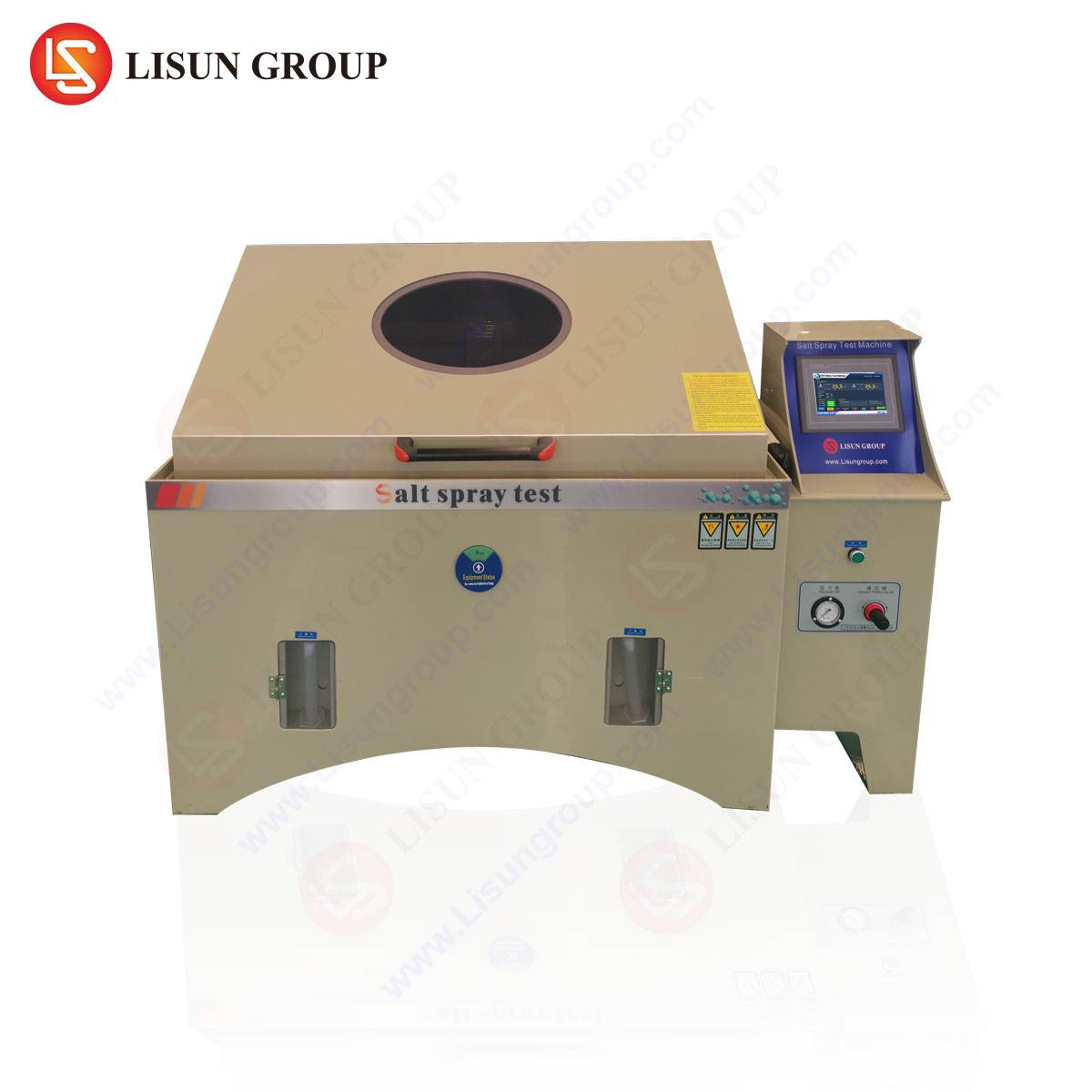
The LISUN YWX/Q-010X model represents a fully compliant, engineered solution for neutral salt spray (NSS), acid salt spray (ASS), and copper-accelerated acetic acid salt spray (CASS) tests per major international standards. Its design incorporates several features that address the critical selection criteria outlined above.
Specifications and Core Architecture:
- Chamber Volume: A 270-liter internal workspace provides ample capacity for standard test racks.
- Construction: Utilizes a 5mm thick, CNC-welded imported PVC plate for the main chamber, ensuring seam integrity and long-term resistance to acidic and saline environments. The outer casing is powder-coated steel for structural rigidity.
- Climate Control System: Employs a dual-stage air saturation tower with automatic water leveling and independent PID temperature control. The chamber heating uses a corrosion-resistant titanium alloy tubular heater.
- Atomization System: Features a calibrated, adjustable nozzle with a sapphire orifice for consistent fog generation and extended service life. The system includes a built-in collection funnel and graduated cylinder for verifying the mandated 1-2 ml/hr collection rate.
- Control & Interface: A color touchscreen PLC controller allows for programming of test duration, temperature, and spray cycles. It provides real-time monitoring of chamber and saturation tower temperatures, with data logging and fault alarm functions.
Testing Principles Embodied: The YWX/Q-010X operationalizes the standard salt fog principle with a focus on parameter stability. Compressed air is humidified and heated in the saturation tower to equilibrium with the chamber temperature, preventing a net draw of moisture from the salt reservoir which would alter its concentration. This pre-conditioned air then draws the salt solution from a reservoir, via a siphon, to the nozzle for atomization. The PID-controlled heating system maintains the chamber air temperature within a tight tolerance, ensuring the correct rate of condensation on specimens.
Industry Use Case Implementation:
- Consumer Electronics & Office Equipment: A smartphone manufacturer uses the YWX/Q-010X to test the corrosion resistance of aluminum alloy frames and charging port assemblies, subjecting them to 96-hour NSS tests to validate coating quality.
- Automotive Electronics: A supplier of engine control units (ECUs) performs 240-hour tests on conformal-coated PCBAs and connector seals to meet OEM specifications derived from ISO 9227.
- Lighting Fixtures: A producer of LED streetlights tests the powder-coated aluminum housings and glass lens gaskets for 500 hours to predict performance in coastal environments.
Competitive Advantages in Context:
The YWX/Q-010X differentiates itself through several engineered solutions:
- Material Resilience: The use of thick, imported PVC and titanium heaters directly targets the pain point of chamber degradation, reducing maintenance downtime and contamination risk.
- Control System Fidelity: The digital PID control for both chamber and tower temperatures enhances compliance with the strict uniformity requirements of ASTM B117, reducing test result variability.
- Operational Transparency: The integrated collection funnel and cylinder simplify the critical daily verification of fog settlement rate, a routine but essential quality control step often cumbersome in lesser designs.
- Application Flexibility: Built-in compatibility for NSS, ASS, and CASS tests allows a single chamber to serve multiple departmental needs across an R&D or quality lab, from testing decorative automotive trim (CASS) to industrial electrical cabinets (NSS).
Total Cost of Ownership and Operational Considerations
The purchase price is a single component of the total investment. A comprehensive evaluation must include:
- Utilities Consumption: Efficiency of heating systems and compressor air requirements impact ongoing costs.
- Maintenance Regimen: Ease of accessing nozzles for cleaning, durability of solution reservoirs, and availability of spare parts (e.g., sapphire nozzles, heater elements) define long-term operational uptime.
- Calibration and Compliance: The chamber itself requires periodic calibration of its temperature sensors and verification of its fog collection rate. Designs that facilitate these procedures reduce validation costs.
- Waste Neutralization: Disposal of spent salt solutions, particularly acidic variants, carries environmental and cost implications. Some advanced systems may offer neutralization aids.
Validation and Compliance: The Final Gatekeepers
Upon installation, a chamber must undergo a rigorous qualification (IQ/OQ/PQ) process. This includes mapping temperature uniformity across the workspace, verifying fog collection rates at multiple points, and confirming the pH of the collected solution. This initial validation, and its periodic re-execution, forms the bedrock of test data credibility. The chosen supplier should provide not only a compliant machine but also the technical documentation and support to facilitate this validation process seamlessly.
Conclusion
Selecting the right salt fog corrosion tester is a systems engineering decision with direct implications for product reliability, safety, and regulatory approval. It necessitates a cross-functional analysis bridging the requirements of international test standards, the specific corrosion failure modes of the product under evaluation, and the practical realities of laboratory operation. By prioritizing technical specifications that guarantee parameter stability—such as precision climate control, robust construction, and verifiable fog dispersion—over mere feature lists, organizations can invest in a capital asset that delivers reproducible, compliant, and actionable corrosion data for years to operation. Equipment like the LISUN YWX/Q-010X, through its focus on material integrity and control fidelity, exemplifies an architecture designed to meet these rigorous demands across the spectrum of electrical, electronic, and industrial component testing.
Frequently Asked Questions (FAQ)
Q1: Can the YWX/Q-010X chamber perform cyclic corrosion tests (CCT)?
A1: The standard YWX/Q-010X is designed for continuous salt spray tests as per ASTM B117, ISO 9227, and similar standards. While it excels at neutral, acetic acid, and CASS tests, it does not include the programmable humidity control and rapid drying systems required for true cyclic tests involving wet/dry or humidity cycles. For CCT profiles, a dedicated cyclic corrosion chamber is necessary.
Q2: How often do the atomizing nozzles and salt solution need to be replaced or maintained?
A2: The sapphire orifice nozzle is wear-resistant but should be inspected and cleaned weekly to prevent clogging from impurities. The 5% sodium chloride solution should be prepared fresh for each test using ASTM Type IV or equivalent deionized water and high-purity salt to prevent nozzle blockage and pH drift. The solution reservoir should be drained and cleaned between test cycles to prevent biological growth or sediment accumulation.
Q3: What preparatory steps are required for testing coated electrical components like connectors or switches?
A3: Prior to testing, specimens must be cleaned to remove contaminants that could influence results, using a method that does not damage the coating. Uncoated areas (e.g., cutting edges) must be sealed with a stable, non-reactive protective medium like wax or tape. Critical contact surfaces may be masked. The components must be mounted on racks at an angle specified by the standard (typically 15-30° from vertical) to ensure consistent fog settlement and avoid pooling.
Q4: Our standard requires testing at a temperature of 35°C ± 1°C. How is this uniformity achieved and verified in the chamber?
A4: The chamber uses a PID-controlled heating system with strategically placed sensors and fans to promote air circulation. Uniformity is verified during initial qualification and periodic recalibration by placing multiple calibrated temperature sensors (e.g., 9-point grid) throughout the empty workspace during a stability run. The data logger function can assist in this verification. The YWX/Q-010X’s design aims to minimize thermal gradients to meet this strict tolerance.
Q5: After a salt spray test, how should specimens be handled to evaluate corrosion correctly?
A5: Specimens must be handled carefully to avoid removing corrosion products. The standard procedure (e.g., ASTM B117) specifies rinsing the specimens gently under running lukewarm water (< 38°C) to remove residual salt, then drying immediately with clean, compressed air or blotting with a lint-free cloth. Evaluation for corrosion type, extent, and adhesion loss is then performed according to the relevant acceptance criteria, often using visual comparison to standardized photographs or ratings.