

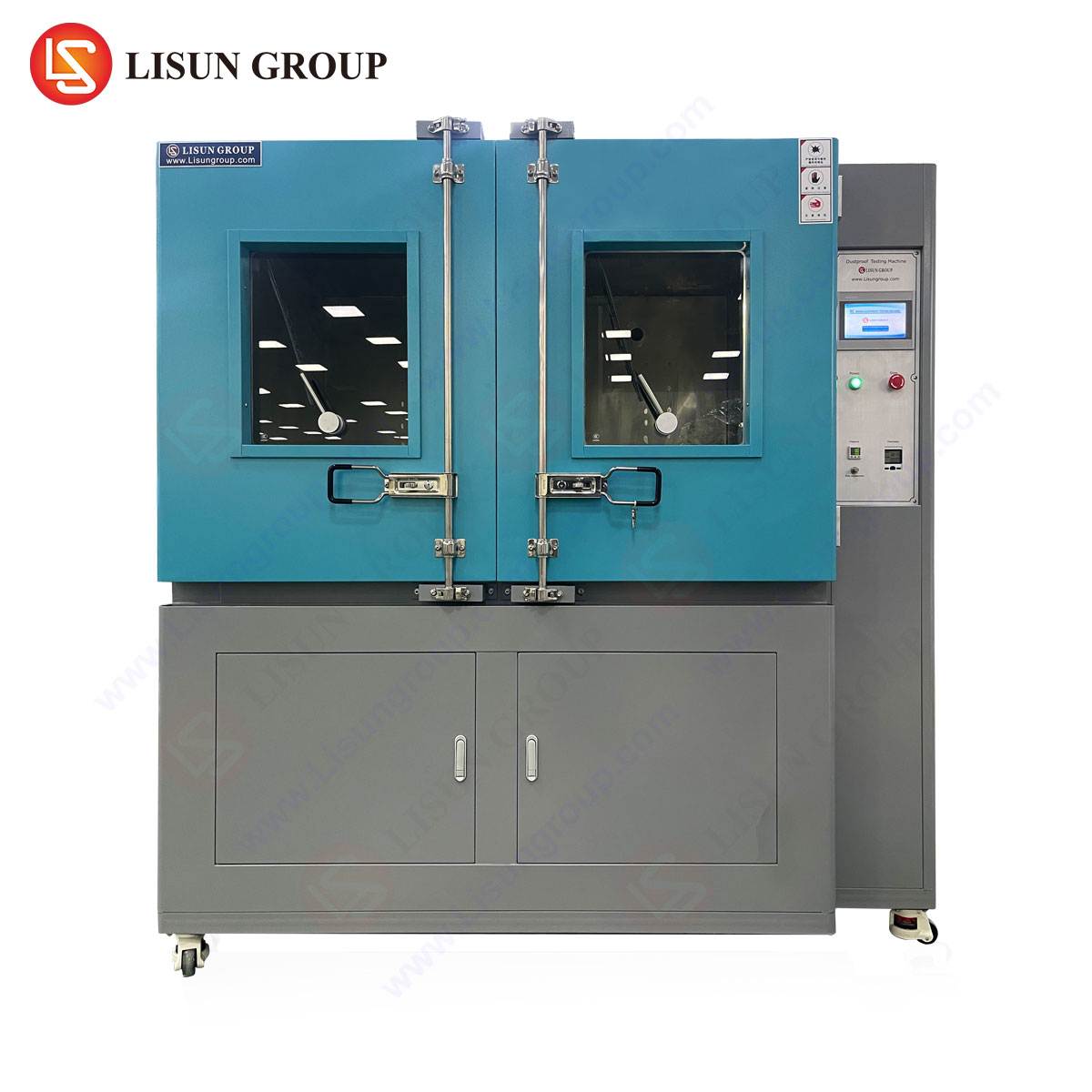
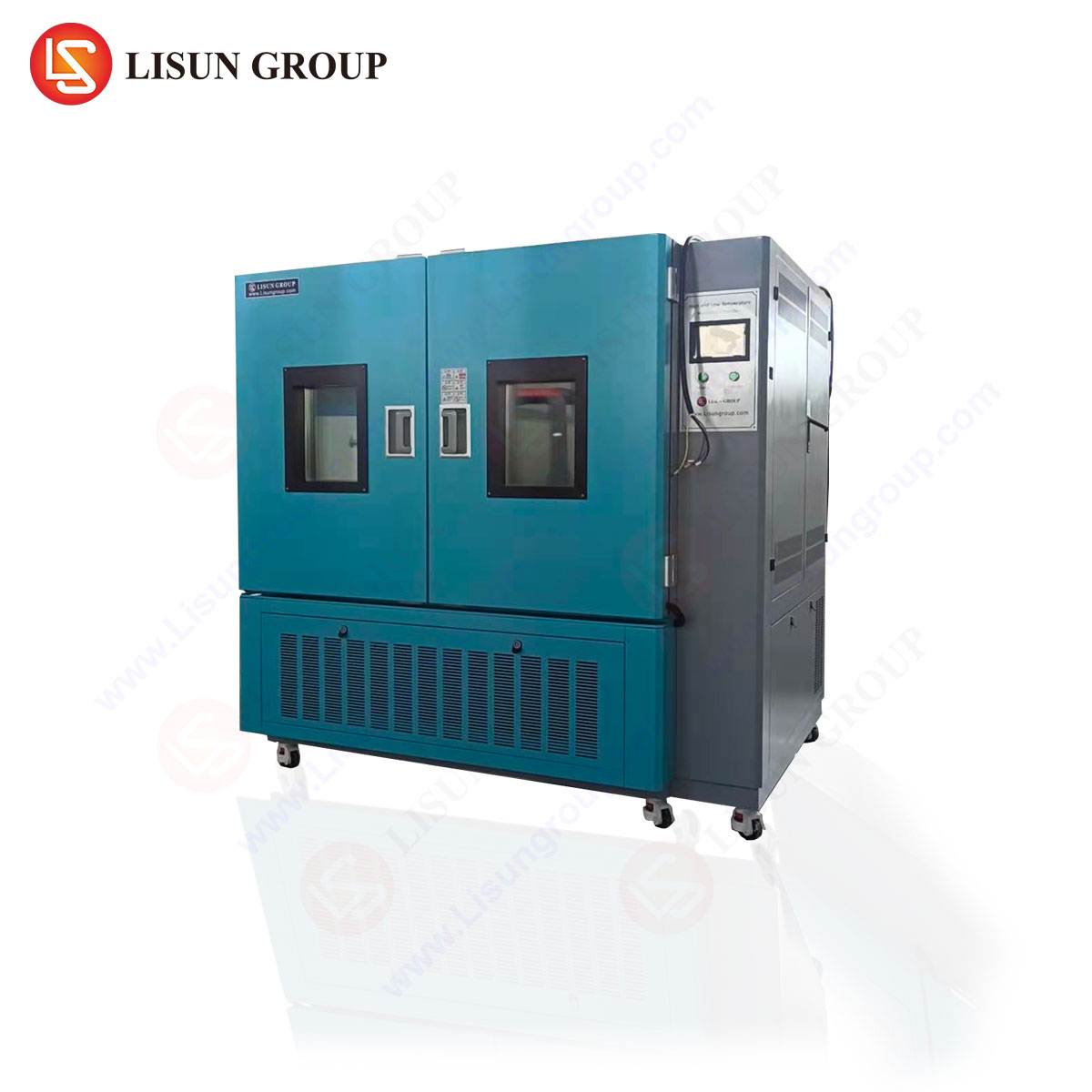
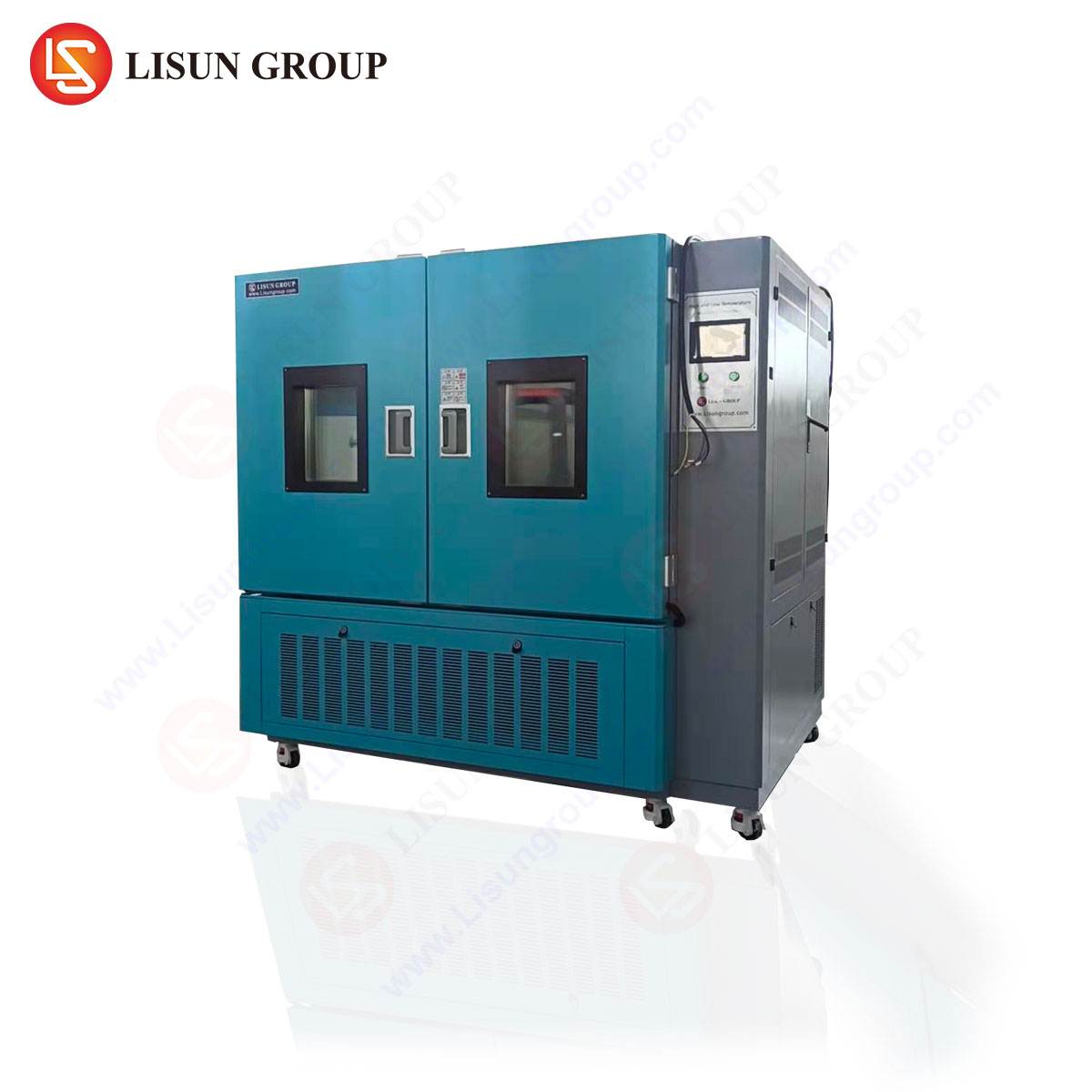



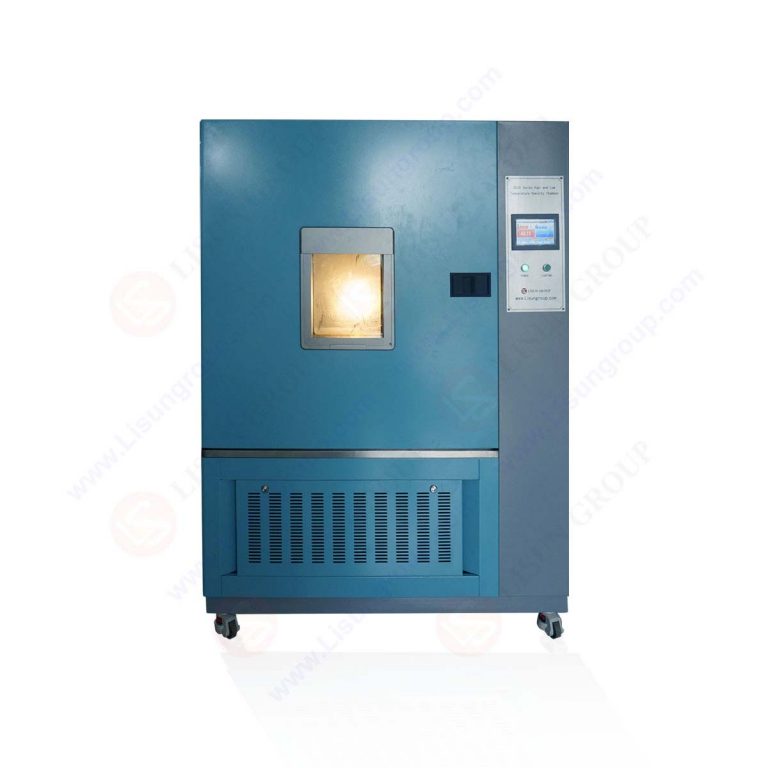
The validation of product reliability across industries—from solid-state lighting to automotive electronics—demands the precise, repeatable application of controlled environmental stress. The LISUN GDJS Series High-Low Temperature & Humidity Cycling Test Chamber serves as a critical instrument for executing standardized test profiles, including those mandated by IEC 60068-2-1 (Cold) and its companion standards, which form the bedrock of environmental testing for electrical and electronic components. This whitepaper provides a rigorous engineering analysis of climatic chamber architecture, control systems, and performance benchmarks, focusing on the thermodynamic principles that enable accurate simulation of field conditions for accelerated aging, lumen maintenance verification per IES LM-80-08, and comprehensive reliability qualification per AEC-Q102 and ISO 16750. The correlation between chamber performance metrics—such as temperature uniformity, humidity stability, and ramp rate linearity—and the statistical validity of test outcomes is paramount, necessitating an equipment design that transcends minimum compliance to ensure data integrity across extended test durations often exceeding 6,000 hours.
The structural integrity and thermal efficiency of a climatic chamber are foundational to its performance. The LISUN GDJS Series High-Low Temperature & Humidity Cycling Test Chamber employs SUS304 (06Cr19Ni10) austenitic stainless steel for the inner test tank, selected for its superior corrosion resistance (with a PREN > 20) and non-contaminating mirror-finish surface (Ra ≤ 0.8 µm), which prevents outgassing and ensures a chemically inert environment for sensitive optoelectronic components. Thermal insulation is achieved through a composite barrier consisting of rigid polyurethane foam (PUR) with a thermal conductivity coefficient (λ) of ≤0.022 W/(m·K) at 20°C, supplemented by an ultra-fine glass fiber mat layer, effectively minimizing conductive and convective heat transfer. High-temperature aging silicone rubber sealing strips, with a compression set of ≤20% (per ASTM D395 Method B, 22h at 175°C) and a continuous service temperature tolerance from -70°C to +250°C, ensure chamber integrity during extreme thermal transitions. Door frame thermal bridge mitigation is implemented via a multi-seal labyrinth design and thermally broken hinges, reducing parasitic heat flux and preventing condensation formation on external surfaces during low-temperature operation, a critical factor for maintaining isothermal conditions within the workspace.
Achieving and maintaining specified environmental conditions requires a sophisticated, feedback-driven control architecture. The LISUN GDJS Series High-Low Temperature & Humidity Cycling Test Chamber utilizes a dual-core system comprising a dedicated programmable logic controller (PLC) for sequence execution and a high-resolution temperature controller employing advanced PID (Proportional-Integral-Derivative) algorithms with adaptive gain scheduling, achieving a temperature control response time of <250 ms for a 1°C setpoint deviation. Temperature sensing is performed via PT100Ω platinum resistance thermometers conforming to IEC 60751 Class A accuracy (±0.15°C + 0.002|t| at 0°C), strategically positioned with low thermal mass housings to minimize sensor lag. For humidity measurement and control, a Vaisala (Finland) HMT330 series capacitive thin-film polymer sensor is employed, offering long-term stability with a typical calibration interval of 12 months and an accuracy of ±0.8% RH at 20°C over the 0-90% RH range. Heating is provided by nickel-chromium (NiCr) alloy electric heaters with a distributed power density of ≤3.5 W/cm², managed via pulse-width modulation (PWM) to ensure thermal uniformity better than ±2.0°C. Refrigeration is supplied by a TECUMSEH (France) hermetic compressor system utilizing R404A refrigerant, with a cooling capacity calculated via the coefficient of performance (COP) equation: Q_cooling = m_refrigerant * Δh_evaporation, where Δh is the change in specific enthalpy. The system is designed for a continuous duty cycle with a compressor on/off cycle life exceeding 500,000 operations.
Chamber performance must be quantified using standardized statistical methodologies to ensure compliance with international test standards. The LISUN GDJS Series High-Low Temperature & Humidity Cycling Test Chamber offers multiple temperature range configurations: Type A (-20℃ to +150℃), Type B (-40℃ to +150℃), Type C (-60℃ to +150℃), and Type D (-70℃ to +150℃). The humidity range is 20% to 98% RH, with a control deviation of +2%/-3% RH, excluding low-temperature high-humidity conditions where physical limits apply. Temperature fluctuation, defined as the short-term variation at the chamber’s control sensor, is maintained within ±0.5°C. Temperature uniformity, a more critical parameter defined as the spatial variation across the workspace under stable conditions, is held within ±2.0°C, verified per GB/T 5170.2-2020 using a 9-point sensor array. Linear temperature ramping rates are programmable from 1.0°C/min to 3.0°C/min for heating and 0.7°C/min to 1.0°C/min for cooling, with heat extraction efficiency (η) calculated as η = (Q_actual / Q_theoretical) * 100%, where Q_theoretical is based on compressor specifications and heat load. These metrics are foundational for executing precise test profiles like IEC 60068-2-14 (Change of temperature), where transition rates and dwell times directly influence the induced thermal stress.
The LISUN GDJS Series High-Low Temperature & Humidity Cycling Test Chamber is engineered to meet the rigorous demands of specific industry test protocols. For LED luminaire testing per IES LM-80-08, the chamber facilitates the 6,000-hour accelerated aging test at case temperatures (T_c) of 55°C, 85°C, and a third customer-defined point, with precise control to correlate ambient chamber temperature to the LED junction temperature (T_j) using the thermal resistance model: T_j = T_c + (R_θJC * P_dissipated). For electronic component reliability, IEC 60068-2-30 Db damp heat cyclic testing (12h + 12h cycle) is executed, where the chamber’s precise dew point control prevents unintended condensation during the 25°C to 55°C transition phase, ensuring adherence to the specified 93% RH saturation requirement. In automotive electronics, the chamber enables AEC-Q102 REV A:2020 qualification for optoelectronic devices, including sequential stress tests combining temperature cycling with operational bias. Furthermore, it satisfies ISO 16750-4:2018 climatic load tests for vehicles, such as extreme cold start simulations at -40°C and heat soak testing at 85°C with solar loading simulation, validating performance under real-world environmental stress.
Compliance with international and national standards is non-negotiable for test result recognition. The design and operation of the LISUN GDJS Series High-Low Temperature & Humidity Cycling Test Chamber are validated against a comprehensive suite of standards:
Objective comparison of key performance indicators (KPIs) reveals critical differentiators in chamber design and operational reliability. The following table benchmarks the LISUN GDJS Series against generic IEC/GB minimum requirements and typical competitor offerings.
Gradient mapping analysis of the LISUN GDJS Series High-Low Temperature & Humidity Cycling Test Chamber demonstrates a tightly controlled thermal field, minimizing edge effects. The humidity control system’s rapid setpoint recovery, achieved through pre-conditioned air injection and advanced dew point calculation algorithms, ensures test integrity is quickly re-established following necessary interventions.
Robust safety systems are essential for protecting both the test samples and the chamber itself during extended, unattended reliability tests. The LISUN GDJS Series High-Low Temperature & Humidity Cycling Test Chamber incorporates a multi-layered protection architecture. Electrical safety is ensured by leakage current protection devices with a trip current ≤30mA and magnetic circuit breakers for short-circuit protection. The nickel-chromium alloy heating tubes are safeguarded by redundant thermal fuses rated for the heater sheath’s maximum temperature, physically interrupting power upon overtemperature detection. Compressor protection is comprehensive, featuring high/low pressure switches (e.g., trip at 28 bar/2 bar for R404A systems), overload relays, and phase-sequence monitors. Motor overheating is prevented by embedded temperature switches within the fan motor windings. Finally, equipment and test safety interlocks include door-open automatic pause functions, independent over-temperature limiters separate from the main controller, and low refrigerant level alarms, creating a fail-safe operational environment for rigorous environmental stress screening.
Q1: How does the LISUN GDJS Series chamber ensure accurate junction temperature (T_j) correlation for IES LM-80-08 testing, which is critical for predicting LED lumen depreciation (L70/L90 life)?
A: IES LM-80-08 requires controlling the LED case temperature (T_c). The LISUN GDJS Series High-Low Temperature & Humidity Cycling Test Chamber provides exceptional temperature stability (±0.5°C fluctuation) to maintain a constant ambient environment. This allows for a stable thermal equilibrium where T_j can be accurately calculated using the known thermal resistance (R_θJC) from the LED package manufacturer and the measured forward voltage/drive current. The chamber’s uniform airflow (±2.0°C uniformity) ensures consistent cooling across all samples in a batch, leading to reliable and comparable T_j estimates, which are the direct input for lumen maintenance projection models.
Q2: When performing IEC 60068-2-30 Db damp heat cyclic testing, what specific chamber feature prevents uncontrolled condensation during the temperature rise phase, which could violate the test standard’s intent?
A: Clause 6.1 of IEC 60068-2-30 requires maintaining humidity above 95% RH during the 3-hour rise from 25°C to 55°C, but condensation must only occur during the latter part of the high-temperature dwell. The LISUN GDJS Series chamber prevents premature condensation through precise dew point control. The system continuously calculates the dew point temperature (T_d) from the Vaisala sensor’s RH and dry-bulb readings. During the ramp, the controller actively manages the humidity output to keep the chamber air’s T_d just below the current sample surface temperature, a state of near-saturation without bulk condensation, until the specified condensation phase is initiated.
Q3: For AEC-Q102 qualification, thermal shock testing is often required. Can the LISUN GDJS single chamber meet the transition rate requirements of true two-zone thermal shock testing?
A: No. AEC-Q102 thermal shock (Test 1.2) typically requires extremely rapid transitions (e.g., <10 seconds) as specified in JESD22-A104. The LISUN GDJS Series High-Low Temperature & Humidity Cycling Test Chamber is designed for temperature cycling with controlled linear ramps (1.0-3.0°C/min), not instantaneous transfers. It is perfectly suited for AEC-Q102 temperature cycling (Test 1.1). For true thermal shock testing, a dedicated two-zone transfer chamber is required. The GDJS chamber is, however, ideal for the subsequent humidity and operational life tests within the AEC-Q102 sequence.
Q4: What is the thermodynamic rationale behind the different maximum heating (3.0°C/min) and cooling (1.0°C/min) rates in the chamber specifications?
A: The asymmetry is due to fundamental thermodynamic principles. Heating is achieved via direct electrical energy conversion in the NiCr heaters, which can deliver high power density quickly. Cooling, however, relies on the refrigeration cycle’s heat extraction capacity, governed by the compressor’s power, refrigerant mass flow rate, and evaporator efficiency. The cooling rate is ultimately limited by the system’s coefficient of performance (COP) and the need to avoid excessive thermal stress on the compressor. The specified rates represent an optimal balance between test acceleration and long-term equipment reliability.
Q5: How do the chamber’s calibration intervals (12-24 months) align with the requirements of accredited third-party testing laboratories per ISO/IEC 17025?
A: ISO/IEC 17025 requires measurement equipment to be calibrated at intervals that ensure continued metrological confidence. The recommended 12-24 month interval for the LISUN GDJS Series is based on the long-term stability data of its PT100 and Vaisala sensors. Most accredited labs will initially adopt a 12-month interval as a conservative measure. After several calibration cycles demonstrating minimal drift (well within the ±0.15°C and ±0.8% RH sensor tolerances), the lab’s quality manager may justify and extend the interval to 24 months based on historical data, thereby optimizing cost of ownership while maintaining compliance. The chamber’s design facilitates easy sensor access for this purpose.