


A Comprehensive Analysis of Dust Ingress Testing Chambers for Product Quality Assurance
Introduction to Particulate Ingress and Its Impact on Product Reliability
The operational lifespan and functional integrity of electrical and electronic equipment are perpetually challenged by environmental contaminants, with particulate matter representing a pervasive and insidious threat. Dust, sand, and other fine solids can infiltrate enclosures, leading to a cascade of failure modes including mechanical binding, electrical short circuits, insulation degradation, optical obscuration, and thermal management disruption. For manufacturers across a spectrum of industries—from automotive electronics to medical devices—the ability to predict and mitigate these failure modes is not merely advantageous but a fundamental requirement for market access and brand reputation. Consequently, dust ingress testing has evolved from a qualitative assessment to a rigorous, standards-driven component of the product validation lifecycle. This article provides a comprehensive examination of dust test chambers, detailing their operational principles, relevant international standards, and critical role in a robust quality assurance (QA) regimen. A specific focus is placed on the implementation and technical merits of the LISUN SC-015 Dust Sand Test Chamber as a representative solution for contemporary testing demands.
Fundamental Principles of Dust Ingress Simulation
Dust test chambers operate on controlled physical principles designed to accelerate and standardize the exposure of a test specimen to a defined particulate environment. The core objective is not merely to coat a product with dust but to simulate the dynamic conditions under which ingress occurs in real-world applications. This involves the creation of a turbulent aerosol within a sealed test enclosure. A precisely graded test dust, typically talcum powder or Arizona Test Dust calibrated to specific particle size distributions (e.g., ≤ 75 µm for dust, 150-850 µm for sand), is fluidized and circulated by a controlled airflow system. The specimen, mounted on a turntable to ensure uniform exposure from all angles, is subjected to this environment under negative pressure differentials specified by standards such as IEC 60529 (IP Code) and MIL-STD-810. The negative pressure inside the specimen, often created by a vacuum pump connected to its internal cavity, actively draws particulates towards seals, gaskets, vents, and other potential ingress points. The post-test examination involves meticulous inspection for dust penetration, assessment of functional performance degradation, and measurement of any accumulated mass inside the enclosure.
Deciphering International Standards: IP5X, IP6X, and Beyond
Compliance with internationally recognized ingress protection (IP) codes is a primary driver for dust testing. The IP code, defined by IEC 60529 and its regional equivalents (e.g., EN 60529), classifies the degrees of protection provided by enclosures. Two ratings are germane to dust testing:
- IP5X (Dust Protected): This rating indicates that the enclosure prevents the ingress of dust in a quantity sufficient to interfere with the satisfactory operation of the equipment or to impair safety. Testing involves exposing the specimen to a concentrated dust cloud for a prescribed duration (typically 2-8 hours) without a vacuum applied. The pass criterion is based on a qualitative inspection for any dust inside that could cause harm.
- IP6X (Dust Tight): This is the highest level of particulate protection. The enclosure must permit no ingress of dust under a more severe test condition, which includes the application of an internal vacuum (typically 2 kPa or 20 mbar below atmospheric pressure) to actively promote penetration. The test duration is longer (often 8 hours), and the pass criterion is absolute: no dust is allowed inside.
Beyond the basic IP ratings, industry-specific standards impose additional requirements. Automotive electronics, governed by ISO 20653 (which mirrors IP but adds testing for high-pressure water jets), and military/aerospace components, tested per MIL-STD-810 Method 510.7, demand more severe profiles that may include cyclic temperature and humidity alongside dust and sand exposure to simulate desert or operational environments.
The LISUN SC-015 Dust Sand Test Chamber: Technical Specifications and Operational Profile
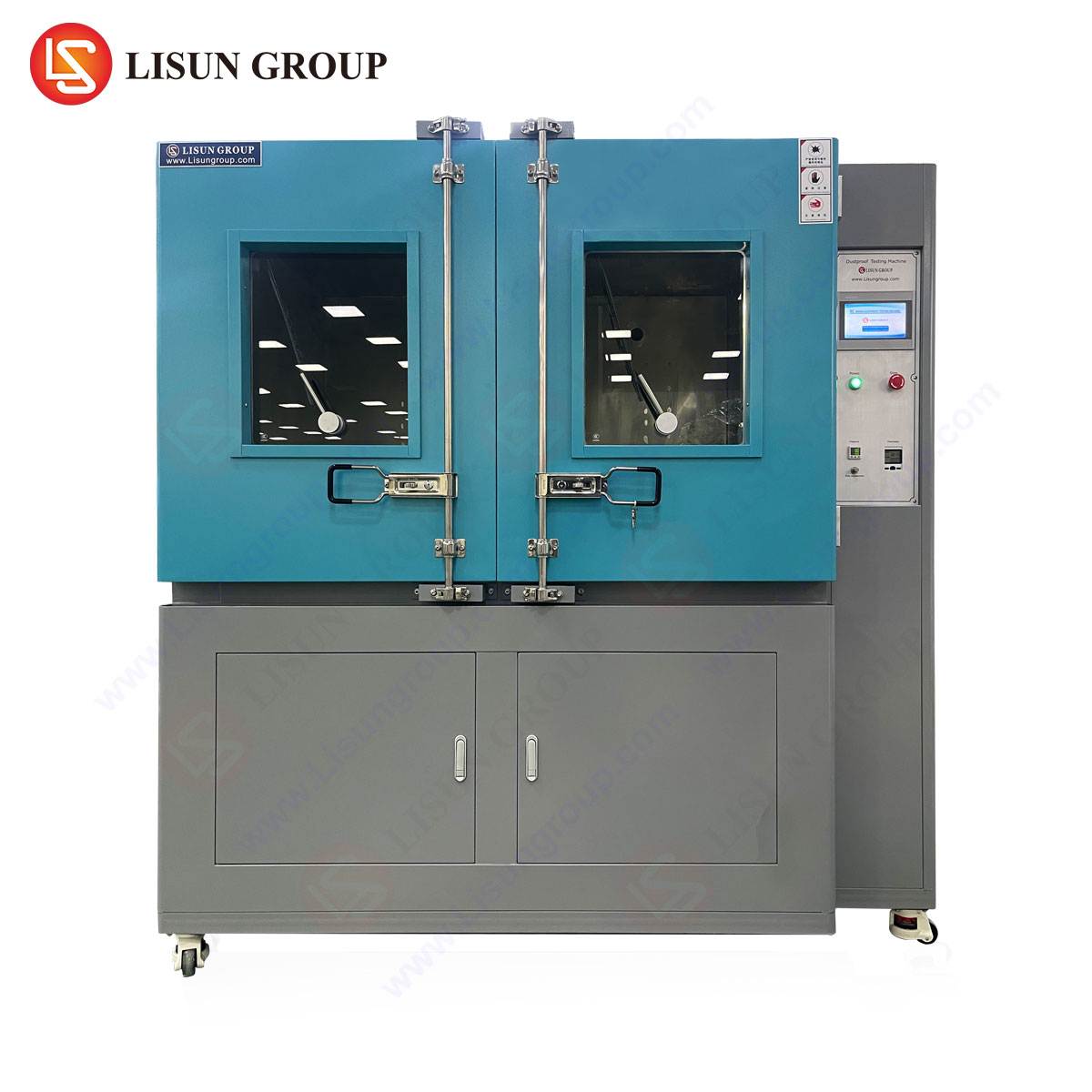
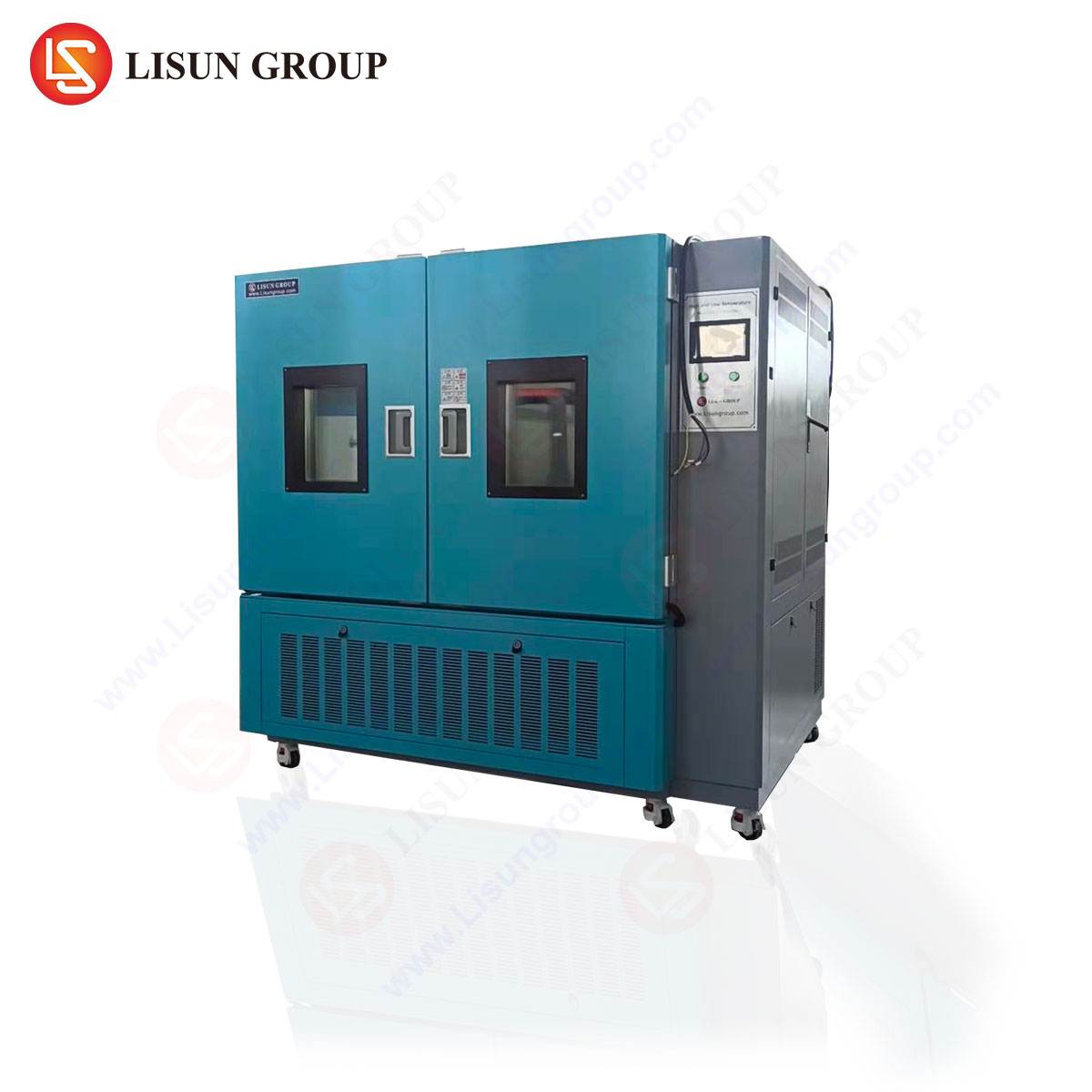
The LISUN SC-015 represents a fully integrated testing solution engineered to meet the stringent requirements of IP5X, IP6X, and related sand dust test methodologies. Its design incorporates precision controls and robust construction to ensure repeatable and reliable test outcomes.
Key Specifications:
- Test Chamber Volume: 0.5 m³ (500 liters), providing ample space for a wide range of products from small connectors to sizable control units.
- Dust Concentration: Adjustable from 2 kg/m³ to 10 kg/m³, allowing simulation of both moderate and severe dust storm conditions.
- Airflow Velocity: Continuously variable between 0.5 m/s and 2.5 m/s, enabling the simulation of both settling and wind-blown particulate scenarios.
- Turntable: Electrically driven, with adjustable speed (1-5 RPM) to ensure uniform exposure on all specimen faces.
- Vacuum System: Integral system capable of drawing a pressure differential of 0-5 kPa, with precise regulation for IP6X testing. Includes flowmeter and pressure gauge.
- Dust Material: Supplied with standardized talcum powder; compatible with Arizona Test Dust for specific military or automotive validations.
- Control System: Digital microcomputer controller with PID logic for stable temperature (ambient to +60°C) and humidity control, programmable test cycles, and data logging.
Testing Principle and Workflow: The specimen is placed inside the chamber, and its internal volume is connected to the vacuum system via a sealed port. The operator programs the test parameters—duration, dust concentration, turntable speed, vacuum level, and any thermal cycles. Upon initiation, the chamber’s blower system fluidizes the dust reservoir, creating a homogenous cloud. The turntable rotates the specimen, while the applied vacuum draws the dust towards potential weak points. The entire process is monitored and recorded, ensuring traceability.
Industry-Specific Applications and Use Cases
The universality of the dust threat makes the SC-015 relevant across numerous sectors:
- Automotive Electronics: Testing engine control units (ECUs), sensors, lighting assemblies, and infotainment systems for reliability in off-road or arid environments per ISO 20653.
- Electrical Components & Industrial Control Systems: Validating the sealing integrity of switches, sockets, circuit breakers, PLCs, and motor drives for use in manufacturing plants, mining operations, or outdoor installations.
- Telecommunications Equipment: Ensuring base station electronics, outdoor routers, and fiber optic terminal enclosures remain operational in dusty rural or desert deployments.
- Lighting Fixtures: Verifying that outdoor, industrial, and automotive LED luminaires maintain light output and do not suffer from internal obscuration or driver failure.
- Medical Devices: Assessing the resilience of portable diagnostic equipment, field hospital devices, and dental tools against particulate ingress that could compromise sterility or function.
- Aerospace & Aviation: Screening components like cockpit instrumentation, avionics bays, and external sensors against high-altitude dust and sand conditions referenced in DO-160 or MIL-STD-810.
- Consumer Electronics & Office Equipment: Testing the durability of smartphones, tablets, outdoor speakers, printers, and copiers against everyday dust accumulation in homes and offices.
Critical Design Features for Validated Test Results
The accuracy of a dust test chamber hinges on several non-negotiable design elements. A transparent viewing window, made of reinforced glass or polycarbonate, allows for real-time observation without interrupting the test. The chamber interior must be constructed of corrosion-resistant, smooth materials (e.g., stainless steel) to facilitate easy cleaning and prevent cross-contamination between tests. The dust circulation system requires a carefully engineered airflow path to eliminate dead zones and ensure a uniform dust density throughout the working volume. The vacuum system must maintain a stable, calibrated pressure differential, as fluctuations can lead to false positive or negative results. Furthermore, integrated safety features—such as emergency stop buttons, chamber over-temperature protection, and fail-safe vacuum releases—are essential for protecting both the operator and the often-valuable test specimens.
Integrating Dust Testing into a Broader Reliability Engineering Strategy
While standalone dust testing is valuable, its greatest efficacy is realized when integrated into a sequential or combined environmental stress testing protocol. A comprehensive QA strategy might subject a product to thermal cycling to stress seals and housing materials, followed by vibration testing to simulate transportation or operational stresses, and culminate in dust ingress testing to evaluate the integrity of the now-stressed seals. This approach, known as Highly Accelerated Life Testing (HALT) or combined environment testing, uncovers failure modes that single-factor tests might miss. For instance, a cable gland may pass an IP6X test when new but fail after being subjected to UV aging from sunlight exposure. Therefore, the LISUN SC-015 and similar chambers are most powerful as part of a larger, interconnected reliability lab ecosystem.
Analyzing the Competitive Landscape and Selection Criteria
When procuring a dust test chamber, technical evaluation extends beyond basic compliance. Key selection criteria include:
- Calibration and Traceability: The instrument must be calibratable against national or international standards, with documentation to prove it.
- Control System Sophistication: The ability to create, store, and precisely execute complex multi-stage test profiles is crucial for advanced R&D.
- Ease of Decontamination: A design that allows for quick and thorough removal of spent test dust minimizes downtime between tests.
- Technical Support and Service Availability: Access to knowledgeable support for maintenance, troubleshooting, and re-calibration is vital for long-term asset utilization.
- Modularity and Upgradability: The potential to integrate additional sensors (e.g., particle counters inside the specimen) or interface with other environmental chambers adds future value.
The LISUN SC-015 positions itself competitively by offering a balance of rigorous performance specifications, user-programmable controls, and a construction quality designed for continuous laboratory use, often at a total cost of ownership that is advantageous compared to purely premium brands.
Conclusion
The imperative for reliable electronic and electromechanical systems in increasingly diverse and harsh environments has solidified dust ingress testing as a cornerstone of modern quality assurance. By leveraging standardized, repeatable test methodologies in chambers like the LISUN SC-015, engineers can proactively identify design flaws in sealing, ventilation, and assembly. This proactive validation reduces field failure rates, minimizes warranty costs, enhances brand credibility, and, most importantly, ensures that products from automotive control modules to life-saving medical devices perform as intended throughout their designed service life. As product complexity grows and global markets demand higher reliability, the role of comprehensive particulate testing will only continue to expand in the product development lifecycle.
Frequently Asked Questions (FAQ)
Q1: What is the difference between using talcum powder and Arizona Test Dust in the SC-015 chamber?
A1: Talcum powder is the standard medium specified for IP5X and IP6X testing per IEC 60529. It has a controlled, fine particle size. Arizona Test Dust is a specific, more abrasive silica-based mixture used primarily for military (MIL-STD-810) and certain automotive sand erosion tests. The SC-015 is compatible with both, but the test standard applicable to the product under test dictates the required medium. Arizona Dust is generally more aggressive and may be used for validation beyond basic IP ratings.
Q2: Can the SC-015 simulate both settling dust and blowing sand storms?
A2: Yes. The chamber’s adjustable airflow velocity (0.5 to 2.5 m/s) and dust concentration (2 to 10 kg/m³) allow it to simulate different conditions. A lower velocity and higher concentration can simulate a heavy, settling dust environment. A higher velocity with a moderate concentration better simulates a wind-blown dust or sand storm, where particles are carried laterally with force.
Q3: How is the “no ingress” criterion for IP6X objectively verified after a test?
A3: The verification is a detailed inspection. After the test, the specimen is carefully disassembled in a clean environment. Inspectors look for any visible dust accumulation inside the enclosure using magnification and bright light. For a definitive pass, there should be no dust present. Some standards allow for a quantitative measure by weighing the specimen’s interior components before and after testing to detect any mass increase, though visual inspection remains the primary method per IEC 60529.
Q4: Is it necessary to run the test with the specimen powered and operational?
A4: This depends on the test purpose. For a basic IP rating certification, the standard often requires the specimen to be in a non-operating state. However, for a more realistic reliability assessment, it is highly recommended to power the device and monitor its functionality in-situ during the test. This can reveal failures like overheating due to clogged heatsinks or electrical noise caused by conductive dust bridging traces, which a post-test inspection alone would not catch.
Q5: What maintenance is required for the chamber to ensure consistent results?
A5: Regular maintenance is critical. Key tasks include: thoroughly cleaning the chamber interior and air circulation ducts after each test to prevent cross-contamination; checking and replacing the dust sieve or fluidizing bed if clogged; calibrating the vacuum pressure gauge and flowmeter annually; verifying the sealing integrity of the chamber door gasket; and ensuring the dust blower motor and turntable drive are lubricated per the manufacturer’s schedule.