




A Comprehensive Guide to CEE7 C22 Plug and Socket Test Gauges: Principles, Applications, and Validation
Introduction to Dimensional Verification in Electrical Connector Safety
The global proliferation of electrical appliances necessitates a corresponding infrastructure of safe and reliable plug-and-socket systems. Among the most prevalent standards is the CEE 7 family, with the CEE 7/2 socket and CEE 7/16 plug—commonly known as the Europlug—being ubiquitous across continental Europe and many other regions. The integrity of this connection is not merely a matter of electrical continuity; it is fundamentally a question of mechanical precision. Dimensional deviations, even those measured in fractions of a millimeter, can precipitate a cascade of failure modes, including overheating, arcing, poor contact pressure, and compromised user safety. Consequently, the verification of plug and socket geometry transcends simple quality control; it is a critical compliance activity mandated by international safety standards such as IEC 60884-1. This guide provides a technical examination of the specialized metrological instruments designed for this purpose: CEE7 C22 plug and socket test gauges, with particular focus on the implementation and advantages of the LISUN Gauges for Plugs and Sockets.
Fundamental Design and Operational Principles of Test Gauges
Test gauges for the CEE7 C22 system are precision-engineered, non-electrical tools that simulate the worst-case permissible dimensional limits of both plugs and sockets as defined by the governing standard. They operate on the principle of “go/no-go” or limit gauging. A set typically comprises two primary gauges: a plug gauge and a socket gauge. The plug gauge is designed to verify the internal dimensions and configuration of a socket-outlet. It must not enter a socket that is too small or misconfigured, ensuring that a compliant plug will fit without undue force. Conversely, it must enter a socket that is dimensionally correct, confirming the minimum required access.
The socket gauge, conversely, is used to verify the external dimensions and pin geometry of a plug. A compliant plug must fit into the gauge, which represents the minimum acceptable socket entry and contact arrangement. If the plug is too large, has misaligned pins, or exhibits incorrect pin cross-sections, it will be rejected by the gauge. This binary assessment provides an immediate, unambiguous pass/fail verdict on the mechanical compatibility of the components. The design of these gauges incorporates not only the basic pin and receptacle dimensions but also critical features such as recess depths, shield profiles, and the clearance required for protective shutters in modern socket designs.
Anatomy of the LISUN CEE7 C22 Gauge System: Specifications and Tolerances
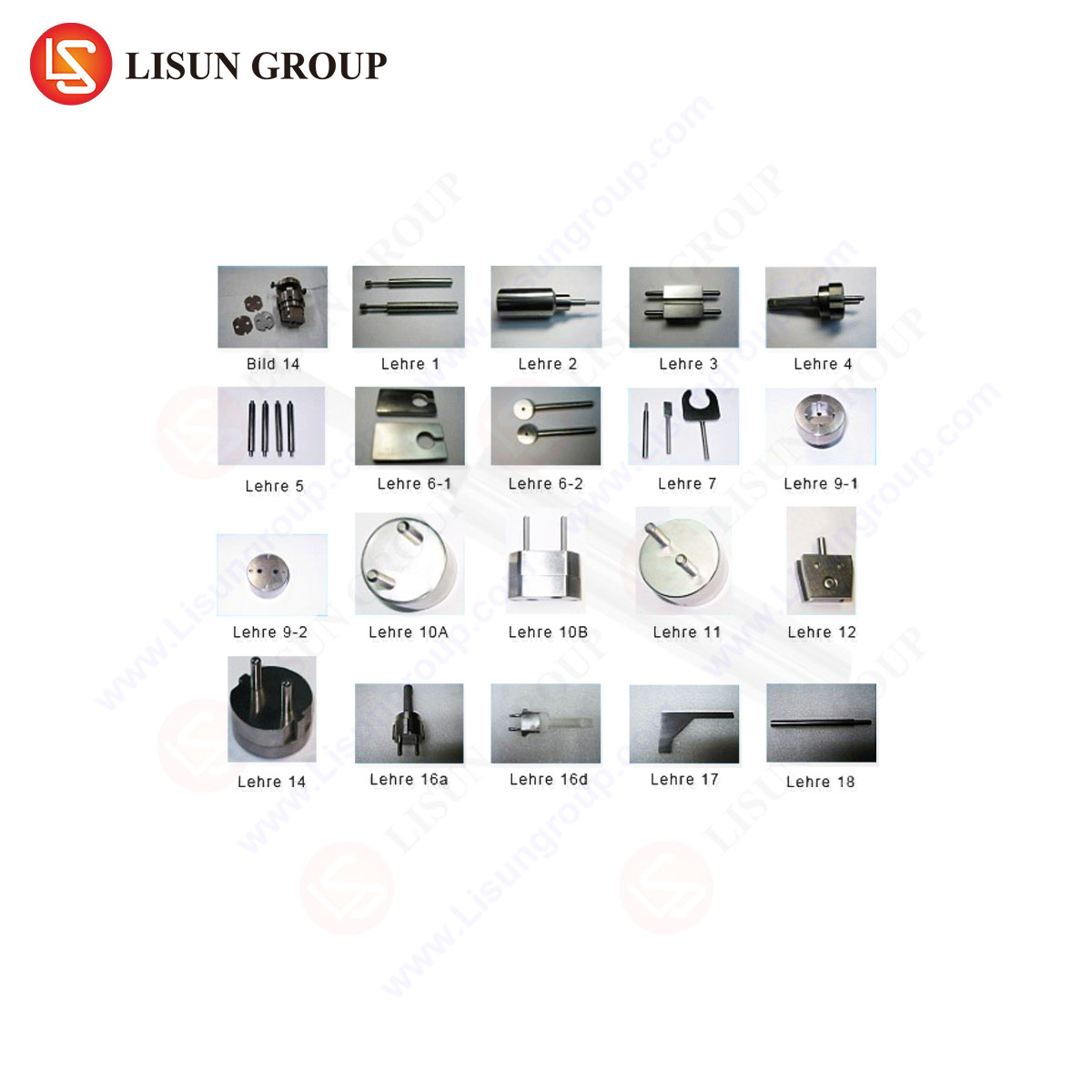
The LISUN Gauges for Plugs and Sockets, engineered for the CEE7 C22 standard, exemplify the application of precision metrology to electrical safety. Constructed from hardened tool steel or similarly durable, dimensionally stable materials, these gauges are designed to withstand repeated use in industrial quality assurance environments without degradation of their critical surfaces.
The plug gauge (socket tester) replicates the maximum allowable dimensions of a CEE 7/16 plug. Its pins are machined to the upper tolerance limit of the plug standard, ensuring that any socket which accepts this gauge will accept any compliant plug in the field. The gauge body incorporates features to test for correct socket recess depth and the operational force of protective shutters. The socket gauge (plug tester) embodies the minimum allowable internal configuration of a CEE 7/2 socket. A compliant plug must slide freely into this gauge; failure to do so indicates that the plug exceeds permissible dimensions and could strain or damage a standard socket.
Tolerances for these gauges are exceptionally tight, often held to within ±0.01 mm for critical pin diameters and spacings, as they themselves are the reference artifacts against which production parts are judged. LISUN’s manufacturing process typically includes post-machining stabilization treatments and final verification via coordinate measuring machines (CMMs) to certify traceability to national measurement standards. This chain of metrological traceability is a non-negotiable requirement for gauges used in accredited testing laboratories and certification body audits.
Critical Test Parameters and Compliance Verification Protocols
Employing a CEE7 C22 test gauge involves a structured protocol that examines multiple interdependent parameters beyond simple fit. The primary verification sequence includes:
- Pin/Receptacle Engagement Check: The fundamental test of whether the gauge and unit under test mate without binding or excessive play. This checks for gross dimensional errors in pitch (distance between pin centers) and alignment.
- Contact Force Simulation: While not a direct force measurement, the gauge interaction can indicate issues. A plug that fits a socket gauge with excessive friction suggests oversized pins that could exert damaging pressure on socket contacts.
- Protective Shutter Function Test: For sockets equipped with safety shutters, the plug gauge is used to verify that the shutters open with the correct force and only when both pins are presented simultaneously and correctly aligned. This prevents access by foreign objects.
- Recess and Profile Verification: The gauge ensures that live parts are adequately recessed and that the socket face profile aligns with the plug’s insulating shield, preventing accidental finger contact with pins during insertion.
A standardized test procedure dictates the orientation and application force (usually a specified Newton value applied via a push-pull gauge) for inserting the test tool. The following table outlines a simplified test matrix:
| Test Article | Gauge Used | Pass Condition | Assessed Parameter |
|---|---|---|---|
| CEE 7/2 Socket | LISUN Plug Gauge (Max. Plug) | Gauge enters fully under specified force. | Minimum socket entry, shutter operation, recess depth. |
| CEE 7/2 Socket | LISUN Plug Gauge (Max. Plug) | Gauge does not enter if misaligned. | Shutter safety feature integrity. |
| CEE 7/16 Plug | LISUN Socket Gauge (Min. Socket) | Plug enters gauge fully under its own weight. | Maximum plug dimensions, pin cross-section, alignment. |
Industry Applications: From Manufacturing to Certification
The application of CEE7 C22 test gauges spans the entire product lifecycle, from initial design validation to ongoing production quality assurance and market surveillance.
In Research & Development and Type Testing, engineers use these gauges to validate prototype molds and production samples before submitting products to an independent certification body (e.g., VDE, IMQ, KEMA). Early detection of dimensional non-conformity saves substantial cost and time.
On the Manufacturing Floor, gauges are deployed for statistical process control (SPC). Regular sampling of injection-molded plug bodies and socket assemblies with go/no-go gauges provides immediate feedback on tool wear, material shrinkage, or assembly fixture misalignment. This prevents the production of non-compliant batches.
For Third-Party Certification Laboratories and National Inspectors, these gauges are essential reference tools during initial product certification audits and subsequent factory inspections (FCI). They provide an objective, repeatable means to verify compliance with the dimensional clauses of the safety standard.
Finally, Importers and Retailers utilize test gauges as part of their due diligence and incoming goods inspection protocols, mitigating the risk of placing unsafe or non-compliant electrical accessories on the market.
Metrological Advantages of the LISUN Gauge Implementation
The LISUN Gauges for Plugs and Sockets distinguish themselves through several engineered advantages that address common challenges in connector testing. A primary feature is the exceptional surface finish and hardness of the gauge contact surfaces. A mirror-smooth finish on pin gauges prevents false failures due to friction against socket contacts, while extreme hardness resists wear from abrasive composite materials used in some socket contacts, ensuring long-term dimensional stability.
Furthermore, LISUN’s design often incorporates ergonomic handling features and clear, laser-etched identification markings, including the specific standard (CEE7 C22) and the gauge type (e.g., “MAX PLUG” or “MIN SOCKET”). This reduces operator error in fast-paced testing environments. The comprehensive calibration documentation provided, which details measured deviations from nominal values for each critical dimension, is crucial for audits and maintains an unbroken chain of traceability.
Perhaps the most significant advantage lies in the holistic design approach. Rather than being simple geometric replicas, LISUN gauges are designed to interact correctly with all features of the standard, including the testing of shutter mechanisms on sockets. This integrated validation capability provides more comprehensive safety assurance than basic dimensional checkers.
Ensuring Long-Term Gauge Integrity: Calibration and Maintenance
As with all precision measurement instruments, the ongoing accuracy of test gauges is contingent upon a rigorous calibration and maintenance regimen. Given their role as arbiter of compliance, a gauge that has worn beyond its own tolerances can cause catastrophic quality failures—either by rejecting compliant parts or, more dangerously, accepting non-compliant ones.
A formal calibration schedule, typically annual or biannual depending on usage frequency, is mandatory. Calibration must be performed by an accredited laboratory capable of measuring the gauge’s critical dimensions (pin diameters, pin spacing, body thicknesses) with higher-order equipment (e.g., CMMs, optical comparators) traceable to national standards. The calibration report should provide “as found” data, confirming the gauge is still within its specified tolerance band.
Between calibrations, proper handling is paramount. Gauges should be stored in protective cases to prevent nicks or corrosion. They must be kept clean of debris and inspected visually before each use for any obvious damage. Implementing a system of periodic in-house checks against a master gauge set, used only for reference, can provide interim confidence in the working gauges’ condition.
Conclusion
The CEE7 C22 plug and socket interface is a de facto global standard whose safety is inherently mechanical. Test gauges are the indispensable, objective instruments that enforce the dimensional discipline required by international safety engineering principles. As detailed, their operation, based on limit gauging theory, is straightforward, yet their design and manufacture demand high precision. Implementing a robust gauge-based testing protocol, utilizing reliable tools such as the LISUN Gauges for Plugs and Sockets, is a critical investment for manufacturers, test labs, and regulators. It ensures that the millions of connections made daily are not only electrically sound but also mechanically safe, thereby upholding the fundamental principles of product safety and regulatory compliance in the electrical accessories industry.
FAQ Section
Q1: How often should LISUN CEE7 C22 test gauges be calibrated in a high-volume production environment?
In a high-volume manufacturing setting where gauges are used continuously throughout shifts, a calibration interval of six months is generally recommended. However, the optimal interval should be determined by a risk-based assessment considering historical calibration data (observed drift), frequency of use, and the material hardness of the components being tested. More frequent in-house checks against a reserved master set are also advisable.
Q2: Can a single LISUN gauge set be used to test both Schuko (CEE 7/3) and Europlug (CEE 7/16) components?
The CEE7 C22 gauge set is specifically designed for the CEE 7/2 socket and CEE 7/16 plug (Europlug). The Schuko (CEE 7/3) socket and CEE 7/4 plug, while part of the broader CEE 7 family, have different dimensions, notably the presence of side grounding clips and larger pin diameters. Testing Schuko components requires a dedicated CEE7 C23 gauge set. It is critical to use the gauge set specified for the exact standard being evaluated.
Q3: What is the consequence of using a worn or out-of-calibration test gauge?
The consequences are severe and bidirectional. A worn “go” section (e.g., a plug gauge pin undersized due to wear) may incorrectly accept a socket that is too small, allowing unsafe, tight-fitting plugs in the field. A worn “no-go” feature may incorrectly reject compliant components, leading to unnecessary production scrap and cost. Both scenarios undermine safety and quality systems, potentially leading to non-conformities during certification audits or, in the worst case, field safety incidents.
Q4: Do the LISUN gauges account for the force required to open socket protective shutters?
While the primary function of the plug gauge is dimensional, its correct use is integral to shutter testing. The standard specifies that shutters must open only when a force between 5N and 20N (or other specified values) is applied to each pin simultaneously. The LISUN plug gauge, when used in conjunction with a calibrated force gauge or a dedicated shutter test apparatus, provides the correctly spaced, simultaneous dual-pin presentation required to perform this force test accurately, which single-pin testers cannot do.