




Methodological Framework for Corrosion Test Chamber Selection in Industrial Quality Assurance
Introduction to Accelerated Corrosion Testing
The imperative to predict and quantify the corrosion resistance of materials and finished products underpins a critical segment of industrial quality assurance. Field exposure, while definitive, is temporally prohibitive for design validation and production release cycles. Consequently, accelerated corrosion testing, executed within controlled environmental chambers, serves as an indispensable proxy. These tests simulate, in a condensed timeframe, the degradative effects of atmospheres laden with chlorides, sulfides, humidity, and cyclic temperature variations. The selection of an appropriate corrosion test chamber, however, is not a trivial exercise. It demands a rigorous technical assessment aligned with material science principles, applicable international standards, and the specific failure modes pertinent to the end-use application. An erroneous selection risks generating non-representative data, leading to either the premature release of vulnerable components or the unnecessary over-engineering of products, both scenarios incurring significant financial and reputational liability.
Deconstructing the Corrosion Test Spectrum: Methodologies and Standards
A foundational step in chamber selection is the precise identification of the required test methodology. These methodologies are codified in standards promulgated by bodies such as ASTM International, the International Organization for Standardization (ISO), and various national automotive (e.g., SAE, JIS) and military (e.g., MIL-STD) organizations. The test spectrum is broadly categorized, each demanding specific chamber capabilities.
The Neutral Salt Spray (NSS) test, per ASTM B117 or ISO 9227, represents the most prevalent method. It involves the continuous atomization of a 5% sodium chloride solution at a pH of 6.5 to 7.2 within a chamber maintained at 35°C ± 2°C. This creates a dense, settling fog of corrosive electrolyte. While often criticized for its lack of direct correlation to all real-world environments, its severity and reproducibility make it a cornerstone for comparative quality control, material ranking, and detection of gross processing defects like inadequate plating thickness or porosity.
More aggressive variants include the Acetic Acid Salt Spray (AASS) and Copper-Accelerated Acetic Acid Salt Spray (CASS) tests. AASS (ASTM B287) acidifies the salt solution with acetic acid to a pH of approximately 3.1–3.3, accelerating the attack on decorative nickel-chromium and anodized aluminum coatings. CASS (ASTM B368) further intensifies the process by adding copper chloride, primarily used for rapid testing of copper-nickel-chromium plating systems. Chambers employed for these tests must be constructed of materials highly resistant to acidic corrosion, typically specialized polymers or titanium components, to ensure chamber integrity and prevent contamination.
Modern testing philosophies increasingly favor Cyclic Corrosion Tests (CCT). These multi-step protocols, such as those outlined in ASTM G85 or automotive standards like SAE J2334, simulate more realistic environmental sequences. A typical cycle may include phases of salt spray, controlled humidity condensation, ambient air drying, and temperature ramps. This progression more accurately replicates the wet/dry transitions that drive osmotic penetration and underfilm corrosion. Chambers for CCT require sophisticated programmable controllers capable of managing precise transitions between disparate environmental states with minimal overshoot or lag.
Critical Technical Parameters in Chamber Specification
Beyond the test type, selection hinges on a matrix of technical parameters that define chamber performance, durability, and operational viability.
Chamber Construction and Corrosion Resistance: The internal workspace and vapor plenum must be fabricated from inert, non-contaminating materials. While Type 316L stainless steel is standard for NSS tests, AASS and CASS necessitate materials like glass-reinforced polypropylene, polyvinyl chloride (PVC), or titanium. Sealing gaskets and nozzles must be similarly compatible. The external housing should be of robust, corrosion-resistant coated steel to withstand laboratory environments.
Temperature Control and Uniformity: Precise, stable temperature control is non-negotiable. The standard NSS test requires 35°C ± 2°C, but CCT profiles may demand ranges from ambient to 60°C or higher. The system must demonstrate spatial uniformity (typically within ±1.5°C across the workspace) and temporal stability. Heater wattage, placement, and airflow design are critical. Redundant over-temperature protection is a mandatory safety feature.
Spray System Fidelity: The heart of a salt spray chamber is its atomization system. It must generate a consistent, fine mist of specified droplet size that settles uniformly over the test specimens. Key components include the reservoir, saturation tower (for heating and humidifying the compressed air), nozzle type, and air pressure regulation. The system must maintain the correct collection rate, as measured by standard fog collectors, typically 1.0 to 2.0 ml/hour per 80cm².
Control and Data Acquisition: Modern chambers transition from simple analog controllers to full-featured digital programmable logic controllers (PLCs) with touch-screen human-machine interfaces (HMIs). These systems allow for the creation, storage, and execution of complex multi-step test profiles. Data logging of critical parameters—temperature, humidity, test runtime, cycle step—is essential for audit trails and test validation. Connectivity options (USB, Ethernet, RS-485) enable remote monitoring and integration into laboratory information management systems (LIMS).
Industry-Specific Application Imperatives
The functional requirements for a corrosion test chamber are profoundly influenced by the industry sector and the specific failure modes it seeks to mitigate.
- Automotive Electronics & Components: Testing must simulate the under-hood and road-splash environments. CCT profiles are paramount. Connectors, engine control units (ECUs), sensors, and wiring harnesses are tested for terminal corrosion, insulation degradation, and short-circuit risks. Chambers must accommodate large or irregularly shaped components like entire wiring looms.
- Aerospace and Aviation Components: Here, the stakes involve extreme reliability and safety. Tests often reference MIL-STD-810 or proprietary OEM standards, which may incorporate salt fog, humidity, and temperature cycling with extreme precision. Materials for turbine components, avionics casings, and electrical systems are evaluated.
- Electrical & Electronic Equipment, Industrial Control Systems: For printed circuit board assemblies (PCBAs), enclosures, contactors, and relays, the primary concerns are conductive anodic filament (CAF) formation, solder joint integrity, and corrosion of fine-pitch components. Tests may involve bias voltage application during humidity exposure (e.g., THB testing), requiring chambers with electrical feed-through ports.
- Medical Devices and Telecommunications Equipment: Devices such as implantable electronics, diagnostic equipment housings, and base station components require validation for long-term reliability in varied climatic conditions. Corrosion resistance is linked directly to patient safety and network uptime. Test protocols are stringent, with meticulous documentation requirements.
- Lighting Fixtures, Household Appliances, Consumer Electronics: These products face both indoor and outdoor environments. Testing focuses on cosmetic corrosion of exterior finishes, functionality of switches and sockets, and the integrity of seals on outdoor luminaires. Salt spray and cyclic humidity tests are common.
The YWX/Q-010 Salt Spray Test Chamber: A Technical Analysis
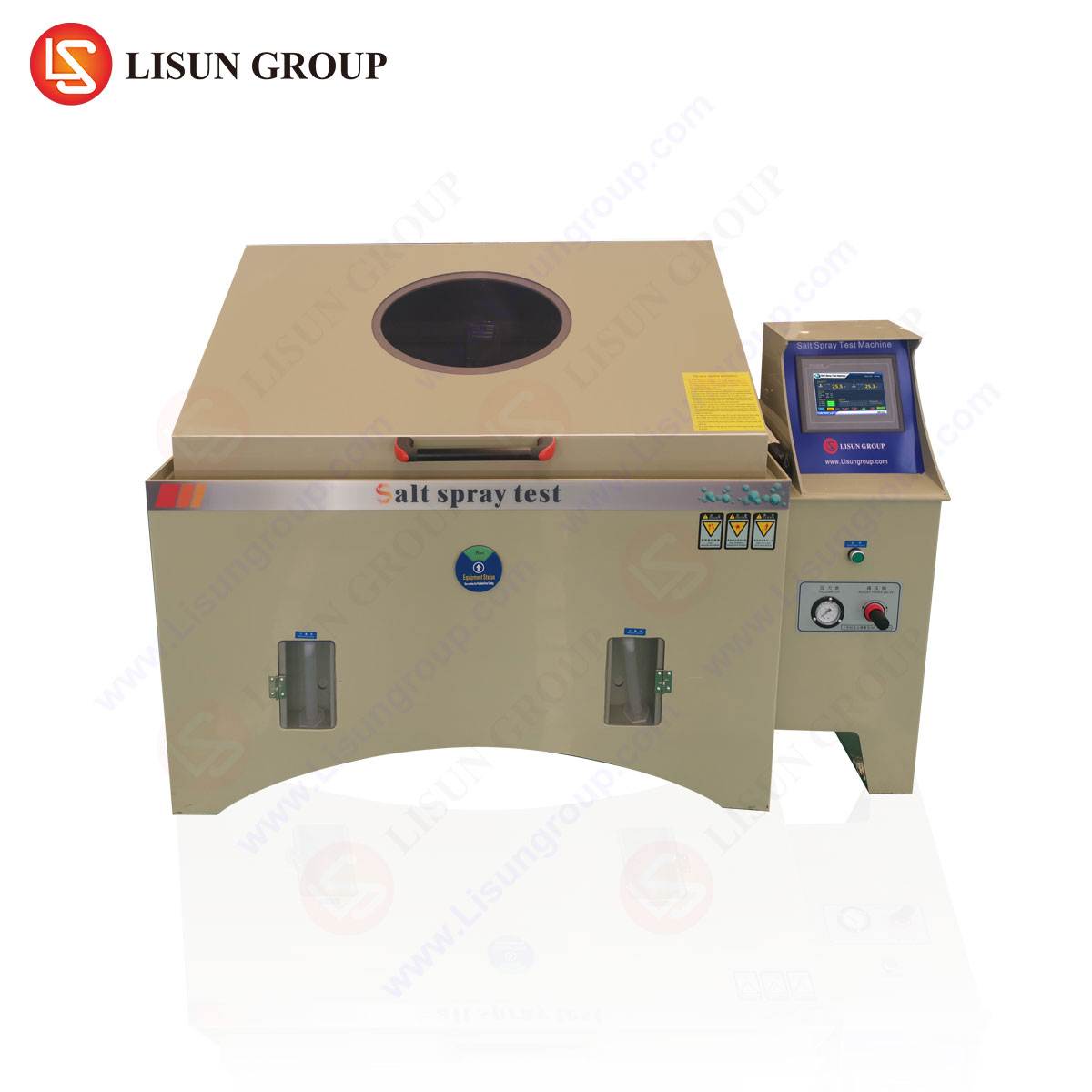
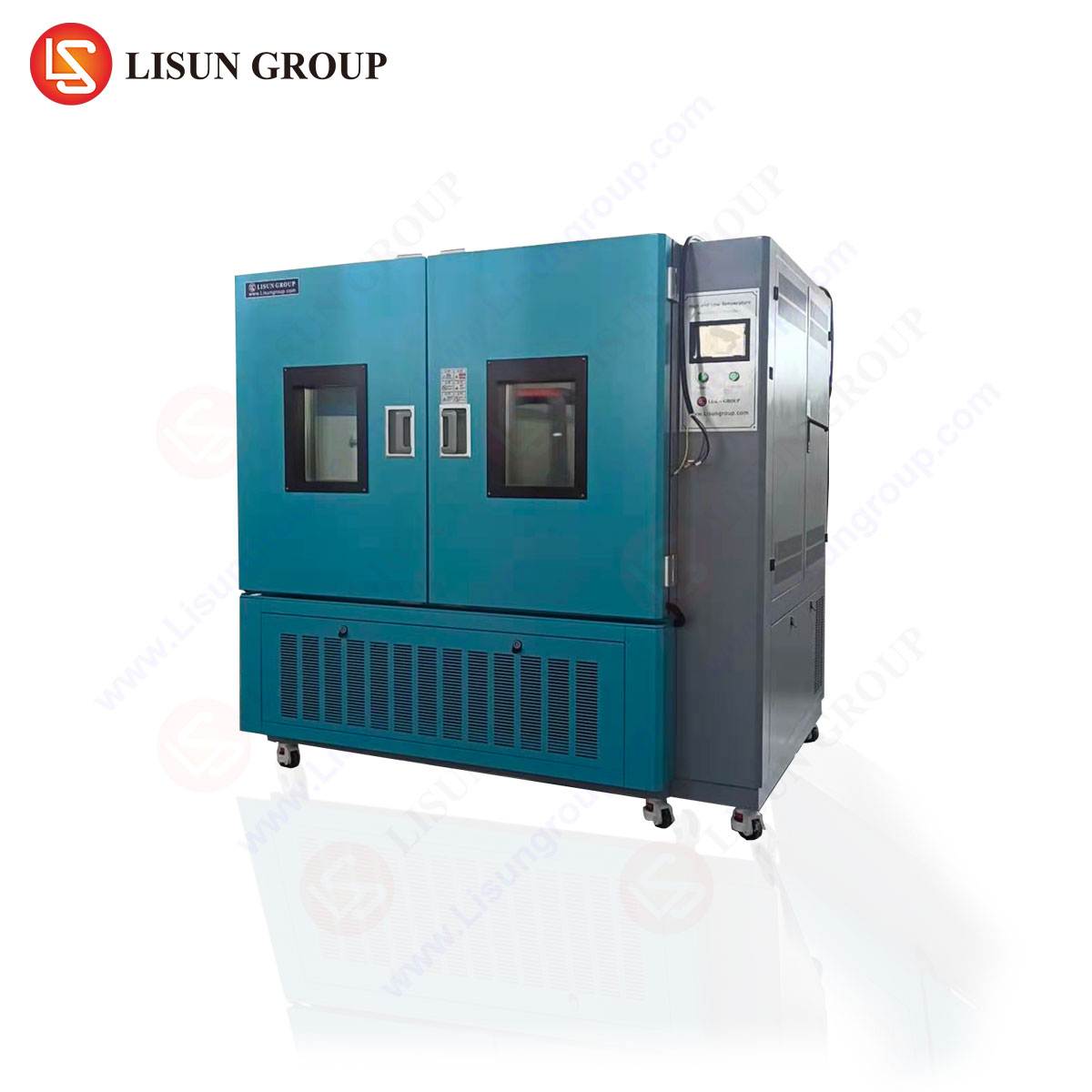
The LISUN YWX/Q-010 series of salt spray test chambers embodies a design philosophy focused on compliance, reproducibility, and operational robustness for standard accelerated corrosion tests. Engineered primarily to satisfy the parameters of ASTM B117, ISO 9227, and related NSS, AASS, and CASS standards, it serves as a fundamental tool for quality control laboratories across the aforementioned industries.
Testing Principle and Chamber Architecture: The YWX/Q-010 operates on the principle of controlled, continuous atomization. Compressed air is cleaned, regulated, and passed through a saturated tower where it is heated and humidified to prevent solution concentration drift. This conditioned air is then forced through a specialized nozzle, aspirating the prepared test solution from a reservoir and creating a dense, settling salt fog. The chamber’s air-sealed interior, constructed from corrosion-resistant materials, ensures a uniform fog distribution and stable temperature environment maintained by a PID-controlled heating system and insulated walls.
Key Technical Specifications:
- Internal Volume: Available in standard sizes (e.g., 1080L, 1600L) to accommodate varying test specimen loads.
- Temperature Range: Ambient +10°C to +55°C, with a control stability of ±0.5°C and uniformity of ≤±2.0°C.
- Spray System: Includes a built-in saturation tower, precision quartz nozzle, and adjustable air pressure for fog collection rate calibration.
- Construction: Interior chamber and cover made of imported grade PP (Polypropylene) sheet, welded with high-temperature welding rod for exceptional resistance to acidic and alkaline solutions. The outer shell is cold-rolled steel with PVC-coated anti-corrosion spray painting.
- Control System: Digital LED temperature controller with PID auto-tuning function, providing clear display and stable control. Timer and low-solution-level safety cut-offs are integrated.
Industry Use Cases: The YWX/Q-010 is deployed for routine quality surveillance of electroplated coatings on automotive brackets and fasteners, for validating the conformal coating integrity on telecommunications PCBAs, for testing the surface finish of aluminum die-cast enclosures for industrial controls, and for assessing the salt fog resistance of connectors and sockets used in appliance and consumer electronics. Its reliability in performing standardized tests makes it a staple for supplier qualification and incoming material inspection.
Competitive Advantages in Context: The chamber’s design emphasizes several factors critical for generating valid, repeatable data. The use of high-grade, welded PP for the entire workspace provides superior long-term resistance to aggressive CASS solutions compared to some chambers using coated steel, eliminating a potential source of contamination and maintenance. The integrated saturation tower heating system ensures the compressed air is fully saturated at the test temperature, a critical but sometimes overlooked requirement of ASTM B117 that prevents evaporation cooling at the nozzle and consequent concentration of the test solution. Furthermore, the precise PID temperature control algorithm minimizes spatial and temporal fluctuations, a key factor in test reproducibility. While not a complex CCT chamber, for its intended purpose of standard salt spray testing, it offers a focused combination of material durability, standards compliance, and control stability that reduces operational variables and fosters confidence in test outcomes.
Integration, Validation, and Lifecycle Considerations
Procurement is merely the initial phase. Proper installation requires adequate laboratory space, a reliable source of clean, dry compressed air, an exhaust system with neutralization capability (to meet environmental regulations for acidic effluent), and access to distilled or deionized water. Operational qualification (OQ) and performance qualification (PQ) are essential. This involves verifying temperature uniformity mapping, calibrating the fog collection rate using standard funnels, and confirming the pH and concentration of the collected solution. Regular preventative maintenance—cleaning of nozzles and chambers, calibration of sensors, inspection of seals—is mandatory to ensure ongoing compliance with standard methods.
The total cost of ownership extends beyond the purchase price. It encompasses utilities (compressed air, electricity, water), consumables (salt, acids), maintenance labor and parts, and the cost of calibration services. A chamber with robust construction and accessible components may have a higher initial cost but can yield lower lifecycle costs through reduced downtime and repair frequency.
Conclusion
The selection of a corrosion test chamber is a technically grounded decision with direct implications for product reliability, safety, and compliance. It necessitates a systematic evaluation beginning with the mandated test standards and the specific corrosion mechanisms relevant to the product. This informs the required chamber capabilities, from construction materials and temperature performance to spray system fidelity and control sophistication. As exemplified by instruments like the LISUN YWX/Q-010, optimal selection for a given application often prioritizes rigorous adherence to fundamental standards, material integrity in the test environment, and control stability over superfluous features. A disciplined approach to selection, installation, and validation transforms the corrosion test chamber from a simple enclosure into a reliable scientific instrument, generating the predictive data necessary for material advancement and quality assurance in an increasingly demanding industrial landscape.
Frequently Asked Questions (FAQ)
Q1: What is the critical difference between the Neutral Salt Spray (NSS) test and a Cyclic Corrosion Test (CCT), and why does it matter for my electronic components?
A1: The NSS test provides a continuous, aggressive corrosive environment useful for comparative ranking and detecting major coating flaws. However, it does not replicate the wet/dry cycles encountered in real-world service. For electronics, CCT is often more relevant. The drying phase allows salts to concentrate, driving deeper penetration under conformal coatings or into crevices, while the wetting phase facilitates electrochemical corrosion. This cyclic stress is more effective at revealing failure modes like creep corrosion on circuit boards or the degradation of connector interfaces, which continuous fog may not adequately accelerate.
Q2: When performing an Acetic Acid Salt Spray (AASS) test in a chamber like the YWX/Q-010, what specific maintenance procedures are required to prevent chamber degradation and ensure test validity?
A2: The acidic environment of AASS is highly aggressive. Post-test, a thorough neutralization and rinse of the chamber interior with a sodium bicarbonate solution is imperative to halt ongoing corrosion of the structure. All residual test solution must be drained and the reservoir cleaned. Regular inspection of welded seams in the PP lining, spray nozzles, and air saturation tower is crucial. Gaskets and seals should be checked for swelling or hardening. Failure to perform these steps can lead to chamber damage, contamination of future tests, and drift in the pH of the fog, invalidating results.
Q3: Our laboratory tests a wide variety of sample sizes, from small fasteners to large automotive modules. What chamber features should we prioritize to ensure testing efficiency and standard compliance?
A3: Flexibility in sample mounting is key. Prioritize chambers with an adjustable, non-metallic (e.g., PP or glass) specimen support system that can be reconfigured. Ensure the chamber’s internal volume is sufficient to maintain the required distance (typically at least 10cm) between specimens and walls/spray nozzles, even with large items, to guarantee uniform fog settlement. A chamber with a well-designed, large-access door and internal lighting, like many modern units, significantly improves ease of loading and unloading diverse sample geometries while maintaining the airtight seal required for test consistency.