

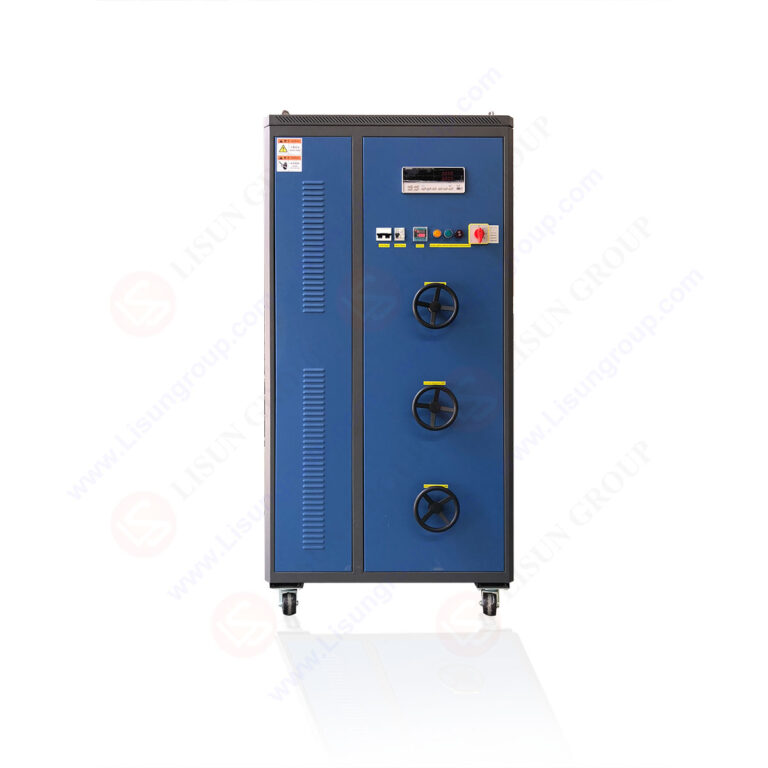



Corrosion Testing with Salt Spray Chambers: Principles, Standards, and Industrial Applications
Introduction to Accelerated Corrosion Testing
Corrosion represents a fundamental and economically significant degradation mechanism affecting metallic components across virtually every industrial sector. The electrochemical reaction of a metal with its environment leads to material loss, functional impairment, and potential catastrophic failure. Predicting the long-term corrosion resistance of materials and protective coatings under real-world conditions is a critical challenge for design engineers and quality assurance professionals. Natural atmospheric exposure testing, while accurate, is prohibitively time-consuming, often requiring years to yield actionable data. Consequently, accelerated corrosion test methodologies have been developed to simulate and intensify corrosive environments within a controlled laboratory setting. Among these, salt spray (fog) testing stands as one of the most established and widely recognized procedures for comparative evaluation.
Salt spray testing operates on the principle of creating a controlled corrosive environment through the atomization of a neutral (pH 6.5 to 7.2) or acidified saline solution into a fine mist within an enclosed chamber. This mist settles uniformly on test specimens, initiating and propagating corrosion in a manner that accelerates processes similar to those occurring in marine or coastal atmospheres. The primary objective is not to precisely replicate years of service life in a direct temporal ratio but to provide a reproducible and severe benchmark for assessing relative performance. This enables manufacturers to screen materials, qualify coatings, verify production consistency, and comply with international material specifications in a fraction of the time required by field exposure.
Fundamental Operating Principles of Salt Spray Chambers
The core function of a salt spray chamber is to generate and maintain a consistent corrosive fog environment. The apparatus typically consists of a main test compartment constructed from corrosion-resistant materials such as polypropylene or fiber-reinforced plastic, a saturated air supply system, a reservoir for the test solution, a mist generation (atomizer) system, and precise temperature controls. The standardized test solution is a 5% ± 1% sodium chloride (NaCl) solution in deionized water, with specific resistivity and pH criteria as defined in relevant standards.
Compressed air, purified and humidified to prevent droplet drying and ensure saturation, is forced through a nozzle, drawing the salt solution from a reservoir to create a dense fog. This fog is then dispersed throughout the chamber volume. Maintaining a constant chamber temperature, typically at +35°C ± 2°C for neutral salt spray (NSS) tests, is paramount, as temperature fluctuations directly influence corrosion kinetics and test reproducibility. Specimens are mounted on non-conductive supports at an angle (usually 15° to 30° from vertical) to allow condensate to run off without pooling, ensuring uniform exposure of surfaces to the settling fog. The chamber interior design must prevent direct impingement of the fog jet on specimens and facilitate even distribution without the formation of large droplets, which can cause unrealistic localized corrosion.
Relevant International Standards and Testing Protocols
Adherence to internationally recognized test standards is non-negotiable for ensuring test validity, repeatability, and cross-industry acceptance of results. The most prevalent standard is ISO 9227:2017, “Corrosion tests in artificial atmospheres – Salt spray tests.” This comprehensive standard outlines procedures for several test variants:
- Neutral Salt Spray (NSS) Test: The foundational test using a neutral pH NaCl solution, applicable to a wide range of metals and coatings.
- Acetic Acid Salt Spray (AASS) Test: The NaCl solution is acidified with glacial acetic acid to pH 3.1–3.3, creating a more aggressive environment for testing decorative coatings like copper-nickel-chromium or anodized aluminum.
- Copper-Accelerated Acetic Acid Salt Spray (CASS) Test: Further acceleration is achieved by adding copper(II) chloride to the acidified solution, used primarily for rapid testing of decorative nickel-chromium and copper-nickel-chromium coatings.
Other critical standards include ASTM B117-19, “Standard Practice for Operating Salt Spray (Fog) Apparatus,” which is historically significant and widely referenced in North American industries, and JIS Z 2371:2015 in Japan. While these standards share core principles, subtle differences in parameters such as solution collection rate, pH monitoring, and air saturation specifications necessitate careful selection based on end-user or customer specification requirements. Testing is always concluded with a defined evaluation methodology, which may include assessment of time to first red rust, measurement of creepage from a scribe (ISO 17872), blister density (ISO 4628-2), or mass loss.
The YWX/Q-010 Salt Spray Test Chamber: Technical Specifications and Design Philosophy
The LISUN YWX/Q-010 salt spray test chamber embodies a design focused on precision, durability, and compliance with contemporary testing demands. Its architecture facilitates rigorous adherence to ISO, ASTM, and other equivalent standards, making it a suitable instrument for quality control laboratories and research facilities.
Key Specifications and Features:
- Chamber Volume: Designed with a standardized internal workspace to accommodate a representative number of test specimens or larger components.
- Construction: The interior chamber is fabricated from high-grade, thick polypropylene, offering exceptional resistance to thermal stress and chemical attack from the saline fog and acidic variants. The outer casing utilizes reinforced plastic (PP plate) or coated steel for structural rigidity.
- Temperature Control: Utilizes a digital PID temperature controller with high-resolution display for the chamber and saturated air barrel (if applicable). The system employs air-heating methods and high-efficiency insulation to maintain a uniform temperature of +35°C ± 1°C (or other setpoints for specialized tests), exceeding the typical ±2°C tolerance required by standards for enhanced stability.
- Fog Generation System: Incorporates a pneumatic atomizer nozzle system with adjustable fog output. The design ensures a consistent and fine mist dispersion. The chamber includes a built-in fog collector with calibrated funnel area, allowing for periodic verification that the solution settlement rate falls within the standard-specified range of 1.0 to 2.0 ml/80cm²/hour.
- Air Supply System: Includes an air saturator (bubble tower) that heats and humidifies the compressed air prior to atomization, preventing concentration of the salt solution due to evaporation and ensuring proper fog characteristics.
- Control System: Features a user-friendly microcontroller or touch-screen interface for setting test parameters, temperature, timer functions, and cycle programming for more complex tests like Prohesion or cyclic corrosion tests (CCT) when equipped with optional humidity and drying functions (as in the enhanced YWX/Q-010X model).
- Safety and Observability: Equipped with low solution level safety cut-offs, over-temperature protection, and a large transparent viewing window with internal lighting for visual inspection without interrupting the test environment.
Industry-Specific Applications and Use Cases
The utility of salt spray testing spans a vast array of industries where electronic and metallic component reliability is critical.
Automotive Electronics and Components: With increasing electrification, electronic control units (ECUs), sensor housings, connector terminals, and lighting assemblies must withstand under-hood and road-splash environments. The YWX/Q-010 is used to test conformal coatings on printed circuit boards (PCBs), the corrosion resistance of zinc-nickel plated brake components, and the durability of aluminum alloy housings for LiDAR systems.
Electrical and Electronic Equipment & Industrial Control Systems: Enclosures for variable frequency drives, PLCs, and industrial servers are often subject to harsh environments. Testing verifies the performance of powder coatings, chromate conversions on aluminum, and the sealing integrity of gasketed enclosures to prevent ingress of corrosive agents that could short-circuit sensitive electronics.
Aerospace and Aviation Components: While subject to more specialized testing suites, salt spray remains a baseline test for many non-critical metallic parts, ground support equipment connectors, and the comparative evaluation of alternative protective coatings or alloys for interior and secondary structural components.
Telecommunications Equipment: Outdoor cabinets, 5G antenna radomes, and broadband connectors are exposed to global coastal and industrial atmospheres. Testing ensures that stainless steel fasteners, galvanized steel frames, and environmental seals maintain functionality over decades.
Medical Devices and Lighting Fixtures: Surgical instrument coatings, the housings of imaging equipment, and outdoor LED luminaires are tested to ensure no corrosive byproducts form and that aesthetic appearance is maintained. For lighting, this is critical for maintaining photometric performance and safety ratings.
Consumer Electronics, Household Appliances, and Office Equipment: From the internal sheet metal of a washing machine control panel to the magnesium-aluminum alloy chassis of a laptop, salt spray testing provides a benchmark for finish durability, especially for products sold in high-humidity regions. Connectors and sockets within these devices are also validated to prevent contact corrosion.
Interpreting Test Results and Methodological Limitations
A critical aspect of salt spray testing is the disciplined interpretation of results. The test is primarily a comparative, qualitative tool, not an absolute predictor of service life. A common misapplication is attempting to equate “X hours in salt spray” directly to “Y years in the field.” The correlation is highly dependent on the specific real-world environment (marine, urban, industrial, rural) and the failure mechanism being accelerated.
Evaluation is often visual and comparative against control specimens with known performance. For coated samples, common evaluation criteria include:
- Time to First Corrosion: Recording the hours of exposure before the first appearance of base metal corrosion (red rust for steel).
- Creepage from a Scribe: Measuring the underfilm corrosion propagation distance from a deliberate scratch through the coating, per ISO 17872.
- Blister Density and Size: Assessing the formation of blisters in organic coatings using ISO 4628-2.
- Corrosion Products: Identifying and documenting the type of corrosion (e.g., white rust on zinc, pitting on stainless steel).
The principal limitation of the standard continuous salt spray test is its lack of environmental cycling. Real-world exposures include wet/dry cycles, UV radiation, and temperature fluctuations, which can produce different failure modes. This has led to the development and increased adoption of cyclic corrosion tests (CCT), which incorporate phases of salt spray, humidity, drying, and sometimes freezing. The enhanced YWX/Q-010X model is explicitly designed for such protocols, offering programmable control over these multi-phase cycles, thereby providing a more realistic and damaging acceleration of field failures for advanced qualification purposes.
Comparative Advantages in Modern Testing Regimens
In the context of modern manufacturing, the value proposition of a chamber like the YWX/Q-010 series extends beyond basic compliance. Its competitive advantages lie in its precision, reliability, and adaptability.
Precision and Compliance: The tight temperature tolerances and consistent fog generation directly translate to reduced inter-laboratory variation, a chronic challenge in corrosion testing. This ensures that data generated is trustworthy for internal quality benchmarks and for audits against customer specifications.
Robust Construction and Operational Longevity: The use of monolithic polypropylene for the test chamber eliminates seams that could leak or become weak points under constant thermal and chemical stress. This reduces maintenance downtime and ensures long-term chamber integrity, protecting the capital investment.
Operational Efficiency and Safety: Automated controls, clear safety interlocks, and easy-to-clean surfaces reduce operator burden and potential for human error. The viewing window and internal lighting allow for quick, non-intrusive inspections, preserving the test environment’s stability.
Pathway to Advanced Testing: The platform, especially the YWX/Q-010X variant, provides a foundation for more sophisticated cyclic testing without requiring a completely separate apparatus. This scalability allows laboratories to expand their testing capabilities in line with evolving industry standards, such as those in the automotive sector (e.g., SAE J2334, GM 9540P), which mandate cyclic protocols.
Conclusion
Salt spray testing remains an indispensable, standardized pillar of corrosion evaluation within quality assurance and research laboratories worldwide. Its strength lies in its well-understood procedures, severe and reproducible environment, and its ability to provide rapid comparative data on materials and coatings. As exemplified by the technical design and capabilities of the LISUN YWX/Q-010 series, modern salt spray chambers have evolved into sophisticated instruments that prioritize control accuracy, durability, and flexibility. When applied with a clear understanding of its comparative nature and limitations, and when potentially integrated into more complex cyclic regimens, salt spray testing provides invaluable data for mitigating corrosion risk, guiding material selection, and ensuring the long-term reliability of components across the demanding spectrum of electrical, electronic, automotive, and industrial applications.
Frequently Asked Questions (FAQ)
Q1: What is the primary difference between the standard YWX/Q-010 and the YWX/Q-010X model?
The standard YWX/Q-010 is designed for traditional continuous salt spray tests (NSS, AASS, CASS). The YWX/Q-010X is an enhanced model that includes additional programming capabilities and environmental controls, allowing it to perform Cyclic Corrosion Tests (CCT). These tests program sequences of salt spray, high humidity, dry-off, and sometimes condensation, which often provide better correlation to real-world outdoor exposure for many coating systems.
Q2: How often should the salt solution and chamber be cleaned and maintained?
The test solution should be prepared fresh for each test series using high-purity sodium chloride and deionized water. The chamber’s reservoir, nozzles, and saturator tower require regular rinsing with deionized water to prevent salt crystallization and clogging. A more thorough cleaning and inspection of the entire chamber interior should be performed on a monthly or quarterly schedule, depending on usage frequency, to ensure consistent fog distribution and prevent cross-contamination between tests.
Q3: Can the chamber test non-metallic materials, like plastics or sealed electronic assemblies?
Yes, but the purpose differs. For non-metallics, the test may evaluate the effects of salt deposits on surface properties, electrical insulation resistance, or the integrity of seals and gaskets on enclosed assemblies. It is crucial to define the specific evaluation criteria (e.g., visual checking for degradation, functional testing post-exposure) as traditional metallic corrosion metrics do not apply.
Q4: Our product standard requires testing per ASTM B117. Is the YWX/Q-010 chamber compliant?
Yes, the YWX/Q-010 is designed to meet the core apparatus requirements of ASTM B117-19, as well as ISO 9227 and JIS Z 2371. Compliance in practice also depends on proper calibration, maintenance, and adherence to the standard’s procedural details regarding solution chemistry, pH, collection rate, and temperature monitoring, all of which the chamber’s design supports.
Q5: Why might a 500-hour salt spray test yield different results between two different testing laboratories using the same standard?
Minor inter-laboratory variation is common and can stem from several factors: subtle differences in solution preparation (water purity, salt grade), calibration state of the chamber’s temperature sensors, exact orientation and spacing of specimens, the quality of the compressed air supply, and environmental conditions in the lab room itself. This underscores the importance of using a well-calibrated, stable chamber like the YWX/Q-010 and running control specimens with known performance alongside test samples to provide a reliable benchmark.