




A Comprehensive Price Guide and Technical Analysis for Dust Ingress Testing Chambers
The evaluation of a product’s resilience against particulate ingress represents a critical phase in the validation of its environmental durability. Dust test chambers, engineered to simulate the deleterious effects of airborne sand and dust, are indispensable instruments within research, development, and quality assurance laboratories across a multitude of industries. The procurement of such specialized equipment necessitates a nuanced understanding of the technical specifications, performance parameters, and cost drivers that define the market. This guide provides a detailed, objective analysis of dust chamber pricing structures, correlating financial investment with technical capability, with particular reference to the operational and economic considerations underpinning the selection process.
Fundamental Principles of Dust Ingress Testing
Dust testing is governed by internationally recognized standards, primarily the IEC 60529 (Ingress Protection or IP Code) and its derivative military or automotive standards such as ISO 20653 and MIL-STD-810. These protocols define the conditions for testing the ability of an enclosure to protect internal components against the ingress of solid foreign objects. The “IP5X” and “IP6X” designations are of paramount importance, with IP5X indicating “dust protected” (limited ingress permitted, no harmful deposit) and IP6X signifying “dust tight” (no ingress of dust). The test principle involves the controlled circulation of fine talcum powder or Arizona Road Dust within a sealed chamber at specified concentrations, air velocities, and durations. The test specimen is subjected to these conditions under varying pressure differentials (vacuum or overpressure) to assess sealing efficacy. The resulting data informs design improvements, material selection, and compliance certification, directly impacting product reliability, safety, and marketability.
Deconstructing the Cost Architecture of Dust Test Chambers
The price of a dust chamber is not a monolithic figure but an aggregate of its constituent subsystems, manufacturing complexity, and performance envelope. A primary cost driver is the chamber’s internal volume and physical dimensions, which must accommodate the largest intended test specimen while maintaining uniform dust distribution. Larger volumes require more robust construction materials, greater quantities of test dust, and more powerful air recirculation systems, leading to exponential cost increases.
The sophistication of the dust circulation and recovery system constitutes another significant factor. Basic systems may employ a simple fan and reservoir, while advanced designs integrate precision blowers, cyclonic separators, and high-efficiency filtration loops to ensure consistent dust density (typically 2kg/m³ to 10kg/m³ as per standard) and enable safe, clean recovery of the expensive test medium. The control system represents a further tier of differentiation. Entry-level chambers may feature manual timers and basic indicators, whereas premium models incorporate fully programmable logic controllers (PLCs) with touchscreen human-machine interfaces (HMIs). These advanced systems allow for the creation, storage, and precise execution of complex test profiles, including multi-stage sequences of dust exposure, settling, and vacuum cycling, with real-time monitoring of temperature, humidity, pressure differential, and dust concentration.
Additional cost variables include the quality of construction materials (stainless steel vs. coated mild steel), the type and rating of viewing windows and seals, the integration of safety interlocks and exhaust dampers, and compliance with specific regional electrical and safety standards. The inclusion of ancillary equipment—such as a dedicated vacuum system for generating internal under-pressure, a compressed air source for reverse jet cleaning of filters, or an environmental conditioning unit to control chamber temperature and humidity—will also substantially affect the total capital expenditure.
The LISUN SC-015 Dust Sand Test Chamber: A Technical Benchmark
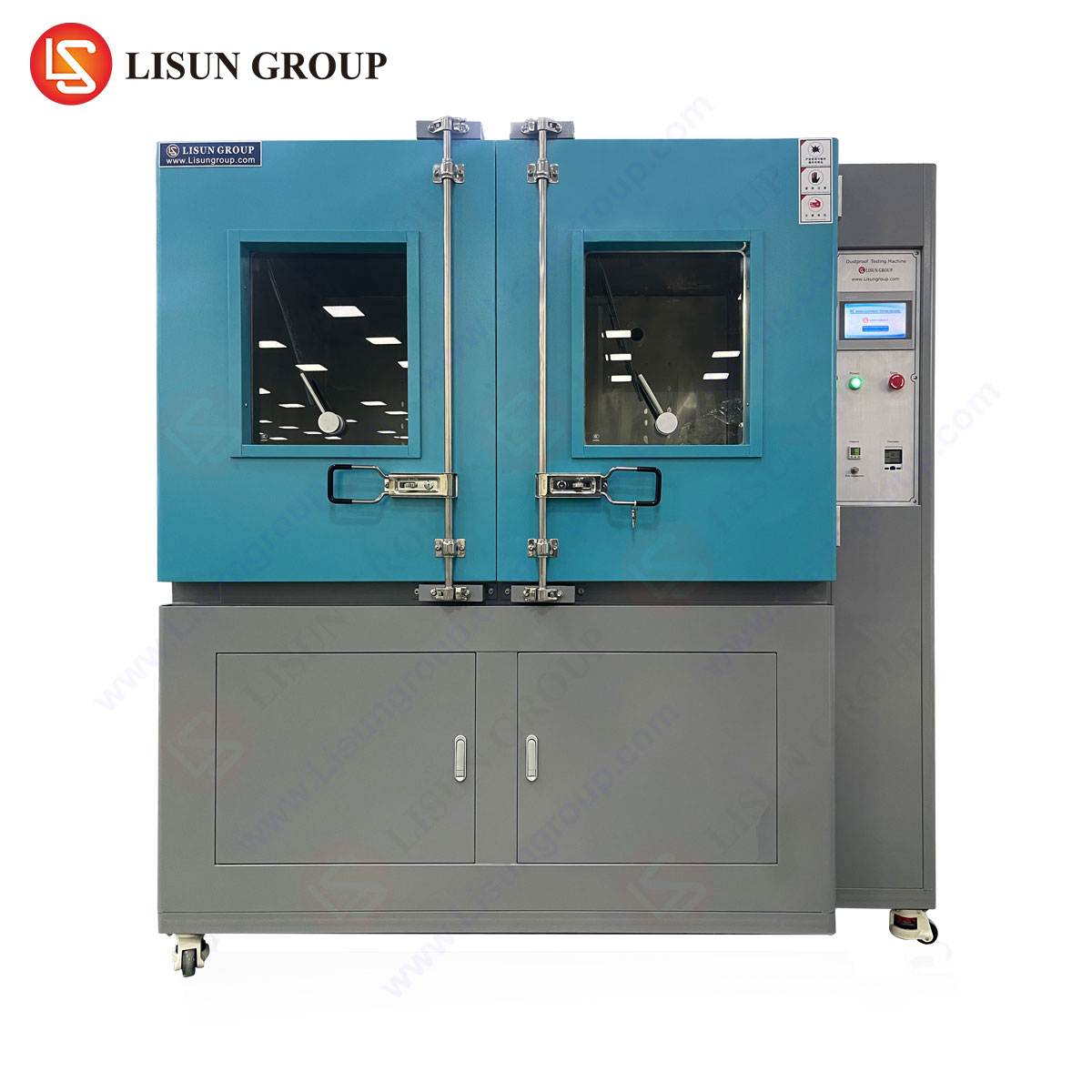
Within this stratified market, the LISUN SC-015 Dust Sand Test Chamber establishes itself as a calibrated instrument designed for rigorous compliance testing. Its engineering prioritizes repeatability and adherence to international standards, making it a pertinent reference point for a cost-benefit analysis.
Core Specifications and Testing Principle: The SC-015 is constructed with a stainless steel interior chamber and a powder-coated steel exterior. It utilizes a closed-loop vertical airflow system. A high-volume centrifugal blower draws the dust-laden air from the bottom of the test space, passes it through a cyclonic separator to remove particulates from the exhaust stream, and reinjects it at the top of the chamber through a diffuser. This design ensures a uniform vertical laminar flow of dust throughout the working volume, a critical requirement for test consistency. The dust concentration is controlled via a calibrated feed mechanism, and the test duration is managed by a programmable microcontroller. The chamber is designed to test to both IP5X and IP6X levels, with an integrated vacuum system to create the required pressure differential for IPX5 and IPX6 testing.
Industry Use Cases and Applications: The SC-015’s design caters to a broad spectrum of industrial applications. In Electrical and Electronic Equipment and Industrial Control Systems, it validates the integrity of cabinet enclosures, PLC housings, and terminal blocks. Automotive Electronics suppliers employ it to test sensors, control units, and infotainment systems against road dust ingress. For Lighting Fixtures (both indoor and outdoor), Telecommunications Equipment (outdoor routers, base station components), and Aerospace and Aviation Components, the chamber certifies that optical surfaces, connectors, and vents remain functional in dusty environments. Manufacturers of Household Appliances (e.g., robotic vacuum cleaners, outdoor air conditioners), Consumer Electronics, and Office Equipment use it to ensure product longevity and user safety. Crucially, in Medical Devices and Electrical Components like switches and sockets, such testing is often a non-negotiable prerequisite for safety certification, preventing internal arcing or contamination.
Competitive Advantages in Context: The SC-015’s value proposition is anchored in several key areas. Its fully enclosed dust circulation and recovery system minimizes operator exposure and material waste, reducing long-term operational costs. The use of standardized components and a modular design philosophy simplifies maintenance and potential repairs, a factor often overlooked in total cost of ownership calculations. Furthermore, its calibration and validation are traceable to relevant national standards, providing the documented evidence required for audit trails in regulated industries. While it may not incorporate the extreme automation of the most costly systems, it delivers precise, standards-compliant performance at a capital cost point that offers a favorable return on investment for high-throughput quality labs and dedicated R&D facilities.
Financial Allocation Across Industry Segments
The justification for capital expenditure on dust testing equipment varies significantly by industry, reflecting differing risk profiles, regulatory burdens, and product lifecycle costs.
- High-Compliance Industries (Medical Devices, Aerospace, Automotive): In these sectors, failure due to environmental ingress can have catastrophic safety, financial, or legal consequences. Testing is mandated and non-negotiable. Companies here typically allocate budget for high-specification chambers with extensive validation packages, automated pressure cycling, and full data logging capabilities. The cost of testing is amortized over the high unit cost of the products and the imperative of mitigating recall risk. Price sensitivity is lower, but demand for demonstrable precision and audit compliance is paramount.
- Volume-Driven Industries (Consumer Electronics, Household Appliances, Electrical Components): For manufacturers operating on thin margins and high volumes, efficiency and throughput are critical. A chamber like the LISUN SC-015, which offers reliable, repeatable testing with minimal downtime and dust consumption, aligns with this economic model. The focus is on achieving compliance at the lowest possible cost per unit tested, making the initial capital investment a key consideration. Budgets may be more constrained, favoring robust, purpose-built solutions over feature-laden premium systems.
- Infrastructure & Industrial Sectors (Telecommunications, Lighting, Industrial Control): Products in these fields are expected to operate reliably for years, often in unprotected outdoor or harsh indoor environments. The cost of a field failure includes not just the replacement unit but the far greater expense of service deployment. Investment in dust testing is seen as a form of insurance. These buyers often seek a balance, opting for chambers with good programmability to simulate long-term exposure and thermal cycling, but without unnecessary automotive or military-grade extremes.
Quantifying Value: Beyond the Initial Purchase Price
A holistic price evaluation must extend beyond the invoice to encompass the total cost of ownership (TCO). Operational expenditures include the recurring cost of standardized test dust, which is a consumable of notable expense. Chambers with efficient recovery systems offer significant savings here. Energy consumption of the blower and vacuum systems constitutes another ongoing cost. Maintenance demands—filter replacement, seal integrity checks, blower bearing service—vary by design and influence long-term operational budgets. Furthermore, downtime for calibration or repair directly impacts laboratory throughput and project timelines. A chamber with a slightly higher initial price but demonstrably lower operating costs, higher reliability, and excellent serviceability often presents a superior financial outcome over a five-to-ten-year horizon.
Table 1: Key Price and Specification Correlates
| Feature / Specification Tier | Entry-Level | Mid-Range (e.g., LISUN SC-015) | High-End / Fully Automated |
| :— | :— | :— | :— |
| Control System | Manual / Basic Timer | Programmable Microcontroller / Simple HMI | Full PLC with Touchscreen HMI, Data Logging |
| Dust Circulation | Open or Semi-Open Loop | Closed Loop with Basic Recovery | Closed Loop with High-Efficiency Cyclonic Recovery & Auto-Feed |
| Construction | Coated Mild Steel | Stainless Steel Interior, Coated Exterior | Full Stainless Steel (Interior & Exterior) |
| Ancillary Integration | Vacuum System Optional | Integrated Vacuum System | Integrated Vacuum, Climate Control, Networked PC Interface |
| Primary Cost Driver | Chamber Size / Basic Function | System Reliability / Standards Compliance | Automation / Data Integrity / Custom Profiles |
| Typical Industry Fit | Education, Basic QC | R&D, High-Volume Compliance QC | Regulated Industries, Certified Test Labs, Advanced R&D |
Future Trends Influencing Technical and Economic Demands
The evolution of product technology is concurrently raising the performance bar for test equipment. The proliferation of Electrical and Electronic Equipment with passive cooling vents, the miniaturization of Automotive Electronics, and the deployment of Telecommunications Equipment in arid, dusty regions all demand more precise simulation of real-world conditions. This may drive demand for chambers capable of finer control over particle size distribution, the ability to introduce temperature and humidity variables concurrently with dust exposure, and more sophisticated data acquisition to monitor partial discharge in Electrical Components during testing. From a pricing perspective, these added capabilities will segment the market further, but the core requirement for reliable, standards-based IP5X/IP6X testing will remain a volume market served by capable, cost-optimized instruments.
Frequently Asked Questions (FAQ)
Q1: What is the typical lead time for the procurement and installation of a dust test chamber like the LISUN SC-015?
A: Lead times vary by manufacturer and configuration. For a standard model from stock, delivery may occur within 4-8 weeks. Customized units or those requiring specific country certifications may require 10-16 weeks. Installation typically involves placement, electrical connection, and a basic operational verification, often manageable by facility personnel with guidance from the supplier.
Q2: How often does the test dust need to be replaced, and what are the cost implications?
A: Dust replacement frequency depends on chamber efficiency and test volume. In a chamber with a high-quality closed-loop recovery system, dust loss is minimal. Under continuous testing, topping up may be required every few months. Standardized Arizona Test Dust is a controlled, significant consumable cost; efficient recovery directly reduces this recurring operational expenditure.
Q3: Can a single chamber be used to test for both IP5X (Dust Protected) and IP6X (Dust Tight) ratings?
A: Yes, most modern chambers, including the LISUN SC-015, are designed for both tests. The key difference in procedure is the use of a vacuum system to create an internal under-pressure for the IP6X (dust tight) test. The chamber must be equipped with this integrated vacuum system and the necessary ports and controls to perform the test sequence specified in the standard.
Q4: What are the critical calibration and maintenance requirements to ensure ongoing test validity?
A: Regular calibration of the vacuum gauge (for pressure differential) and timer is essential, typically on an annual basis. Maintenance focuses on the mechanical system: checking and cleaning the blower fan and motor bearings, inspecting and replacing seals on the door and viewport, and servicing or replacing the filter in the dust recovery loop. A log of all maintenance and calibration should be kept for quality audits.
Q5: For testing automotive components, are there specific standards beyond IEC 60529 that the chamber must address?
A: Yes. While IEC 60529 is foundational, the automotive industry frequently references ISO 20653 (Road vehicles — Degrees of protection). This standard includes not only dust ingress tests similar to IP5X/IP6X but also tests for water and foreign object protection. Furthermore, specific OEMs often have their own, more stringent test specifications that may require modified dust types, longer durations, or combined environmental stresses.