




The Role of Particulate Ingress Testing in Modern Product Validation
In the relentless pursuit of product longevity and operational integrity across global markets, environmental simulation testing stands as a critical gatekeeper. Among these validation protocols, dust chamber testing occupies a specialized and indispensable niche. It is a discipline dedicated to evaluating a product’s resilience against the pervasive threat of particulate ingress—a failure mode that can precipitate catastrophic electrical faults, mechanical seizure, optical obscuration, and thermal management collapse. This form of testing transcends mere quality assurance; it is a fundamental exercise in risk mitigation, directly correlating to mean time between failures (MTBF), warranty claims, and brand reputation. For engineers and validation managers within sectors as diverse as automotive electronics, industrial control, and medical devices, a robust dust testing regimen is not optional but a mandatory component of the design verification and compliance lifecycle.
The underlying principle is one of controlled contamination. By subjecting devices to a calibrated concentration of standardized dust within a sealed chamber under specified atmospheric conditions, test laboratories can accelerate years of field exposure into a matter of hours or days. The resultant data provides empirical evidence of sealing efficacy, filtration performance, and the potential for internal accumulation that could compromise safety or function. This article delineates the technical methodologies, applicable standards, and practical implementation of dust chamber testing, with a specific examination of advanced instrumentation that enables precise and repeatable compliance verification.
Deconstructing Particulate Ingress: Failure Mechanisms and Industry Impact
Particulate matter, ranging from fine talcum-like powders to coarse sand grains, infiltrates products through multiple vectors: static pressure differentials, dynamic “pumping” actions from moving parts, and natural convection driven by internal heat dissipation. The consequences are industry-specific yet universally damaging. In electrical and electronic equipment and industrial control systems, conductive dust bridging PCB traces can create leakage currents or short circuits, leading to erroneous signals or board-level failure. For automotive electronics mounted in underbody or engine-adjacent locations, the abrasive nature of road dust can degrade connector integrity and wear down mechanical actuators.
Household appliances like robotic vacuum cleaners or outdoor air conditioning units ingest their operational environment; dust accumulation on brush motors or condenser coils directly impairs efficiency and elevates thermal stress. Lighting fixtures, particularly those in industrial or roadway settings, suffer from lumen depreciation and overheating as particulates coat LED drivers and optical surfaces. In the critical realm of medical devices, such as portable ventilators or imaging equipment used in field hospitals, dust ingress represents a direct patient safety hazard, potentially contaminating sterile pathways or disrupting sensor accuracy.
Telecommunications equipment deployed in base stations or desert environments must maintain signal integrity, where dust on RF connectors or cooling fans can cause thermal shutdowns. Even passive cable and wiring systems are vulnerable, as dust can compromise insulation resistance and promote tracking. Each failure mode underscores the necessity for a validated defense, quantified through standardized testing protocols.
Regulatory Landscape: Key Standards Governing Dust Ingress Testing
Compliance is largely dictated by the International Electrotechnical Commission (IEC) 60529 standard, which classifies degrees of protection provided by enclosures via the Ingress Protection (IP) code. The code’s first numeral denotes protection against solid objects, with specific ratings relevant to dust:
- IP5X: Dust Protected. Dust ingress is not entirely prevented, but it cannot enter in sufficient quantity to interfere with satisfactory operation of the equipment.
- IP6X: Dust Tight. No dust ingress under prescribed test conditions.
The testing methodology for IP5X and IP6X is detailed in IEC 60529 and its regional derivatives (e.g., EN 60529, ASTM D1732). The test prescribes the use of talcum powder for fine dust (IP5X) and requires a vacuum condition inside the enclosure for IP6X testing to create a pressure differential that drives infiltration. Other specialized standards address more severe conditions. The ISO 20653 standard, derived from DIN 40050-9, is pivotal for automotive electronics, defining protections against dust and water. MIL-STD-810G, Method 510.6, is employed for aerospace and aviation components and military gear, simulating blowing dust and sand that can cause erosion and blockage.
Successful certification against these standards provides a universally recognized benchmark, facilitating market access and serving as a compelling testament to engineering rigor in product documentation and marketing collateral.
System Architecture of a Modern Dust Test Chamber: The LISUN SC-015 Sand Dust Test Chamber
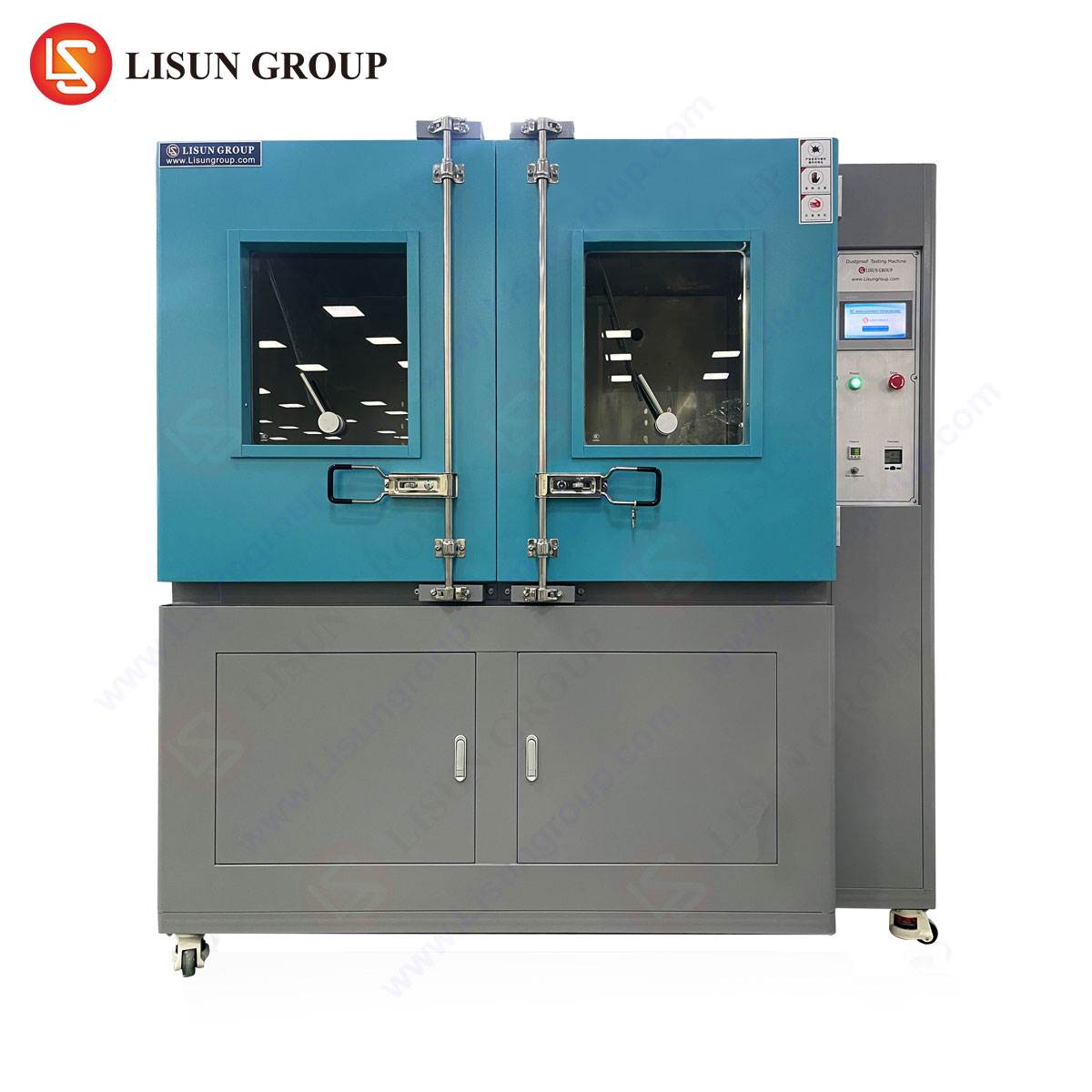
Achieving consistent, standards-compliant results necessitates instrumentation of precise engineering. The LISUN SC-015 Sand Dust Test Chamber exemplifies the integration of core subsystems required for rigorous particulate testing. Its design facilitates both IP5X/IP6X compliance and more demanding blow-sand simulations.
The chamber’s primary enclosure is constructed from SUS304 stainless steel, selected for its corrosion resistance and structural stability. A double-layer tempered glass viewing window allows for real-time observation without interrupting the test environment. The particulate injection system is a cornerstone of its functionality. A dedicated reservoir holds the test dust—typically talcum powder for IP testing or Arizona Road Dust (as specified in ISO 12103-1, A4 Fine Test Dust) for abrasive simulations. A controlled, vortex-based circulation mechanism, driven by a centrifugal blower, fluidizes and disperses the dust uniformly throughout the test volume. The velocity and density of the dust cloud are adjustable and monitored, ensuring the specified concentration (e.g., 2kg/m³ for certain durations as per standard) is maintained.
For IP6X dust-tight testing, the chamber integrates a vacuum system. This subsystem creates and maintains the required pressure differential (lower inside the test specimen) as stipulated in IEC 60529. A precision pressure gauge and control valve allow for accurate setting and regulation of this vacuum, typically at a level equivalent to 20 mbar below atmospheric pressure. The specimen is connected via a port, and any ingress is detected by a pressure sensor monitoring the specimen’s internal pressure change or via a post-test internal inspection.
A programmable logic controller (PLC) with a touch-screen human-machine interface (HMI) provides centralized command. Operators can input complex test profiles, controlling cycles of dust circulation, settling, and vacuum application. This automation ensures repeatability and eliminates operator-induced variables. A dust collection and filtration module at the chamber’s exhaust mitigates environmental contamination upon test completion.
Key Specifications of the LISUN SC-015:
- Test Volume: 0.5 m³ (SC-015-1) or 1 m³ (SC-015-2) standard variants.
- Dust Concentration: Adjustable, typically 0.5 to 3 kg/m³.
- Airflow Velocity: Adjustable range, e.g., 0-2 m/s, for blow-sand simulation.
- Vacuum System Range: 0 to -50 kPa, sufficient for IP6X requirements.
- Sieve Mesh: Compliant with standards (e.g., 75μm nominal for talcum).
- Controller: Digital PLC with programmable cycles and data logging.
- Safety Features: Over-temperature protection, blower overload protection, and secure door interlocks.
Application-Specific Testing Protocols and Validation Outcomes
The configuration of the chamber varies significantly with the device under test (DUT) and its target standard. For a sealed industrial control cabinet (target: IP6X), the test would involve placing the powered-off cabinet inside the chamber. The cabinet’s internal volume is connected to the vacuum system. After creating a stable vacuum inside the cabinet, the dust is circulated for 8 hours. A successful pass is confirmed if the internal vacuum drop (indicating air—and thus dust—ingress) remains within the standard’s allowable limit, and a subsequent internal inspection reveals no visible dust.
Conversely, testing an automotive sensor module for ISO 20653 Dust Code 4 (blowing dust) requires a different approach. The powered DUT, mounted on a fixture, is exposed to a high-velocity stream of Arizona Road Dust for a prescribed duration (e.g., 8 hours at 8-10 m/s). Post-test validation involves a full functional check, measurement of signal drift, and inspection for abrasive wear on connectors and housing. For consumer electronics like a ruggedized tablet, a combined test profile might be used: cycles of dust exposure followed by functional operation checks to simulate dust entering during button actuation or speaker operation.
Medical device testing, such as for a handheld diagnostic monitor, emphasizes internal inspection and functional safety. Even minute amounts of dust inside the optical path of a spectrometer or on the contacts of a test cartridge port can render the device unreliable. Testing here follows IP5X or IP6X but is coupled with stringent post-test performance validation against clinical specifications.
Analytical Post-Test Evaluation: Beyond Pass/Fail
A comprehensive dust test yields rich diagnostic data beyond a binary compliance result. Post-test disassembly and analysis are crucial for engineering insight. Techniques include:
- Visual Inspection: Documenting dust deposition patterns using borescopes or macro photography to identify primary ingress paths (e.g., gasket interfaces, connector seals).
- Gravimetric Analysis: Weighing internal components or filter elements before and after testing to quantify total ingress mass.
- Electrical Testing: Measuring insulation resistance, contact resistance, or leakage current on electrical components like switches and sockets post-exposure.
- Functional Performance Testing: Running the DUT through its full operational range to identify intermittent faults or performance degradation in office equipment like printers or telecommunications routers.
This forensic data directly informs design iterations, guiding improvements in gasket geometry, vent design with hydrophobic membranes, or conformal coating application on PCBs.
Strategic Advantages of Precision Dust Chamber Instrumentation
Investing in a calibrated, versatile dust chamber like the LISUN SC-015 confers multiple strategic advantages. Firstly, it de-risks the certification process by providing laboratory-grade accuracy that aligns with notified body expectations, reducing the likelihood of costly retests. Secondly, it accelerates development cycles by enabling rapid, in-house design validation, allowing engineers to test prototypes iteratively without relying on external lab schedules. This agility is paramount in fast-moving sectors like consumer electronics.
Thirdly, it provides a competitive market differentiator. The ability to claim and substantiate a high IP rating or compliance with stringent automotive/aerospace standards enhances product specifications and marketing messaging. For manufacturers of lighting fixtures or electrical components, this can be a decisive factor in procurement decisions for harsh environment applications. Finally, it contributes directly to lifecycle cost reduction by identifying failure modes early, thereby minimizing field returns, warranty repairs, and reputational damage.
Integrating Dust Testing into a Holistic Reliability Engineering Program
Dust chamber testing should not exist in isolation. Its greatest value is realized when integrated into a broader reliability sequence, often following temperature cycling and vibration testing, which can stress and compromise seals. Preceding a damp heat or salt spray test can also be instructive, as dust combined with humidity can form conductive sludge, a severe threat to electrical and electronic equipment.
Data from dust tests should feed into the Failure Modes, Effects, and Criticality Analysis (FMECA) and the Design for Reliability (DfR) process. By quantifying the particulate threat, organizations can make informed material choices, such as specifying higher-grade elastomers for seals or designing labyrinth paths instead of relying solely on compressive gaskets.
Conclusion
Dust chamber testing represents a critical convergence of environmental simulation, materials science, and electrical engineering. As products proliferate into increasingly demanding environments—from the Sahara to the factory floor—the ability to empirically validate their defense against particulate ingress becomes a cornerstone of reliable design. Instruments like the LISUN SC-015 Sand Dust Test Chamber provide the controlled, repeatable, and standards-aligned environment necessary to generate this essential validation data. By implementing a rigorous dust testing protocol, manufacturers across the spectrum of electrical components, automotive electronics, medical devices, and beyond can ensure their products not only meet compliance mandates but also deliver the operational resilience that defines market leadership and end-user trust.
FAQ Section
Q1: What is the primary difference between IP5X and IP6X testing in a chamber like the LISUN SC-015?
A1: The fundamental difference lies in the test severity and acceptance criteria. IP5X (“Dust Protected”) involves exposing the specimen to a cloud of fine talcum dust without a pressure differential. The pass criterion is that dust does not enter in sufficient quantity to interfere with operation. IP6X (“Dust Tight”) is more stringent. It requires creating a vacuum inside the test specimen (or lower pressure) while it is exposed to the dust cloud. The pass criterion is no ingress whatsoever, verified by either monitoring the internal vacuum stability (no significant pressure rise indicating air/dust entry) or by a post-test internal inspection revealing no visible dust.
Q2: Can the LISUN SC-015 chamber simulate real-world conditions like desert sandstorms for automotive testing?
A2: Yes, beyond standard IP testing, the chamber’s adjustable blower system allows it to perform blow-sand or blowing dust tests as per standards like ISO 20653 or MIL-STD-810G. By using standardized Arizona Road Dust and configuring the airflow to achieve specified velocities (e.g., 8-10 m/s for severe conditions), it can simulate the abrasive and infiltrative effects of sandstorms on automotive electronics, exterior lighting, and aerodynamic components.
Q3: How do you prepare and maintain the test dust to ensure consistent results?
A3: Consistency is paramount. The test dust (talcum for IP, Arizona Road Dust for abrasion) must be kept dry in a sealed container to prevent clumping. Before each test, it is often recommended to sieve the dust using the specified mesh (e.g., 75μm) to remove agglomerates. The dust should not be reused indefinitely; its abrasive properties and particle size distribution can change. Most standards specify a maximum number of reuses (e.g., 20 cycles) before the dust must be replaced to maintain test validity.
Q4: For a medical device with internal fans for cooling, should it be powered on or off during testing?
A4: This is a critical test parameter that must reflect real-use conditions and be defined in the product-specific test plan. If the fan operates during normal use, testing with the fan powered on is essential. The fan creates an active pressure differential that can draw dust in through vents or gaps more aggressively than a static test. A comprehensive validation might include both static (off) and dynamic (on) test phases to assess sealing under all operational modes.
Q5: What are the most common points of failure identified during post-test analysis?
A5: Recurrent failure points include compromised static seals at housing interfaces due to uneven flange pressure or gasket material degradation, inadequate sealing around dynamic penetrations (buttons, rotary switches, shafts), porous castings or weld lines, and insufficient filtration on ventilation ports. Another common issue is “walk-in,” where dust gradually works its way past seals over repeated thermal or mechanical stress cycles applied before or during the dust test.