

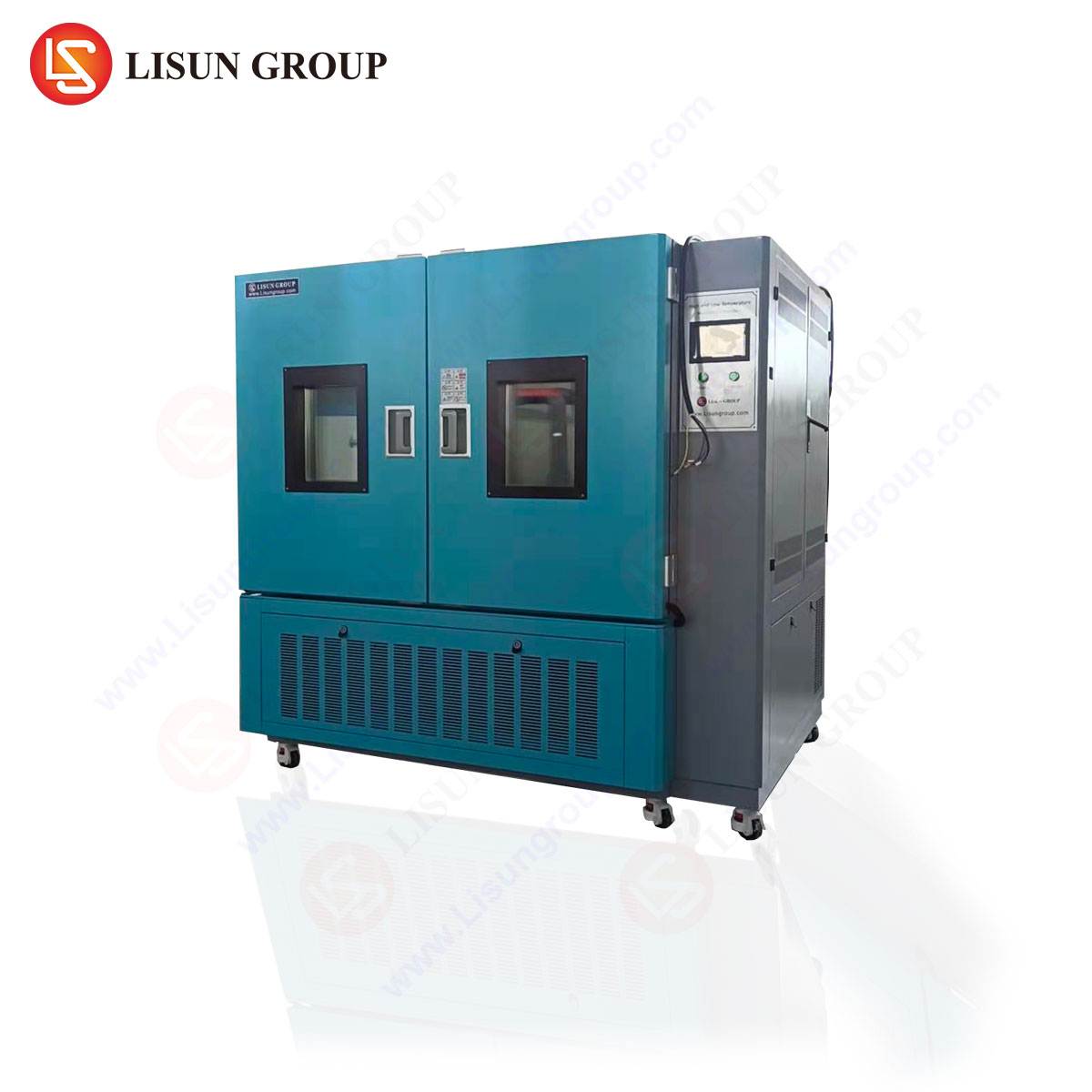



A Comprehensive Guide to Dust Ingress Testing for Product Durability
The operational lifespan and functional reliability of modern equipment are intrinsically linked to its ability to withstand harsh environmental conditions. Among these, the pervasive threat posed by particulate matter—dust, sand, and other fine solids—represents a critical failure mode for a vast array of products. Dust ingress can lead to catastrophic outcomes, including mechanical seizure, electrical short circuits, optical obscuration, thermal management failure, and accelerated wear. Consequently, rigorous and standardized dust ingress testing has become a non-negotiable phase in the design validation and quality assurance processes across industries. This guide provides a detailed examination of dust ingress testing methodologies, relevant standards, and the implementation of specialized equipment, with a focus on the LISUN SC-015 Dust Sand Test Chamber as a pivotal solution.
The Mechanisms and Consequences of Particulate Ingress
Understanding the failure modes induced by dust is fundamental to designing effective tests. Particulate matter is not a homogeneous challenge; its impact varies based on particle size distribution, composition, concentration, and environmental dynamics such as airflow and static pressure differentials.
Primary failure mechanisms include Abrasive Wear, where hard particles like silica sand cause physical degradation of moving parts, seals, and surfaces. Electrical Malfunction occurs when conductive dust bridges isolated terminals or when hygroscopic dust absorbs moisture, creating leakage currents and short circuits. Thermal Insulation is a significant risk, as dust accumulation on heat sinks, vents, or enclosures can drastically reduce heat dissipation, leading to component overheating. Optical Interference affects devices with lenses, sensors, or displays, where dust deposition scatters light, reduces signal clarity, or completely obscures the field of view. Finally, Mechanical Blockage can impede moving parts, clog filters, vents, or cooling fans, and foul connectors and switches.
The industries most acutely affected are diverse. Automotive Electronics and Aerospace and Aviation Components face sand and dust storms that can disable engine control units, sensors, and navigation systems. Electrical and Electronic Equipment and Industrial Control Systems deployed in factories, mines, or outdoor installations are subject to conductive metal or carbon dust. Lighting Fixtures, especially high-power outdoor or industrial luminaires, risk lumen depreciation and driver failure from dust accumulation. Medical Devices, particularly portable or field-deployed units, must maintain sterility and functionality. Telecommunications Equipment in base stations and Electrical Components like switches and sockets require long-term reliability in dusty environments to prevent arcing and contact failure.
Standardized Testing Frameworks and Classification
To quantify and certify a product’s resistance, international standards provide reproducible test methods and a clear classification system. The most widely recognized is the Ingress Protection (IP) Code defined in IEC 60529 (and its regional equivalents like DIN 40050, GB/T 4208). The IP code’s first numeral indicates protection against solid objects. For dust, the relevant classifications are IP5X and IP6X.
IP5X (Dust Protected): Testing involves exposing the enclosure to talcum powder inside a dust chamber. The test is passed if the amount of dust entering does not interfere with satisfactory operation or safety. It allows for some limited ingress.
IP6X (Dust Tight): A more stringent test where a vacuum is often applied inside the test specimen to create a pressure differential, drawing dust in. No dust ingress is permitted for a passing rating.
Beyond the IP code, other industry-specific standards apply. MIL-STD-810G, Method 510.5 is pivotal for Aerospace and Aviation Components and Automotive Electronics, simulating blowing dust and sand to assess abrasion and clogging effects. ISO 20653 details protection degrees for road vehicles. IEC 60068-2-68 provides a foundational test method for dust and sand. These standards define key parameters: test dust composition (typically Arizona Road Dust or similar), particle size distribution (e.g., 0-150µm for fine dust, 150-850µm for sand), dust concentration (e.g., 2-10 g/m³), air velocity, test duration, and pressure differential.
The LISUN SC-015 Dust Sand Test Chamber: Principles and Specifications
Implementing the standards described requires precise, reliable, and consistent instrumentation. The LISUN SC-015 Dust Sand Test Chamber is engineered to meet the exacting demands of IP5X, IP6X, and related blowing dust/sand tests. Its design integrates the core principles of controlled particulate suspension and application.
The testing principle revolves on a closed-loop vertical wind tunnel. A controlled volume of test dust is introduced into the airstream generated by a centrifugal blower. The air-dust mixture is circulated uniformly within the cylindrical test chamber, ensuring a consistent concentration enveloping the test specimen. For IP6X tests, an integrated vacuum system creates the required negative pressure differential inside the device under test (DUT), actively drawing dust toward potential ingress points. The chamber’s construction, typically from stainless steel with a tempered glass viewing window, ensures durability and clear observation.
Key Technical Specifications of the LISUN SC-015:
- Test Chamber Volume: 0.5 m³ (SC-015A) or 1 m³ (SC-015B), accommodating a wide range of product sizes.
- Dust Concentration: Adjustable from 0 to 10 g/m³, covering all standard requirements.
- Airflow Velocity: Continuously variable from 0 to 2 m/s, simulating gentle settling to severe blowing conditions.
- Test Dust: Compatible with standard Arizona Road Dust (fine dust) and silica sand (150-850µm). A built-in sieve and drying oven prepare the dust to specification.
- Vacuum System: For IP6X testing, includes a flowmeter (0-20 L/min), pressure gauge (0-10 kPa), and vacuum pump to create and monitor the required under-pressure.
- Control System: Programmable Logic Controller (PLC) with touchscreen HMI for setting and storing test profiles (duration, blow/stop cycles, vacuum level). This ensures repeatability and eliminates operator variance.
- Safety & Containment: Features include emergency stop, filter protection for the blower, and a sealed design to prevent laboratory contamination.
Application Across Critical Industries
The versatility of the LISUN SC-015 allows it to serve as a critical validation tool across the product development lifecycle in numerous sectors.
In Automotive Electronics, it validates components like LED headlamps (preventing lumen loss), electronic control units (ECUs), sensors (LiDAR, radar), and infotainment systems against desert driving or off-road conditions per ISO 20653. Aerospace and Aviation Components suppliers use it to test avionics bay enclosures, external lighting, and connector systems against MIL-STD-510.5 profiles.
For Electrical and Electronic Equipment and Industrial Control Systems, such as PLCs, variable frequency drives, and HMI panels destined for manufacturing floors or energy plants, the chamber verifies IP5X/IP6X ratings, ensuring longevity amidst conductive or abrasive dust. Lighting Fixtures manufacturers test the integrity of gaskets and seals on outdoor, industrial, and roadway luminaires, where dust ingress can compromise thermal management and optical systems.
Medical Device manufacturers test portable monitors, diagnostic equipment, and surgical tools to ensure functionality in varied environments, including ambulances or field hospitals. Telecommunications Equipment like 5G small cells and outdoor routers are tested for seal integrity to prevent moisture-dust synergy failures. Consumer Electronics and Office Equipment, including ruggedized laptops, printers, and outdoor speakers, undergo testing to meet market-specific durability claims.
Methodological Implementation and Best Practices
A successful dust ingress test is more than placing a product in a chamber. It requires a methodical approach. Pre-Test Preparation is crucial: the specimen must be clean, dry, and in its operational state. For electrical products, functional monitoring leads should be routed through sealed ports. The appropriate test dust must be sieved and dried to remove moisture and agglomerates.
Test Execution involves selecting the correct standard profile. For an IP5X test, the specimen is placed in the chamber, dust is circulated at a specified concentration for a set duration (e.g., 8 hours), and then examined. For IP6X, the internal vacuum is applied (e.g., 2 kPa below atmospheric) for the same period. For blowing sand tests (e.g., MIL-STD-810), higher velocities (e.g., 18-29 m/s) and larger sand particles are used, often with the specimen mounted on a rotating table to simulate all attack angles.
Post-Test Evaluation is the definitive phase. The specimen is carefully extracted and inspected for dust penetration. Electrical tests verify insulation resistance and dielectric strength. Mechanical tests check for binding or abrasion. The internal components are microscopically examined for particulate presence. The findings inform design iterations—improving seal geometries, filter designs, or vent labyrinths.
Competitive Advantages of the LISUN SC-015 System
The LISUN SC-015 distinguishes itself through several engineered advantages that translate to testing integrity and operational efficiency. Its Precision Concentration Control, achieved via a calibrated feeding mechanism and real-time monitoring, ensures strict adherence to standard-mandated dust densities, a common failure point in less sophisticated chambers. The Integrated Vacuum and Flow System is calibrated for IP6X, providing direct readouts of pressure differential and volumetric flow, eliminating the need for external, often inaccurate, setups.
Enhanced Operational Longevity is built-in through features like a high-efficiency filter protecting the blower assembly from dust overload and a stainless-steel construction resistant to abrasive wear. From a usability standpoint, the Programmable PLC Controller allows for the creation, storage, and precise replication of complex test cycles, critical for audit trails and comparative testing. Finally, its Multi-Standard Compliance in a single platform—capable of switching between IP dust tests and MIL/ISO blowing sand tests—offers laboratories exceptional flexibility and a strong return on investment.
Interpreting Results and Driving Design Improvement
The ultimate value of dust ingress testing lies in its feedback loop to engineering. A failed test is not an endpoint but a diagnostic tool. The pattern and location of ingress provide direct clues. Dust accumulation along a specific seam indicates a gasket compression or tolerance issue. Fine dust on a PCB far from an opening suggests ingress via cable glands or connector interfaces. Abrasion marks on a fan blade pinpoint a problematic airflow path.
This data drives targeted improvements: specifying higher-grade sealing elastomers, redesigning labyrinth vents, adding protective meshes, or implementing conformal coatings on sensitive electronics. By integrating the LISUN SC-015 into the iterative design process, manufacturers can achieve robust product designs that meet compliance standards, reduce warranty claims, and enhance brand reputation for reliability in the most demanding environments.
Frequently Asked Questions (FAQ)
Q1: What is the key difference between IP5X and IP6X testing in the LISUN SC-015?
A1: The fundamental difference is the acceptance criterion and test method. IP5X (Dust Protected) tests for “limited ingress” without harmful effects, typically using a circulating dust cloud. IP6X (Dust Tight) requires “no ingress” under more severe conditions. In the SC-015, this is achieved by activating the integrated vacuum system to create a negative pressure differential inside the test specimen, actively drawing dust towards potential entry points for a more stringent assessment.
Q2: Can the SC-015 test for both fine dust and blowing sand as per MIL-STD-810?
A2: Yes, the chamber is designed for multi-standard testing. By changing the test medium from fine Arizona Road Dust (for IP tests) to specified silica sand with a larger particle size distribution (150-850µm), and by adjusting the blower velocity to the high-speed profile required (e.g., 18-29 m/s), the SC-015 can accurately simulate the blowing sand conditions outlined in MIL-STD-810G, Method 510.5 and similar standards.
Q3: How is dust concentration calibrated and maintained during a long-duration test?
A3: The LISUN SC-015 employs a precision dust feed mechanism controlled by the PLC. The concentration (g/m³) is set via the HMI. The system uses a calibrated screw feeder or vibrating tray to introduce dust into the airstream at a controlled rate. The closed-loop circulation and chamber design promote uniform suspension. Regular validation using gravimetric sampling (weighing a filter before and after drawing a known air volume from the chamber) is recommended as a best practice to confirm calibration.
Q4: For testing automotive components like light fixtures, is internal vacuum still applied?
A4: It depends on the referenced standard. For an IP6X rating claim, yes, the vacuum test is required. However, for specific automotive validation against ISO 20653 or OEM-specific tests that simulate driving-induced pressure cycles, the test profile may differ. The SC-015’s programmable controls allow it to simulate various pressure conditions, not just a static vacuum, making it suitable for these complex automotive scenarios.
Q5: What are the critical maintenance procedures for the chamber to ensure consistent results?
A5: Key maintenance includes regular cleaning of the chamber interior and ductwork to prevent cross-contamination between tests, inspection and replacement of the blower protection filter, calibration of the vacuum and flow sensors at prescribed intervals, and ensuring the dust sieving and drying oven components are functioning correctly to maintain the specified dust properties. Following the manufacturer’s scheduled maintenance plan is essential for long-term accuracy.