



A Technical Analysis of Electrostatic Discharge Simulators for the Validation of Plugs and Sockets
Introduction: The Imperative of ESD Immunity in Electrical Connectors
The proliferation of sensitive electronic control systems within residential, commercial, and industrial environments has fundamentally altered the performance requirements for basic electrical components. Plugs and sockets, once considered purely electromechanical interfaces, now frequently incorporate embedded electronics for functions such as smart metering, load monitoring, safety cutoff, and wireless communication. This integration renders them susceptible to transient electromagnetic phenomena, with Electrostatic Discharge (ESD) representing a primary threat vector. ESD events, characterized by sub-nanosecond rise times and peak currents exceeding tens of amperes, can induce latch-up, gate oxide breakdown, or software glitches in unprotected circuitry, leading to functional interruption, data corruption, or permanent failure. Consequently, rigorous ESD immunity testing has transitioned from an exclusive concern for consumer electronics to a critical validation step for the modern plug and socket industry. This article delineates the operational principles, standardized methodologies, and application-specific considerations of ESD simulators, with a particular focus on the specialized instrumentation required for this sector, exemplified by the LISUN Gauges for Plugs and Sockets.
Fundamental Principles of Electrostatic Discharge Simulation
An ESD simulator, or ESD gun, is engineered to replicate the discharge events that occur when two objects at different electrostatic potentials come into close proximity or contact. The underlying model is defined by the Human Body Model (HBM), which approximates the discharge from a charged human being. The core circuitry comprises a high-voltage DC supply, a storage capacitor (Cs), a discharge resistor (Rd), and a relay for switching. The standardized values, as per IEC 61000-4-2, are typically Cs = 150 pF and Rd = 330 Ω, simulating the human body’s capacitance and resistance, respectively. The simulator generates two distinct discharge waveforms: the contact discharge, applied directly to the Equipment Under Test (EUT) via a relaying tip, and the air discharge, where the charged tip is moved toward the EUT until an arc is established.
The critical challenge in simulation lies in the fidelity of the output waveform. The target waveform, as specified in IEC 61000-4-2, demands an initial peak current with a rise time of 0.7–1.0 ns, followed by a subsequent current at 30 ns and 60 ns. Achieving this requires meticulous control of parasitic inductance in the discharge path and the use of high-bandwidth measurement systems, such as current targets and oscilloscopes with bandwidths exceeding 1 GHz. Any deviation from the standard waveform can lead to non-representative testing, either over-stressing or under-stressing the EUT, thereby invalidating the compliance assessment.
Standardized Test Methodologies for Connector Housings and Contacts
For plugs and sockets, ESD testing is governed by a suite of international standards, primarily IEC 61000-4-2 for the test methodology and product-family standards like IEC 60884-1 (plugs and socket-outlets for household use) or IEC 60309 (industrial connectors), which reference it. The test procedure is systematic. The EUT is placed on a grounded horizontal coupling plane (HCP) and configured for normal operation. Testing is performed at severity levels defined by the product standard, commonly Level 2 (4 kV contact, 8 kV air) for basic equipment, up to Level 4 (8 kV contact, 15 kV air) for robust industrial applications.
Discharges are applied to both conductive accessible parts (e.g., metal shrouds, grounding pins) and to insulating surfaces. For insulating surfaces, such as the polymer body of a socket, the air discharge method is employed. Crucially, indirect discharges are also mandated. These involve discharging the simulator to the HCP or a vertical coupling plane (VCP) placed near the EUT’s cabling, which couples energy electromagnetically into the system. This is particularly relevant for assessing the immunity of internal circuits to discharges occurring on nearby surfaces or connected cables. The EUT is monitored for performance degradation per its functional performance criteria, which may range from temporary loss of a smart indicator light to a more severe, permanent malfunction of a ground-fault circuit interrupter (GFCI) module.
The LISUN Gauges for Plugs and Sockets: A Specialized Validation Instrument
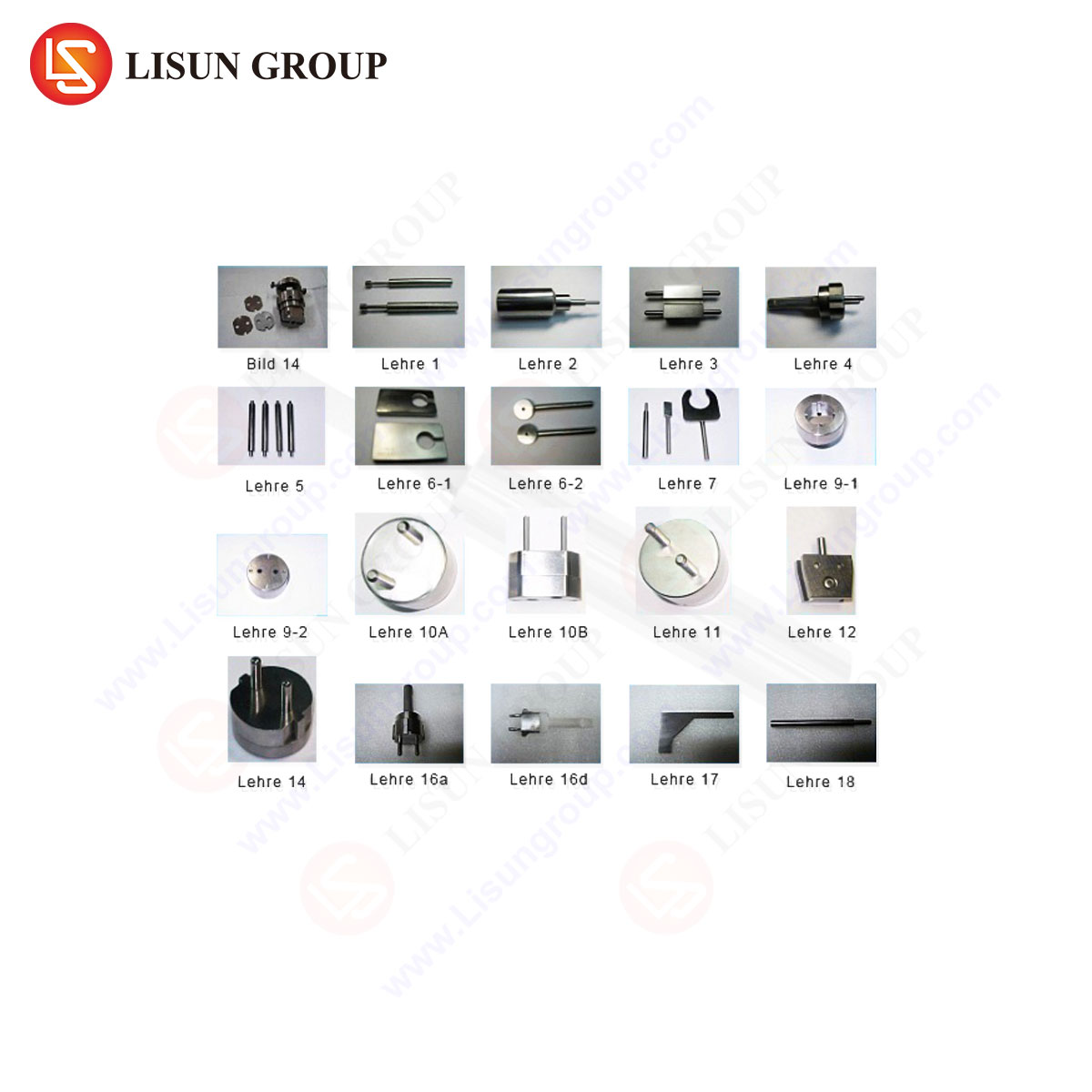
While general-purpose ESD simulators are widely available, the unique geometry and material composition of plugs and sockets necessitate specialized fixturing and measurement tools. The LISUN Gauges for Plugs and Sockets constitute a dedicated apparatus designed to address the specific validation challenges of this product category. Its primary function is to provide a repeatable, geometrically precise, and standards-compliant platform for applying ESD stresses and measuring critical performance parameters during and after testing.
The system integrates a calibrated ESD pulse generator with a suite of mechanical gauges and fixtures that ensure consistent application points, as mandated by standards. A key component is the interchangeable tip holder, which accommodates standard discharge tips as well as custom fixtures designed to interface with the complex contours of plug pins and socket apertures. This eliminates variability introduced by manual handling of the ESD gun, a significant source of test result inconsistency.
Technical Specifications and Operational Advantages
The LISUN system is characterized by several defining specifications that underscore its suitability for connector testing. Its voltage range typically spans 0.2 kV to 30 kV, covering all standard test levels and allowing for margin testing. The waveform verification system is integral, employing a high-frequency current target and a calibrated measurement chain to confirm compliance with IEC 61000-4-2’s stringent waveform parameters before each test session.
A distinctive feature is its integrated monitoring circuitry for the EUT. For smart plugs and sockets, the gauge can be configured to monitor supply voltage, leakage current, contact resistance, and digital communication lines (e.g., via Wi-Fi or Zigbee modules) in real-time during ESD stress. This allows for the precise correlation of a discharge event with a specific functional anomaly. Furthermore, the apparatus includes a programmable XYZ positioning system, enabling automated test sequences across a predefined grid of test points on the EUT’s surface, thereby enhancing throughput and repeatability.
Industry Application: Ensuring Reliability in Smart Home and Industrial Systems
The practical application of this specialized simulator is evident in several key industry use cases. For manufacturers of smart sockets with USB charging ports, the device is indispensable. ESD strikes on the main AC pins or the outer housing can couple into the low-voltage DC circuitry, potentially damaging the USB power delivery controller. The LISUN gauge allows for targeted discharges on the AC pins while monitoring the 5V DC output for deviations, enabling engineers to optimize board layout and shielding.
In industrial environments, connectors per IEC 60309 are exposed to harsh conditions, including operator handling with possible high static charges. Testing these large, metallic-bodied connectors requires high-energy discharges and a robust fixture to hold the heavy EUT. The system’s high-current capability and ruggedized mechanical stage are designed for this purpose, ensuring that the connector’s optional electronic locking mechanism or power monitoring chipset remains immune to transient disturbances.
Comparative Analysis: Enhancing Repeatability and Diagnostic Precision
The competitive advantage of a dedicated system like the LISUN Gauges, versus a generic ESD gun and manual setup, lies in three areas: metrological repeatability, diagnostic depth, and compliance assurance.
- Metrological Repeatability: Manual testing is prone to operator influence—variations in approach speed for air discharge, angle of contact, and pressure. The automated, fixture-guided approach of the LISUN system eliminates these variables, producing statistically comparable results across different labs and operators, a critical factor for certification bodies.
- Diagnostic Depth: By integrating real-time electrical monitoring of the EUT’s core functions, the system moves beyond simple pass/fail assessment. It provides actionable diagnostic data, pinpointing whether a failure is in the power supply, signal conditioning, or digital processing section. This accelerates root-cause analysis and redesign cycles.
- Compliance Assurance: The built-in waveform verification and automated test logging create a comprehensive audit trail. This documentation is vital for demonstrating due diligence and compliance with standards such as IECEE CB Scheme requirements, where test reproducibility is scrutinized.
Conclusion
As the functional complexity of electrical connectors increases, so too does the imperative for rigorous and repeatable ESD immunity validation. General-purpose ESD simulators, while foundational, often lack the application-specific fixturing and integrated diagnostics required for efficient development and certification of plugs and sockets. Specialized instrumentation, such as the LISUN Gauges for Plugs and Sockets, addresses this gap by providing a standardized, automated, and deeply analytical testing platform. By enhancing repeatability, providing granular diagnostic data, and ensuring strict adherence to international standards, such systems play a pivotal role in de-risking product development and ensuring the long-term reliability and safety of next-generation electrical connection systems in an increasingly electrified and digitally connected world.
FAQ Section
Q1: Why is air discharge testing particularly important for plastic-bodied sockets?
Air discharge testing simulates a real-world scenario where a charged object (like a person’s finger) approaches but does not initially contact the insulating surface of the device. The discharge arcs across the air gap, and the point of arc attachment can be unpredictable, injecting current into potentially vulnerable internal points. This test is crucial for assessing the effectiveness of internal shielding, board layout, and gap design in preventing energy from coupling into sensitive circuits behind the insulating barrier.
Q2: How does the simulator test indirect discharges, and why are they relevant for a plug?
Indirect discharges are applied to a coupling plane adjacent to the EUT or its connected cables, rather than to the unit itself. The rapidly changing current in the plane generates intense, localized electromagnetic fields. For a plug with attached cable, these fields can induce transient voltages and currents on the power lines or within any internal signal lines (e.g., for an LED indicator). This tests the immunity of the product’s circuitry to nearby ESD events, such as a discharge to a metal workbench.
Q3: What is the significance of monitoring contact resistance during an ESD test on a socket?
While ESD is a high-frequency event, its energy can cause microscopic welding or pitting on mating contact surfaces, especially in low-energy signal contacts within smart connectors. Monitoring contact resistance dynamically during and after a test sequence can reveal latent degradation that might not cause immediate functional failure but could lead to increased heat generation and premature failure under normal load conditions over time.
Q4: Can a product pass contact discharge but fail air discharge testing, and what does this indicate?
Yes, this is a common occurrence. A pass in contact discharge but a failure in air discharge typically indicates an issue with the design of the insulating housing or the gaps between the housing and internal conductors. The arc from an air discharge can find a path to a sensitive internal node that is not accessible to the direct contact tip. This failure mode points to the need for improved creepage/clearance distances, additional shielding, or the use of a different dielectric material for the housing.
Q5: For a fully metallic industrial plug, is ESD testing still necessary?
Absolutely. While the metallic body provides excellent shielding, the test focus shifts. Direct contact discharges to the shell must not cause malfunctions in internal electronics. Furthermore, the “backdoor” coupling path becomes the cables entering the connector. Indirect discharge testing to coupling planes near the cable bundle is critical to ensure noise from an external ESD event is not conducted into the equipment via the power lines, bypassing the shielded shell.