




Abstract
Ensuring the electromagnetic compatibility (EMC) of automotive electronics against harsh electrical transients is a fundamental requirement for vehicle safety and reliability. This article provides a comprehensive technical analysis of the EMS-ISO7637 Automotive Electronics Transient Immunity EMC Testing System: 12V/24V/36V Support, a sophisticated platform designed for rigorous compliance validation. We examine its core architecture, which integrates multi-pulse generators and coupling networks to simulate real-world disturbances as defined by ISO 7637. The discussion covers its application across vehicle voltage systems, from 12V passenger cars to 36V mild-hybrid platforms, detailing its role in R&D verification, production quality control, and certification testing for critical components like ECUs and power converters.
1.1 The Critical Role of ISO 7637 in Vehicle EMC Validation
The ISO 7637 series of standards defines the cornerstone methodology for evaluating the immunity of electrical and electronic components to electrical transients conducted along supply and signal lines. These transients, originating from load dump, switching of inductive loads, and relay contact bounce, pose significant risks to electronic control units (ECUs). Compliance with ISO 7637-2:2021 (Electrical transient conduction) and ISO 7637-3:2016 (Electrical transient transmission by capacitive and inductive coupling) is mandatory for global market access, ensuring components can withstand the electrically noisy automotive environment without malfunction or degradation.
1.2 System Overview: The LISUN EMS-ISO7637 Testing Platform
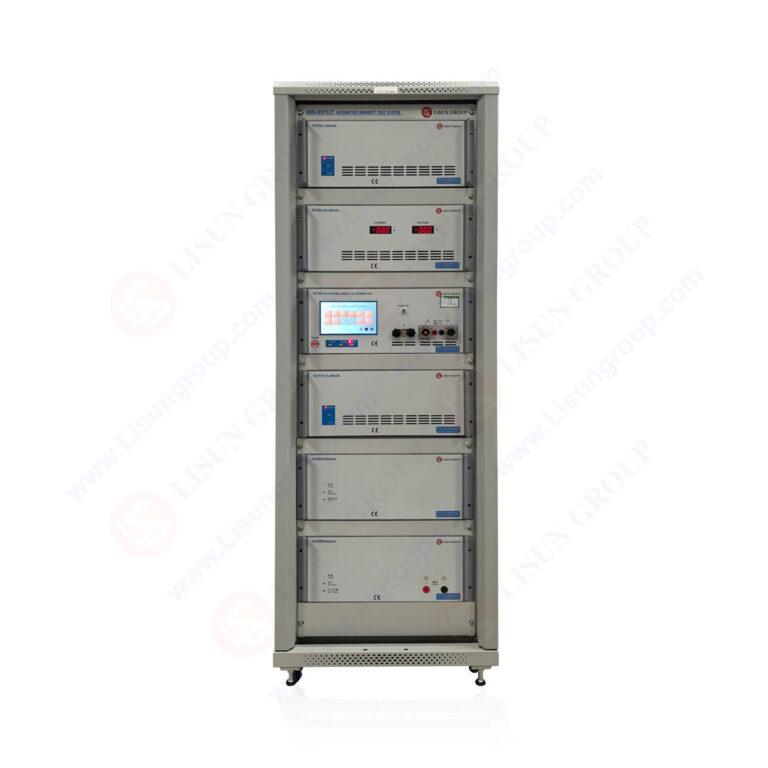
The LISUN EMS-ISO7637 system is a fully integrated, turnkey solution engineered to perform the complete suite of transient immunity tests mandated by international and regional standards. Its design centers on a modular pulse generator capable of producing the defined P1, P2a, P2b, P3, P4, P5a, and P5b test pulses with high fidelity. A key differentiator is its native support for 12V, 24V, and 36V vehicle electrical systems, accommodating the evolving landscape from conventional vehicles to 48V mild-hybrid architectures. The system features dual operational interfaces—a built-in industrial touchscreen and comprehensive PC software—enabling both benchtop manual testing and automated, script-driven test sequences.
2.1 Multi-Pulse Generator Module and Waveform Fidelity
At the heart of the system is a precision pulse generator module. Each pulse type is engineered to replicate specific real-world disturbance phenomena with strict adherence to standard-defined parameters. For instance, the P5a and P5b pulses simulate load dump transients, requiring precise control of rise time, pulse width, and internal resistance as per ISO 7637-2:2021, Clause 5. The generator ensures waveform integrity, which is critical for repeatable and comparable test results. This fidelity is verified through regular calibration against reference standards, ensuring the output matches the specified open-circuit voltage and short-circuit current waveforms within tight tolerances.
2.2 Coupling/Decoupling Networks (CDNs) and 12V/24V/36V Support
To apply transient pulses to the Equipment Under Test (EUT) without affecting the auxiliary power supply, the system employs a range of Coupling/Decoupling Networks (CDNs). These networks, including direct capacitive coupling clamps and inductive coupling clamps per ISO 7637-3, are integral to the test setup. The system’s power supply and CDNs are specifically designed to support 12V, 24V, and 36V DC systems. This tri-voltage capability is essential for laboratories servicing a broad clientele, from commercial truck (24V) component manufacturers to developers of 48V mild-hybrid systems (testing at the 36V nominal level), as referenced in standards like ISO 16750-2:2023.
2.3 Automated Test Sequencing and Data Management
Beyond pulse generation, the system excels in test automation. The PC software allows engineers to pre-program complete test plans, sequencing through various pulses, voltage levels, and polarities according to a component’s test specification. This automation minimizes operator error and significantly increases testing throughput. The system automatically logs all test parameters, EUT monitoring results (e.g., functional performance status), and captures oscilloscope waveforms of applied pulses. This data is compiled into structured test reports, providing auditable evidence for compliance with standards such as GB/T 21437.2-2021 and OEM-specific specifications like VW 80000.
3.1 Alignment with ISO and GB/T Core Standards
The EMS-ISO7637 system is explicitly designed to meet the technical requirements of the principal global transient immunity standards. Its pulse definitions and test methodologies are aligned with ISO 7637-2:2021 for conducted transients and ISO 7637-3:2016 for coupled transients. For the Chinese market, it equally supports the technically equivalent national standards GB/T 21437.2-2021 and GB/T 21437.3-2021. This dual-compliance capability makes it an ideal tool for both international Tier-1 suppliers and domestic Chinese manufacturers seeking to export or meet local certification requirements.
3.2 Addressing OEM-Specific Requirements
Major automotive OEMs often promulgate enhanced or supplementary test requirements. The flexibility of the LISUN system allows it to address these nuanced specifications. For example, it can be configured to meet the rigorous test pulses and durations outlined in the GM 3172 standard. The system’s programmability enables the creation of custom pulse waveforms or test sequences that mirror the unique electrical environments defined by OEMs like Volkswagen in the VW 80000 series of standards, which often specify extended test durations or additional pulse shapes beyond the base ISO requirements.
Table 1: Technical Specification Comparison: LISUN EMS-ISO7637 vs. Base ISO 7637-2 Requirements
| Feature / Parameter | ISO 7637-2:2021 Minimum Requirement | LISUN EMS-ISO7637 System Capability | Technical Advantage |
|---|---|---|---|
| Supported Pulse Types | P1, P2a, P2b, P3, P4, P5a, P5b | P1, P2a, P2b, P3, P4, P5a, P5b (Full suite) | Complete standard coverage in one integrated system. |
| Voltage System Support | Typically defined for 12V & 24V. | 12V, 24V, and 36V native support. | Future-proof for 48V mild-hybrid (36V nominal) testing; reduces need for multiple systems. |
| P5a/P5b Internal Resistance (Ri) | Defined values (e.g., 0.5Ω, 1Ω, 2Ω, 4Ω for P5a). | Programmable Ri within standard ranges. | Allows precise simulation of different alternator and wiring harness impedances. |
| Test Automation | Not specified by standard. | Full software-controlled sequencing & reporting. | Ensures repeatability, reduces human error, and improves lab efficiency. |
| Calibration Verification | Requires periodic verification of pulse parameters. | Integrated self-check and calibration reminder functions. | Promotes consistent data quality and simplifies maintenance of accreditation (e.g., ISO 17025). |
4.1 R&D Engineering and Design Verification
During the design phase, R&D engineers utilize the EMS-ISO7637 system for iterative immunity testing. By subjecting prototype ECUs, sensors, or infotainment modules to standardized transients, engineers can identify design weaknesses in power supply conditioning, input filtering, or software watchdog functions early in the development cycle. The system’s ability to quickly switch between pulse types and voltage levels facilitates efficient design margin analysis and hardening, ensuring a robust product before costly tooling and production begin.
4.2 Production Line End-of-Line (EOL) Testing
For quality control in mass production, a simplified or dedicated version of the test regimen can be deployed for end-of-line audit testing. The system’s automated pass/fail testing capability allows non-specialist technicians to verify that every unit, or a statistical sample, maintains immunity performance. This application is crucial for catching manufacturing process variations that could affect EMC performance, such as changes in component sourcing or soldering quality, thereby preventing field failures and recalls.
4.3 Third-Party Laboratory Certification Testing
Independent testing laboratories rely on systems like the EMS-ISO7637 to provide authoritative compliance certification for their clients. The system’s traceable calibration, comprehensive data logging, and strict adherence to standard methodologies generate the evidence needed for test reports submitted to regulatory bodies and OEMs. Its support for multiple global standards allows a single lab to service a diverse international client base efficiently.
5.1 High-Voltage Component Considerations
While the EMS-ISO7637 focuses on the low-voltage network (LV), its testing is equally critical for NEVs. Components like the Battery Management System (BMS), On-Board Charger (OBC), and DC-DC converters have low-voltage control and communication interfaces that are vulnerable to transients on the 12V/24V bus. Testing these interfaces ensures that a transient on the LV network does not cause a malfunction in a high-voltage system, which is a fundamental safety requirement.
5.2 Ensuring Robustness in Complex Electrical Architectures
NEVs feature more complex electrical architectures with numerous interconnected ECUs and high-power switches. This complexity can generate unique transient interactions. The system’s capability to test according to both ISO 7637-2 (direct coupling) and ISO 7637-3 (coupling to adjacent lines) is vital. It allows engineers to assess susceptibility from transients coupled onto CAN, LIN, or other communication lines, which could lead to network errors or unintended vehicle behaviors.
6.1 Test Setup and EUT Configuration
A proper test setup is paramount. This involves connecting the EUT to the system’s CDN, applying the appropriate artificial network (AN) as specified in ISO 7637-2, and establishing monitoring equipment to assess the EUT’s functional performance during testing. The EUT should be powered and exercised using a representative load or simulator. The system’s support for multiple voltage levels must be correctly configured to match the EUT’s nominal operating voltage (e.g., 13.5V for a 12V system test).
6.2 Defining Pass/Fail Criteria and Monitoring
Prior to testing, clear pass/fail criteria must be established based on the relevant standard or OEM specification. These criteria define allowable performance degradations (e.g., temporary loss of function that self-recovers) versus critical failures. The EMS-ISO7637 system’s software can be integrated with the EUT monitoring system to automatically record performance against these criteria during the automated application of transient pulses, creating an objective and documented test result.
7.1 From Design to Deployment: A Cohesive EMC Strategy
The EMS-ISO7637 Automotive Electronics Transient Immunity EMC Testing System: 12V/24V/36V Support is not merely a compliance tool but a strategic asset across the product lifecycle. Its use in R&D prevents late-stage redesigns, its application in production safeguards quality, and its role in certification enables market access. By providing consistent, standard-compliant test conditions from prototype to product, it helps build a culture of design-for-EMC, ultimately reducing time-to-market, minimizing warranty costs, and enhancing brand reputation for reliability.
7.2 Supporting Automotive Innovation and Electrification
As vehicles evolve with increased automation and electrification, the electrical environment becomes more demanding. The system’s inherent flexibility—through software updates and modular design—positions it to adapt to new test requirements for advanced driver-assistance systems (ADAS) controllers, vehicle-to-everything (V2X) communication modules, and next-generation 48V/800V architectures. Its foundational role in validating component robustness remains indispensable for the safe and reliable deployment of automotive innovation.
The LISUN EMS-ISO7637 system represents a comprehensive engineering solution for one of automotive EMC’s most critical challenges: transient immunity. Its technical merit lies in the precise integration of multi-pulse generation, versatile coupling networks, and broad voltage support within an automated, software-driven framework. This integration directly addresses the rigorous demands of ISO 7637, GB/T 21437, and key OEM standards, providing laboratories and manufacturers with a single, authoritative platform for validation. The real-world impact is substantial, enabling engineers to proactively design robustness, allowing quality teams to prevent field failures, and empowering certification bodies to deliver trusted compliance verdicts. In an era of rapid automotive electrification and digitalization, such a system is not just a test instrument but a fundamental enabler of vehicle safety, reliability, and successful market entry on a global scale.
Q1: Why is support for 12V, 24V, and 36V systems important in a modern automotive EMC test system?
A: Modern vehicle portfolios are diverse. Traditional passenger cars use 12V systems, heavy-duty trucks and buses use 24V systems, and new 48V mild-hybrid vehicles operate with a nominal 36V level for their low-voltage network. A test system with native multi-voltage support, like the LISUN EMS-ISO7637, eliminates the need for external adapters or multiple dedicated systems. This ensures testing accuracy by using correctly calibrated CDNs and power supplies for each voltage, as required by standards like ISO 16750-2:2023. It future-proofs a laboratory’s investment and increases its capability to service a wider range of clients, from commercial vehicle manufacturers to NEV developers.
Q2: How does the system ensure test accuracy and repeatability for pulses like the fast P1 or high-energy P5a?
A: Accuracy is ensured through a combination of high-fidelity pulse generation electronics and rigorous calibration protocols. The system’s pulse shaping networks are designed to produce the exact rise times, pulse widths, and source impedances defined in ISO 7637-2:2021, Clauses 4-5. Repeatability is achieved via automated, software-controlled sequencing that applies pulses with precise timing and voltage levels, eliminating manual trigger inconsistencies. Furthermore, the system requires periodic calibration against traceable standards to verify that open-circuit voltage and short-circuit current waveforms remain within the tolerances specified in the standard, which is a mandatory practice for ISO/IEC 17025 accredited laboratories.
Q3: Can the LISUN EMS-ISO7637 system be used to test components for electric vehicles (EVs), given they use high-voltage batteries?
A: Absolutely. While EVs have high-voltage (HV) traction batteries (e.g., 400V or 800V), they retain a critical low-voltage (LV) system (typically 12V) to power all standard automotive electronics: ECUs, sensors, infotainment, and importantly, the control logic for the HV components like the BMS and OBC. Transients on this LV bus can disrupt these controllers, leading to safety-critical faults. The EMS-ISO7637 system is essential for testing the immunity of these LV interfaces and control units as per ISO 7637-2 and ISO 7637-3. It ensures the resilience of the electronic “brain” that manages the high-voltage “muscle” of the EV.
Q4: What is the difference between testing per ISO 7637-2 and ISO 7637-3, and how does the system handle both?
A: ISO 7637-2:2021 covers conducted electrical transients, where pulses are injected directly onto the power supply or signal lines of the EUT via a Coupling/Decoupling Network (CDN). ISO 7637-3:2016 covers coupled transients, where pulses are coupled onto lines adjacent to the EUT’s wiring harness via a capacitive or inductive clamp, simulating cross-talk. The LISUN system handles both through its modular design. It uses the same pulse generator but provides different coupling fixtures: direct-injection CDNs for ISO 7637-2 and capacitive/inductive coupling clamps for ISO 7637-3. The test software guides the user through the appropriate setup and configuration for each standard.