




Abstract
Ensuring the electromagnetic compatibility (EMC) of automotive electronics against harsh transient disturbances is a cornerstone of vehicle safety and reliability. This article provides a comprehensive technical analysis of the
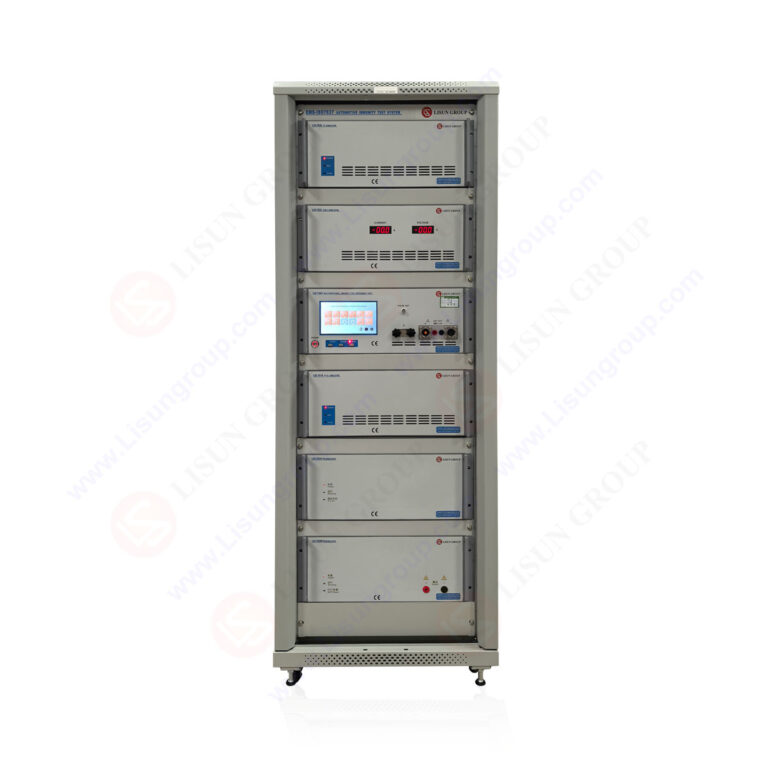
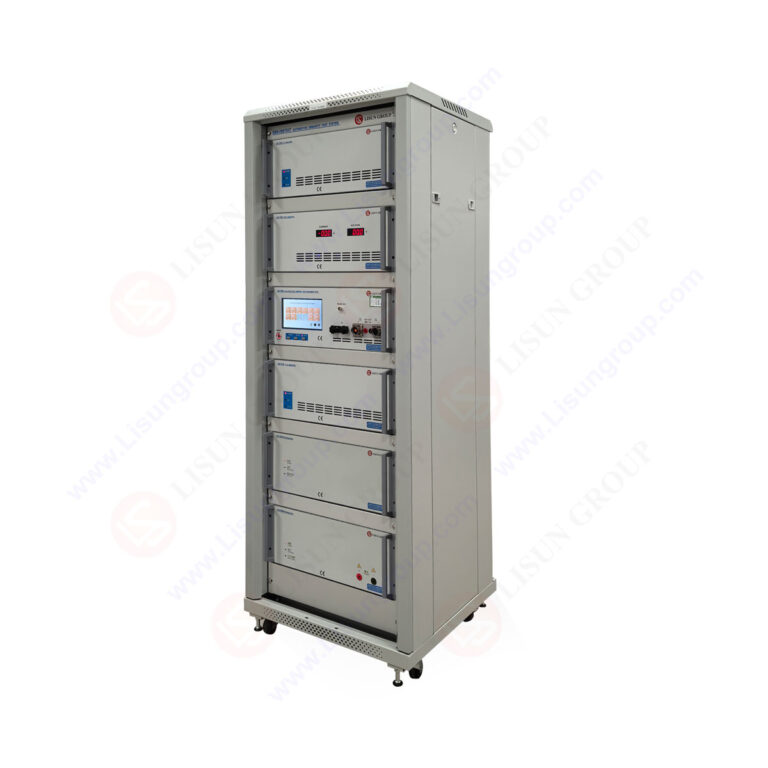
EMS-ISO7637 Automotive Electronics Transient Immunity EMC Testing System | 2025 Edition, focusing on its application for validating electronic control units (ECUs), power converters, and onboard chargers against standardized transient pulses. The discussion centers on the LISUN EMS-ISO7637 system, a sophisticated platform engineered for full compliance with ISO 7637-2, ISO 7637-3, and related national standards. We will explore its multi-pulse generation architecture, dual operational interfaces, and its critical role in the development and qualification lifecycle for both conventional and new energy vehicles, providing actionable insights for R&D and validation engineers.
1.1 The Electromagnetic Environment of the Vehicle
1.2 Consequences of Transient Immunity Failures
1.3 The Role of ISO 7637 in Standardized Testing
2.1 Multi-Pulse Generator Module: Simulating Real-World Disturbances
2.2 System Configuration: Voltage Platforms and Coupling Networks
2.3 Control and Software: Dual-Interface Operation and Automation
3.1 Pulse Parameter Coverage and Accuracy
3.2 Voltage System Compatibility and Future-Proofing
3.3 Comparative Performance Metrics
4.1 R&D and Design Verification
4.2 Production Line End-of-Line (EOL) Testing
4.3 Third-Party Laboratory Compliance Certification
5.1 Powertrain and Chassis Control Units (ECUs)
5.2 New Energy Vehicle (NEV) Power Electronics
5.3 Body Electronics and Infotainment Systems
6.1 Correlation with ISO 16750-2 Electrical Load Tests
6.2 Synergy with Radiated Immunity (ISO 11452-2) and ESD (ISO 10605) Testing
7.1 Test Plan Development and DUT Configuration
7.2 Monitoring, Failure Analysis, and Data Reporting
The LISUN EMS-ISO7637 Automotive Electronics Transient Immunity EMC Testing System represents a critical engineering tool for navigating the complex electromagnetic landscape of modern vehicles. Its precise emulation of ISO 7637-defined transients, coupled with support for 12V, 24V, and emerging 36V/48V architectures, provides a future-proof solution for validating component robustness. By integrating automated test sequences and comprehensive data logging, the system bridges the gap between rigorous R&D verification and high-throughput production screening. For automotive engineers and test laboratories, mastering this system is not merely about compliance; it is a proactive measure to enhance functional safety, reduce warranty costs, and accelerate the development of reliable electronic systems for the next generation of passenger, commercial, and new energy vehicles, ensuring they perform flawlessly under real-world electrical stress conditions.
Q1: What is the key difference between testing to ISO 7637-2 and ISO 7637-3, and how does the EMS-ISO7637 system address both?
A: ISO 7637-2 focuses on conducted electrical transients coupled directly onto supply lines via a coupling/decoupling network (CDN), simulating disturbances from switching inductive loads (e.g., relays, motors). ISO 7637-3 addresses transients coupled via capacitive and inductive coupling to signal/control lines, simulating cross-talk and field coupling effects. The LISUN EMS-ISO7637 system is a unified platform that integrates the pulse generators required for both standards. It includes the necessary CDNs for Part 2 testing and can be configured with capacitive coupling clamps (CCCs) as per ISO 7637-3:2016, Clause 5, to apply pulses to communication harnesses (e.g., CAN, LIN). This integrated approach allows for a complete assessment of a device’s immunity on both power and signal ports.
Q2: How does the system’s support for 12V/24V/36V systems accommodate the evolving automotive electrical architecture, particularly for New Energy Vehicles (NEVs)?
A: Traditional 12V/24V systems remain prevalent for body electronics and auxiliary loads in both internal combustion engine (ICE) and NEV platforms. However, NEVs extensively use higher-voltage systems: 400V/800V for traction batteries and increasingly 48V (or 36V as a common test level) for subsystems like electric turbochargers, advanced chassis controls, and high-power infotainment. The EMS-ISO7637 system’s programmable high-voltage DC source and pulse generators capable of operating across these voltage levels are essential. This allows testing of components like DC-DC converters (which bridge high-voltage and low-voltage domains) and On-Board Chargers (OBCs) against transients on their input/output lines, ensuring compliance with standards like GB/T 21437.2-2021 (China’s equivalent to ISO 7637-2) and OEM specifications such as VW 80000, which define test levels for various voltage buses.
Q3: For production line End-of-Line (EOL) testing, what features of the EMS-ISO7637 system enable fast and reliable screening?
A: High-volume manufacturing requires tests that are rapid, repeatable, and foolproof. The EMS-ISO7637 system facilitates this through its automated test sequences and dual touchscreen/PC software control. On the production floor, operators can use the intuitive touchscreen to launch pre-configured test profiles (e.g., a simplified pulse subset from ISO 16750-2:2023, Test Pulse 1, 2a, 3b, 4). The system executes the pulses in sequence, with pass/fail criteria based on predefined monitoring of the DUT’s functional status. Automated report generation logs serial numbers, test parameters, and results, creating an auditable trail. This minimizes operator error, reduces test cycle time, and ensures every unit is subjected to a baseline immunity check, catching latent manufacturing defects before shipment.
Q4: Can the EMS-ISO7637 system be used to test components according to specific OEM standards like GM 3172 or VW 80000?
A: Absolutely. While ISO 7637 provides the foundational test methods and pulse definitions, OEM standards often specify tailored test levels, application points, and performance criteria (Status Class definitions). GM 3172 and VW 80000, for instance, reference ISO 7637 pulses but define unique severity levels and DUT operational modes. The flexibility of the EMS-ISO7637 system is key here. Its software allows engineers to precisely program pulse parameters (rise time, duration, amplitude, repetition rate, source impedance) and sequencing to match these OEM-specific requirements. The system’s calibration accuracy ensures the applied pulses meet the stringent tolerances demanded by these standards, making it a versatile tool for suppliers who must certify components for multiple automotive manufacturers.