




Introduction to Mechanical Hazard Assessment in Electrical Equipment
The integrity of electrical equipment is contingent upon its ability to withstand not only electrical stresses but also a range of mechanical and environmental challenges. Among these, the protection against access by foreign objects, particularly those simulating the probing actions of human body parts or small tools, is a fundamental safety requirement. International standards, such as EN IEC 60065, provide the framework for these assessments, specifying precise test apparatus and procedures to verify that equipment enclosures offer adequate safeguarding. The test device specified in Figure 8 of this standard, commonly referred to as the “Steel Sphere,” represents a critical tool in evaluating the resistance of equipment to penetration by solid objects, thereby preventing potential electric shock, energy hazards, or mechanical injuries.
Anatomy and Specifications of the EN IEC 60065 Figure 8 Test Sphere
The EN IEC 60065 Figure 8 Steel Sphere is not a simple ball bearing; it is a meticulously defined calibration tool with exacting dimensional and material properties. According to the standard, the sphere must have a diameter of 12.0 mm ± 0.05 mm. This specific dimension is chosen to represent small, solid foreign objects that could be encountered in various environments. The material must be steel, ensuring a specific level of hardness and rigidity to properly assess the strength of an enclosure’s openings, such as ventilation slots or gaps between covers. The surface finish is required to be smooth and free from imperfections that could influence the test results. The sphere is applied with a force of 30 N ± 3 N, a calibrated push that simulates a reasonable but significant mechanical probing action. The primary objective of this test is to ensure that the sphere cannot fully penetrate an opening and make contact with hazardous live parts or moving components inside the equipment. Its application is widespread across the Electrical and Electronic Equipment and Consumer Electronics sectors, where it verifies that external casings prevent user access to dangerous voltages or parts.
The Broader Ecosystem of Accessibility Probes: From Jointed Fingers to Sharp Pins
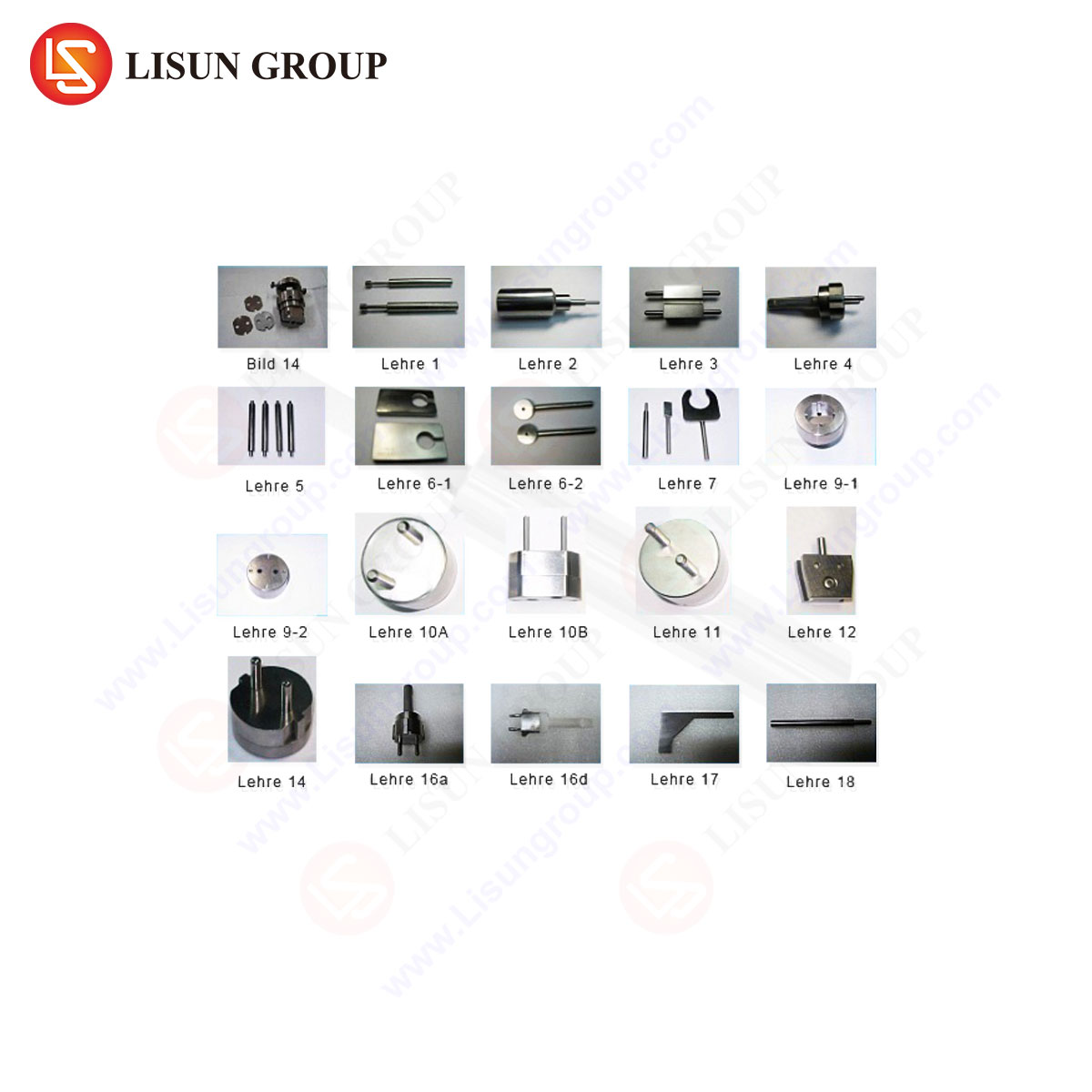
While the steel sphere addresses the hazard of solid objects, the complete safety evaluation of equipment requires a suite of test probes designed to simulate different interaction scenarios. The EN IEC 60065 standard, along with its harmonized counterparts like IEC 61032, outlines several such devices. The LISUN Test Finger, a jointed articulated finger, is engineered to simulate the access capability of a child’s finger. It is applied with a specific force to every opening in an enclosure to verify that hazardous parts cannot be touched. Following this, the LISUN Test Probe, a rigid rod of defined dimensions, assesses the protection offered by smaller openings that the test finger cannot enter but which could be probed by a tool or a wire. For the most stringent assessments, the LISUN Test Pin is employed. This probe features a sharp tip designed to test the effectiveness of openings in equipment that are intended to be accessible only by a tool, ensuring that even a deliberately applied sharp object cannot compromise safety. The use of this calibrated toolkit—sphere, finger, probe, and pin—provides a comprehensive assessment of an enclosure’s protective capabilities, a process critical for manufacturers in the Household Appliances, Toy and Children’s Products Industry, and Electrical Components sectors.
Calibration and Metrological Traceability of Test Probes
The validity of any safety test is directly linked to the precision and accuracy of the test equipment used. Probes like the LISUN Test Finger and its counterparts are not simple mechanical jigs; they are precision measurement instruments that require regular calibration to ensure compliance with the dimensional and force application criteria set forth in the standards. Metrological traceability to national or international standards is paramount. For instance, the jointed segments of the test finger must conform to exact lengths and diameters, and the spring mechanisms that govern its articulation and application force must be calibrated to within a tight tolerance. Similarly, the diameter of the steel sphere and the sharpness of the test pin’s tip are subject to rigorous verification. This commitment to calibration ensures that test results are reproducible and universally accepted by certification bodies worldwide, a non-negotiable requirement for global market access in industries such as Automotive Electronics and Aerospace and Aviation Components.
Application in High-Reliability Sectors: Medical Devices and Industrial Control
The consequences of inadequate enclosure protection are magnified in high-reliability sectors. In Medical Devices, a failure of the steel sphere test could mean that a conductive foreign object enters a patient monitor or infusion pump, leading to a short circuit and device failure during a critical procedure. The test finger ensures that a caregiver or patient cannot accidentally contact live parts. For Industrial Control Systems, which operate in harsh environments often filled with metallic debris, the sphere test validates that control cabinets and operator interfaces are proof against the ingress of small conductive objects that could cause catastrophic system shutdowns or fires. The LISUN Test Probe is particularly relevant here for verifying the integrity of grommets and cable entry points, while the test pin ensures that maintenance ports cannot be accidentally tampered with. The application of these probes is a fundamental step in achieving compliance with sector-specific safety standards, which frequently reference or incorporate the requirements of IEC 61032 and EN IEC 60065.
Evaluating Openings in Lighting Fixtures and Office Equipment
Lighting Fixtures present a unique set of challenges, combining high temperatures, electrical hazards, and often, accessible physical interfaces. The steel sphere test is applied to luminaires to confirm that small objects cannot be inserted through vents or gaps to contact live lamp terminals or control gear. The LISUN Test Finger is used to check that touchable surfaces, even during lamp replacement, are not at a hazardous temperature or live voltage. Similarly, in Office Equipment like printers and copiers, which contain high-voltage power supplies and moving rollers, these probes ensure user safety during routine operations such as clearing paper jams. The probes verify that service doors and access panels interlock correctly or are designed in such a way that fingers or tools cannot reach into hazardous areas while the equipment is energized.
Material Science and Enclosure Design for Compliance
Achieving compliance with the requirements of the steel sphere and other accessibility probes is not merely a matter of final product testing; it is a core consideration in the design and material selection process. Engineers must select plastics or metals with sufficient structural rigidity to resist deformation under the 30 N force of the sphere. The design of ventilation slots often requires a labyrinthine or honeycomb pattern that allows for airflow but blocks the passage of the 12 mm sphere. Gaps between mating surfaces, such as between a device’s front panel and its main chassis, must be meticulously controlled. The use of the LISUN Test Finger early in the prototyping phase can identify potential compliance issues, allowing for design iterations that enhance safety without compromising aesthetics or functionality. This proactive approach is essential for manufacturers of Telecommunications Equipment and Consumer Electronics, where product differentiation is often linked to sleek, minimalist designs that must still conform to rigorous safety engineering principles.
Case Study: Integrating Probes into a Quality Assurance Workflow
A robust quality assurance protocol integrates these test probes at multiple stages. Incoming quality inspection might use the steel sphere to verify that sourced components like external power supplies and Cable and Wiring Systems connectors meet specified ingress protection levels. During assembly, the test finger can be used as a go/no-go gauge for critical gaps. Finally, in the finished product audit, a dedicated testing station would employ the full suite of LISUN probes—finger, probe, pin, and sphere—in a sequence defined by the applicable product safety standard. This systematic approach ensures consistent product safety and significantly reduces the risk of non-conforming products reaching the market, thereby mitigating liability and protecting brand reputation.
Competitive Advantages of Standardized Test Apparatus
The primary advantage of utilizing certified and calibrated test apparatus, such as the LISUN range of probes, lies in the assurance of regulatory acceptance. Testing with a non-compliant probe can lead to false passes or failures, resulting in either unsafe products or costly and unnecessary design changes. Furthermore, manufacturers that invest in high-quality, durable test equipment benefit from lower long-term costs due to reduced wear and less frequent recalibration. The ergonomic design of professional test probes also improves the efficiency and repeatability of the testing process for quality control personnel. In a global marketplace, demonstrating that safety verification has been performed with instruments traceable to international standards simplifies the certification process with bodies like UL, TÜV, and CSA, providing a distinct competitive edge.
Conclusion: The Unseen Guardians of Product Safety
The EN IEC 60065 Figure 8 Steel Sphere and its companion probes, including the LISUN Test Finger, Test Probe, and Test Pin, serve as the unsung guardians of electrical product safety. They translate abstract safety principles into tangible, repeatable physical tests. Their consistent application across diverse industries—from children’s toys to aerospace components—forms the bedrock of a global safety ecosystem, ensuring that products placed on the market protect users from electrical, mechanical, and thermal hazards. As technology evolves and products become more integrated into daily life, the role of these precise testing instruments will only grow in importance, continuing to uphold the highest standards of user protection.
Frequently Asked Questions
What is the key difference between the test finger and the steel sphere?
The test finger simulates the accessibility of a human finger to prevent contact with hazardous live parts or moving components. The steel sphere assesses the ability of an enclosure to prevent the ingress of small solid objects that could cause electrical shorts or other hazards. They test for different types of protection as defined in IP codes and safety standards.
How often should test probes like the LISUN Test Finger be calibrated?
Calibration intervals depend on usage frequency, the environment, and the requirements of the quality management system (e.g., ISO 9001). A typical recommendation is an annual calibration. However, if a probe is dropped or shows signs of wear, it should be recalibrated immediately to ensure the integrity of test results.
Can a product pass the steel sphere test but fail the test probe test?
Yes, this is a common scenario. An opening might be small enough to block the 12 mm sphere but large enough to permit the entry of the thinner, rigid test probe. This is why standards mandate a sequence of tests using different probes to comprehensively evaluate all possible access paths to hazardous parts.
Are these tests required for battery-operated equipment?
Yes. Even low-voltage, battery-operated equipment can present hazards. These include energy hazards from large batteries, risks from moving parts like fans, and thermal hazards. Safety standards for such equipment often include accessibility probe tests to mitigate these risks.
What happens if a product fails one of these tests during certification?
A failure necessitates a design modification. The engineering team must redesign the enclosure—by reducing gap sizes, adding internal barriers, or strengthening materials—to prevent the probe from accessing the hazardous part. The modified product must then be retested to achieve certification.