




Enhancing Product Durability through Predictive UV Accelerated Weathering Methodologies
Introduction to Photodegradation and Accelerated Life Testing
The long-term reliability and aesthetic integrity of materials and components exposed to outdoor environments are paramount across virtually every manufacturing sector. Solar radiation, particularly the ultraviolet (UV) spectrum, acts as a primary catalyst for photodegradation, initiating complex chemical reactions that lead to polymer chain scission, oxidation, color fading, chalking, loss of gloss, and embrittlement. For industries where product failure carries significant safety, financial, or reputational risk, relying on real-time outdoor weathering data—which can span years or decades—is commercially and technically untenable. Consequently, UV accelerated weathering has emerged as an indispensable laboratory-based discipline, enabling engineers to predict service life, compare material formulations, and validate product durability within a compressed timeframe. This technical article examines the principles of accelerated UV testing, its critical role in product development, and the integration of complementary environmental stress testing, with a specific focus on the application of the LISUN HLST-500D Thermal Shock Test Chamber in validating product robustness against combined environmental insults.
The Photochemical Mechanisms of Material Degradation
Understanding the accelerated testing paradigm first requires a foundational grasp of the underlying photochemistry. Ultraviolet radiation, specifically wavelengths between 290 nm and 400 nm, possesses sufficient energy to break covalent bonds in many organic polymers and pigments. The process is not merely one of radiant energy imposition but a synergistic reaction involving moisture, heat, and atmospheric pollutants. UV photons absorbed by a material can excite molecules to higher energy states, leading to the formation of free radicals. These highly reactive species subsequently initiate autocatalytic oxidation cycles, propagating damage deep into the substrate. The presence of moisture, simulated in testing through condensation or humidity cycles, exacerbates this process by causing hydrolytic degradation, swelling, and stress-cracking, while also washing away surface degradation products that might otherwise provide a limited protective layer. Thermal energy further accelerates these reaction kinetics, following the Arrhenius equation, where for many polymer systems, reaction rates approximately double with each 10°C increase in temperature. Therefore, an effective accelerated weathering test must artfully, yet accurately, intensify these environmental factors—UV irradiance, temperature, and moisture—in a controlled and reproducible manner that correlates with real-world performance.
Correlation and Fidelity in Accelerated Test Protocols
A central challenge in accelerated weathering is ensuring that the induced degradation modes are representative of end-use conditions, a concept known as correlation. Poorly designed tests can produce “artifacts of acceleration”—failure mechanisms not observed in natural weathering—leading to misguided material selection or unnecessary over-engineering. Key to achieving fidelity is the spectral power distribution (SPD) of the UV source. While traditional fluorescent UV lamps offer tight control, modern xenon-arc sources, with filters, can more closely mimic the full solar spectrum, including visible and infrared radiation, which influences material temperature. Standards organizations such as ASTM International, the International Organization for Standardization (ISO), and the International Electrotechnical Commission (IEC) provide detailed protocols (e.g., ASTM G155, ISO 4892, IEC 60068-2-5) specifying irradiance levels, cycle durations, black panel temperatures, and chamber relative humidity. These standards are not one-size-fits-all; they are tailored for different geographies (e.g., Arizona vs. Florida weathering) and material types. The calibration and monitoring of irradiance via calibrated radiometers are non-negotiable for test repeatability and inter-laboratory reproducibility.
The Necessity of Combined Environmental Stress Testing
While UV radiation is a predominant stressor, products in service rarely experience it in isolation. Electronic and electromechanical components, in particular, are subjected to severe thermal cycling. An automotive control module, for instance, may experience sub-zero temperatures overnight and be heated to over 80°C by engine heat and solar loading during operation. Such rapid thermal transitions induce mechanical stresses due to the differential coefficients of thermal expansion (CTE) of bonded materials—solder joints, encapsulated ICs, connector housings, and PCB substrates. These stresses can precipitate delamination, solder joint fatigue, contact failure, and hermetic seal breaches. A comprehensive durability validation regimen must, therefore, sequence or combine UV weathering with extreme temperature cycling. This integrated approach uncovers synergistic failure modes: UV-induced embrittlement of wire insulation or connector housings can dramatically reduce their resistance to subsequent thermal shock, leading to premature cracking and failure.
The LISUN HLST-500D Thermal Shock Test Chamber: Principles and Specifications
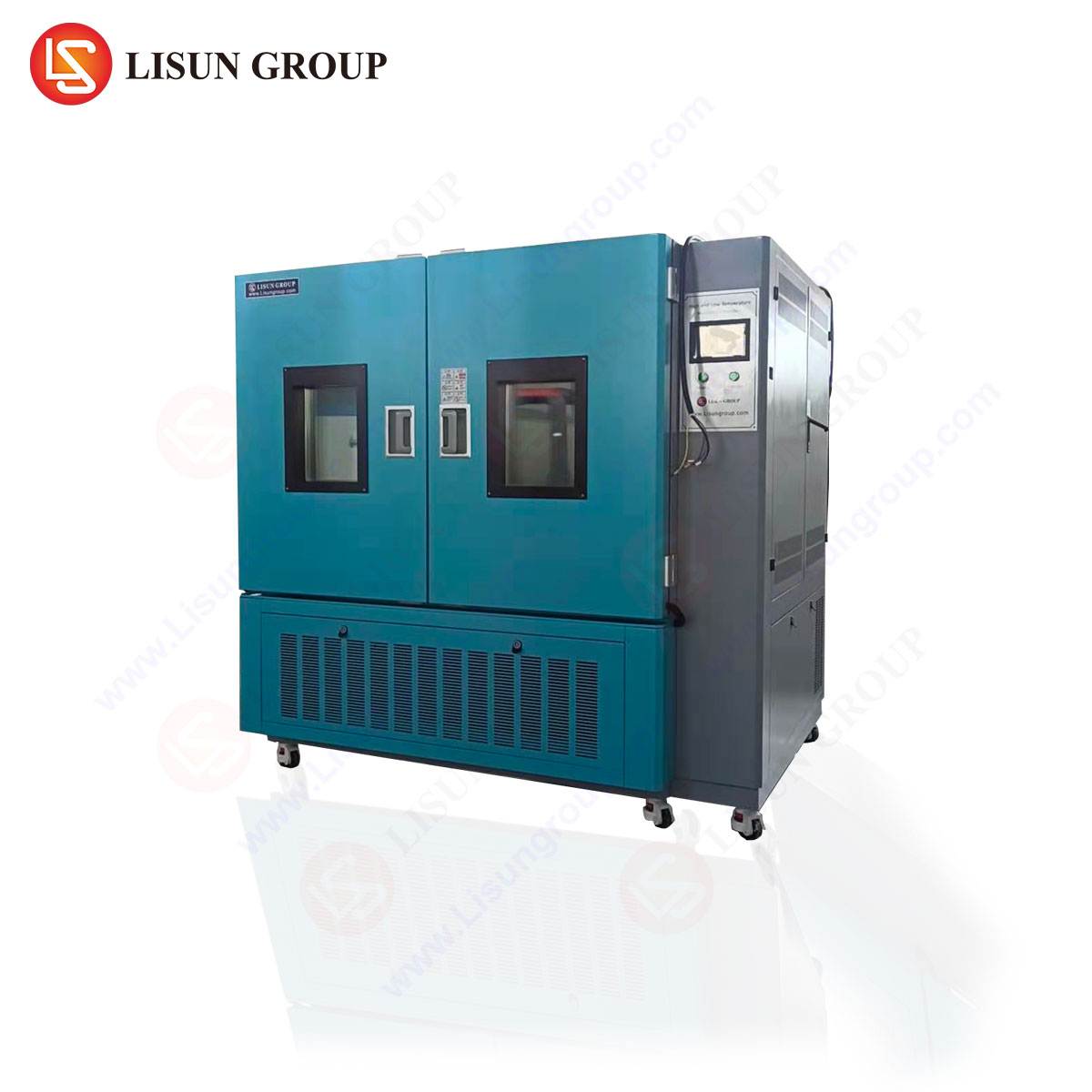
To address the critical need for validating product resilience against rapid temperature extremes, the LISUN HLST-500D Thermal Shock Test Chamber implements a rigorous two- or three-zone testing methodology. The unit operates on the principle of transferring test specimens between independently controlled high-temperature and low-temperature chambers, or through a third ambient zone, with minimal transition time to maximize thermal stress.
Key Technical Specifications:
- Temperature Range: High Temperature Chamber: +60°C to +200°C; Low Temperature Chamber: -10°C to -65°C (extendable with optional LN2 cooling).
- Transition Time: ≤ 10 seconds (meeting stringent standards like IEC 60068-2-14, Test Nb).
- Recovery Time: ≤ 5 minutes to stabilize at target temperature after specimen transfer.
- Chamber Volume: 50 Liters per zone (standard).
- Control System: Digital PID controller with programmable logic for complex cycling profiles, including dwell times and number of cycles.
- Safety Features: Over-temperature protection, compressor delay protection, and fault diagnostics.
The chamber’s rapid transition time is mechanically achieved via a vertical or horizontal basket transfer system, ensuring specimens are subjected to the defined thermal shock profile without a gradual ramp, which is essential for simulating the most severe real-world conditions.
Industry-Specific Applications and Use Cases
The confluence of UV degradation and thermal shock is a relevant failure accelerator across a diverse range of sectors. The HLST-500D is deployed to validate components where such combined stresses are anticipated.
- Automotive Electronics: Testing engine control units (ECUs), LED headlamp assemblies, infotainment system displays, and under-hood sensors. UV weathering assesses dashboard plastic fading and lens yellowing, while thermal shock evaluates solder joint integrity and housing seal performance from desert heat to winter cold.
- Aerospace and Aviation Components: Validating the durability of external antenna housings, cockpit display panels, and non-critical control modules exposed to intense UV at high altitude coupled with rapid temperature changes during ascent and descent.
- Lighting Fixtures: For outdoor LED luminaires, UV testing predicts lens transmittance loss and housing color shift, while thermal shock tests the resilience of the LED driver circuitry and the bond between the LED chip and its substrate.
- Telecommunications Equipment: Outdoor units, fiber optic terminal housings, and antenna radomes must withstand decades of solar exposure and diurnal temperature swings. Sequential testing identifies potential for gasket failure, connector corrosion, and PCB delamination.
- Medical Devices: Ensuring the longevity of portable diagnostic equipment used in varied climates and the housing integrity of implants with polymeric components.
- Electrical Components & Wiring Systems: Evaluating switches, sockets, and cable insulation for cracking, loss of dielectric strength, and connector pin retention after exposure to simulated environmental aging.
Integrating UV Weathering and Thermal Shock in a Validation Regimen
A robust product qualification strategy often employs a sequential stress approach. A typical regimen might involve:
- UV Exposure Phase: Subjecting components to 500-1000 hours of cyclic UV/condensation per ASTM G154 to induce photochemical aging.
- Intermediate Inspection: Measuring key performance indicators (KPIs) such as color (ΔE), gloss (60°), surface cracking (microscopy), and for electrical parts, insulation resistance and dielectric withstand voltage.
- Thermal Shock Phase: Transferring the UV-weathered specimens to the HLST-500D for 50-200 cycles of extreme thermal shock (e.g., -40°C to +125°C).
- Post-Test Analysis: Conducting final electrical functional tests, mechanical pull tests on connectors, and detailed failure analysis (e.g., scanning electron microscopy on fracture surfaces).
This sequence effectively screens for latent weaknesses. A cable insulation that merely discolors during UV testing may completely fracture at a bend point after thermal shock, revealing a critical vulnerability.
Competitive Advantages of the HLST-500D in a Testing Ecosystem
The HLST-500D provides distinct advantages within a quality assurance laboratory. Its precision and reproducibility stem from advanced thermal engineering ensuring rapid temperature recovery, which maintains the integrity of the shock profile throughout long-duration tests. The programmability allows for the creation of complex, multi-step profiles that can mimic specific geographic diurnal cycles. Furthermore, its construction with high-grade stainless steel and reliable compressor systems ensures minimal downtime and consistent performance, which is critical for meeting tight product development schedules. When integrated with data acquisition systems, it provides auditable traceability of test conditions, a requirement for compliance with automotive (IATF 16949), aerospace (AS9100), and medical (ISO 13485) quality management systems.
Conclusion
In an era of global supply chains and products destined for diverse climatic zones, predictive durability testing is not a luxury but a fundamental pillar of responsible engineering and risk management. UV accelerated weathering provides the crucial link between material science and real-world performance, quantifying the effects of solar radiation. However, when complemented by severe thermal shock testing using instruments like the LISUN HLST-500D, the validation process reaches a higher order of fidelity. This combined approach exposes synergistic failure mechanisms, drives material innovation, and ultimately fosters the development of products that deliver enhanced safety, reliability, and customer satisfaction over their intended lifespan. The data derived from these rigorous tests inform design decisions, warranty assessments, and compliance certifications, solidifying their role as cornerstone methodologies in modern manufacturing.
FAQ Section
Q1: What is the primary difference between thermal shock testing and standard temperature cycling?
Thermal shock testing, as performed by the HLST-500D, subjects specimens to an extreme and nearly instantaneous transition between high and low temperature extremes. Standard temperature cycling typically involves slower, controlled ramp rates between setpoints. Shock testing induces higher mechanical stress due to the rapid CTE mismatch, making it more suitable for identifying latent manufacturing defects, solder joint fatigue, and interfacial adhesion failures in a shorter test duration.
Q2: Can the HLST-500D be used to test powered (live) devices during the cycle?
While the chamber is primarily designed for environmental exposure, testing powered devices is complex and requires customization. The rapid movement between chambers and the design of the test basket typically preclude real-time electrical monitoring during transfer. For in-situ power testing during temperature extremes, a dedicated temperature cycling chamber with electrical feed-throughs is generally recommended. The HLST-500D is most commonly used for exposure testing, with functional verification performed at ambient conditions at intervals.
Q3: How do we determine the appropriate number of thermal shock cycles for our product?
The cycle count is typically derived from relevant industry standards, customer-specific specifications, or a reliability goal based on expected product life. For instance, an automotive specification may require 500 cycles from -40°C to +125°C. In the absence of a standard, a failure mode analysis can guide test severity. The correlation is often based on the Coffin-Manson relationship, where the number of cycles to failure is related to the plastic strain induced per cycle. Accelerated testing aims to induce relevant failure modes in a practical timeframe.
Q4: Is there a risk that combined UV and thermal shock testing will over-test a product compared to real-world conditions?
The objective of accelerated testing is to apply stresses in a condensed, yet representative, manner. A well-designed test profile based on field data and recognized standards aims to produce failure modes identical to those seen in service, only faster. While the sequence of stresses in a lab may be more severe or frequent than in nature, the goal is a conservative validation that builds in a safety margin. Correlation studies between lab tests and field returns are essential to calibrate and validate the acceleration factors used.
Q5: What maintenance is required for the HLST-500D to ensure consistent performance?
Regular maintenance is crucial. Key tasks include periodic cleaning of the air filters to ensure proper airflow and heat exchange, checking and tightening electrical connections, verifying the calibration of temperature sensors annually, and ensuring the mechanical transfer system moves smoothly without obstruction. For units using cascade or LN2 cooling, regular checks of the refrigerant system by qualified personnel are necessary. Adherence to the manufacturer’s scheduled maintenance plan is strongly recommended.