

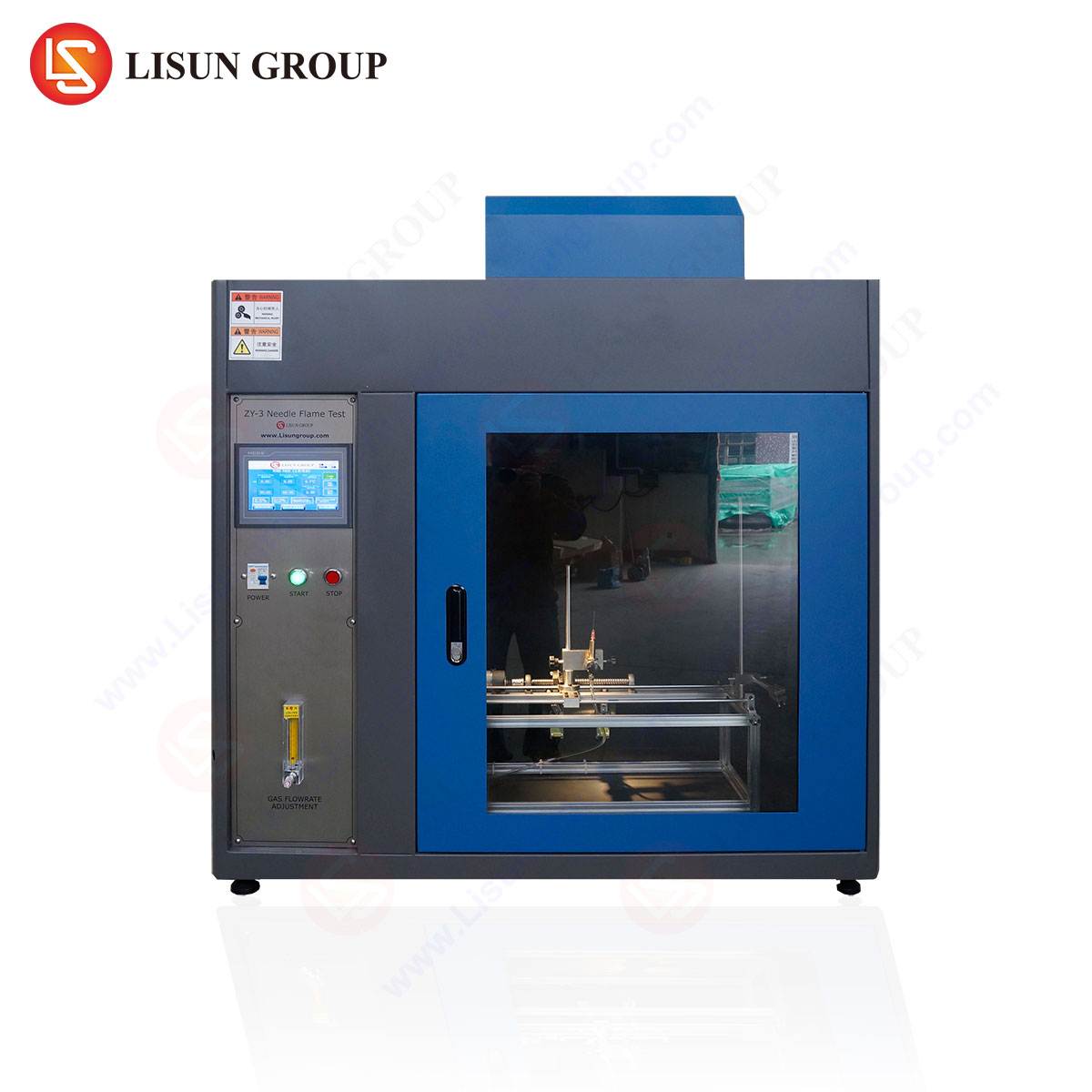



Ensuring Battery Safety and Performance with LISUN Climate Test Chambers
The proliferation of electrochemical energy storage systems across diverse industries has irrevocably linked product reliability and user safety to the environmental resilience of their constituent batteries. From the high-voltage traction packs propelling electric vehicles to the compact lithium-ion cells powering implantable medical devices, batteries are subjected to a vast spectrum of climatic stresses throughout their lifecycle. These stresses—encompassing extreme temperatures, rapid thermal transients, and fluctuating humidity—directly influence critical parameters: electrochemical stability, cycle life, charge acceptance, and ultimately, safety margins. Consequently, rigorous environmental simulation testing is not merely a quality check but a fundamental engineering imperative. This article examines the role of specialized climate test chambers in validating battery safety and performance, with a detailed focus on the application of the LISUN HLST-500D Thermal Shock Test Chamber.
The Electrochemical Imperative: Why Climate Stress Testing is Non-Negotiable
At its core, a battery is a controlled electrochemical reaction. The kinetics of this reaction, the conductivity of electrolytes and electrodes, and the integrity of separator materials are all profoundly temperature-dependent. Elevated temperatures accelerate parasitic side reactions, leading to accelerated aging, gas generation, and potential thermal runaway—a catastrophic failure mode characterized by uncontrolled temperature increase. Conversely, low temperatures increase internal resistance, reducing available power and capacity, and can induce lithium plating during charging, a primary mechanism for internal short circuits. Humidity exacerbates these issues by promoting corrosion on terminals and battery management system (BMS) circuits, leading to increased contact resistance and potential failure of safety controls.
Therefore, the primary objective of climate testing is to probe the boundaries of safe and functional operation. It verifies that a battery and its integrated electronics will not only survive but perform within specification under defined environmental extremes and, critically, will fail in a predictable and safe manner if those limits are exceeded. Standards bodies such as IEC, UL, UN, and various automotive consortia (e.g., ISO, SAE) mandate specific thermal and humidity test profiles for product certification. Compliance with standards like IEC 62133, UL 1642, UN 38.3, and ISO 12405 is impossible without precise, reproducible environmental simulation equipment.
Simulating Real-World Extremes: The Role of Thermal Shock Testing
While steady-state temperature and humidity tests are essential, they do not fully capture the abrupt thermal stresses encountered in real-world applications. An electric vehicle battery may experience rapid cooling from highway operation to a cold-soak overnight, followed by immediate demand for high power. A smartphone left in a car can undergo swift temperature swings from solar heating to air-conditioned cooling. These rapid transitions induce mechanical stress due to the differing coefficients of thermal expansion (CTE) of layered materials within a cell (anode, cathode, separator, current collectors). Repetitive stress can lead to delamination, electrode cracking, and seal failure.
Thermal shock testing, therefore, is a critical accelerated life test designed to evaluate a product’s robustness against such sudden temperature changes. The test rapidly cycles a specimen between extreme hot and cold environments, revealing latent weaknesses in solder joints, housing seals, adhesive bonds, and the electrochemical assembly itself that steady-state testing might miss.
The HLST-500D Thermal Shock Test Chamber: Architecture and Operating Principle
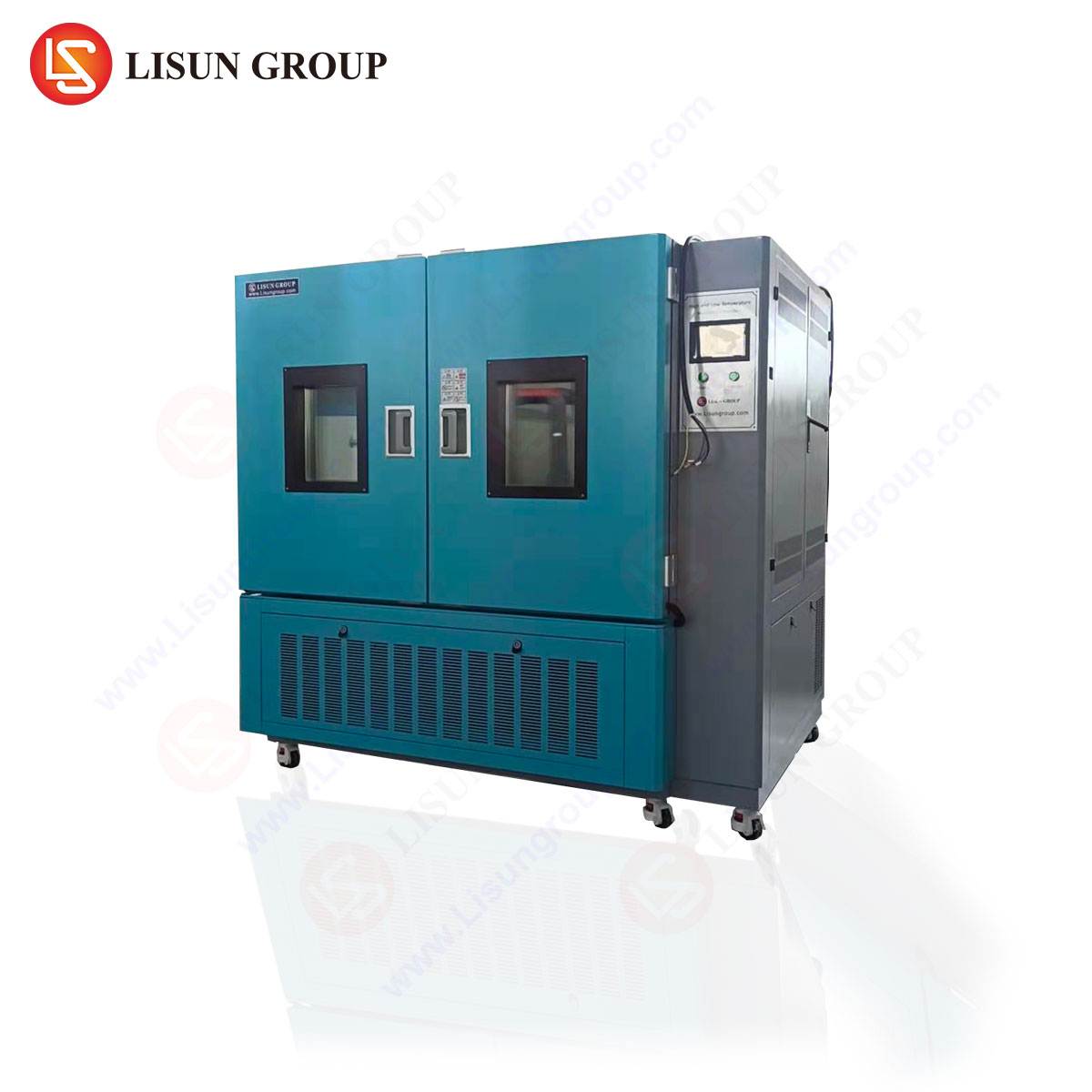
The LISUN HLST-500D is a three-zone thermal shock test chamber engineered specifically for this demanding application. Its design facilitates the rapid transfer of test specimens between independently controlled high-temperature, low-temperature, and ambient-temperature zones.
The chamber’s operation is governed by a basket transfer system. Test specimens are loaded onto a basket within the high-temperature zone. Once the specimen stabilizes at the target high temperature (e.g., +150°C), the basket automatically transfers it to the low-temperature zone (e.g., -65°C) within a specified transfer time, typically less than 10 seconds. This rapid transfer is crucial to achieving the desired thermal shock rate. The specimen dwells at the low temperature before being transferred back to the high-temperature zone, completing one cycle. This process is repeated for hundreds or thousands of cycles as required by the relevant test standard.
Key Technical Specifications and Their Significance
The efficacy of a thermal shock test is dictated by the precision and capability of the equipment. Key specifications of the HLST-500D include:
- Temperature Range: High Temperature Zone: +60°C to +150°C; Low Temperature Zone: -10°C to -65°C. This broad range accommodates testing for global market requirements, from desert heat to arctic cold.
- Temperature Fluctuation: ≤±0.5°C. Minimal fluctuation ensures the specimen is exposed to the exact specified temperature, not a range around it, guaranteeing test consistency.
- Temperature Deviation: ≤±2.0°C. This ensures uniformity of temperature within the workspace, so all specimens in a batch experience identical conditions.
- Heat-up and Cool-down Rate: The chamber utilizes high-power heaters and cascade refrigeration systems to achieve rapid temperature recovery after a basket transfer, maintaining test schedule integrity.
- Basket Transfer Time: <10 seconds. This rapid transfer is the defining feature of a true thermal shock test, as opposed to a slower temperature cycling test.
- Control System: A programmable touch-screen controller allows for complex test profiles, including dwell times, cycle counts, and temperature setpoints, with data logging for audit trails.
Industry-Specific Applications and Use Cases
The HLST-500D finds critical application across all battery-dependent sectors:
- Automotive Electronics (EV/PHEV/HEV Traction Batteries, BMS, On-board Chargers): Testing per ISO 16750, GB/T 31467, and OEM-specific standards. Validates resilience against rapid cooling from operation to winter overnight temperatures and shock from fast-charging heat buildup.
- Aerospace and Aviation Components (Cabin Entertainment Batteries, Emergency Power Units): Simulates the rapid temperature drop from ground operations to high-altitude cruise conditions. Essential for DO-160 and MIL-STD compliance.
- Medical Devices (Portable Diagnostic Equipment, Implantable Battery Packs): Ensures devices remain functional and safe when moved from a warm hospital ward to a refrigerated storage area or during sterilization cycles.
- Telecommunications Equipment (5G Backup Power Systems, Remote RRU Batteries): Tests backup battery packs installed in outdoor cabinets that face daily solar heating and nocturnal cooling.
- Consumer Electronics & Household Appliances (Power Tools, Vacuum Robots, UPS): Evaluates battery packs in products that may be stored in garages or transported in vehicle trunks, subjecting them to wide thermal swings.
- Electrical Components and Lighting Fixtures: Tests battery-backed emergency lighting units and smart switches with integrated batteries for reliability over years of seasonal temperature cycles.
Competitive Advantages in Battery Testing Regimens
The HLST-500D offers several distinct advantages for battery testing laboratories:
- True Three-Zone Design: The dedicated ambient zone allows for specimen recovery or stabilization at an intermediate temperature, which is required by some test protocols and prevents immediate condensation on cold specimens when transferred to a hot, humid lab environment.
- Rapid Transfer Mechanism: The sub-10-second transfer ensures a genuine thermal shock, providing more severe and revealing stress than slower alternatives.
- Precision and Uniformity: Tight temperature control guarantees that test results are attributable to the specimen, not chamber variability, which is paramount for certification testing.
- Robust Construction: Designed to handle the significant thermal mass of battery packs, with reinforced basket and guide systems for reliable long-term cycling.
- Safety Integration: Given the potential hazard of testing energetic devices, the chamber design can be integrated with external safety systems, including gas detection and exhaust ventilation, for managing off-gassing events.
Integrating Thermal Shock into a Comprehensive Test Strategy
It is vital to position thermal shock testing within a broader validation framework. The HLST-500D is often used in sequence with other chambers. For instance, a battery may first undergo humidity cycling in a dedicated temperature humidity chamber (e.g., GDJS series) to assess corrosion resistance, followed by thermal shock in the HLST-500D to evaluate mechanical integrity post-corrosion, and finally undergo electrical performance and abuse testing. This layered approach provides a holistic assessment of product robustness.
Data collected during thermal shock testing extends beyond simple pass/fail. Monitoring voltage, internal resistance, and temperature of individual cells or modules during the test (via feedthrough ports) can identify early signs of degradation, such as increasing resistance due to contact wear or separator shrinkage.
Conclusion
As battery technology advances towards higher energy densities and faster charging capabilities, the margin for error diminishes, making comprehensive environmental validation more critical than ever. Thermal shock testing, as exemplified by the capabilities of the LISUN HLST-500D chamber, serves as a vital tool for uncovering failure modes induced by rapid thermal stress. By subjecting battery systems to controlled, reproducible, and extreme temperature transitions, engineers can de-risk designs, validate safety mechanisms, and ensure reliable performance across the globe’s diverse climates. This process is indispensable for achieving regulatory compliance, ensuring brand protection, and, most importantly, safeguarding end-users in an increasingly electrified world.
FAQ: Thermal Shock Testing for Batteries
Q1: What is the fundamental difference between a thermal shock test and a temperature cycling test?
A thermal shock test is characterized by an extremely rapid transition between extreme temperature setpoints, typically with a transfer time of less than one minute (often seconds). This induces high thermal stress primarily due to CTE mismatch. Temperature cycling tests involve slower, controlled ramp rates between temperatures, focusing more on fatigue life and the effects of slower, more uniform temperature changes. The HLST-500D is designed for the former, providing transfer times under 10 seconds.
Q2: Can the HLST-500D accommodate the testing of large, high-voltage automotive battery modules?
While the HLST-500D has a defined workspace volume, LISUN manufactures a range of thermal shock chambers with varying dimensions. For large automotive modules or full packs, a chamber model with a larger basket and workspace would be specified. The key is to ensure the chamber’s load capacity, workspace size, and cooling power are rated for the thermal mass of the unit under test.
Q3: How do you prevent condensation from forming on cold batteries when they are transferred to the hot zone?
The three-zone design of the HLST-500D is pivotal here. The specimen can be transferred first to the ambient zone, allowing it to stabilize and dry before entering the high-temperature zone. Furthermore, some advanced testing protocols program a “dwell” at an intermediate temperature or use a controlled purge to manage humidity during the transfer.
Q4: What safety precautions are necessary when performing thermal shock tests on live lithium-ion batteries?
Testing must be conducted within a dedicated fire-rated test lab equipped with appropriate exhaust ventilation, fire suppression systems (e.g., aerosol or inert gas), and continuous gas monitoring (for CO, HF). The test chamber itself should be connected to an exhaust duct. Batteries must be instrumented for voltage and temperature monitoring, and tests should be supervised via remote monitoring systems. The chamber’s design, with robust construction and interlocked safety systems, forms one part of a comprehensive safety strategy.
Q5: Are there standards that specifically mandate thermal shock testing for batteries?
Yes. While many standards include temperature cycling, specific thermal shock requirements are found in various industry documents. For example, certain automotive OEM specifications require thermal shock testing for battery modules. The MIL-STD-810G Method 503.6 is a recognized standard for environmental engineering that details thermal shock procedures for military equipment, which is often referenced for aerospace and high-reliability applications. The test parameters in the HLST-500D are programmed to meet the profiles outlined in such standards.