





Ensuring Dimensional Compliance in CEE7 Plugs and Sockets: The Critical Role of Precision Gauging with the C26 Gauge
Introduction: The Imperative of Interoperability and Safety in the European Plug and Socket Ecosystem
The CEE7 series of standards, governing the dimensional, mechanical, and electrical characteristics of plugs and socket-outlets across continental Europe and other adopting regions, represents a cornerstone of electrical safety and interoperability. Within this framework, dimensional compliance is not merely a matter of convenience but a fundamental safety requirement. Incorrect pin dimensions, contact spacing, or engagement depths can lead to hazardous conditions, including poor electrical contact, overheating, mechanical strain, and potential arcing. Consequently, the verification of plug and socket geometry through standardized, traceable gauging systems is a non-negotiable step in the manufacturing quality control process and in the certification laboratories of testing bodies. This article examines the technical principles and practical applications of ensuring compliance for CEE7 plugs and sockets, with a specific focus on the implementation and critical importance of the CEE7/16, or “C26”, gauge as a definitive tool for dimensional assessment.
The CEE7 Standard Family: A Framework for Dimensional Harmonization
The CEE7 standard, formalized by the International Commission on the Rules for the Approval of Electrical Equipment (CEE) and later integrated into European norms, defines several plug and socket types. The most prevalent are the CEE7/7 (the hybrid French/German “Schuko” plug with side earth contacts), the CEE7/16 (the unearthed “Europlug”), and the CEE7/17 (the unearthed French-style plug). Each variant prescribes exacting tolerances for pin diameter, length, spacing (center-to-center distance), and the configuration of any earthing contacts or sleeves. The socket-outlets, defined in standards such as CEE7/1, must correspondingly accept only plugs that conform to these dimensional limits, ensuring a secure fit and proper electrical engagement. This symbiotic relationship between plug and socket geometry necessitates a binary verification method: a compliant plug must enter a compliant socket, and a non-compliant plug must be rejected. The primary tool for enforcing this binary check is the standardized gauge.
The C26 Gauge (CEE7/16): Principle and Function as a Go/No-Go Arbiter
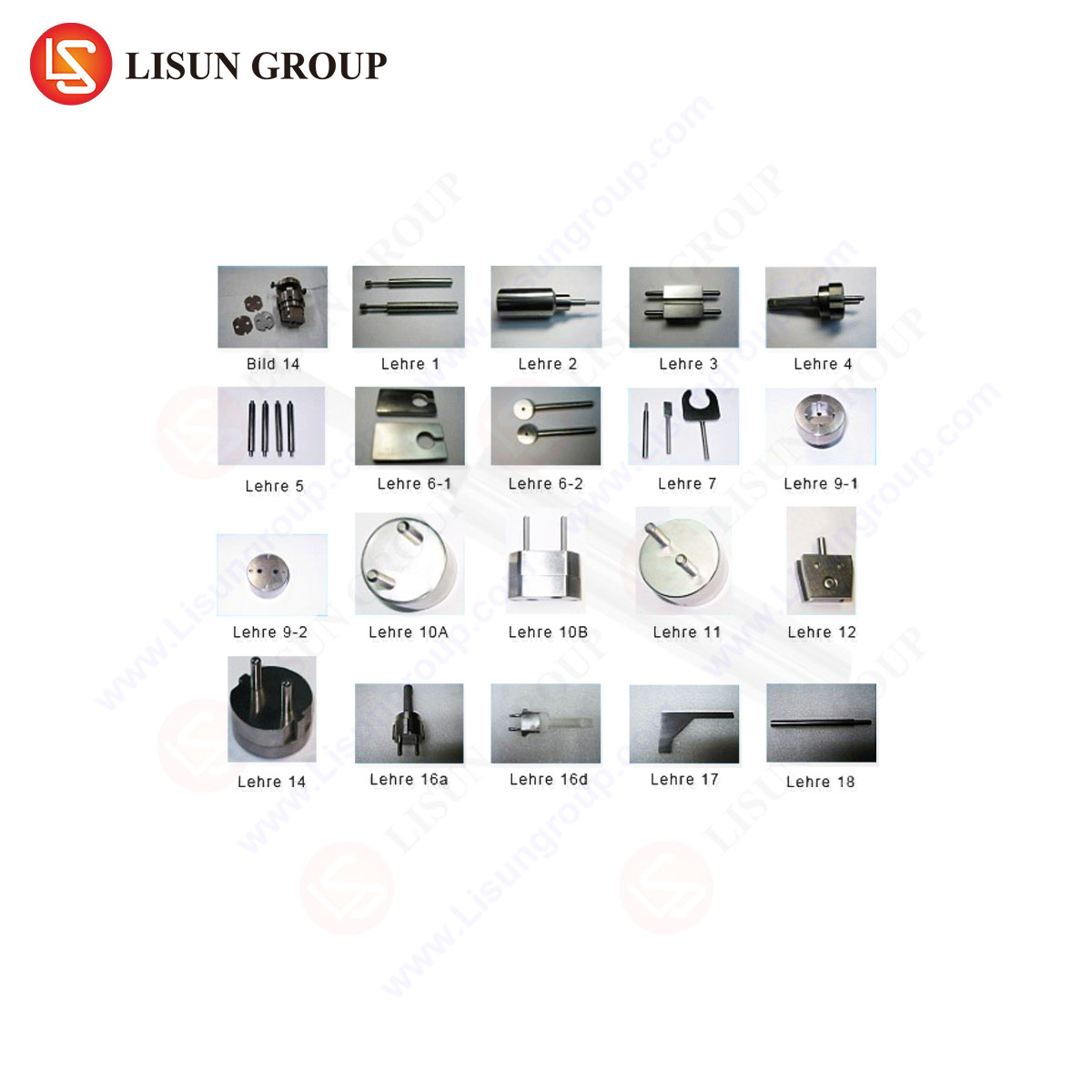
The C26 gauge, formally designated for checking socket-outlets intended to accept CEE7/7, CEE7/16, and CEE7/17 plugs, is a passive mechanical instrument designed on the “go/no-go” principle. Its function is to simulate the worst-case permissible dimensional limits of a compliant plug. The gauge itself is not a measuring instrument in the metrological sense but a verification tool that provides a definitive pass/fail assessment.
The gauge comprises two primary test pins, representing the live and neutral contacts of a plug, which must meet precise diameter specifications. Critically, these pins are engineered to the maximum allowable dimensions permitted by the standard for a plug. If a socket-outlet correctly accepts the C26 gauge—allowing it to be fully inserted without undue force and establishing proper electrical contact simulation—it demonstrates that the socket’s contact apertures and internal geometry are sufficiently large to accommodate the largest permissible plug. Conversely, the gauge also incorporates “no-go” features, often in the form of oversized or misaligned elements on a separate face or through specific test procedures, which must not be accepted by a compliant socket. This dual verification ensures the socket will reject plugs that are dangerously oversized or malformed. The application of the gauge involves a prescribed sequence: insertion force, verification of full seating, and a check for proper simulated electrical contact via integrated indicator circuits within advanced gauge systems.
LISUN Gauges for Plugs and Sockets: Engineering Precision for Compliance Verification
Within the landscape of compliance testing equipment, LISUN produces a range of gauges, including those for CEE7 systems, which are engineered to exacting specifications for material durability, dimensional accuracy, and functional reliability. LISUN’s implementation of the C26 gauge exemplifies the integration of robust mechanical design with the nuanced requirements of international standards.
The LISUN C26 gauge is typically manufactured from high-grade, wear-resistant materials such as hardened steel or plated alloys for the test pins, ensuring longevity and minimal deformation despite repeated use in quality control environments. The body is constructed from durable insulating materials with clear, permanent marking of its standard designation and application. The geometric tolerances applied in the manufacture of the LISUN gauge are significantly tighter than those allowed for the plugs it simulates, ensuring the gauge itself acts as a perfect reference artifact. Furthermore, advanced models may incorporate integrated electrical circuits with visual or audible indicators (e.g., LEDs, buzzers) that activate only when the gauge is fully inserted and the test pins make simulated electrical contact with the socket’s shutters or contacts. This feature objectively verifies not just mechanical entry but also the functional engagement of the socket’s safety shutters and the depth of contact alignment.
Specifications and Calibration: Ensuring Traceability and Measurement Integrity
The utility of any compliance gauge is contingent upon its own conformance to a higher-order reference. LISUN gauges are supplied with detailed specifications and, where applicable, certification traceable to national metrology institutes. Key specifications for a C26-type gauge include:
- Pin Diameter: Precisely machined to the maximum positive tolerance allowed for plug pins (e.g., 4.8 mm ±0.01 mm for the main pins, as per standard).
- Pin Spacing: Center-to-center distance maintained at 19.0 mm with minimal deviation.
- Pin Length and Profile: Faithfully replicating the standardized plug pin form, including any required chamfers.
- Insulation Dimensions: Accurately simulating the plug body to test socket entry aperture and shutter operation.
- Electrical Circuit (if equipped): Designed with a specific test current and voltage to reliably indicate contact without damaging the socket.
Regular calibration against master gauges or via coordinate measuring machines (CMM) is essential to maintain the gauge’s authority as a compliance tool. LISUN provides guidance and services for periodic recalibration, ensuring that wear over time does not compromise the validity of test results, a critical consideration for high-volume manufacturers and third-party testing laboratories.
Industry Application: From Production Lines to Certification Laboratories
The application of the C26 gauge spans the entire product lifecycle of CEE7 socket-outlets.
In manufacturing quality control, gauges are deployed at strategic points on the assembly line for 100% inspection or statistical process control (SPC) sampling. Operators use the gauge to verify that molding tools for socket faces remain within tolerance and that the internal contact assembly and shutter mechanism function correctly before the unit proceeds to electrical testing. A failure at this stage triggers immediate process adjustment.
For third-party testing and certification bodies (e.g., TÜV, VDE, Intertek, UL), the C26 gauge is a mandatory tool in the type-testing suite. During evaluation to standards such as EN 50075 (for plugs) and EN 60112-1 (for sockets), test engineers use the gauge to validate dimensional compliance clauses rigorously. Its objective pass/fail outcome is a clear, unambiguous datum for the test report.
Importers and retailers may also utilize gauges for incoming goods inspection, providing a first-line defense against non-compliant products entering the supply chain, thereby mitigating safety risks and potential liability.
Competitive Advantages of Precision-Engineered Gauging Systems
The choice of gauging equipment, such as that offered by LISUN, carries significant implications for testing integrity. Key advantages of a professionally engineered gauge system include:
- Reduced Measurement Uncertainty: Superior material stability and tighter manufacturing tolerances minimize the gauge’s own contribution to measurement error, yielding more reliable compliance judgments.
- Operational Durability: Wear-resistant construction extends service life and maintains accuracy over thousands of insertion cycles, lowering total cost of ownership.
- Enhanced Test Reproducibility: A well-made gauge ensures that test results are consistent across different operators, shifts, and facilities, which is vital for both internal QC and external certification.
- Risk Mitigation: Employing a certified, traceable gauge provides defensible evidence of due diligence in product safety verification, which is crucial in regulatory audits or liability cases.
Conclusion: The Unseen Guardian of Electrical Safety
The C26 gauge, a seemingly simple mechanical tool, performs a vital gatekeeping function in the ecosystem of CEE7 plugs and sockets. Its rigorous application, as enabled by precision-engineered instruments from manufacturers like LISUN, ensures that the fundamental principle of dimensional interoperability is upheld. By providing an unambiguous, repeatable, and standard-defined method for verifying socket acceptance criteria, it acts as an unseen guardian against the geometric non-conformances that can precipitate electrical failure. In an industry where safety is paramount, the reliance on such calibrated, reliable gauging systems remains an indispensable element of both responsible manufacturing and rigorous independent certification.
FAQ Section
Q1: How frequently should a C26 compliance gauge be calibrated?
A1: Calibration frequency depends on usage intensity. For high-volume production line use, an annual calibration is typically recommended. Testing laboratories may calibrate semi-annually or according to their accredited quality procedure. Any visual sign of wear or damage necessitates immediate recalibration or replacement.
Q2: Can the C26 gauge test all types of CEE7 sockets?
A2: The C26 gauge is specifically designed for socket-outlets built to accept CEE7/7, CEE7/16, and CEE7/17 plugs. It may not be suitable for specialized socket types or older national variants not aligned with these standards. Always verify the gauge’s standard designation against the socket standard being tested.
Q3: Does the gauge also test the electrical safety of the socket?
A3: No. The C26 gauge is primarily a dimensional and mechanical compliance tool. It verifies geometry and, with its indicator circuit, confirms basic contact engagement. Full electrical safety testing—including dielectric strength, earthing continuity, temperature rise, and endurance—requires separate, specialized electrical test equipment per the relevant clauses of EN 60112-1 or other applicable standards.
Q4: What is the consequence of using a worn or out-of-calibration gauge?
A4: Using a non-conforming gauge can lead to false acceptance (passing a non-compliant socket) or false rejection (failing a compliant socket). Both outcomes are costly: the former introduces a safety hazard into the market, while the latter leads to unnecessary production waste, rework, and potential delays in certification. Maintaining gauge integrity is a critical quality control parameter.
Q5: Are there automated systems that incorporate this gauging function?
A5: Yes. Automated test stations for socket-outlets often integrate a robotic or pneumatic actuator to insert a precision gauge like the C26 in a programmed sequence. These systems link the mechanical insertion force and depth with the electrical contact verification, logging all data for traceability. LISUN and other providers offer both standalone gauges and integrated solutions for automated production testing.