

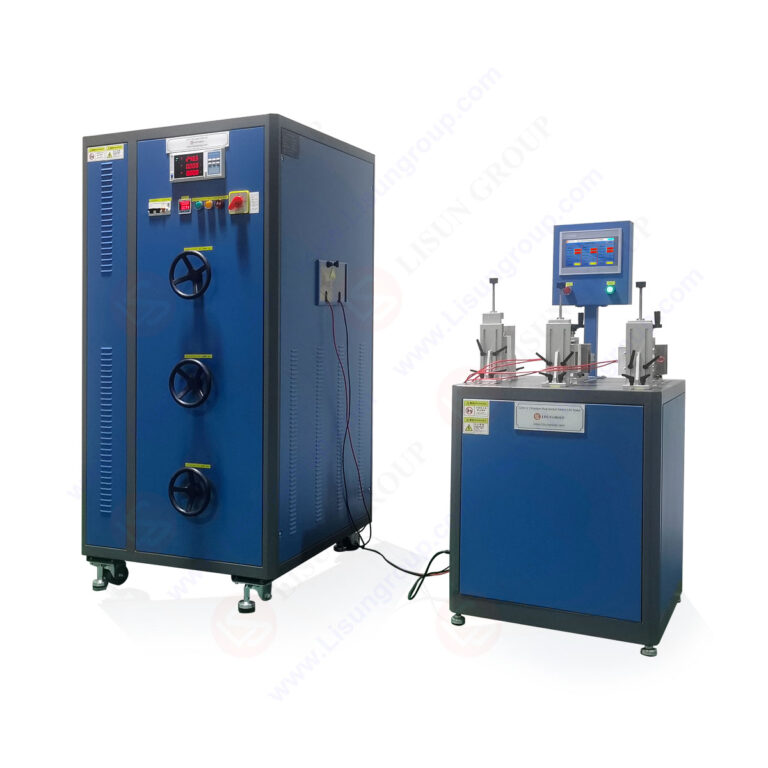



Ensuring Fire Safety Compliance through Glow Wire Testing: A Technical Analysis
Introduction to Fire Hazard Assessment in Electrotechnical Products
The proliferation of complex electrotechnical products across diverse sectors—from household appliances to aerospace components—has necessitated the development of rigorous, standardized methodologies for evaluating fire hazard potential. A primary ignition source in such equipment is often not an open flame but rather an overheated component or connection. These thermal faults can arise from overloaded circuits, poor contact resistance, component failure, or other abnormal operating conditions. To simulate these realistic fault scenarios in a controlled, repeatable laboratory environment, the glow-wire test has become an internationally recognized and indispensable compliance tool. This test does not assess flame spread but rather evaluates a material or product’s resistance to ignition and its ability to limit the propagation of fire from a localized heat source. The objective, scientific data derived from this test directly informs design choices, material selection, and ultimately, the certification of products against critical safety standards.
Fundamental Principles of the Glow-Wire Test Methodology
The core principle of the glow-wire test is elegantly straightforward yet scientifically robust. It involves heating a standardized Nichrome (80% nickel, 20% chromium) wire element, formed into a specific loop shape, to a precisely controlled temperature. This heated element, the “glow-wire,” is then applied with a defined force to the test specimen for a predetermined period. The test apparatus monitors the specimen’s behavior during and after application. Key observational parameters include:
- Ignition: Whether the specimen ignites.
- Duration of Flaming: If ignition occurs, how long flames persist on the specimen or from dripping particles.
- Ignition of Surrounding Material: Whether any drips or flames ignite a specified tissue paper placed beneath the specimen.
- Extinguishing Time: The time for flames to self-extinguish after removal of the glow-wire.
The test temperature is not arbitrary; it is derived from a risk-based classification system outlined in standards such as IEC 60695-2-10 through IEC 60695-2-13. Common severity levels include 550°C, 650°C, 750°C, 850°C, and 960°C, with the required temperature dictated by the product’s intended use, fault probability, and potential consequence of fire. For instance, a terminal block in an industrial control panel may be tested at 850°C, while an external plastic housing for a consumer electronics device might be tested at 750°C.
Standards Framework and Regulatory Imperatives
Glow-wire testing is not a singular test but a family of tests embedded within a comprehensive standards ecosystem. The primary series is IEC 60695-2, which is harmonized across many national and regional standards (e.g., UL 746A, GB/T 5169.10-13). These standards are invoked by countless end-product safety standards, making compliance mandatory for market access.
- IEC 60695-2-10: Glow-wire apparatus and common test procedure.
- IEC 60695-2-11: Glow-wire flammability test method for finished products (GWEPT).
- IEC 60695-2-12: Glow-wire flammability test method for materials (GWFI).
- IEC 60695-2-13: Glow-wire ignitability test method for materials (GWIT).
The Glow-Wire Flammability Index (GWFI) is the highest temperature at which a material does not ignite or, if it does, flames extinguish within 30 seconds after removal of the glow-wire and no dripping particles ignite the tissue. The Glow-Wire Ignition Temperature (GWIT) is the temperature 25°C above the maximum test temperature at which the material does not ignite for longer than 5 seconds. These indices provide quantifiable, comparative data for material datasheets and procurement specifications.
The LISUN ZRS-3H Glow-Wire Test Apparatus: Technical Specifications and Operational Fidelity
To generate reliable, standards-compliant data, the test apparatus itself must exhibit exceptional precision, durability, and repeatability. The LISUN ZRS-3H Glow-Wire Test Apparatus is engineered to meet these exacting requirements, serving as a critical tool for certification laboratories, quality assurance departments, and R&D facilities.
Core Specifications and Design Features:
- Temperature Control Range: 50°C to 1000°C, with a stability of ±2°C at the tip of the glow-wire. This broad range covers all standard severity levels.
- Heating Element: A high-quality, standardized Nichrome wire loop, ensuring conformity to the dimensional and compositional requirements of IEC 60695-2-10.
- Temperature Measurement: Utilizes a type K (NiCr-NiAl) thermocouple spot-welded to the glow-wire, connected to a high-accuracy PID digital controller. This direct measurement is critical for eliminating calibration errors.
- Test Force Application: Incorporates a precision mechanical system to apply a consistent 1.0 N ± 0.2 N force to the specimen, a parameter vital for reproducible results.
- Application Timer: A digital timer controls the glow-wire application duration (typically 30 seconds) with an accuracy of ±0.1 seconds.
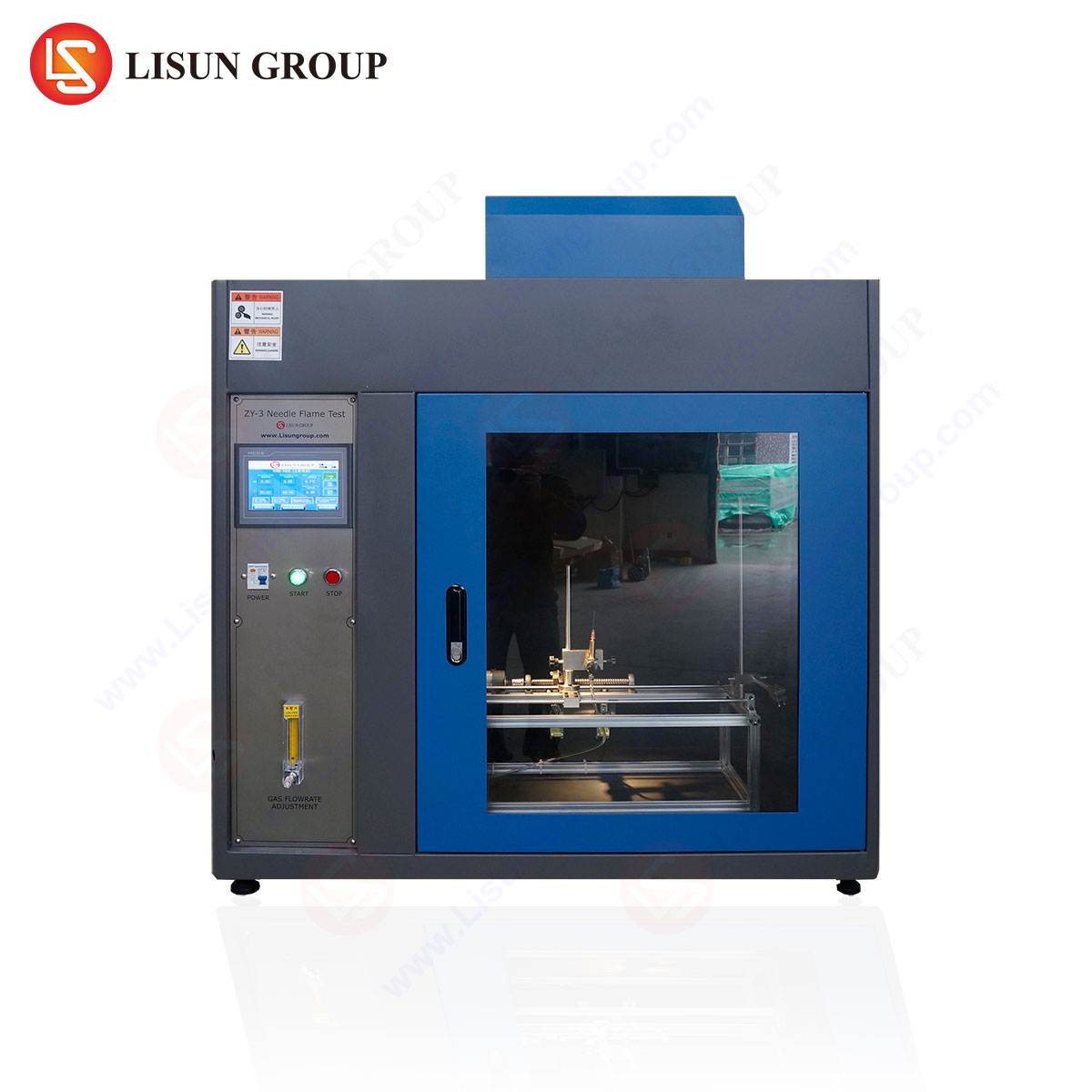
- Safety Enclosure: A transparent, interlocked safety chamber contains the test, protecting the operator from heat and potential fragments, while allowing clear observation.
- Calibration and Validation: The apparatus is designed for straightforward calibration using reference materials and standard checklists to verify force, temperature, and timing accuracy.
Testing Principle Execution: The LISUN ZRS-3H automates the critical phases of the test. The operator secures the specimen on the mounting bracket, positions the tissue paper, and sets the target temperature and time via the controller. The apparatus heats the wire to the setpoint with high stability. Upon initiation, it automatically applies the glow-wire with the correct force for the exact duration, then retracts it. The operator observes and records the specimen’s behavior against the standard’s criteria. This automated precision minimizes human error in test execution, a key factor in audit-ready testing protocols.
Industry-Specific Applications and Risk Mitigation
The application of glow-wire testing spans the entire spectrum of modern technology, each with unique risk profiles.
- Electrical & Electronic Equipment / Industrial Control Systems: Here, the focus is on insulating materials, connector bodies, and PCB substrates. A relay housing that fails a 750°C test could ignite adjacent wiring, leading to catastrophic control system failure. The GWFI value is a critical specification for these components.
- Household Appliances: Elements like switch actuators, thermostat housings, and internal supports in kettles, irons, or washing machines are subject to thermal stress. Testing ensures that a faulty heating element does not cause the surrounding plastic to become a sustained ignition source.
- Automotive Electronics: Under-hood components, battery management system enclosures, and charging port assemblies face extreme environments. Glow-wire testing at higher temperatures (e.g., 850°C or 960°C) validates that materials can withstand short-circuit events in close proximity to the engine bay or high-voltage systems.
- Lighting Fixtures: Particularly for LED drivers and plastic diffusers, the test evaluates the risk from overheating electronic ballasts or faulty LEDs. Dripping ignited material from a diffuser is a significant concern.
- Telecommunications & Data Center Equipment: Power supply units, router housings, and fan assemblies in always-on equipment must prevent fire propagation. The GWIT is often used to specify materials for internal baffles and enclosures.
- Medical Devices: For patient-connected equipment like monitors or infusion pumps, fire safety is paramount. Testing of external enclosures and internal component supports ensures no single internal fault can compromise the device’s integrity in a clinical setting.
- Aerospace and Aviation Components: While often governed by additional standards (e.g., FAA regulations), glow-wire principles apply to cabin entertainment systems, wiring harness clamps, and control panel materials, where weight-saving plastics must not compromise fire safety.
- Electrical Components: This is the quintessential application. Switches, sockets, circuit breaker casings, and terminal blocks are directly tested per standards like IEC 60884-1 (plugs and sockets) and IEC 60669-1 (switches). The LISUN ZRS-3H is frequently used for such product-specific compliance testing.
- Cable and Wiring Systems: While cables have their own flame tests (e.g., vertical tray), cable glands, markers, and cable management accessories (ducting, ties) are evaluated using glow-wire to ensure they do not contribute to fire spread.
Comparative Advantages of Modern Glow-Wire Test Apparatus
When selecting a glow-wire tester, laboratories must consider factors beyond basic functionality. The LISUN ZRS-3H embodies several design advantages that contribute to data integrity and operational efficiency.
1. Enhanced Measurement Accuracy and Stability: The integration of a high-precision PID controller with a directly welded thermocouple ensures the set temperature is the actual temperature at the point of contact. This eliminates thermal lag and gradient errors common in less sophisticated systems, directly impacting the accuracy of GWFI and GWIT determinations.
2. Robust Mechanical Construction and Repeatability: The force application mechanism is engineered for minimal wear and consistent performance over thousands of test cycles. This mechanical repeatability is a cornerstone of test method validation, ensuring that results are a function of the specimen, not apparatus variability.
3. User-Centric Operational Safety and Clarity: The interlocked safety chamber, combined with clear viewing panels and intuitive controls, reduces operator risk and fatigue. Efficient post-test ventilation allows for quicker turnaround between tests, enhancing laboratory throughput.
4. Compliance and Audit-Readiness: The apparatus is designed to facilitate easy calibration and performance verification in line with laboratory quality systems (e.g., ISO/IEC 17025). Detailed documentation and traceable calibration processes support audit requirements for accredited testing.
Integrating Glow-Wire Data into the Product Development Lifecycle
Proactive integration of glow-wire compliance is far more cost-effective than retrospective design changes. In the material selection phase, engineers should consult GWFI and GWIT data from supplier datasheets. For critical or novel materials, in-house verification testing on an apparatus like the LISUN ZRS-3H is prudent. During the prototyping phase, testing actual sub-assemblies (per IEC 60695-2-11) can reveal unforeseen interactions—such as flame propagation along thin ribs or from dripping onto internal components—that material-level tests might miss. This iterative testing approach de-risks the final product certification audit, where failure can result in significant delays and cost overruns.
Conclusion
Glow-wire testing represents a pragmatic and essential bridge between theoretical material properties and real-world fire safety performance in electrotechnical goods. Its simulation of a common thermal fault condition provides invaluable data for hazard assessment. The reliability of this data is intrinsically linked to the precision and compliance of the test apparatus used. Implementing a robust testing regimen with capable instrumentation is a fundamental responsibility for manufacturers committed to safety, quality, and global market compliance. As technology evolves, introducing new materials and higher power densities, the role of this foundational test in preventing fire initiation will remain critically important.
Frequently Asked Questions (FAQ)
Q1: What is the key difference between the GWFI and GWIT tests, and when should each be used?
A1: The Glow-Wire Flammability Index (GWFI) determines the highest temperature at which a material does not cause sustained ignition or ignite a surrounding layer. It is a pass/fail test at specific temperatures and is commonly used for material specification. The Glow-Wire Ignition Temperature (GWIT) is a more stringent test that determines the temperature at which a material does not ignite at all (for more than 5 seconds). GWIT is typically 25-50°C lower than the GWFI for the same material. The choice is dictated by the applicable end-product standard; GWIT is often required for components in more stringent applications.
Q2: How often does a glow-wire test apparatus like the LISUN ZRS-3H require calibration, and what does it entail?
A2: Calibration frequency should follow the laboratory’s quality manual, typically annually or biannually. Critical calibration points include: 1) Temperature Accuracy: Using a traceable external thermocouple/reader to verify the apparatus thermocouple’s reading at multiple setpoints (e.g., 550°C, 750°C, 960°C). 2) Application Force: Verifying the applied force is 1.0 N ± 0.2 N using a calibrated force gauge. 3) Timer Accuracy: Checking the application duration timer. 4) Glow-wire Dimensions: Periodically verifying the shape and dimensions of the Nichrome loop per the standard.
Q3: Can the same apparatus test both finished products and raw materials?
A3: Yes, a fully compliant apparatus like the LISUN ZRS-3H is designed to perform all tests in the IEC 60695-2-10 to -13 series. The key difference lies in the specimen preparation, mounting, and the test criteria applied. For materials (GWFI/GWIT), standardized plaques are used. For finished products (GWEPT), the actual product or a representative section is mounted in its intended service orientation. The apparatus provides the consistent heat source and application conditions for both.
Q4: For a plastic housing with a wall thickness below the standard’s minimum requirement, how is testing conducted?
A4: Standards like IEC 60695-2-12 specify a minimum typical thickness (often 3mm). If the product’s wall is thinner, the test is conducted on the part at its actual thickness. This is a crucial aspect of the finished product test (GWEPT), as it evaluates the real-world article. The results will indicate whether the thin-walled design is acceptable or requires redesign, such as adding ribs, using a higher-performance material, or increasing thickness in critical areas.