




Ensuring Product Reliability in Harsh Environments: Methodologies, Standards, and Advanced Testing Solutions
Introduction
The operational integrity of modern technological systems is inextricably linked to their ability to withstand environmental stressors. For equipment deployed in arid, industrial, or otherwise particulate-laden atmospheres, the ingress of dust and sand represents a pervasive and potentially catastrophic failure mode. Particulate contamination can lead to abrasive wear, electrical short circuits, thermal insulation, mechanical seizure, and optical obscuration. Consequently, rigorous environmental testing is not merely a quality assurance step but a fundamental engineering discipline required to validate product durability, ensure safety, and mitigate lifecycle costs. This article delineates the critical considerations for ensuring product reliability in harsh environments, with a specific focus on standardized dust and sand testing methodologies. It further examines the implementation of these standards through advanced testing instrumentation, exemplified by the LISUN SC-015 Dust Sand Test Chamber.
The Physics of Particulate Ingress and Associated Failure Modes
Understanding the mechanistic pathways of particulate-induced failure is prerequisite to designing effective countermeasures and test protocols. Dust and sand particles, typically ranging from 1 µm to over 1000 µm in diameter, infiltrate systems through a combination of gravitational settling, aerodynamic penetration, and pressure differentials. Key failure modes are categorized as follows:
- Abrasive Wear: Hard silicate particles, such as quartz sand, act as a lapping compound on moving parts. This leads to increased tolerances, loss of sealing integrity in shafts and bearings, and eventual mechanical failure. Automotive electronics in under-hood applications and industrial control systems with external actuators are particularly susceptible.
- Electrical Dysfunction: Conductive dust can bridge insulated traces on printed circuit boards (PCBs), leading to leakage currents or short circuits. Hygroscopic dust can absorb moisture, creating corrosive electrolytes that degrade contacts and solder joints. This is a critical concern for telecommunications equipment, electrical components like relays and switches, and automotive control units.
- Thermal Management Disruption: Dust accumulation on heatsinks, vents, and fan blades acts as a thermal insulator, impeding heat dissipation. This can cause electronic components such as power semiconductors, processors in office equipment, and LED drivers in lighting fixtures to operate beyond their rated junction temperature, accelerating electromigration and precipitating thermal runaway.
- Optical and Sensor Interference: For lighting fixtures, aerospace navigation lights, and medical device sensors, the deposition of particulates on lenses and optical surfaces reduces luminous efficacy and signal integrity. In severe cases, it can completely obscure critical optical paths.
- Clogging and Seizure: Fine dust can infiltrate and jam precision mechanisms, including the moving parts of consumer electronics (e.g., camera lens assemblies), cooling fans in household appliances, and pneumatic or hydraulic systems in aerospace components.
Standardized Test Regimes: IEC 60529 and Beyond
To quantify a product’s resistance to solid particulate ingress, the International Electrotechnical Commission (IEC) 60529 standard, commonly referenced as the Ingress Protection (IP) Code, provides a globally recognized framework. The code’s first numeral denotes protection against solid objects. Relevant ratings for dust include:
- IP5X: Dust Protected. Dust ingress is not entirely prevented, but it cannot enter in sufficient quantity to interfere with the satisfactory operation of the equipment.
- IP6X: Dust Tight. No dust ingress under prescribed test conditions.
The test methodology for IP5X and IP6X involves exposing the equipment to a specified density of talcum powder (for IP5X) or a more rigorous test with finer dust (for IP6X) inside a controlled chamber. A vacuum pump creates a negative pressure differential inside the test specimen to simulate real-world pressure cycling, drawing particulates toward potential ingress points. Compliance is verified by a post-test inspection for any dust penetration.
For environments with larger, more abrasive particles, such as sand, other standards come into play. These include MIL-STD-810G, Method 510.5 (Sand and Dust), ISO 20653 (Road vehicles — Degrees of protection), and various automotive OEM specifications. These tests often involve larger particle sizes, higher air velocities, and cyclical temperature conditions to simulate desert or off-road operations for automotive electronics, aerospace components, and external telecommunications gear.
Implementing Standards: The Role of Precision Test Chambers
The fidelity and repeatability of dust and sand testing are wholly dependent on the precision of the test chamber employed. A sophisticated chamber must accurately control the critical parameters defined by the standards: particulate concentration, air velocity, temperature, humidity, and test duration. Inconsistencies in any parameter can yield non-representative results, leading to either an underestimation of risk or an over-engineering of the product enclosure.
The LISUN SC-015 Dust Sand Test Chamber: A Technical Examination
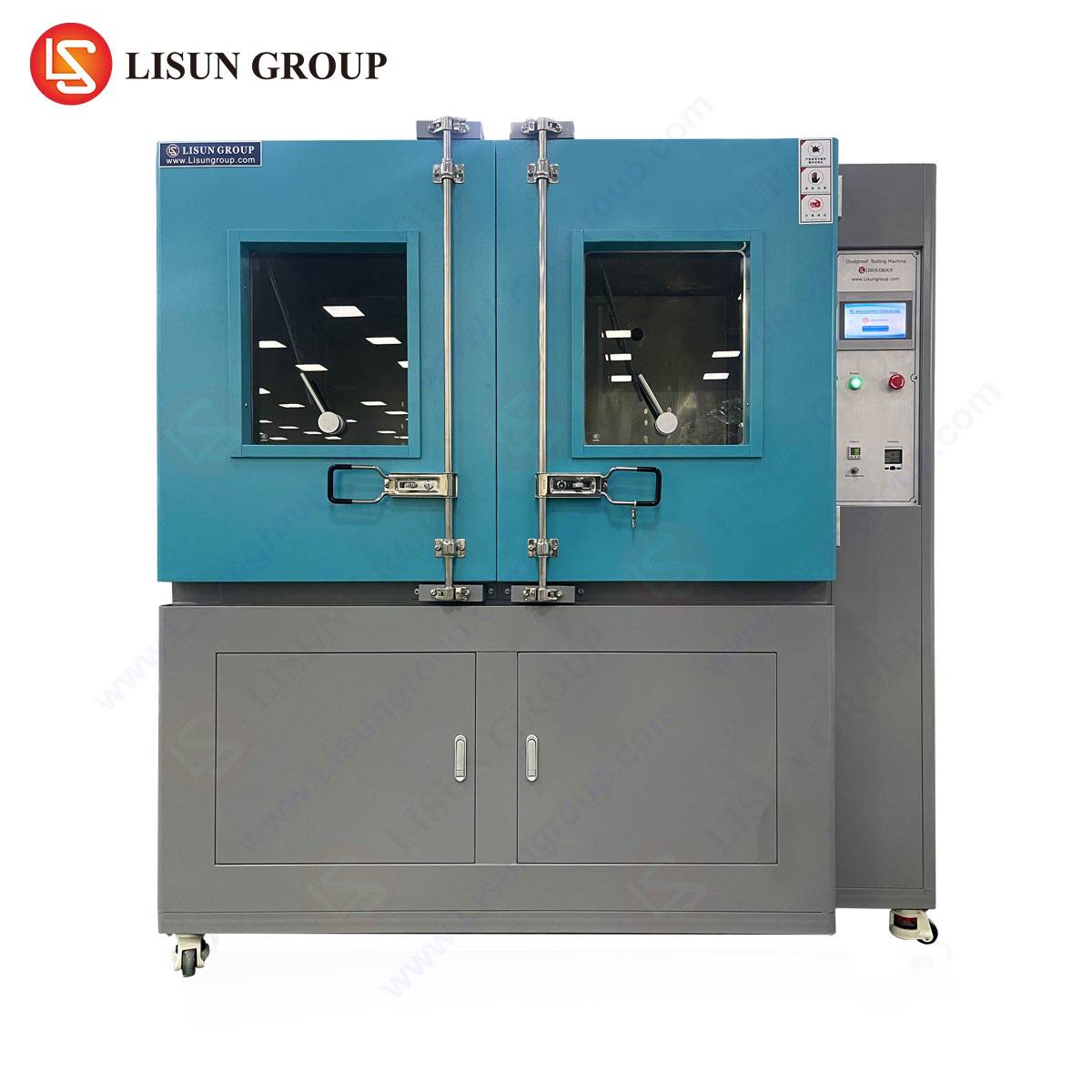
The LISUN SC-015 is engineered to provide a controlled and reproducible environment for conducting rigorous IP5X, IP6X, and analogous sand and dust tests. Its design prioritizes precise parameter control, user safety, and compliance with international standards.
Core Specifications and Operational Principles
The chamber’s construction typically features a double-walled structure with an interior of SUS304 stainless steel for corrosion resistance and an exterior of coated mild steel. A critical component is the closed-loop pneumatic vibration system used to fluidize the test dust (typically talcum powder for IP tests or Arizona Test Dust/ISO 12103-1 A4 fine dust for more severe testing), ensuring a uniform and sustained cloud within the test volume. A centrifugal blower system circulates the dust-laden air at controlled velocities. The specimen under test is mounted on a turntable (e.g., 1-3 RPM) to ensure uniform exposure from all angles. An integrated vacuum system, with flowmeter and pressure gauge, applies the required negative pressure differential to the specimen’s interior.
Table 1: Representative Technical Specifications of the LISUN SC-015
| Parameter | Specification |
| :— | :— |
| Internal Volume | 0.5 m³ / 1 m³ (configurable) |
| Dust Concentration | Adjustable, typically 2 kg/m³ to 10 kg/m³ |
| Air Velocity | 0-2 m/s (continuously variable) |
| Turntable Speed | 1-3 RPM (programmable) |
| Vacuum System | 0-5 kPa adjustable negative pressure |
| Dust Type | Compatible with talcum, Arizona Road Dust (A1-A4), etc. |
| Control Interface | Programmable Logic Controller (PLC) with Touchscreen HMI |
| Compliance | IEC 60529, GB/T 4208, ISO 20653, MIL-STD-810G |
Industry-Specific Application Scenarios
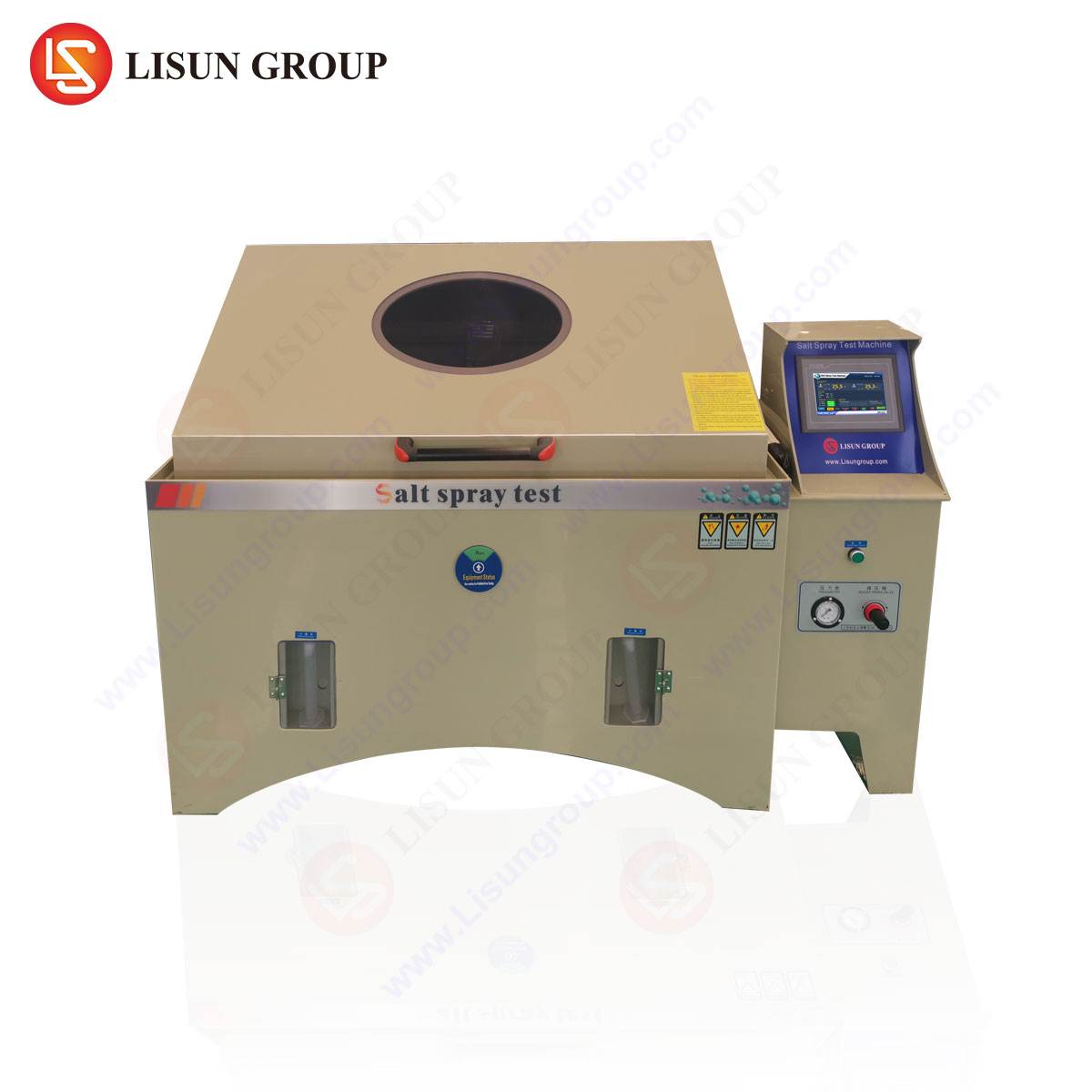
- Electrical & Electronic Equipment / Industrial Control Systems: Validating the sealing of PLC enclosures, motor drives, and remote terminal units (RTUs) intended for installation in cement plants, mining operations, or coastal areas with salty, sandy air.
- Automotive Electronics: Testing engine control units (ECUs), lighting assemblies, sensors, and connectors for resistance to road dust and off-road conditions, per ISO 20653 and OEM-specific durability cycles.
- Lighting Fixtures: Ensuring that IP65/IP66-rated outdoor LED luminaires for street lighting or architectural applications do not experience lumen depreciation or corrosion due to long-term dust ingress into the optical chamber or driver compartment.
- Telecommunications Equipment: Qualifying outdoor base station units, fiber optic terminal enclosures, and satellite communication hardware for deployment in desert or high-wind, dusty regions.
- Medical Devices: Verifying that portable diagnostic equipment, field hospital hardware, or even internal components of larger devices are protected from airborne particulates that could compromise function or sterility.
- Aerospace and Aviation: Testing components for aircraft operating in desert environments, where sand ingestion into avionics cooling systems or external sensors is a known risk.
- Electrical Components: Assessing the long-term reliability of sealed switches, sockets, and circuit breakers in industrial or agricultural settings.
- Cable and Wiring Systems: Evaluating the integrity of cable glands and connector seals when subjected to prolonged dust exposure, which can abrade seals and create conductive paths.
Competitive Advantages in Engineering Validation
The value of an instrument like the SC-015 extends beyond basic compliance checking. Its precise control and programmability offer several engineering advantages:
- Accelerated Life Testing: By maintaining a constant, high concentration of dust, the chamber can simulate years of field exposure in a matter of days or weeks, enabling rapid design iteration and failure mode discovery.
- Parametric Stressing: Engineers can independently vary dust concentration, airflow, temperature, and vacuum to identify the specific threshold at which a sealing design fails. This data is invaluable for optimizing gasket materials, labyrinth seal designs, and venting architectures.
- Quantitative Results: Unlike pass/fail tests, data-logging capabilities allow for the monitoring of internal pressure, and when combined with in-situ electrical monitoring of the test specimen, can pinpoint the exact moment of electrical failure due to dust ingress.
- Safety and Containment: The closed-loop design and high-efficiency filtration system prevent the escape of test dust into the laboratory environment, protecting operators and sensitive equipment elsewhere in the facility.
Integrating Test Data into the Product Development Lifecycle
Effective reliability engineering requires the integration of environmental test data at multiple stages. During the Design and Prototyping phase, preliminary tests on early models identify fundamental vulnerabilities in enclosure design. In the Design Validation phase, formal testing to relevant standards is conducted on pre-production units to certify compliance. Finally, in Production Verification, periodic audits using the same standardized test methods ensure manufacturing consistency, particularly in the quality of seals and assembly processes. The data derived from chambers like the SC-015 feeds directly into Failure Modes, Effects, and Criticality Analysis (FMECA), guiding design-for-reliability (DfR) decisions and informing warranty and maintenance forecasts.
Conclusion
The demand for reliable operation in harsh environments is a non-negotiable criterion across a vast spectrum of industries. Dust and sand testing, governed by rigorous international standards, provides the empirical foundation for validating product durability. The implementation of these standards through advanced, precision test chambers, such as the LISUN SC-015, transforms subjective assessment into objective engineering data. By enabling controlled, reproducible, and severe conditioning, these instruments empower design and validation teams to proactively identify and mitigate failure modes, ultimately leading to products that deliver sustained performance, reduced total cost of ownership, and enhanced safety in the world’s most challenging operating conditions.
Frequently Asked Questions (FAQ)
Q1: What is the key difference between IP5X and IP6X testing in a chamber like the SC-015?
A1: The fundamental difference lies in the acceptance criterion. IP5X (“Dust Protected”) testing allows for a limited amount of dust ingress, provided it does not interfere with normal operation or safety. IP6X (“Dust Tight”) is a more stringent test where no dust whatsoever is permitted inside the enclosure. The test dust for IP6X is often finer, and the test duration or severity may be increased. The SC-015 can be configured to meet the specific requirements of both standards.
Q2: Can the SC-015 be used for testing with abrasive sand, not just fine talcum dust?
A2: Yes. While talcum powder is standard for IP code testing, the chamber is constructed to handle more abrasive standardized test dusts, such as Arizona Road Dust (as defined in ISO 12103-1). This allows for validation against automotive (ISO 20653), military (MIL-STD-810G), and other industry-specific standards that simulate harsh desert or sandstorm conditions.
Q3: How is the required negative pressure differential inside the test specimen controlled and measured?
A3: The SC-015 integrates a vacuum pump and a regulated vacuum system. A hose connects from the chamber’s vacuum port to a sealed port on the test specimen. A precision pressure gauge or sensor monitors the pressure inside the specimen. The system uses a regulating valve to achieve and maintain the exact negative pressure (e.g., 2 kPa below ambient) specified by the test standard for the required duration.
Q4: For a product with internal thermal management (fans, vents), how does dust testing correlate to real-world thermal performance degradation?
A4: The test provides a direct acceleration of the fouling process. By measuring the temperature of critical components (e.g., a CPU or power MOSFET) during a controlled, high-dust-concentration test, engineers can plot the rise in operating temperature over time. This data can be used to model long-term thermal performance, size heatsinks with a fouling factor, or determine maintenance intervals for filter cleaning or replacement in the field.
Q5: What safety features are incorporated to handle the fine particulate matter used in testing?
A5: Modern chambers prioritize operator safety. Key features include a completely sealed test volume, interlocks that prevent the chamber door from opening while the dust circulation system is active, and a high-efficiency post-test filtration system that removes dust from the chamber air before purging. This contained environment protects the laboratory from contamination and minimizes operator exposure to airborne particulates.