




Ensuring Product Reliability with IEC 60529 Dust Testing
Introduction: The Pervasive Challenge of Particulate Ingress
In the operational lifecycle of virtually any manufactured product, environmental particulates represent a persistent and insidious threat to reliability, safety, and functional longevity. Dust, sand, and other fine solid contaminants can infiltrate enclosures, leading to a cascade of failure modes: electrical short circuits, mechanical binding, optical obscuration, thermal insulation leading to overheating, and accelerated wear of moving components. For industries ranging from automotive electronics operating on arid, unpaved roads to medical devices in sterile but particle-laden clinical environments, quantifying and mitigating this risk is not merely an engineering preference but a fundamental requirement for product integrity. The International Electrotechnical Commission’s standard IEC 60529, “Degrees of protection provided by enclosures (IP Code),” provides the definitive, globally recognized framework for this assessment. Specifically, the tests for protection against solid objects, detailed in the standard’s second numeral, offer a rigorous, repeatable methodology for evaluating a product’s defensive capabilities. This article delves into the technical underpinnings, application, and critical importance of dust testing per IEC 60529, with a focus on the implementation of such testing through advanced instrumentation such as the LISUN SC-015 Dust Sand Test Chamber.
Deciphering the IP Code: A Framework for Ingress Protection
The IP Code, as codified in IEC 60529, is a concise yet information-dense classification system. It comprises the letters “IP” followed by two characteristic numerals and optional letters. The first numeral (0-6) defines protection against access to hazardous parts and ingress of solid objects larger than 50mm down to 1.0mm. The second numeral (0-9) specifies protection against harmful ingress of water. For the purpose of dust testing, the second numeral is of paramount interest, specifically levels 5 and 6. It is critical to understand that these are distinct test regimes with different pass/fail criteria, not a linear scale of increasing “dustiness.”
An IP5X rating denotes “Dust Protected.” The test involves circulating a specified concentration of talcum powder within a test chamber for a prescribed duration. The acceptance criterion is that dust does not enter the enclosure in a quantity sufficient to interfere with satisfactory operation of the equipment or to impair safety. Some accumulation on internal surfaces is permissible provided it does not bridge insulated parts.
An IP6X rating signifies “Dust Tight.” This is a more severe test, often employing a partial vacuum (or pressure differential) inside the enclosure to promote ingress. After exposure to a dense dust cloud, the test verdict is stricter: no dust ingress is permitted whatsoever. This absolute requirement makes IP6X a mandatory specification for sensitive components in harsh environments, such as aerospace avionics or sealed industrial control units in foundries.
The Mechanics of Controlled Contamination: Test Principles and Parameters
The scientific validity of IEC 60529 dust testing hinges on the precise control of several interdependent variables to ensure reproducibility and meaningful correlation to real-world conditions. The test dust specified is finely milled talcum powder, with a particle size distribution defined by the standard (typically, 95% by weight of particles between 1μm and 75μm, and 50% between 1μm and 20μm). This simulates a wide range of naturally occurring fine particulates.
The test chamber must maintain a uniform dust cloud. This is achieved by agitating the dust with a controlled airflow, often using a circulator fan, and preventing settlement long enough for the test specimen to be fully exposed. The standard dictates the dust concentration (e.g., 2kg/m³ for IP5X) and the test duration (typically 2, 4, 8, or 24 hours, chosen based on the product’s severity of use). For IP6X testing, the enclosure is subjected to a pressure reduction of 20 kPa below atmospheric pressure, or alternatively, a suction is applied internally, creating a forceful incentive for dust penetration through any viable leak path.
Post-test evaluation is a critical phase. The specimen is visually inspected for dust ingress. For IP5X, functional testing is performed to verify operation is unimpaired. For IP6X, a more sensitive detection method may be employed, such as inspecting for dust on a white background under 200 lux illumination or using a particle counter for ultra-sensitive components.
Instrumentation for Precision: The LISUN SC-015 Dust Sand Test Chamber
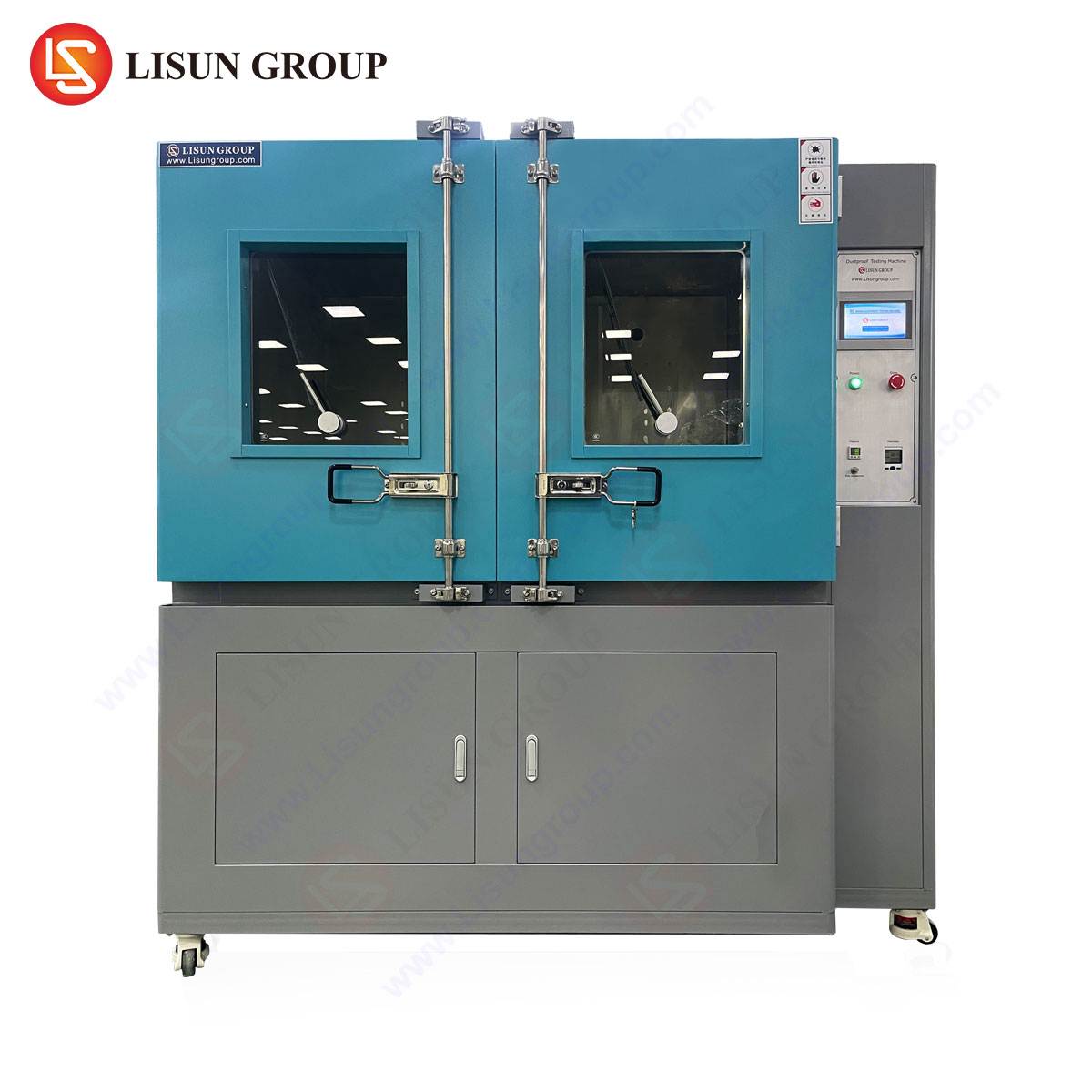
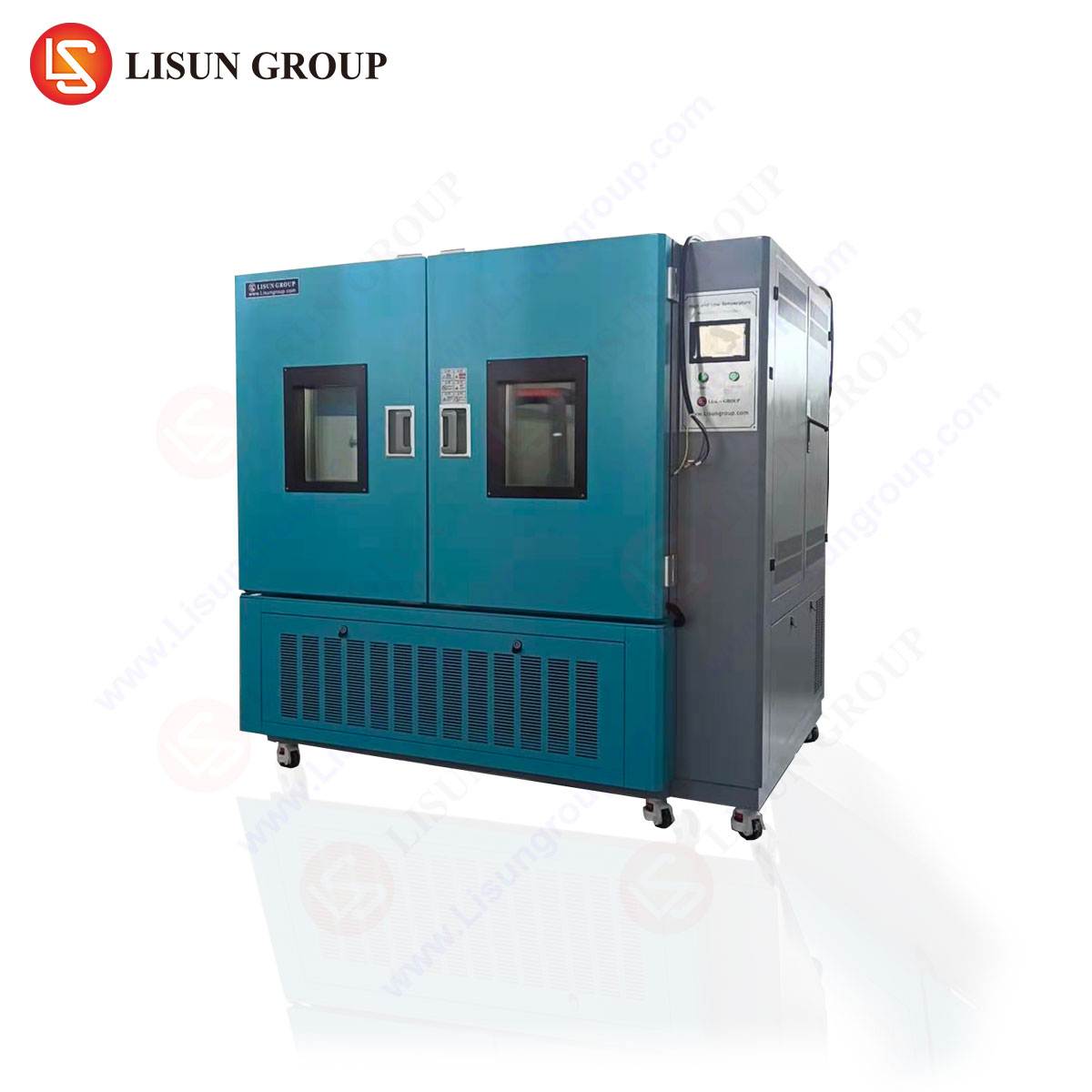
Implementing IEC 60529 tests with manual methods introduces significant variables, compromising repeatability and accreditation. Dedicated test chambers automate and standardize the process. The LISUN SC-015 Dust Sand Test Chamber is engineered to provide a controlled, compliant environment for both IP5X and IP6X testing, alongside other related particulate tests.
The chamber’s core principle involves a closed-loop circulation system. A fan draws the air-dust mixture from the test workspace, passes it through a diffuser to ensure homogeneity, and reintroduces it evenly over the specimen. This creates the sustained, turbulent dust cloud required by the standard. For IP6X testing, the chamber integrates a vacuum system. This system can reduce internal pressure within a mounted specimen or, via a dedicated port, draw air through the specimen to simulate the pressure differential condition.
Key specifications of the LISUN SC-015 that underscore its technical capability include:
- Chamber Volume: A defined workspace ensuring adequate test dust volume and specimen clearance.
- Dust Circulation: A controlled, repeatable airflow velocity and pattern.
- Vacuum System: A programmable vacuum pump and regulator capable of achieving and maintaining the precise pressure differential (±5% tolerance) specified in IEC 60529.
- Sieve Mesh: A standardized wire mesh sieve (75μm or 50μm, as per customer requirement) through which the talcum powder is introduced, ensuring consistent particle size distribution.
- Construction: The chamber interior is typically made of corrosion-resistant stainless steel, with a sealed viewing window and glove ports for setup and inspection without contaminating the laboratory environment.
- Control System: A programmable logic controller (PLC) and human-machine interface (HMI) allow for precise setting and monitoring of test duration, vacuum level, and circulation cycles.
This level of instrumentation transforms dust testing from a qualitative check into a quantifiable, auditable component of a product’s validation dossier.
Cross-Industry Imperatives: Application Use Cases
The necessity for validated dust protection spans a broad spectrum of modern technology. The following examples illustrate the critical role of IEC 60529 testing.
- Automotive Electronics: Control units for engine management, braking (ABS/ESC), and advanced driver-assistance systems (ADAS) are mounted in under-hood or underbody locations. IP6X protection is often required to prevent conductive dust from causing sensor drift or circuit failure, which is a severe safety risk. Connectors and wiring harnesses also require testing to ensure long-term contact integrity.
- Industrial Control Systems: Programmable Logic Controllers (PLCs), motor drives, and human-machine interfaces (HMIs) installed on factory floors, in mining operations, or in agricultural machinery are exposed to high concentrations of metallic, carbon, or fibrous dust. Ingress can cause overheating, relay contact welding, or display failure.
- Lighting Fixtures: Outdoor LED luminaires for street lighting, architectural accent, or industrial high-bay applications must resist dust accumulation on the optical lens (reducing light output) and, more critically, on the LED driver’s electronics, which can lead to thermal runaway and premature failure. IP6X is common for these fixtures.
- Telecommunications Equipment: 5G small cells, outdoor routers, and fiber optic network terminals (ONTs) are deployed in poles and kiosks. Dust ingress can degrade antenna performance, clog cooling fans, and corrode circuit boards, leading to network downtime.
- Medical Devices: Portable diagnostic equipment, surgical power tools, and monitoring devices used in field hospitals or ambulances must function reliably despite the presence of dust. For devices used in sterile environments, an IP5X or IP6X rating can also be a proxy for cleanability, indicating the enclosure can be wiped down without contaminating internal components.
- Aerospace and Aviation Components: Avionics bays and components within aircraft are subject to dust and sand during ground operations, especially in desert regions. The low-pressure conditions at altitude can exacerbate ingress risks, making IP6X testing under vacuum a vital part of DO-160 or similar compliance.
- Electrical Components: Switches, sockets, and circuit breakers for residential, commercial, or marine use require dust protection to prevent arcing, contact resistance increase, and mechanical seizure. A simple light switch installed in a garage or workshop is a prime candidate for IP5X testing.
Strategic Advantages of Standardized Dust Testing
Incorporating IEC 60529 dust testing into the product development cycle confers multiple strategic advantages beyond simple compliance. Primarily, it de-risks product launches by identifying design flaws—such as inadequate gasket compression, poor seam welding, or unsuitable vent membranes—during the validation phase, not in field returns. This leads to a more robust design, reducing warranty claims and associated costs.
Secondly, it provides objective, marketable proof of durability. An IP rating is a universally understood shorthand for environmental ruggedness, supporting marketing claims and providing a competitive edge in specifications. For procurement departments in industries like automotive or telecommunications, a certified IP rating is often a non-negotiable entry criterion for supplier qualification.
Finally, it fosters long-term reliability and safety. By preventing the accumulation of conductive or hygroscopic dust, the product is safeguarded against latent failures that could have safety implications, such as in automotive braking systems or medical life-support devices. This extends the product’s mean time between failures (MTBF) and protects brand reputation.
Conclusion
In an era where electronic and mechanical systems are deployed in increasingly diverse and demanding environments, the ability to resist particulate ingress is a cornerstone of product reliability. IEC 60529 provides the essential, standardized language and methodology for this defense. Moving from the theoretical framework of the standard to its practical, repeatable application requires precise instrumentation. Test chambers like the LISUN SC-015 enable engineers to simulate years of environmental exposure in a controlled laboratory setting, yielding data-driven insights that inform design improvements, validate marketing claims, and ultimately ensure that products deliver on their performance promises regardless of the operational environment. As product lifecycles accelerate and reliability expectations heighten, rigorous dust testing transitions from a best practice to an indispensable pillar of modern engineering quality assurance.
FAQ
Q1: What is the key difference between IP5X and IP6X testing in practice?
The fundamental difference lies in the test severity and acceptance criteria. IP5X (“Dust Protected”) tests with a circulating dust cloud; some non-interfering ingress is allowed. IP6X (“Dust Tight”) typically employs a vacuum or pressure differential to force ingress and mandates zero dust entry. They are distinct tests, not a gradient.
Q2: Can the LISUN SC-015 chamber test for other particulate standards beyond IEC 60529?
Yes. While optimized for IEC 60529, the chamber’s controlled dust circulation and vacuum systems make it suitable for other standards that involve talcum powder or similar fine dusts, such as certain clauses of MIL-STD-810G (Method 510.5) for sand and dust, or specific automotive OEM test specifications. The sieve mesh and test parameters can be adjusted accordingly.
Q3: How do we prepare a product with external cooling fans for IP6X testing?
IEC 60529 anticipates this. For IP6X, the fan must be operational during the test if that is its normal state. The test evaluates the enclosure’s protection with the fan running, as the fan itself can create internal pressure differentials. The chamber’s vacuum system tests the sealed integrity of the overall assembly, including the fan housing and its seals.
Q4: Is visual inspection sufficient for evaluating IP6X compliance, or are more sensitive methods needed?
The standard states that for IP6X, “no dust shall enter.” Visual inspection with adequate illumination (e.g., 200 lux) is the minimum requirement. However, for highly sensitive components (e.g., optical sensors,精密 medical devices), manufacturers often employ more stringent internal criteria, such as using particle counters, microscopic examination, or functional performance tests with higher sensitivity thresholds to ensure an absolute lack of detrimental ingress.
Q5: What is the typical test duration, and how is it determined?
IEC 60529 suggests a default duration of 8 hours for both IP5X and IP6X. However, the standard allows for other durations (2, 4, or 24 hours) to be specified based on the product’s intended use and the severity of the environment it will face. The chosen duration must be documented in the test report. The LISUN SC-015’s programmable timer allows for flexible adherence to these requirements.