




Ensuring Product Safety: A Deep Dive into the IEC 61032 Φ50mm Test Sphere and Dynamometer
Introduction to Mechanical Hazard Mitigation in Product Design
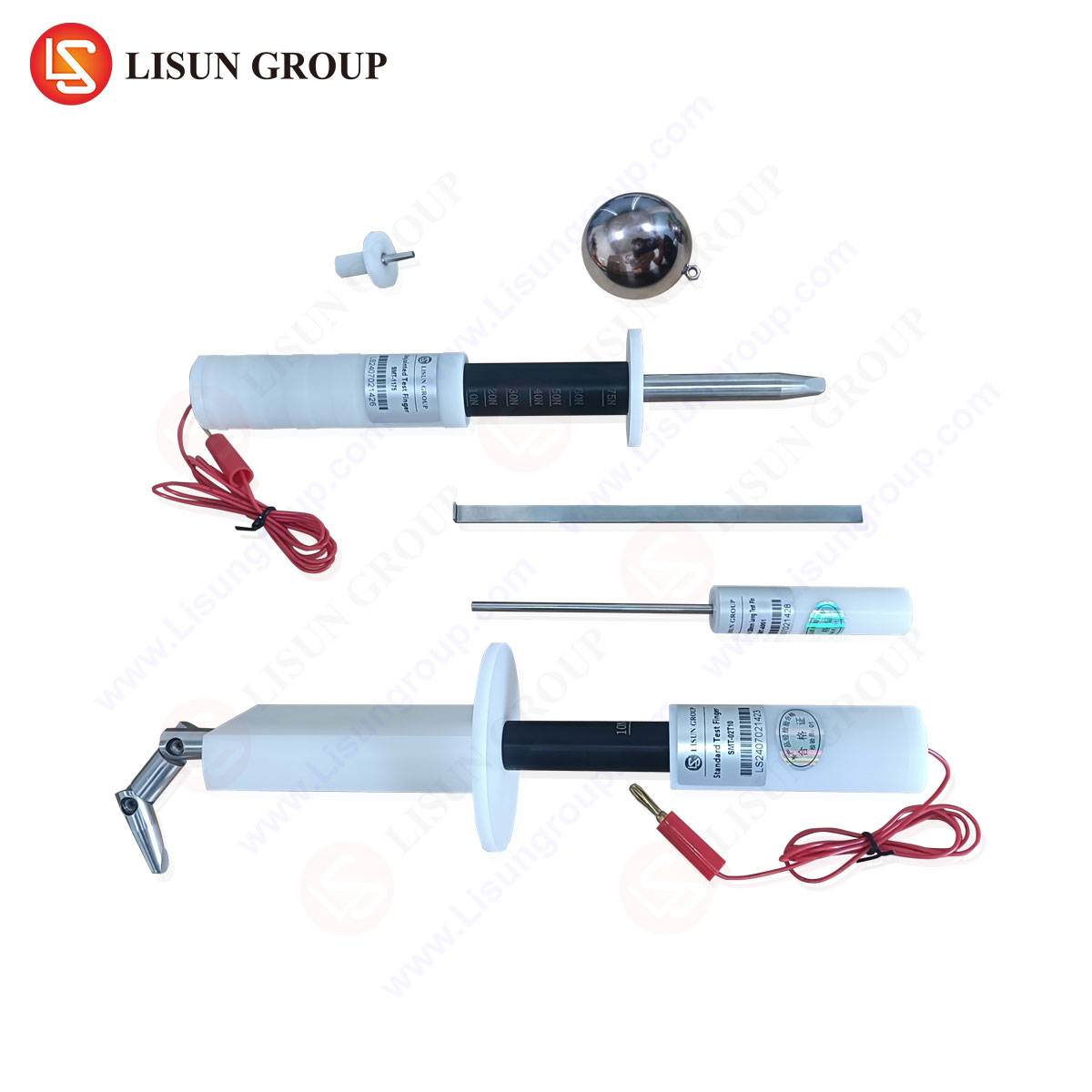
The prevention of mechanical hazards constitutes a foundational pillar of product safety engineering across a diverse spectrum of industries. Among these hazards, the risk posed by accessible openings to live parts, moving components, or hazardous energy sources is paramount. To standardize the evaluation of such risks, the International Electrotechnical Commission (IEC) developed standard 61032, “Protection of persons and equipment by enclosures – Probes for verification.” This document provides a suite of standardized test probes, each designed to simulate a specific part of the human body or common objects that might inadvertently interact with equipment. The Φ50mm test sphere, detailed in clause 9 of IEC 61032, alongside its associated dynamometer, represents a critical tool for assessing protection against access by young children’s hands and similar-sized solid objects. This article provides a comprehensive technical examination of the Φ50mm test probe, its application principles, and the instrumentation required for its correct implementation, with particular focus on the LISUN Test Finger, Test Probe, and Test Pin system as a representative and compliant solution.
Theoretical Foundation and Standardized Dimensions of the Φ50mm Test Sphere
The Φ50mm dimension is not arbitrary; it is derived from anthropometric data correlating to the approximate size of a young child’s fist or the ability to grip a small object. The probe’s primary function is to verify that openings in an enclosure are sufficiently small to prevent such access, thereby mitigating risks of electric shock, entanglement, burns, or crushing. As per IEC 61032, the test sphere is a rigid, smooth sphere with a diameter of 50mm ± 0.2mm. Its construction must be of insulating material to prevent electrical bridging during testing of live equipment. The standard mandates that the sphere be applied with a specific force to simulate a probing action, which necessitates the use of a calibrated dynamometer to ensure repeatable and accurate force application. The probe is intended to be pushed, not dropped, into or against openings, with the test deemed failed if the sphere penetrates to a depth where it could contact hazardous parts or fails to meet the criteria specified in the relevant product safety standard (e.g., IEC 60529 for IP codes, IEC 60335 for household appliances).
Instrumentation Imperative: The Role of the Calibrated Dynamometer
The application of the Φ50mm sphere without controlled force yields subjective and non-reproducible results. Consequently, IEC 61032 stipulates the use of a dynamometer—a force-measuring device—to apply a force of 30 N ± 3 N for verification of protection against solid foreign objects (IP code testing) and 50 N ± 5 N for verification of protection against access to hazardous parts. The dynamometer must be capable of indicating the applied force during the test. The LISUN system integrates this requirement seamlessly, featuring a digital dynamometer with a clear force display, often with peak-hold functionality. This ensures the test operator can apply the sphere gradually until the specified force is reached and maintained, confirming whether penetration occurs under the standardized load. The precision of this force application is critical; an under-application may falsely indicate safety, while over-application may damage a compliant product.
Operational Methodology and Compliance Verification Protocol
The testing protocol is systematic. First, the equipment under test (EUT) is placed in its most unfavorable position for the opening in question. The Φ50mm sphere, attached to the dynamometer assembly, is then deliberately applied to every potential opening, including joints, vents, gaps around controls, and cable entry points. The 30N or 50N force is applied perpendicularly to the opening for a duration specified by the end-product standard (typically 5-10 seconds). The test outcome is assessed visually and functionally. A successful test requires that the sphere does not fully penetrate the enclosure to contact hazardous live parts, enter a dangerous moving mechanism, or compromise a protective interlock. For IP testing (e.g., IP2X), the sphere must not fully penetrate. Documentation of the test, including force applied, points of application, and results, is essential for technical construction files and compliance audits.
Cross-Industry Application Scenarios and Hazard Mitigation
The universality of the Φ50mm test is evident in its widespread adoption across safety standards.
- Electrical and Electronic Equipment & Industrial Control Systems: Cabinets housing PLCs, drives, or power supplies must prevent the insertion of a 50mm sphere to meet IP2X or higher, ensuring operators cannot touch live busbars or terminals.
- Household Appliances: Vents in washing machines, dryers, and dishwashers are tested to prevent children from inserting hands near heating elements or belts. The 50N test is crucial for evaluating the accessibility of hazardous parts after removing service covers with a tool.
- Automotive Electronics & Aerospace Components: Under-hood electronic control units (ECUs) and in-cabin entertainment systems must have openings sized to prevent foreign object intrusion that could cause short circuits or fires, especially in vibration-prone environments.
- Lighting Fixtures: For outdoor or industrial luminaires rated at least IP2X, the test ensures that a child’s hand cannot reach live parts within the fixture or the lamp holder.
- Medical Devices: Equipment such as patient monitors or imaging systems must prevent access to internal high-voltage components, ensuring safety for both patients and service personnel in clinical environments.
- Electrical Components: Socket outlets, switchgear, and connection boxes are rigorously tested to ensure the Φ50mm sphere cannot pass through apertures intended only for tools or conductors.
- Toy and Children’s Products: This test is fundamental, directly simulating a child’s attempt to access battery compartments or internal mechanisms, ensuring no pinch points or electrical hazards are accessible.
The LISUN Test Finger, Test Probe, and Test Pin System: A Comprehensive Compliance Solution
To address the full scope of IEC 61032 and related standards (like IEC 60529), a complete test set is required. The LISUN system provides an integrated suite of probes, with the Φ50mm sphere as a core component.
Specifications and Construction: The LISUN Φ50mm Test Sphere is machined to the exacting tolerances of the standard (±0.2mm) from a high-strength, insulating polymer, ensuring dimensional stability and electrical safety. Its surface finish is smooth to prevent snagging and to replicate the standard’s requirements accurately. It is mounted on a rigid stalk designed for secure attachment to the dynamometer.
Testing Principles Embodied: The system operationalizes the standard’s principles. The digital dynamometer, typically with a range of 0-100N and a resolution of 0.1N, allows for precise application of both the 30N and 50N forces. The ergonomic design allows the operator to apply force smoothly and observe penetration clearly. The kit often includes the full array of IEC 61032 probes (Test Finger A, Probe B, etc.), enabling comprehensive testing for different hazards (e.g., jointed test finger for IP1X/2X access to hazardous parts).
Industry Use Cases and Competitive Advantages: For a certification laboratory, manufacturer’s QA department, or design engineering team, the advantages of a system like LISUN’s are multifold. Accuracy and Traceability: The dynamometer is calibratable against national standards, providing the traceability required for accredited testing. Durability: The robust construction of the probes withstands repeated use without deformation, ensuring long-term consistency. Completeness: A single kit addresses multiple clauses of IEC 61032, IEC 60529, and other derivative standards (UL, EN), streamlining the compliance workflow. Operational Efficiency: Clear force feedback and well-designed tooling reduce operator error and test time, particularly when evaluating complex products with numerous potential access points across diverse industries from telecommunications racks to consumer electronics enclosures.
Integration with Broader Safety Testing Regimes
The Φ50mm test is rarely performed in isolation. It is part of a sequential or parallel testing regimen. For instance, an enclosure might first be subjected to the IP1X test (50mm sphere) to verify protection against large solids, then to the IP3X test (2.5mm probe) for smaller objects. It precedes or follows tests for dielectric strength, leakage current, and mechanical stress. The data from the sphere test informs design iterations—for example, if a vent pattern fails, the designer may revise the louvre geometry or add an internal baffle. In the cable and wiring systems industry, a gland or entry seal must prevent the sphere from being pushed into the enclosure while maintaining its cable grip and ingress protection rating.
Conclusion
The IEC 61032 Φ50mm test sphere and dynamometer represent a precise, quantifiable method for evaluating a critical aspect of product safety. By simulating a specific anthropomorphic threat, it provides a reproducible benchmark that drives safer design practices globally. The implementation of this test, through compliant and reliable instrumentation such as the LISUN Test Finger, Test Probe, and Test Pin system, is a non-negotiable step in the compliance journey for virtually any enclosed electrical product. Its rigorous application across industries—from medical devices to automotive electronics—ensures that one of the most fundamental mechanical hazards is effectively mitigated, protecting users and upholding the integrity of safety standards.
FAQ Section
Q1: What is the difference between applying 30N and 50N with the Φ50mm sphere?
The applied force is dictated by the objective of the test. A 30 N ± 3 N force is specified in standards like IEC 60529 for verifying the degree of protection against solid foreign objects (IP Code first numeral). A higher force of 50 N ± 5 N is used when verifying protection against access to hazardous parts, such as live electrical components or dangerous moving parts, as it simulates a more deliberate or forceful probing action.
Q2: Can the Φ50mm test sphere be used for testing IP ratings higher than IP2X?
No. The Φ50mm sphere is explicitly defined for testing the first numeral “2” in the IP code (IP2X), meaning protection against solid foreign objects larger than 12.5mm. For higher levels of solid object protection (IP3X-IP6X), smaller and different test probes specified in IEC 61032, such as the 2.5mm steel wire (IP3X) or the 1.0mm wire (IP4X), must be used.
Q3: How often should the dynamometer in a test set be calibrated?
Calibration intervals depend on usage frequency, laboratory accreditation requirements (e.g., ISO/IEC 17025), and manufacturer recommendations. Typically, an annual calibration cycle is standard practice for equipment used in accredited testing or quality assurance to ensure measurement traceability and validity. A routine functional check before daily use is also advised.
Q4: In the context of toy safety, are there additional considerations when using the 50mm sphere?
Yes. While the IEC 61032 sphere is relevant, toy safety standards such as ISO 8124 or EN 71 have specific provisions for accessibility probes that may differ slightly in dimension or application force to simulate a child’s actions more closely. Always consult the specific toy safety standard for the exact test probe and protocol mandated.
Q5: If my product has a removable cover, should the Φ50mm test be applied with the cover in place or removed?
Testing must account for foreseeable use. If the cover is intended to be removed by the user or by a tool (as specified in instructions), the product must be tested both with the cover secured and with the cover removed. With the cover removed, the test is applied to any openings that become accessible to ensure that even in a service state, hazardous parts are not accessible by the 50mm sphere under the specified force.