




Environmental Dust Ingress Testing: Principles, Standards, and Technological Implementation
Introduction to Particulate Ingress and Its Engineering Significance
The infiltration of particulate matter—encompassing dust, sand, and other fine solids—poses a persistent and multifaceted threat to the operational integrity and longevity of engineered systems. Ingress can precipitate a cascade of failure modes, including abrasive wear on moving components, electrical short circuits, optical obscuration, thermal insulation leading to overheating, and the clogging of filters or ventilation pathways. Consequently, validating a product’s resilience against such environmental stressors is not merely a quality assurance step but a critical engineering imperative. This validation is systematically conducted within specialized apparatus known as Environmental Dust Ingress Testing Chambers. These instruments simulate concentrated, accelerated particulate exposure under controlled laboratory conditions, providing reproducible and quantifiable data on a device’s sealing efficacy and durability.
The technical objective of dust testing transcends simple exposure; it is a forensic analysis of a product’s defensive architecture. Testing protocols are designed to interrogate the integrity of gaskets, seals, labyrinth paths, and casing designs. The findings directly inform design iterations, material selection, and compliance certification, ultimately mitigating field failure risks and associated liabilities across global markets.
Fundamental Operating Principles of Dust Ingress Test Chambers
At its core, a dust ingress chamber operates on the principle of creating a controlled, homogenous dust cloud within an enclosed volume and exposing the test specimen to this environment under specified conditions. The scientific rigor of the test hinges on precise control over several interdependent variables. The chamber must generate and maintain a consistent concentration of particulate matter per unit volume of air, typically measured in grams per cubic meter (g/m³). This is achieved through a recirculating airflow system, often employing a fan or blower to fluidize and disperse the test dust from a reservoir.
The dust itself is standardized, most commonly using Arizona Test Dust or equivalent ISO 12103-1 sands (e.g., A1, A2, A3, A4), which have defined particle size distributions. The chamber’s internal geometry and airflow dynamics are engineered to minimize dead zones and ensure uniform dust distribution around the test item. A critical secondary function involves the management of static pressure differentials. Many standards, such as those defining IP5X and IP6X ingress protection codes, require the chamber to maintain a negative pressure differential between the interior and exterior of the test specimen. This negative pressure, often achieved via a vacuum pump connected to the specimen’s interior, actively draws dust particles toward potential ingress points, simulating the effect of wind or internal cooling fans in real-world operation.
Interpreting Key Standards: IEC 60529, ISO 20653, and MIL-STD-810
Dust ingress testing is governed by a framework of international standards, which define the severity levels, procedures, and acceptance criteria. The most widely referenced standard is IEC 60529, which outlines the Ingress Protection (IP) rating system. The first numeral after “IP” denotes protection against solid objects.
- IP5X (Dust Protected): Tested with a partial vacuum. Dust ingress is not entirely prevented, but it must not enter in sufficient quantity to interfere with satisfactory operation or compromise safety.
- IP6X (Dust Tight): Tested with a more stringent partial vacuum. No dust ingress is permitted.
ISO 20653, derived from IEC 60529 but with automotive-specific adaptations, is pivotal for road vehicles. It defines protection degrees (e.g., IP5KX, IP6KX) and includes additional tests for high-pressure water jets. For military and aerospace applications, MIL-STD-810 Method 510.6 provides procedures for testing with blowing dust and sand, often at higher velocities and temperatures to simulate extreme desert or operational environments.
Compliance with these standards is not interchangeable; each serves a distinct market and failure philosophy. A chamber must therefore offer the flexibility to replicate the specific environmental conditions—dust concentration, air velocity, temperature, humidity, pressure differential, and test duration—mandated by the relevant standard for the product under evaluation.
The LISUN SC-015 Dust Sand Test Chamber: A Technical Overview
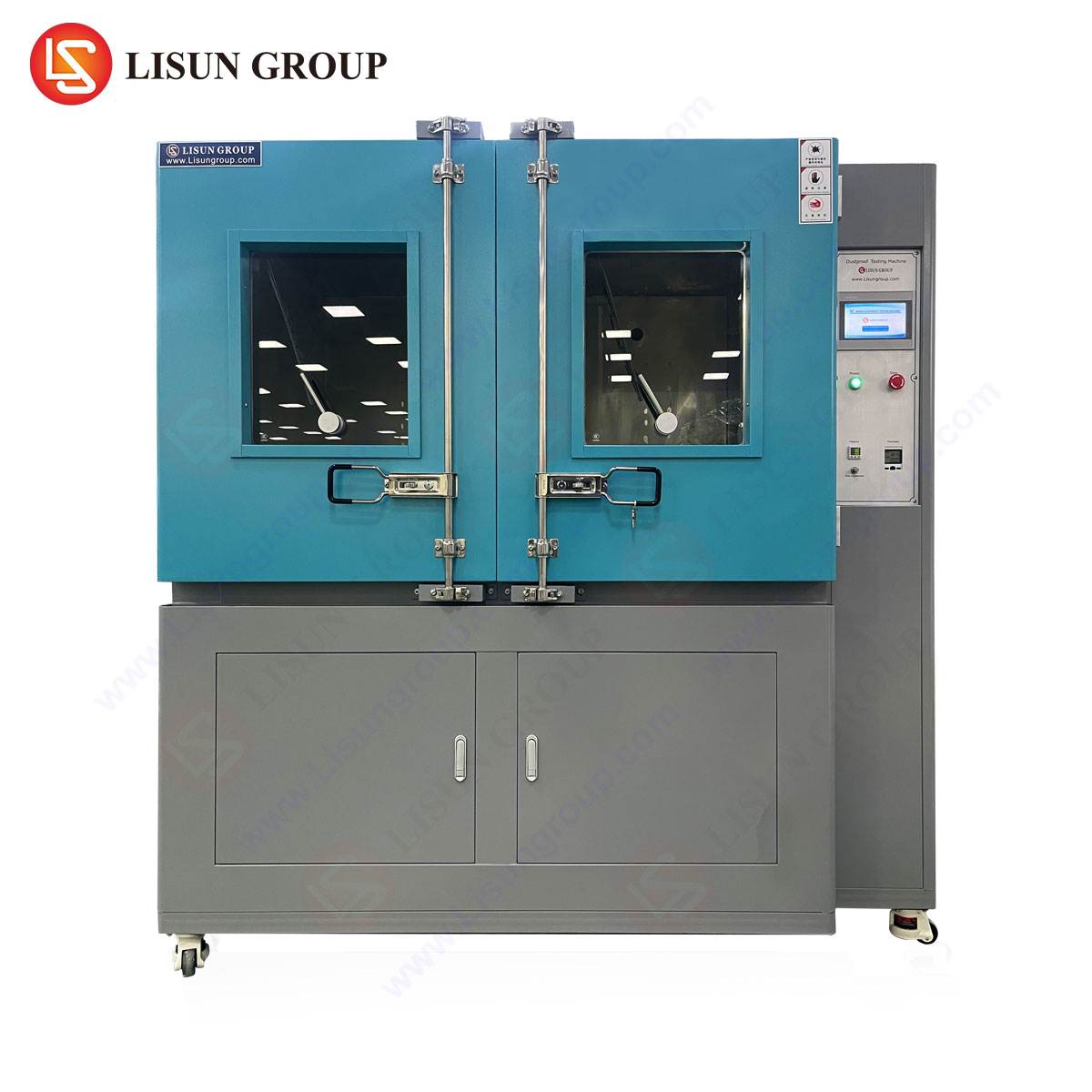
The LISUN SC-015 represents a contemporary implementation of dust ingress testing technology, engineered to meet the stringent requirements of IEC 60529, ISO 20653, and related standards for IP5X and IP6X testing. Its design prioritizes precise environmental control, user operational safety, and repeatable results.
Core Specifications and Design Features:
- Test Volume: Provides a standardized workspace sufficient for a range of component and enclosure sizes.
- Dust Circulation System: Utilizes a closed-loop airflow design with a centrifugal blower to ensure turbulent, uniform dust distribution. The system includes a dedicated dust separation and recovery mechanism to maintain consistent concentration.
- Dust Medium: Compatible with standardized test dusts (e.g., Arizona Road Dust per ISO 12103-1 A2). A sieve shaker is integrated for dust preparation and recycling.
- Pressure Differential Control: Incorporates a regulated vacuum system with a flowmeter (typically 0-10 L/min range) and a pressure gauge (0-2 kPa or 0-5 kPa range) to accurately impose and monitor the required negative pressure on the test specimen.
- Construction: The chamber interior is fabricated from corrosion-resistant stainless steel (SUS304). A large, sealed observation window with internal wipers allows for real-time monitoring without test interruption. The chamber door employs a robust clamping mechanism with silicone sealing to prevent external leakage.
- Control System: Features a programmable logic controller (PLC) with a human-machine interface (HMI) touchscreen. This allows for precise setting and logging of test parameters: test duration, vacuum degree, and blower operation cycles.
Testing Principle in Practice: The specimen is placed inside the chamber, and its internal volume is connected to the chamber’s vacuum system. The desired negative pressure (e.g., 2 kPa below atmospheric pressure for IP6X) is set and stabilized. The blower is activated, fluidizing the pre-loaded dust into a dense cloud. The test runs for the prescribed duration (commonly 2, 4, or 8 hours). The negative pressure differential continuously attempts to draw the dust into any breach in the specimen’s seals. Post-test, the specimen is carefully inspected for dust penetration, and its functionality is verified.
Industry-Specific Applications and Use Cases
The applicability of dust ingress testing spans virtually every sector where electronics and mechanical systems are deployed in non-pristine environments.
- Electrical and Electronic Equipment & Industrial Control Systems: Programmable Logic Controllers (PLCs), motor drives, and industrial sensors installed on factory floors are exposed to conductive metallic dust and general particulate. Testing ensures these critical control nodes do not fail due to internal contamination, which could cause costly production downtime.
- Automotive Electronics: Components like Engine Control Units (ECUs), lighting assemblies, infotainment systems, and ADAS sensors must withstand road dust, brake pad debris, and off-road conditions. Testing per ISO 20653 is often a mandatory part of OEM qualification.
- Lighting Fixtures: External streetlights, automotive headlamps, and industrial high-bay lights must maintain luminous output and prevent internal reflector contamination. Dust ingress can significantly reduce light efficacy and cause overheating.
- Telecommunications Equipment: Outdoor base station units, fiber optic terminal enclosures, and satellite communication hardware are subjected to wind-blown dust and sand. Ingress can degrade connector performance and damage sensitive RF components.
- Medical Devices: Portable diagnostic equipment, ventilators, and surgical tools used in field hospitals or ambulances require protection to ensure reliability and sterility. Dust can compromise sensitive optical sensors and mechanical assemblies.
- Aerospace and Aviation Components: Avionics bay components, external sensors, and in-flight entertainment systems are tested to extreme standards like MIL-STD-810 to guarantee functionality after exposure to sandstorms during ground operations or high-altitude particulate.
- Electrical Components: Switches, sockets, and circuit breakers must prevent dust from affecting contact resistance or causing tracking (the formation of conductive paths on insulating surfaces), which is a fire risk.
- Cable and Wiring Systems: Connectors and cable glands are tested to validate their sealing performance, ensuring long-term signal integrity and safety in dusty environments like mines or construction sites.
- Consumer Electronics & Office Equipment: Drones, outdoor cameras, and printers benefit from dust protection to enhance product lifespan and reduce maintenance. For instance, dust inside a printer can jam mechanisms and degrade print quality.
Comparative Advantages of Modern Integrated Test Systems
When evaluated against older or less sophisticated test setups, integrated chambers like the LISUN SC-015 offer distinct technical and operational advantages that translate to higher fidelity test data and laboratory efficiency.
Enhanced Repeatability and Reproducibility: The closed-loop circulation and automated control systems minimize human intervention variables. Consistent dust concentration and pressure differential are maintained throughout the test, ensuring results are comparable across different test runs and laboratories—a cornerstone of standardized testing.
Operational Safety and Containment: The fully enclosed design with secure door seals prevents the escape of fine, potentially hazardous test dust into the laboratory environment, protecting operators and sensitive equipment elsewhere in the facility.
Resource Efficiency and Dust Management: Integrated dust recovery and recycling systems reduce the consumption of expensive standardized test dust. The sieve shaker allows for the re-use of dust by breaking up agglomerations, ensuring the particle size distribution remains within specification for subsequent tests.
Data Integrity and Traceability: Digital parameter control and logging provide an immutable record of test conditions. This audit trail is invaluable for compliance documentation, failure analysis, and defending product certifications.
Flexibility and Standard Compliance: The programmability of parameters such as cycle times, vacuum levels, and test duration allows a single chamber to be configured for a wide array of standards and customer-specific test profiles, maximizing the utility of capital equipment.
Methodological Considerations and Test Execution Protocol
Executing a valid dust ingress test requires meticulous preparation and a systematic approach. The process begins with the selection of the appropriate test standard and severity level based on the product’s end-use environment. The specimen must be prepared in its operational state; for electrical items, it is typically energized and, if applicable, its internal cooling mechanisms activated. Openings intended for conduits or cables must be sealed as they would be in service.
The test dust must be conditioned—dried if necessary—and sieved to remove agglomerates before being loaded into the chamber’s reservoir. The specimen is then mounted, and its interior connected to the vacuum system via a sealed port. The test parameters are entered into the controller: the required pressure differential (e.g., 2 kPa for IP6X), the test duration (e.g., 8 hours), and any intermittent cycling of the dust circulation fan if specified.
Upon test completion, a critical recovery period is observed. The specimen must be allowed to settle in a clean environment before careful disassembly in a dust-controlled area, such as a clean bench. Internal inspection for dust accumulation is performed visually, often aided by magnification. For quantitative assessment, dust can be collected from internal surfaces and weighed. The final step is a functional test of the specimen to confirm no performance degradation has occurred.
Conclusion: The Role of Precision Testing in Product Validation
The Environmental Dust Ingress Testing Chamber is an indispensable tool in the reliability engineering arsenal. It transforms the qualitative risk of particulate contamination into quantitative, actionable data. As products become more compact, powerful, and deployed in increasingly diverse and harsh environments, the demand for precise, standards-compliant testing will only intensify. Implementing a robust testing protocol using capable instrumentation is a strategic investment that safeguards product reputation, reduces warranty costs, and facilitates access to global markets by demonstrating compliance with international safety and durability benchmarks. The technological evolution of these chambers, emphasizing automation, control, and data integrity, continues to raise the standard for what constitutes a reliable, dust-protected product.
Frequently Asked Questions (FAQ)
Q1: What is the difference between IP5X and IP6X testing in a chamber like the LISUN SC-015?
The fundamental difference lies in the stringency of the test and the acceptance criterion. IP5X (“Dust Protected”) testing is conducted with a partial vacuum, and the standard allows for some dust ingress provided it does not interfere with operation or safety. IP6X (“Dust Tight”) testing employs a more rigorous partial vacuum (specifically, drawing a vacuum to 2 kPa below atmospheric pressure) and mandates that no dust whatsoever enters the enclosure. The chamber must be capable of accurately generating and maintaining this higher pressure differential for the IP6X test.
Q2: Can the SC-015 chamber test for both dust and water ingress?
No, the LISUN SC-015 is specifically designed for dry particulate (dust and sand) ingress testing according to standards like IEC 60529 IP5X/IP6X. Water ingress testing (e.g., IPX1 to IPX9K) requires a fundamentally different apparatus with water spray nozzles, water tanks, pressure systems, and drainage. These are separate, specialized environmental chambers. A complete IP rating validation typically requires sequential testing in both dust and water test equipment.
Q3: How is the required test duration determined for a dust ingress test?
The test duration is primarily dictated by the referenced test standard and the specific protection level being claimed. Common default durations in IEC 60529 are 2 hours for IP5X and 8 hours for IP6X. However, industry-specific standards (e.g., automotive OEM specifications) or customer internal requirements may stipulate longer durations (e.g., 24 hours) to simulate more severe lifetime exposure. The programmable controller of the SC-015 allows for flexible setting of this parameter.
Q4: What type of dust is used, and why is standardization important?
Standardized test dusts, such as Arizona Test Dust conforming to ISO 12103-1 (e.g., A2 “Fine Test Dust”), are used. These dusts have a tightly controlled particle size distribution (typically from <1 µm to 150 µm). Standardization is critical for test repeatability and reproducibility across different labs and points in time. Using arbitrary or site-specific dust would yield non-comparable results, invalidating certifications and making reliability assessments meaningless.
Q5: How often does the test dust need to be replaced, and can it be reused?
The dust can be reused multiple times if properly maintained. After each test, the collected dust should be dried (if it has absorbed moisture) and sieved using the chamber’s integrated sieve shaker to break up agglomerates and remove foreign debris. This restores its particle size distribution. Dust replacement is necessary only when it becomes excessively contaminated, degrades into too-fine particles through abrasion, or its quantity diminishes below the level required to maintain proper concentration in the chamber.