




Abstract
Precise environmental test chamber humidity fluctuation control for IEC 60068 compliance is a foundational pillar for validating the long-term reliability of LEDs and electronic components. This technical article examines the critical interplay between controlled humidity stress and accelerated aging protocols, specifically within the framework of IES LM-80 and LM-84 testing standards. We detail how advanced systems, such as LISUN‘s LED Optical Aging Test Instruments, integrate with environmental chambers to deliver the stable, repeatable conditions mandated by IEC 60068-2-78 and other standards. The discussion provides actionable insights for engineers on achieving compliance, ensuring data integrity for lumen maintenance projections like L70 and L50, and optimizing test chamber performance for definitive product lifecycle validation.
1.1 Humidity as a Primary Accelerating Factor for Failure Mechanisms
While temperature is often the focal point in accelerated aging, humidity—and specifically its controlled fluctuation—is a potent co-stressor that precipitates critical failure modes in LED packages and drivers. Moisture ingress can lead to metal corrosion, delamination of encapsulants and phosphor layers, and electrochemical migration, all of which directly impact optical performance and electrical safety. The IEC 60068 series of environmental testing standards, particularly parts 2-30 (damp heat) and 2-78 (combined temperature/humidity), provide the methodological framework for applying these stresses in a reproducible manner. Effective environmental test chamber humidity fluctuation control for IEC 60068 compliance is therefore not merely about maintaining a setpoint but about precisely managing the rate of change and spatial uniformity to ensure that the applied stress is both severe enough to accelerate failures and consistent enough for valid, comparative data.
1.2 Synergy Between Humidity Control and Lumen Maintenance Standards
The IES LM-80 standard for measuring LED lumen depreciation and the IES LM-84 standard for measuring luminaire lumen maintenance both mandate testing at multiple controlled temperature points, typically 55°C, 85°C, and a third temperature selected by the manufacturer. While these standards primarily specify dry heat conditions, real-world luminaire operation often involves significant humidity cycles. Therefore, comprehensive reliability validation requires separate, complementary humidity stress testing aligned with IEC 60068. Data from these humidity tests inform design robustness, while the dry-heat LM-80/LM-84 data feeds into the Arrhenius-based extrapolation models of TM-21 and TM-28 to predict long-term lumen maintenance. A holistic testing strategy thus employs separate but synchronized equipment: precision humidity chambers for stress testing and dedicated optical aging systems for continuous photometric measurement.
2.1 Key Requirements of IEC 60068-2-78 for Steady-State and Cyclic Humidity
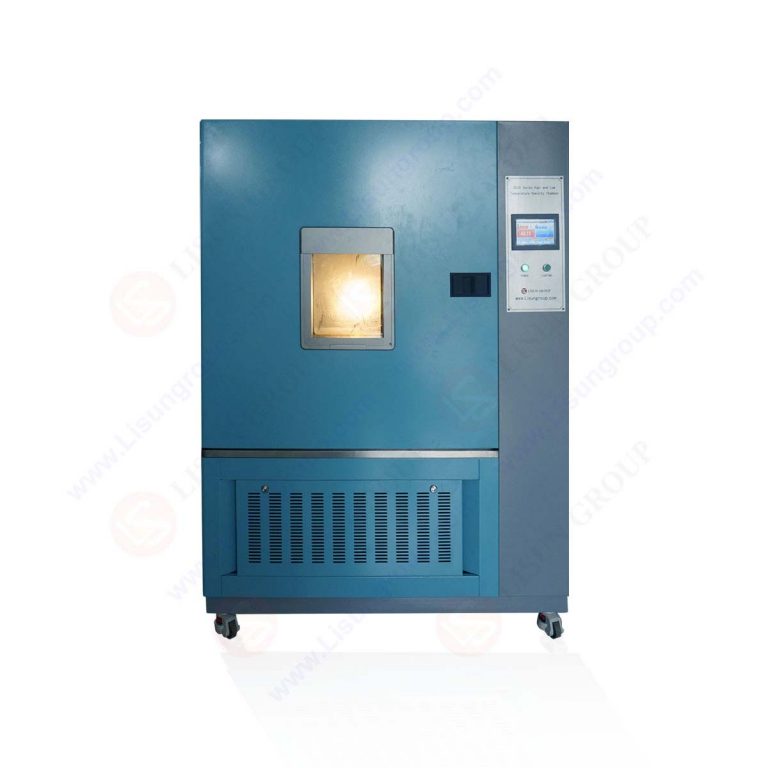
IEC 60068-2-78, “Tests – Test Cab: Damp heat, steady state,” establishes a benchmark for environmental test chamber performance. Compliance demands exceptional stability; for example, a chamber set to 85% relative humidity (RH) at 85°C must maintain a tolerance of ±2% RH for the duration of the test, which can extend for thousands of hours. This level of control prevents unintended stress relaxation or intensification, which could invalidate comparative results between product batches or testing laboratories. The standard specifies the need for chamber air to be continuously circulated to ensure uniform conditions at all sample locations, a parameter directly critical when testing multiple LED arrays or driver boards simultaneously.
2.2 The Challenge of Transient Response and Spatial Uniformity
True compliance extends beyond steady-state performance to encompass the chamber’s transient response during door openings for sample inspection or during programmed cyclic tests. Effective environmental test chamber humidity fluctuation control for IEC 60068 compliance requires a control system that can rapidly recover setpoints with minimal overshoot. Furthermore, spatial uniformity—the variation in temperature and humidity at different points within the working volume—must be rigorously characterized and minimized. A gradient of even ±3°C or ±5% RH can mean that some test samples are subjected to a significantly different stress profile than others, leading to inconsistent failure rates and unreliable data for statistical analysis.
3.1 LISUN LEDLM Series: Dual-System Configuration for Standard Compliance
LISUN’s approach addresses the need for parallel yet integrated testing streams. The LEDLM-80PL system is engineered explicitly for IES LM-80 (LED package) and TM-21 compliance, while the LEDLM-84PL variant is tailored for IES LM-84 (luminaire) and TM-28 compliance. These systems are designed to interface with external environmental chambers. A single LEDLM-80PL or LEDLM-84PL control unit can support connections to up to 3 independent temperature chambers, allowing simultaneous testing at the standard’s required multiple temperature points (e.g., 55°C, 85°C, and a user-defined third temperature). This architecture separates the optical measurement system from the environmental stressor, allowing each to be optimized for its specific function.
3.2 Hardware Integration and Signal Synchronization
The physical integration involves mounting the LED or luminaire samples inside the IEC 60068-compliant humidity/temperature chamber. Optical fibers or direct wiring then route the light output to the LISUN system’s high-precision integrating sphere and spectrometer, which are maintained in a stable, benign environment. This ensures that the sensitive optical measurement equipment is not degraded by the harsh test conditions. The system software provides synchronized logging, correlating each photometric measurement (luminous flux, chromaticity, CCT) with a timestamp and the corresponding environmental chamber data log entry for temperature and humidity. This creates an immutable, auditable data chain essential for compliance reporting.
4.1 Establishing Baseline Measurements and Chamber Characterization
Prior to initiating a long-term environmental test chamber humidity fluctuation control for IEC 60068 compliance test, a rigorous calibration and characterization phase is mandatory. This involves performing initial photometric characterization of all LED samples per IES LM-79-19 (for electrical and photometric measurements of solid-state lighting products) to establish a time-zero baseline. Concurrently, the environmental chamber must be mapped for spatial uniformity per its own calibration procedures, often referencing standards like CIE 70 for sphere photometry of directional lamps or CIE 127 for LED measurement, which emphasize controlled environmental conditions for baseline accuracy. The LISUN software’s Arrhenius Model-based platform is then configured with the target test parameters, including the 6000-hour standard test duration and the specific L70/L50 lumen maintenance metrics to be monitored.
4.2 Executing Dual Testing Modes: Continuous Aging and Interval Check
The LISUN systems offer two primary operational modes crucial for managing long-duration tests. The Continuous Aging Mode automates uninterrupted measurement at user-defined intervals (e.g., every 24 hours), providing a high-resolution depreciation curve. The Interval Check Mode is designed for efficiency, allowing the system to power samples and take measurements only at specified times, reducing energy use and thermal load on the samples when data density requirements are lower. Throughout either mode, the external chamber maintains the IEC 60068 humidity profile. The system’s software continuously analyzes incoming data, applying TM-21 or TM-28 projection algorithms in near-real-time to provide early insights into potential failure trends or to validate lifetime projections.
5.1 The Role of the Arrhenius Model in Extrapolation
The core of lifetime prediction lies in the Arrhenius Model, which describes the temperature-dependent rate of chemical degradation processes, such as phosphor thermal quenching and epoxy yellowing. The LISUN software embeds this model to process the lumen maintenance data collected at multiple temperatures. By plotting the logarithmic rate of lumen depreciation against the inverse of absolute temperature, the software calculates an activation energy (Ea) specific to the LED product. This model is the engine behind the TM-21 (for LM-80 data) and TM-28 (for LM-84 data) extrapolation procedures, which provide statistically sound methods for projecting L70 (70% of initial lumen output) and L50 lifetimes from the 6000-10,000 hours of collected test data.
5.2 Correlating Humidity Test Data with Dry Heat Projections
While humidity test data does not directly feed into the Arrhenius extrapolation for lumen maintenance (which is temperature-centric), it is critically analyzed in parallel. The table below illustrates a comparative framework for integrating data from different test types, providing a complete reliability profile.
Table 1: Integrated LED Reliability Testing Framework
| Test Standard | Primary Stress Factor | Measurement Focus | Typical Duration | Outcome / Correlation |
| :— | :— | :— | :— | :— |
| IES LM-80 / LM-84 | Dry Heat (e.g., 55°C, 85°C) | Luminous Flux, Chromaticity | 6000-10,000 hrs | Generates data for TM-21/TM-28 L70/L50 lifetime projection. |
| IEC 60068-2-78 | Damp Heat (e.g., 85°C/85% RH) | Electrical Insulation, Corrosion, Delamination | 500-1000+ hrs | Validates robustness against moisture; failures here may inform derating of dry-heat projections. |
| IEC 60068-2-30 | Cyclic Damp Heat | Thermal-Mechanical Stress from Expansion/Contraction | Multiple cycles | Assesses resistance to solder joint fatigue and material cracking. |
6.1 Precision Sensing and Closed-Loop Feedback Systems
Modern chambers designed for environmental test chamber humidity fluctuation control for IEC 60068 compliance employ advanced, calibrated hygrometers with direct digital feedback to the main controller. These systems often use chilled-mirror dew point sensors or high-accuracy capacitive polymer sensors for the highest fidelity. The control algorithm uses Proportional-Integral-Derivative (PID) logic, constantly adjusting steam injection, dry air purges, and cooling coil activity to maintain the setpoint. Advanced systems feature multi-zone sensing, where sensors at different locations within the workspace provide feedback to correct for gradients, dynamically adjusting airflow or local conditioning to enhance spatial uniformity beyond the basic requirements of the standard.
6.2 Mitigating Disturbances and Ensuring Long-Term Stability
Long-term tests are vulnerable to disturbances such as voltage sags, water supply pressure changes, or ambient lab temperature shifts. Compliant chambers incorporate buffer tanks for water, uninterruptible power supplies (UPS) for critical controls, and robust insulation. Furthermore, the control software includes adaptive tuning features that can compensate for sensor drift over time or changes in chamber load as samples degrade or fail. The integration capability with systems like the LISUN LEDLM allows for automated pause/resume protocols; if the chamber deviates outside pre-set tolerances, the optical measurement system can be instructed to halt testing and flag the event, preserving the integrity of the dataset and preventing the collection of invalid data points.
7.1 Developing a Comprehensive Test Plan
For a testing laboratory or R&D department, the first step is developing a test plan that maps product requirements to specific standards. A plan for an outdoor LED luminaire might include: 1) IES LM-84 testing at 55°C, 75°C, and 95°C using an LEDLM-84PL system connected to three dry heat chambers for lumen maintenance projection; and 2) Separate IEC 60068-2-78 testing at 85°C/85% RH for 1000 hours on a subset of samples, monitoring for catastrophic electrical failure or significant optical degradation not predicted by the dry-heat model. This two-pronged approach, supported by CIE 084 (measurement of LED intensity) for angular distribution checks at intervals, provides a complete picture of product reliability.
7.2 Leveraging Customizable Hardware for Diverse Product Forms
The value of a configurable system like LISUN’s is evident when testing non-standard products. The support for customizable jigs and fixtures allows the optical aging system to adapt to LED modules, automotive headlamp assemblies, or horticultural lighting bars. Similarly, the environmental chamber must be selected with an appropriate workspace volume and port configurations for electrical feedthroughs and optical fiber passages. The ability to connect one LISUN controller to multiple chambers (dry heat for LM-84 and damp heat for IEC 60068) streamlines workflow and maximizes capital equipment utilization, allowing a lab to run concurrent, standardized tests on different product lines or for different clients.
Achieving rigorous environmental test chamber humidity fluctuation control for IEC 60068 compliance is a non-negotiable requirement for generating defensible data on LED and electronic component reliability. This control, characterized by exceptional stability, uniformity, and recoverability, creates the consistent stress conditions necessary to accelerate failure mechanisms in a meaningful way. When this capability is seamlessly integrated with dedicated optical aging instrumentation, such as the LISUN LEDLM series configured for IES LM-80/LM-84 and TM-21/TM-28 compliance, organizations unlock a powerful validation workflow. The synergy allows for the parallel generation of dry-heat data for lumen maintenance projection and damp-heat data for environmental robustness qualification. This holistic approach, grounded in standardized methodologies and precise numerical data on L70/L50 metrics over 6000-hour tests, empowers engineers to make confident design decisions, validate lifetime claims, and ultimately deliver products that meet the stringent durability expectations of global markets.
Q1: Why is controlling humidity fluctuation so critical, beyond just maintaining an average setpoint, for IEC 60068 compliance in LED testing?
A: Precise fluctuation control is critical because many moisture-induced failure mechanisms are rate-dependent. A rapid humidity cycle can cause more severe stress than a steady state due to differential expansion and condensation kinetics. IEC 60068-2-78’s tight tolerance (±2% RH) ensures the applied stress is reproducible. For LEDs, this controls the rate of moisture diffusion into the package, affecting corrosion and delamination processes. Uncontrolled fluctuations introduce random variables, making it impossible to correlate failure times between tests or labs, thereby invalidating the accelerated testing principle. Stable conditions ensure the acceleration factor is known and consistent, which is essential for translating short-term test results into accurate long-field-life predictions.
Q2: How does the LISUN system’s support for up to 3 connected temperature chambers directly benefit compliance with IES LM-80 and LM-84 standards?
A: IES LM-80 and LM-84 explicitly require testing at a minimum of three case temperatures (e.g., 55°C, 85°C, and a third). Supporting three connected chambers allows a single LISUN LEDLM-80PL or LEDLM-84PL controller to simultaneously manage the optical measurement of samples residing in three independently controlled environmental zones. This architecture guarantees that all photometric data across all temperatures is collected by the same calibrated instrument, eliminating inter-instrument variation. It streamlines the test setup, reduces manual handling, and ensures perfect synchronization of data logging, which is a fundamental requirement for applying the Arrhenius model and executing the TM-21/TM-28 extrapolation across the complete, multi-temperature dataset.
Q3: Can data from IEC 60068 damp heat tests be used directly in the TM-21 or TM-28 lumen maintenance projection models?
A: No, data from IEC 60068 damp heat tests should not be used directly in the TM-21 or TM-28 projection models. These IES projection standards are specifically derived from and validated for data obtained under controlled dry heat conditions as specified in LM-80 and LM-84. The Arrhenius model at their core models temperature-activated degradation processes. Introducing humidity as a co-variable creates a different, more complex failure chemistry that the standard Arrhenius extrapolation does not account for. Damp heat data is used for a separate, critical purpose: to qualify product robustness against moisture. If a product fails prematurely in damp heat, it may necessitate a derating or redesign, but the formal L70/L50 lifetime claim for lumen output must be based on the dry-heat test data stream.