




Abstract
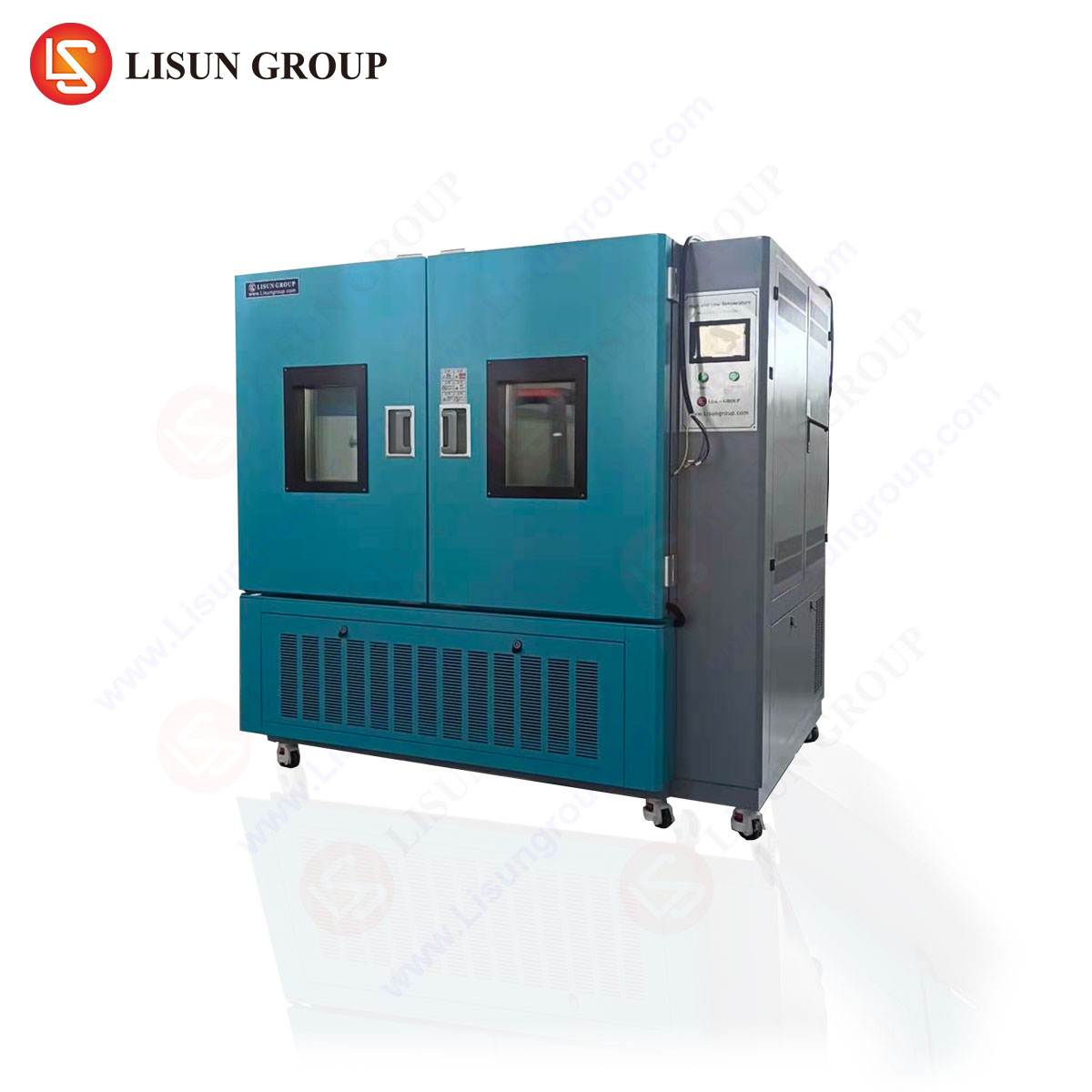
A reliable environmental test chamber is the cornerstone of valid accelerated aging tests for LEDs, where precise control of temperature and humidity is mandated by standards like IES LM-80 and LM-84. When a chamber fails to humidify, it jeopardizes multi-thousand-hour test integrity, leading to costly downtime and invalid data. This article provides a comprehensive technical guide on troubleshooting & solutions for an environmental test chamber not humidifying, framed by the expertise of an LED testing engineer. We integrate this critical maintenance knowledge with the operational context of LISUN‘s LED Optical Aging Test Instruments (LEDLM-80PL/84PL), emphasizing how chamber reliability directly impacts the accuracy of lumen maintenance projections and compliance with IES TM-21 and TM-28 reporting standards.
1.1 Humidity as an Accelerated Stress Factor
In LED reliability testing, humidity is not merely an environmental variable but a controlled stress factor that accelerates failure mechanisms related to moisture ingress and corrosion. Standards such as IES LM-84-21, which governs the testing of LED light engines and luminaires, explicitly require temperature and humidity control to simulate real-world operating conditions. The Arrhenius Model, fundamental to lifetime extrapolation in IES TM-28-21, incorporates humidity’s effect on chemical reaction rates within the LED package. A chamber’s inability to maintain specified humidity—for instance, the 85°C/85%RH condition common in accelerated tests—invalidates the test’s foundational assumptions, rendering subsequent L70/L50 lifetime projections scientifically unsound.
1.2 Integration with LISUN LED Aging Systems
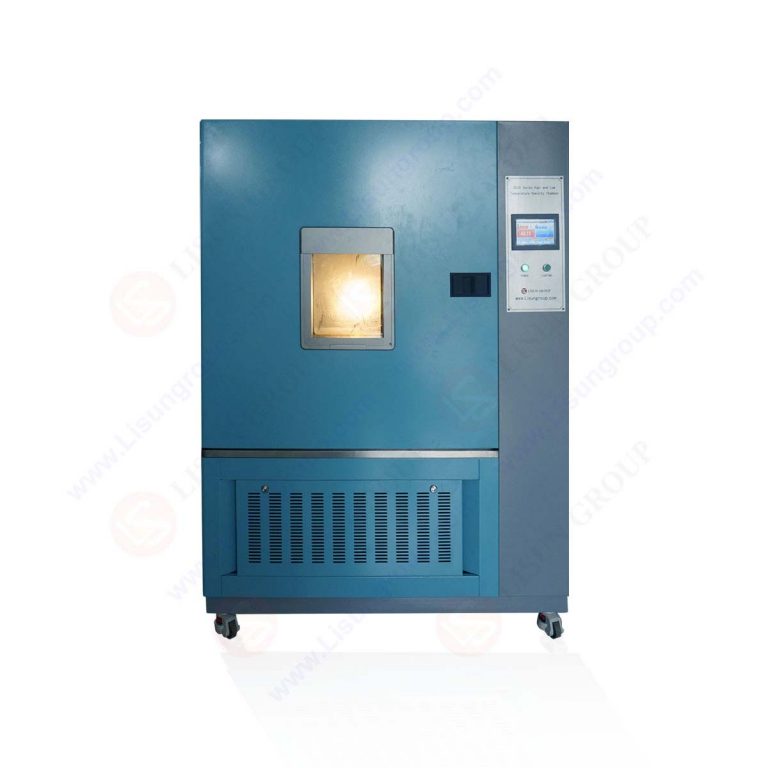
LISUN’s LED Optical Aging Test Instruments, including the LEDLM-80PL (for LM-80/TM-21) and LEDLM-84PL (for LM-84/TM-28), are designed to interface with external environmental chambers. These systems can support up to 3 connected temperature chambers simultaneously, automating optical measurements at defined intervals over 6000-hour test durations. The chamber’s humidity function is therefore a critical subsystem of the larger test ecosystem. The proprietary software’s Arrhenius-based algorithms for lifetime extrapolation depend entirely on the accuracy and stability of the environmental data logged from these chambers. A humidification failure creates a discontinuity in this data chain, compromising the entire validation process.
2.1 Initial Diagnostics and Safety Protocols
Before intrusive investigation, perform foundational checks. First, verify the test profile: confirm the setpoint for relative humidity (RH) is correctly programmed and above the ambient dew point. Inspect the chamber’s water supply: ensure the reservoir is filled with deionized (DI) water as specified to prevent mineral scaling, and check that supply valves are open. Visually inspect for obvious leaks in tubing leading to the humidification system. Always adhere to lock-out/tag-out (LOTO) procedures before accessing electrical panels, and allow the chamber to cool and de-energize fully to ensure technician safety.
2.2 Sensor and Control Loop Verification
A primary failure point is the humidity sensor (typically a capacitive polymer or chilled-mirror type). Sensor drift or contamination can cause erroneous readings, leading the controller to believe the target RH has been achieved. Verify sensor accuracy using a calibrated, NIST-traceable handheld hygrometer placed inside the chamber. Next, examine the control loop. Access the chamber’s controller to review the PID (Proportional-Integral-Derivative) settings for the humidity function. An improperly tuned loop can cause severe oscillation or an inability to reach setpoint. Compare the controller’s RH reading with your calibrated instrument to isolate a potential sensor fault.
3.1 Humidifier Assembly and Heating Elements
Most chambers use a steam-generator-type humidifier. A common failure is the burnout of the immersion heating element. Use a multimeter to check the element for continuity; a reading of infinite resistance indicates an open circuit and a need for replacement. Simultaneously, inspect the water level sensor or float switch in the humidifier boiler. A stuck or failed sensor will not signal the need for more water or will incorrectly shut off the heater to prevent dry-fire damage, halting steam production.
3.2 Water Delivery and Steam Distribution
If the humidifier produces steam but chamber humidity does not rise, the issue lies in delivery. Check the solenoid valve that controls water feed to the boiler; a failed coil or clogged valve will starve the system. Subsequently, inspect the steam injection line and its nozzle or diffuser inside the chamber workspace. This port can become clogged with mineral deposits from non-DI water, physically blocking steam entry. The steam line may also have a condensate trap that is blocked, preventing flow.
4.1 Impact on LM-80 and LM-84 Test Validity
IES LM-80-20 mandates testing LED packages, arrays, and modules at up to three temperature set points, with humidity often controlled as a secondary variable. A humidification failure at a critical test node, such as the 85°C/85%RH condition, invalidates that data stream for products where moisture sensitivity is a key reliability metric. For IES LM-84-21 testing of complete luminaires, which integrates thermal, electrical, and optical systems, humidity control is even more critical. The standard’s prescribed test conditions directly inform the TM-28 projection models. Data from a chamber with uncontrolled humidity cannot be used for compliant lifetime claims.
4.2 Compromising TM-21 and TM-28 Extrapolation Accuracy
The mathematical rigor of IES TM-21-19 and TM-28-21 relies on consistent, accurate environmental data. These standards use the Arrhenius equation to extrapolate long-term lumen maintenance from collected data (e.g., to L70, the time to 70% of initial light output). An unhumidified period during a damp-heat test creates an anomalous data point that skews the reaction rate calculation. This introduces significant error into the projected lifetime, potentially leading to non-conservative estimates that over-predict product life, posing a major risk to product reliability and brand reputation.
5.1 Scheduled Preventive Maintenance (PM)
A robust PM schedule is the most effective solution to prevent “environmental test chamber not humidifying” events. Key tasks include:
- Weekly: Check and refill the DI water reservoir. Inspect for leaks.
- Monthly: Clean the humidifier boiler and steam nozzle with a descaling agent approved by the chamber manufacturer. Verify float switch operation.
- Quarterly: Perform a functional test of the solenoid valve and inspect all tubing for wear or kinking.
- Annually: Replace the humidity sensor as per manufacturer guidance or calibration findings. Conduct a full system calibration.
5.2 Metrological Calibration and Traceability
Annual calibration by an accredited laboratory is non-negotiable. This should include the humidity sensor and controller across the entire operating range (e.g., 20% to 95% RH). The calibration report must provide evidence of NIST traceability. For labs accredited to ISO/IEC 17025, this documented calibration is a direct requirement for maintaining the validity of their test data. Integrating this calibration data into the LISUN test software ensures all environmental parameters feeding the Arrhenius model are traceably accurate.
6.1 Utilizing System Alerts and Data Logging
The LISUN LEDLM series software provides comprehensive alarm and data-logging functions. Engineers can set high/low limits for chamber humidity. A deviation triggering an “environmental test chamber not humidifying” alarm can pause the test sequence, preventing the collection of invalid data. The system’s detailed logs, which timestamp every optical measurement with corresponding environmental data, are invaluable for forensic analysis. They can pinpoint the exact hour a humidity drift began, correlating it with potential chamber maintenance events or external facility issues.
6.2 Configuration for Redundancy and Data Integrity
A key advantage of the LISUN platform supporting 3 connected temperature chambers is the potential for test redundancy. Critical long-term tests can be distributed, or identical samples can be run in separate chambers. If one chamber experiences a humidification fault, the parallel test in a functioning chamber provides data continuity, mitigating risk. Furthermore, the system’s ability to customize hardware configurations means it can be specified with additional, independent chamber monitoring sensors as a cross-verification layer against the chamber’s internal controls.
7.1 Standard Compliance Mode vs. Custom Research Mode
LISUN systems offer dual testing modes, each imposing different demands on chamber performance. The Standard Compliance Mode automates tests strictly per IES LM-80 or LM-84, requiring the chamber to execute predefined, stable humidity profiles. Any deviation is a compliance failure. The Custom Research Mode allows engineers to create complex stress profiles, such as thermal cycling with humidity spikes. This mode can be more taxing on the chamber’s humidification system, requiring rapid steam injection and precise control, highlighting the need for a robust and well-maintained chamber.
Table 1: Chamber Requirements for LISUN LED Aging Test Modes
| Test Mode | Primary Standard | Typical Humidity Profile | Critical Chamber Requirement | Impact of Humidification Failure |
| :— | :— | :— | :— | :— |
| Standard Compliance | IES LM-80-20 | Constant (e.g., 85% RH) | Extreme long-term stability (±3% RH) | Invalidates entire test batch for standard reporting. |
| Standard Compliance | IES LM-84-21 | Constant or Cyclic per standard | Precise setpoint control & reproducibility | Compromises TM-28 projections for luminaires. |
| Custom Research | N/A (User-defined) | Arbitrary (e.g., cycles, ramps) | Fast response time & high capacity | Renders aggressive stress test data uninterpretable. |
7.2 Correlation with Photometric Standards
While this article focuses on environmental chamber issues, the end goal is accurate photometric data. The light output measurements threatened by chamber failures are conducted per IES LM-79-19 and CIE 127:2007 for total luminous flux, and CIE 70:1987 for spatial distribution. CIE 084:1989 defines the measurement of luminous flux, the very metric (lumen depreciation) being tracked. A stable chamber ensures that changes in the measured flux, captured by an integrating sphere or goniophotometer, are due solely to LED aging and not environmental artifact, upholding the integrity of these foundational photometric standards.
Troubleshooting an environmental test chamber not humidifying is a critical technical skill that preserves the integrity of long-term LED reliability testing. As detailed, the failure extends beyond simple equipment malfunction, directly undermining compliance with IES LM-80, LM-84, TM-21, and TM-28 by introducing uncontrolled variables into the Arrhenius-based lifetime projection models. A systematic approach—encompassing sensor verification, component inspection, and control loop analysis—is essential for efficient resolution. For users of integrated systems like LISUN’s LEDLM-80PL and LEDLM-84PL, proactive chamber maintenance and calibration are non-negotiable components of the test protocol, ensuring the 6000-hour of collected data for L70/L50 metrics is valid and actionable. Ultimately, the reliability of the environmental chamber is the bedrock upon which trustworthy accelerated aging data and credible LED product lifetime claims are built.
Q1: How quickly can a humidification failure invalidate an LM-80 test, and can the data be salvaged?
A: The invalidation is immediate from the point of deviation. IES LM-80-20 requires continuous, controlled conditions. Data collected while humidity is outside specified tolerances (typically ±3-5% RH) cannot be used for compliant reporting. Salvaging is generally not possible for the standard report, as it introduces an unknown variable. The test should be paused, the chamber repaired, and the test restarted from time zero or a previous valid checkpoint. Using LISUN software’s detailed logs helps identify the exact failure point for forensic analysis and restart planning.
Q2: Why is deionized (DI) water specified for the chamber humidifier, and what happens if tap water is used?
A: DI water is specified to prevent the rapid accumulation of mineral scale (limescale) inside the humidifier boiler, on the heating element, and in the steam injection nozzle. Tap water contains dissolved calcium and magnesium salts that precipitate out when heated, forming an insulating layer. This reduces heating efficiency, causes overheating and burnout of elements, and eventually clogs the system entirely, leading directly to an “environmental test chamber not humidifying” fault. It also contaminates the chamber interior and can affect test samples.
Q3: In a LISUN system controlling multiple chambers, how does a failure in one chamber affect tests in the others?
A: The LISUN LEDLM system architecture treats each of the up to 3 connected temperature chambers as an independent station. A humidification failure in one chamber will trigger alarms and can be configured to pause only the test sequence for that specific chamber. Tests running in the other, properly functioning chambers continue uninterrupted. This modularity provides significant data integrity protection and highlights the value of the system’s multi-chamber support for risk mitigation during critical, long-duration 6000-hour reliability tests.