




Abstract
In the rigorous world of LED reliability testing, precise control of the environmental test chamber temperature fluctuation is not merely a preference but a fundamental requirement for generating valid, standards-compliant data. This guide delves into the critical role of temperature stability as mandated by IEC 60068 and related standards, providing a technical framework for engineers to ensure their accelerated aging tests yield accurate lumen maintenance projections. We will explore how uncontrolled thermal variance directly compromises the integrity of the Arrhenius model, leading to erroneous TM-21 or TM-28 extrapolations. The article further integrates practical insights with LISUN‘s specialized LED Optical Aging Test Instrument systems, detailing how their configurable hardware and intelligent software are engineered to master temperature control, thereby ensuring compliance and delivering reliable L70/L50 lifetime metrics for LED manufacturers and testing laboratories.
1.1 Understanding the Arrhenius Model’s Sensitivity to Thermal Variance
The cornerstone of accelerated LED lifetime testing is the Arrhenius Model, which describes the exponential relationship between the rate of a chemical reaction (like phosphor degradation or LED lumen depreciation) and absolute temperature. The model’s fundamental equation, k = A * exp(-Ea/RT), is highly sensitive to even minor temperature deviations. A temperature fluctuation in the environmental test chamber introduces noise into the measured degradation rate (k), directly propagating error into the calculated activation energy (Ea). This compromises the entire extrapolation process, making accurate prediction of long-term lumen maintenance (e.g., L70) impossible. Precise, stable temperature control is therefore the non-negotiable foundation for applying this model, as mandated by standards like IES LM-80 and LM-84.
1.2 Consequences of Non-Compliance: From Data Scatter to Projection Failure
Failure to control environmental test chamber temperature fluctuation within the tight tolerances specified by IEC 60068 leads to tangible, costly testing failures. Primary consequences include increased data scatter in lumen depreciation curves, obscuring the true degradation trend. This scatter invalidates the statistical confidence of the TM-21 or TM-28 projection. Furthermore, systematic temperature drift—a slow change over the 6000+ hour test duration—can cause a miscalculation of the acceleration factor. The result is either an overly optimistic or pessimistic lifetime forecast, risking product recalls for premature failure or unnecessary over-engineering that increases manufacturing costs. Compliance is not about bureaucracy; it is about data integrity.
2.1 IEC 60068-2-1 & 2-2: Defining Environmental Test Chamber Temperature Fluctuation Tolerance
IEC 60068 is the overarching international standard for environmental testing procedures. For steady-state temperature testing (akin to LED aging tests), parts 2-1 (Cold) and 2-2 (Dry Heat) are paramount. These standards rigorously define test chamber performance criteria, including temperature tolerance and gradient. For high-accuracy applications like LED testing, the “test specimen” area—where the LED arrays are mounted—must maintain a temperature fluctuation typically within ±2.0°C or tighter of the set point, as specified in the test plan. This stringent requirement ensures the thermal stress applied is uniform and known, a prerequisite for any subsequent analysis per IES or CIE standards.
2.2 Integration with IES LM-80, LM-84, TM-21, and TM-28
While IEC 60068 governs the chamber’s performance, LED-specific standards dictate the test methodology and data analysis. IES LM-80 (for LED packages/modules) and LM-84 (for LED light engines and luminaires) prescribe the test conditions, including the mandatory temperature points (e.g., 55°C, 85°C, a third case temperature) and minimum 6000-hour duration. The data collected under these stable conditions is then analyzed using IES TM-21 (for LM-80 data) or TM-28 (for LM-84 data) to extrapolate lumen maintenance life. The chain of validity is clear: IEC 60068-compliant temperature control enables LM-80/LM-84 compliant data collection, which in turn enables a TM-21/TM-28 compliant lifetime projection.
3.1 Dual-System Design: LEDLM-80PL and LEDLM-84PL for Targeted Compliance
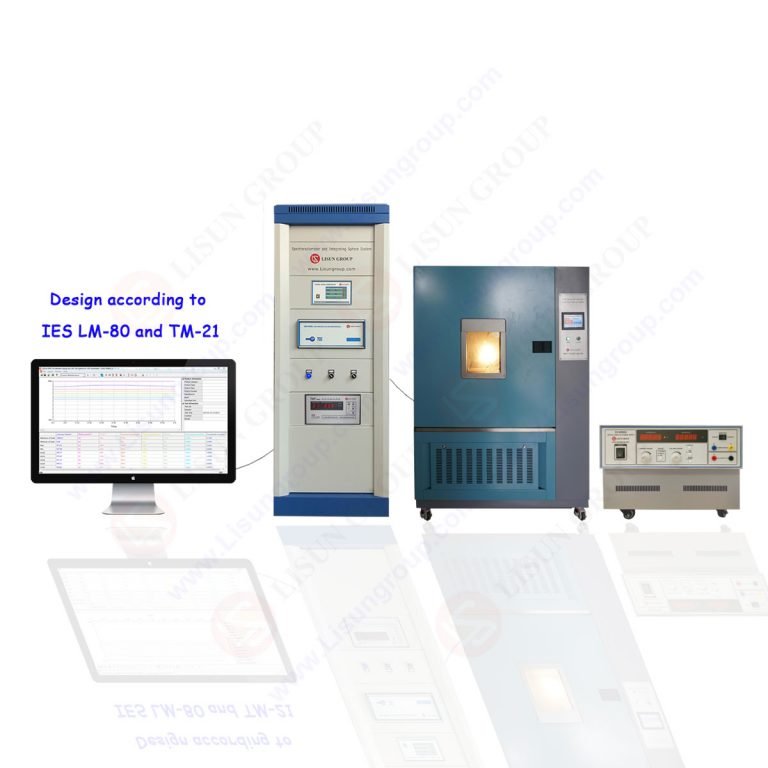
LISUN’s approach to guaranteed compliance is embodied in its two dedicated systems. The LEDLM-80PL is engineered specifically for IES LM-80 and TM-21 compliance, optimized for testing LED packages and arrays. The LEDLM-84PL is tailored for the more complex requirements of IES LM-84 and TM-28, designed to handle integrated light engines and luminaires. Both systems are built from the ground up to interface with and control external environmental chambers, ensuring the chamber is an integrated component of the test system, not an independent variable. This specialization ensures all hardware and software parameters are aligned with the respective standard’s demands for thermal management.
3.2 Configurable Chamber Integration and Multi-Zone Monitoring
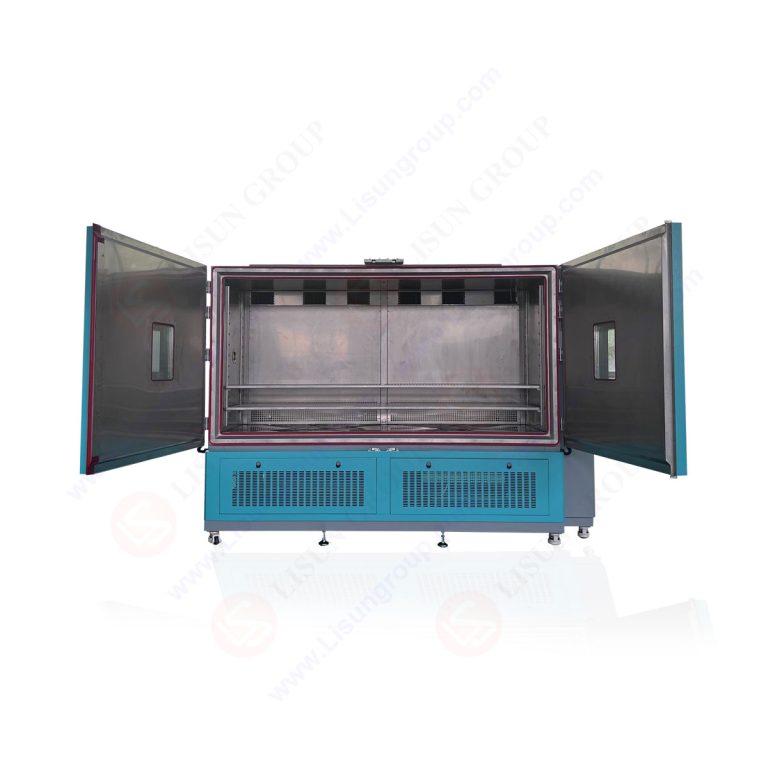
A key feature for managing environmental test chamber temperature fluctuation is LISUN’s support for connecting up to 3 independent temperature chambers to a single control system. This allows for parallel testing at different temperature set points (e.g., 55°C, 85°C, 105°C) simultaneously, dramatically improving testing throughput. Each chamber’s stability is continuously monitored. The system employs high-precision temperature sensors placed at critical points within the chamber (near the DUT) to validate spatial gradient and temporal fluctuation against IEC 60068 tolerances. This multi-zone monitoring provides empirical proof of compliance for every test run.
4.1 Calibration and Chamber Profiling Pre-Test
Prior to initiating any long-term test, a critical step is chamber profiling and system calibration. This involves using a calibrated temperature logger to map the thermal environment inside the empty and loaded chamber at the intended set point. This profile identifies hot or cold spots, ensuring the Device Under Test (DUT) is placed within the chamber’s “working volume” where temperature fluctuation is minimal. LISUN’s software can integrate this profile data, allowing for positional awareness. Furthermore, the optical calibration of the integrating sphere (referencing standards like CIE 127 and IES LM-79-19 for luminous flux measurement) is performed under stable thermal conditions to decouple optical drift from thermal effects.
4.2 Dual Testing Modes: Continuous Aging vs. Periodic Measurement
LISUN systems offer two operational modes that interact with temperature control. In Continuous Aging Mode, the LEDs are driven and the chamber maintains a constant temperature for extended periods, with optical measurements taken at standard intervals (e.g., every 1000 hours). This mode stresses the chamber’s long-term stability. In Periodic Measurement Mode, power and temperature are typically cycled, requiring the chamber to rapidly re-stabilize to the target temperature before each precise optical measurement is taken. This mode tests the chamber’s recovery speed and stability under cycling conditions, a common real-world requirement. Both modes demand IEC 60068-level control for valid data.
Table: LISUN LED Optical Aging Test Instrument Key Specifications & Compliance
| Feature / Specification | LEDLM-80PL (LM-80/TM-21 Focus) | LEDLM-84PL (LM-84/TM-28 Focus) | Compliance Relevance |
| :— | :— | :— | :— |
| Core Test Standard | IES LM-80, IES TM-21 | IES LM-84, IES TM-28 | Defines test method & analysis |
| Min. Test Duration | 6000 hours | 6000 hours | LM-80/LM-84 minimum requirement |
| Key Lifetime Metrics | L70, L50 Projection | L70, L50, Lx(y) Projection | TM-21/TM-28 output |
| Temp. Chamber Support | Up to 3 chambers | Up to 3 chambers | Enables multi-condition parallel testing |
| Optical Std. Reference | CIE 127, IES LM-79-19 | CIE 127, IES LM-79-19 | Ensures photometric accuracy |
| Control Foundation | IEC 60068 Tolerances | IEC 60068 Tolerances | Ensures environmental parameter validity |
5.1 Automated Data Logging and Fluctuation Alerting
The software suite is the brain that safeguards data quality. It continuously logs not only luminous flux and chromaticity data but also the temperature from each sensor in every connected chamber. This creates a time-synchronized data set. Sophisticated algorithms monitor the logged temperature for deviations exceeding pre-set thresholds (aligned with IEC 60068). If an anomalous environmental test chamber temperature fluctuation is detected, the system can trigger alerts (email, on-screen) and flag the corresponding optical data points for review. This proactive monitoring prevents the waste of thousands of hours of testing due to an undetected chamber fault.
5.2 Direct TM-21/TM-28 Projection with Arrhenius Foundation
Upon completion of the 6000-hour (or longer) data collection phase, the software does not operate on a black-box principle. It utilizes the Arrhenius-based algorithms prescribed by TM-21 or TM-28 to process the stable, compliant temperature data. Engineers can generate the six-parameter lumen maintenance curve, calculate the depreciation rate at each temperature, and project L70/L50 lifetimes with associated confidence intervals. Because the input thermal data is validated, the output projections carry the weight of standard compliance, ready for regulatory submissions or product datasheets.
6.1 Stress Testing Beyond Standard Conditions
While compliance with baseline standards is essential, advanced R&D often requires stress testing. Engineers can configure LISUN systems to run chambers at higher temperatures (e.g., 105°C, 120°C) to explore failure modes and derive activation energies for specific degradation mechanisms. In these extreme regimes, controlling temperature fluctuation becomes even more critical, as the Arrhenius model’s exponential sensitivity increases with temperature. The system’s robust monitoring ensures that even under accelerated stress, the data remains scientifically sound and useful for comparative analysis.
6.2 Integrating Spectral and Colorimetric Measurements (CIE 084/70)
Beyond lumen maintenance, LED color shift (per CIE 084) and spatial chromaticity uniformity are critical quality metrics. LISUN systems can be configured with array spectroradiometers for full spectral measurement. Stable temperature is equally vital here, as the emission spectrum of an LED, particularly the peak wavelength and color rendering properties, is also temperature-dependent. Uncontrolled thermal swings during spectral sampling would conflate measurement noise with true chromaticity drift over time. Thus, IEC 60068 compliance underpins not only flux maintenance testing (LM-80/84) but also comprehensive photobiological and colorimetric safety assessments.
7.1 Pre-Test Checklist: Chamber Validation and DUT Mounting
A standardized pre-test checklist is vital. This must include: verification of the chamber’s recent calibration certificate; an empty-chamber temperature profile run to confirm spatial uniformity meets IEC 60068; proper thermal interface between the DUT and the chamber’s thermal plate (using thermal paste or pads) to minimize thermal resistance; and secure, non-shadowing mechanical mounting of the DUT inside the integrating sphere. This checklist ensures the system starts in a state of control.
7.2 In-Test Monitoring and Post-Test Data Validation
During the test, engineers should regularly review the automated temperature logs and system alerts. A weekly check of the short-term flux and temperature trends can identify subtle drifts early. Post-test, before running TM-21/TM-28 projections, the entire temperature history should be graphed and inspected for any periods of non-compliance. Any suspect data segments must be investigated and potentially excluded from the final analysis to maintain the integrity of the lifetime claim.
Mastering environmental test chamber temperature fluctuation is the linchpin of credible LED accelerated lifetime testing. As detailed, compliance with IEC 60068 is not an isolated requirement but the essential enabler for executing IES LM-80, LM-84, and subsequent TM-21/TM-28 projections with confidence. Uncontrolled thermal variance directly injects error into the Arrhenius model, rendering expensive, long-duration tests inconclusive. LISUN’s dedicated LEDLM-80PL and LEDLM-84PL systems address this challenge holistically, integrating configurable multi-chamber control, intelligent software monitoring, and standard-specific workflows to transform the environmental chamber from a potential source of error into a pillar of data integrity. For LED manufacturers and testing laboratories aiming to generate reliable L70/L50 metrics, investing in a system engineered for thermal compliance is a fundamental step toward ensuring product reliability, meeting regulatory mandates, and building market trust based on verifiable, standards-compliant data.
Q1: What is the maximum allowable temperature fluctuation in an LM-80 test, and which standard defines this?
A: IES LM-80-20 specifies that the ambient temperature around the LED test specimen should be maintained within ±2.0°C of the specified test temperature (e.g., 55°C, 85°C). This tolerance is a functional application of the more general performance criteria for test chambers outlined in IEC 60068-2-1 and 2-2. The ±2.0°C limit encompasses both spatial gradient (variation across the DUT location) and temporal fluctuation (variation over time). LISUN systems monitor this via multiple calibrated sensors, ensuring the recorded data is valid for the mandatory 6000-hour duration and subsequent TM-21 analysis.
Q2: How does connecting multiple temperature chambers improve testing efficiency and data quality?
A: Connecting up to 3 chambers to a single LISUN controller allows for simultaneous testing at different Arrhenius model temperature points (e.g., 55°C, 85°C, and a third stress temperature like 105°C) using the same batch of LEDs and identical optical measurement conditions. This parallel testing cuts total project time by up to two-thirds compared to sequential testing. Crucially, it improves data quality by eliminating batch-to-batch variation, as all data points across temperatures come from identical samples. The centralized software ensures synchronized data logging and uniform application of temperature fluctuation monitoring across all chambers.
Q3: Can the LISUN system compensate for or correct data if a temperature excursion outside tolerance occurs?
A: The system’s primary role is prevention and alerting, not correction. It continuously logs temperature and will flag any excursion beyond user-defined thresholds (aligned with IEC 60068/LM-80 tolerances). If an excursion occurs, the corresponding optical data points are automatically tagged. The engineer must then investigate the cause. According to standard best practices, data from periods of non-compliant temperature control should generally be excluded from the final TM-21/TM-28 projection analysis. The system provides the transparent, time-synchronized data log required to make this judgment call, protecting the overall integrity of the lifetime claim.