




Environmental Test Chambers: A Foundational Technology for Product Reliability Engineering
The relentless pursuit of product reliability across industrial and consumer sectors is fundamentally an exercise in predictive failure analysis. Products destined for global markets must be engineered to withstand a vast spectrum of environmental stressors, from the frigid, arid conditions of a continental winter to the sweltering, humid climates of equatorial regions, and the rapid thermal transitions experienced during power cycling or transportation. Environmental test chambers serve as the critical laboratory apparatus that simulates these conditions in a controlled, accelerated, and repeatable manner. By subjecting components and assemblies to precisely defined environmental extremes, engineers can identify design weaknesses, validate material selections, and verify manufacturing processes long before a product reaches the end-user, thereby mitigating field failures, reducing warranty costs, and safeguarding brand reputation.
This technical discourse examines the principles, applications, and specifications of environmental test chambers, with a particular focus on thermal shock testing as a paramount methodology for evaluating product robustness. We will explore the implementation of this technology through the lens of a specific advanced instrument, the LISUN HLST-500D Thermal Shock Test Chamber, detailing its operational mechanics and its indispensable role in modern reliability engineering.
The Thermodynamic and Hygroscopic Principles of Environmental Simulation
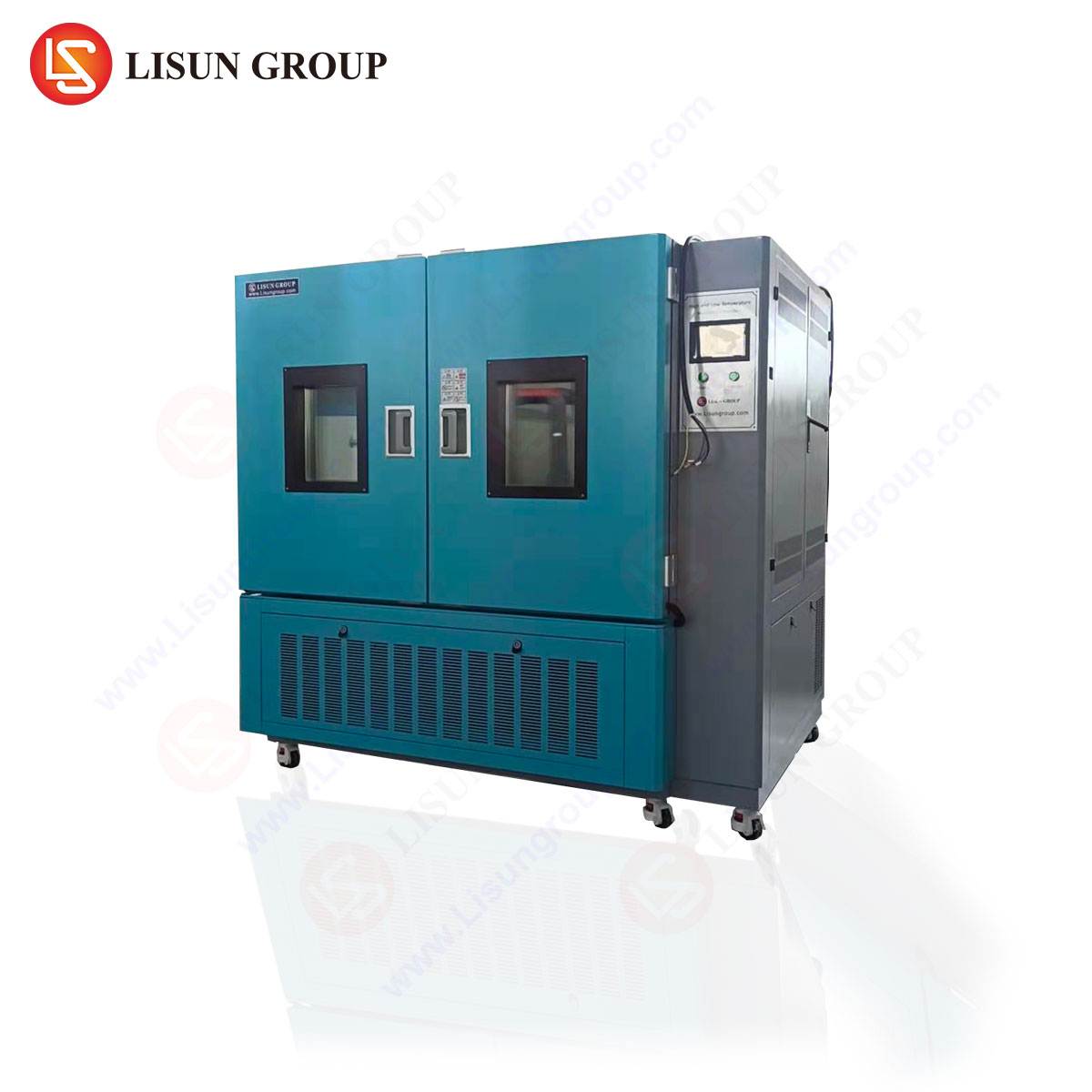
At its core, environmental testing is the applied science of recreating and intensifying natural or operational conditions within a confined volume. The two most pervasive stressors are temperature and humidity, both individually and in concert. A temperature humidity test chamber operates on principles of thermodynamic exchange and psychrometric control. Heating is typically achieved via electric resistance elements, while cooling often employs a mechanical vapor-compression refrigeration cycle, similar to that found in industrial air conditioning systems, but capable of achieving much wider temperature extremes. Humidity generation is commonly accomplished through a boiler system that injects steam into the airstream, whereas dehumidification is achieved by cooling the chamber air below its dew point, condensing out moisture, and then reheating it to the desired dry-bulb temperature.
The scientific challenge lies not merely in reaching setpoints but in maintaining precise uniformity and stability. Airflow design, utilizing strategically placed baffles and high-velocity fans, is crucial to minimize thermal gradients—often specified as ±0.5°C or better—within the working volume. Sensor technology, typically platinum resistance thermometers (PRTs) and capacitive polymer humidity sensors, provides feedback to sophisticated programmable logic controllers (PLCs) that modulate the heating, cooling, and humidification systems. This closed-loop control enables the execution of complex test profiles, such as those outlined in standards like IEC 60068-2-1 (cold), IEC 60068-2-2 (dry heat), and IEC 60068-2-30 (damp heat, cyclic).
Thermal Shock Testing: A Critical Accelerated Life Test Methodology
While steady-state temperature/humidity tests are invaluable, they often fail to replicate the most damaging real-world scenarios: rapid thermal transitions. Thermal shock testing, also known as temperature cycling or thermal cycling, specifically addresses failures induced by differential expansion and contraction of dissimilar materials, solder joint fatigue, and the formation of microcracks in encapsulants and substrates. When a product is rapidly moved from a high-temperature environment to a low-temperature one, the resulting thermal stress can exceed the yield strength of materials or the adhesion strength of bonds.
The principle is one of accelerated fatigue. A single thermal shock cycle can induce stress equivalent to many days of gradual temperature change. This makes it an exceptionally efficient tool for precipitating latent defects. The test is governed by standards such as IEC 60068-2-14 (Change of temperature) and MIL-STD-883 Method 1010.9, which define parameters including temperature extremes, dwell times at each extreme, and transition rates or durations.
Architectural Implementation: The Two-Zone Thermal Shock Chamber
The most efficient apparatus for conducting high-rate thermal shock tests is the two-zone (or three-zone) chamber. The LISUN HLST-500D exemplifies this architecture. It consists of three distinct compartments: a high-temperature zone, a low-temperature zone, and a moving basket that houses the test specimens.
The testing sequence is mechanical in nature but controlled with high precision. The specimen basket resides in the high-temperature zone for a user-defined dwell period, ensuring the test items are fully saturated at the target temperature (e.g., +150°C). Upon completion of the dwell, the basket is mechanically transferred, typically via a pneumatic or electrical hoist system, into the low-temperature zone (e.g., -65°C) within a specified transfer time, often less than 10 seconds. This rapid transition is the defining characteristic of the test. After the low-temperature dwell, the basket returns to the high-temperature zone, completing one full cycle.
This design offers significant advantages over single-chamber systems that attempt to achieve rapid transitions by ramping temperature. The two-zone system provides faster true transition rates, better stability at extremes since each chamber only controls one temperature, and higher energy efficiency.
Technical Specifications and Capabilities of the HLST-500D Chamber
The LISUN HLST-500D Thermal Shock Test Chamber is engineered for rigorous, high-throughput testing. Its specifications are tailored to meet the demanding requirements of international testing standards and industrial quality assurance protocols.
Key Specifications:
- Test Volume: 500 Liters (Internal basket dimensions customizable to fixture needs).
- Temperature Range:
- High Temperature Zone: +60°C to +200°C
- Low Temperature Zone: -10°C to -65°C (or -80°C with optional cascade refrigeration)
- Temperature Fluctuation: ≤±0.5°C.
- Temperature Uniformity: ≤±2.0°C.
- Recovery Time: ≤5 minutes (from ambient to extreme setpoints after loading).
- Transition Time: <10 seconds (mechanical transfer between zones).
- Dwell Time: Adjustable from 0 to 999 hours, 59 minutes.
- Control System: Digital touch-screen PID controller with programmable cycles, real-time graphing, and data logging. RS-232/485 interface is standard for connection to laboratory data management systems.
- Safety Features: Over-temperature protection, compressor delay protection, phase failure protection, and chamber door interlock.
The chamber’s construction utilizes high-grade stainless steel (SUS#304) for interior surfaces, ensuring corrosion resistance and cleanroom compatibility. High-density polyurethane foam insulation minimizes thermal loss and improves efficiency. The use of German-made BITZER or French-made TECUMSEH compressors in the refrigeration system underscores a focus on core component reliability.
Industry-Specific Applications and Failure Mode Precipitations
The HLST-500D finds critical application across industries where electronic or electromechanical component failure is not an option.
- Automotive Electronics: Testing engine control units (ECUs), sensors, and infotainment systems for resilience against the thermal shocks experienced from engine bay heat to cold startup or during liquid cooling.
- Aerospace and Aviation Components: Qualifying avionics, satellite components, and communication gear for the extreme thermal vacuums and rapid changes encountered during ascent/descent or orbital operations.
- Telecommunications Equipment: Validating base station electronics, fiber optic transceivers, and network switches that may experience rapid load-based heating and cooling.
- Medical Devices: Ensuring the reliability of portable diagnostic equipment, implantable device components, and surgical tools that undergo repeated sterilization (high heat) and subsequent storage or use.
- Lighting Fixtures (LEDs): Accelerating the failure of LED drivers, solder joints, and thermal interface materials to predict lumen depreciation and catastrophic failure from power cycling.
- Electrical Components & PCBAs: Precipitating cracks in ceramic capacitors, delamination of multilayer boards, and failure of solder joints (via Coffin-Manson relationship modeling) on populated circuit boards.
- Consumer Electronics & Household Appliances: Testing smartphones, wearables, and appliance control boards for durability against everyday environmental changes, such as moving from an air-conditioned building to a hot outdoor environment.
In each case, the chamber does not create failures but reveals them. A cracked BGA solder ball, a delaminated conformal coating, or a failed wire bond would eventually occur in the field; thermal shock testing brings that failure forward in time to the design or production validation phase.
Comparative Advantages in System Design and Operational Fidelity
The operational efficacy of a thermal shock chamber is measured by its fidelity to the test standard’s intent and its long-term operational stability. The HLST-500D incorporates several design features that confer competitive advantages.
First, the independent zone design ensures that the specified extreme temperatures are maintained with high stability, unaffected by the thermal mass of the transferred basket. Second, the optimized airflow and heat exchanger design in each zone lead to rapid temperature recovery after basket insertion, ensuring the specified dwell time is conducted at the correct temperature. Third, the mechanical transfer system is engineered for minimal vibration and high repeatability over hundreds of thousands of cycles, a necessity for long-duration tests.
From a data integrity perspective, the chamber’s controller provides not just setpoint programming but also detailed audit trails and curve reporting, which are essential for compliance with quality management systems like ISO/IEC 17025 for testing laboratories. The ability to simulate and accelerate years of thermal fatigue in a matter of days or weeks provides an unparalleled return on investment in terms of risk mitigation.
Integration into a Comprehensive Reliability Testing Regimen
It is crucial to position thermal shock testing within a broader reliability strategy. The HLST-500D is rarely used in isolation. Findings from thermal shock tests often inform and are informed by other tests. For example, a component that survives 1,000 thermal shock cycles might subsequently undergo vibration testing (per IEC 60068-2-64) to simulate combined environments, or highly accelerated life testing (HALT) to discover operational limits. Conversely, a product designed for high humidity resistance would first undergo damp heat testing in a chamber like the GDJS-015B before being subjected to thermal shock to assess the compounded effect of moisture ingress followed by thermal stress.
This sequential or combinatorial testing approach, guided by standards such as IEC 60721 (Classification of environmental conditions) and tailored by industry-specific protocols like AEC-Q100 for automotive ICs, builds a complete picture of product robustness. The environmental test chamber, in its various forms, remains the foundational tool for constructing this picture empirically.
Frequently Asked Questions (FAQ)
Q1: What is the critical difference between a thermal shock test and a temperature cycling test?
While the terms are sometimes used interchangeably, a strict interpretation defines “thermal shock” by a very rapid transition between extremes (often achieved by a two-zone liquid bath or a two-zone air chamber like the HLST-500D), focusing on the rate of change. “Temperature cycling” typically refers to tests performed in a single chamber with a controlled ramp rate between extremes. The former is more severe for inducing stresses from differential expansion.
Q2: How do I determine the appropriate temperature extremes and dwell times for my product?
Extremes should be based on the product’s operational and storage specifications, often with an added margin for safety. Dwell times must be sufficient for the entire test specimen to thermally saturate at the target temperature, which is a function of its mass, thermal conductivity, and packaging. Computational thermal modeling or preliminary testing with thermocouples attached to test units is used to establish the minimum effective dwell time.
Q3: Can the HLST-500D chamber be used for testing products that generate their own heat (active devices)?
The standard chamber is designed for passive thermal shock testing. Testing active, powered devices requires modification, typically the integration of a feed-through panel to supply power and monitor signals to the test specimens inside the moving basket. This is a common customization for testing functional electronic assemblies.
Q4: What maintenance is required to ensure the long-term accuracy and reliability of the chamber?
Regular maintenance includes cleaning the air filters to ensure proper airflow, checking and tightening electrical connections, inspecting door seals for integrity, and performing periodic calibration of the temperature sensors against a NIST-traceable standard. For the refrigeration system, monitoring compressor oil levels and ensuring clean, unobstructed condenser coils are essential for performance.
Q5: How is the transfer time of <10 seconds measured and verified?
The transfer time is defined as the interval from the moment the basket begins to leave the first zone until the moment it is fully sealed within the second zone. Verification is performed during installation and periodic qualification using a stopwatch or high-speed logging. This metric is vital because a prolonged transfer allows the specimens to begin stabilizing at ambient temperature, reducing the severity of the shock.