




Methodologies and Instrumentation for Accelerated Environmental Stress Screening
The relentless advancement of technology across industrial and consumer sectors necessitates a parallel evolution in reliability assurance protocols. Products are deployed in environments ranging from the controlled interiors of medical facilities to the thermally volatile under-hood compartments of automobiles and the vacuum of space. Environmental testing, a cornerstone of product validation, simulates these conditions in a controlled, accelerated manner to identify latent defects, verify design robustness, and ensure compliance with international standards. This article delineates the critical applications of environmental testing, with a focused examination on thermal shock testing as a pivotal stress screening methodology, exemplified by the operational principles and applications of the LISUN HLST-500D thermal shock test chamber.
The Imperative of Accelerated Life Testing in Product Development
Product failure in the field carries significant consequences, including financial loss, brand degradation, and, in sectors like medical devices or automotive electronics, direct risks to human safety. Traditional life testing under real-time conditions is economically and temporally prohibitive. Accelerated Life Testing (ALT) employs intensified environmental stresses to precipitate failure mechanisms that would otherwise manifest over extended periods. The core principle is the application of a known stress model—often derived from the Arrhenius equation for temperature or the Coffin-Manson relationship for thermal cycling—to extrapolate product lifetime under normal use conditions. Environmental test chambers are the physical apparatus that enable this acceleration, providing precise, repeatable control over climatic and mechanical variables.
Thermal shock testing constitutes a particularly severe form of ALT. It subjects a test specimen to rapid transitions between extreme high and low temperatures. This induces mechanical stress due to the differential coefficients of thermal expansion (CTE) among dissimilar materials within an assembly. Solder joints, bonded interfaces, encapsulated components, and plastic housings are all susceptible to cracking, delamination, or fracture under such conditions. The objective is not to simulate a realistic daily temperature change but to apply an extreme thermodynamic force to rapidly uncover workmanship flaws, material incompatibilities, and design weaknesses.
Operational Principles of Two-Zone Thermal Shock Testing
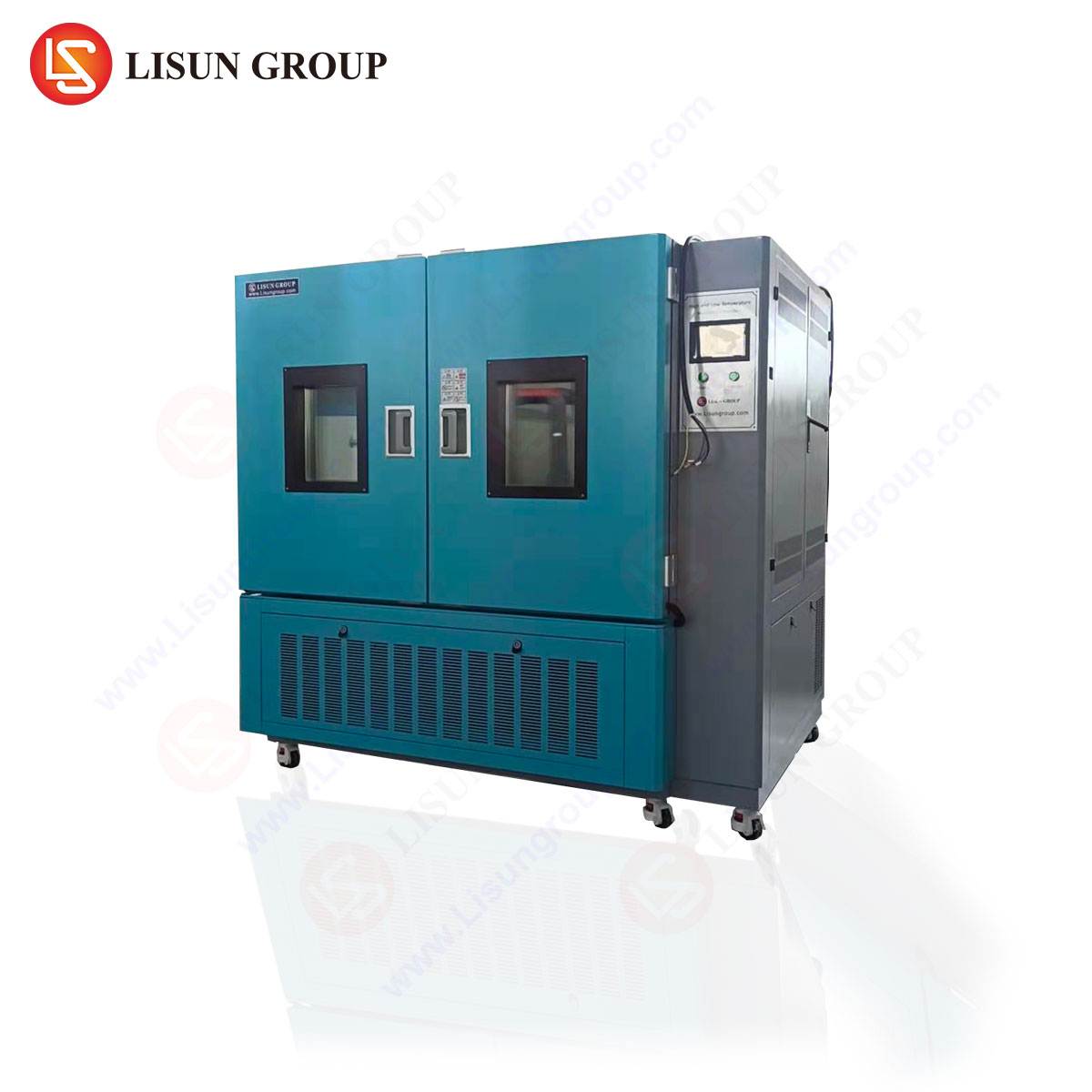
The HLST-500D thermal shock test chamber employs a widely recognized two-zone (also called two-basket) methodology to achieve rapid temperature transition rates. The system comprises three primary compartments: a high-temperature zone, a low-temperature zone, and a transition basket or elevator that holds the test specimen.
The testing cycle initiates with the basket stationed in one of the extreme zones, allowing the specimen to achieve thermal soak—a state where its internal temperature stabilizes to match the chamber air temperature. Upon completion of the soak period, the basket rapidly transfers the specimen to the opposite zone. The HLST-500D specification notes a transition time of ≤10 seconds, a critical parameter ensuring the specimen experiences the full thermal gradient before internal temperatures can equalize. The specimen then soaks in the second zone before being transferred back, completing one cycle.
The severity of the test is governed by several key parameters: the extreme temperatures (e.g., +150°C to -65°C), the dwell time at each extreme, the transition time between zones, and the total number of cycles. Standards such as MIL-STD-883 (Method 1010.9), IEC 60068-2-14, and JESD22-A104 provide detailed test condition guidelines for various product classifications. The rapid transition is paramount; a sluggish transfer allows the specimen to partially acclimatize during movement, invalidating the “shock” aspect and producing less stringent results.
Industry-Specific Applications and Failure Mode Analysis
The utility of thermal shock testing spans virtually all engineering disciplines where electronic or electromechanical systems are deployed.
Automotive Electronics and Aerospace Components: Under-hood control units, sensor modules, and avionics systems must endure temperatures from desert heat to high-altitude cold. The HLST-500D can simulate these extremes, testing for ceramic capacitor cracking, solder joint fatigue in Engine Control Units (ECUs), and seal integrity in connectors. Aerospace applications often require even broader temperature ranges to account for operational extremes coupled with rapid ascent/descent profiles.
Telecommunications and Industrial Control Systems: Base station electronics, network switches, and Programmable Logic Controllers (PLCs) installed in outdoor enclosures or unheated industrial facilities are subject to diurnal and seasonal swings. Thermal shock testing validates the robustness of plated-through holes (PTHs) in multilayer PCBs and the stability of conformal coatings, which can become brittle and crack if improperly specified.
Medical Devices and Consumer Electronics: Portable diagnostic equipment, implantable device monitors, smartphones, and laptops experience thermal stress from both environmental exposure and internal heat generation during operation. Testing with a chamber like the HLST-500D can reveal latent defects in battery pack interconnections, micro-BGA solder balls, and the adhesion of display laminates, ensuring functionality after being left in a cold car or used in a warm clinical environment.
Lighting Fixtures and Electrical Components: LED-based luminaires and their associated drivers contain materials with divergent CTEs (e.g., aluminum heat sinks, ceramic substrates, silicone encapsulants). Thermal shock cycling accelerates the assessment of phosphor layer degradation, lens yellowing, and connection failures in screw terminals or switches. For wiring systems, it tests the flexibility and crack resistance of insulation materials at temperature extremes.
Technical Specifications and Validation of the HLST-500D Chamber
The efficacy of a thermal shock test is directly contingent upon the performance and accuracy of the chamber. The LISUN HLST-500D provides a defined testing envelope with the following core specifications:
| Parameter | Specification | Relevance to Testing Integrity |
|---|---|---|
| Temperature Range | High Temp: +60°C to +200°C | Defines the upper limit of thermal stress for material glass transition, softening, or aging tests. |
| Low Temp: -10°C to -65°C | Defines the lower limit for assessing material embrittlement and contraction-induced stresses. | |
| Temperature Fluctuation | ≤±0.5°C | Ensures soak temperature stability, preventing under- or over-stress during the dwell period. |
| Temperature Deviation | ≤±2.0°C | Guarantees uniformity of temperature within the workspace, ensuring consistent stress across a batch of specimens. |
| Transition Time | ≤10 seconds | The critical metric for shock severity. A sub-10-second transfer preserves the maximum thermal gradient. |
| Recovery Time | ≤5 minutes | Time for a zone to return to its target temperature after a basket transfer, ensuring subsequent cycles are consistent. |
| Internal Dimensions | 500 x 500 x 400 mm (Test Basket) | Determines the maximum size or volume of the Device Under Test (DUT). |
Beyond specifications, chamber validation is crucial. This involves mapping the temperature uniformity and transition times with calibrated sensors placed within loaded test baskets. The use of instrumentation-grade PT100 sensors and a multi-channel data logger is standard practice to create a profile of the actual thermal experience of the DUT, verifying it meets the requirements of the intended test standard.
Comparative Advantages in Stress Screening Fidelity
The design of a two-zone thermal shock chamber like the HLST-500D confers specific advantages over alternative methods, such as single-chamber air-to-air cycling or liquid bath shock.
Stress Fidelity and Control: The physical separation of the extreme zones eliminates thermal cross-talk, allowing each zone to maintain its set point with high stability. The mechanical transfer system provides a highly repeatable and quantifiable transition time. Liquid bath methods, while faster in heat transfer, can introduce contaminants, require extensive cleanup, and are unsuitable for many sealed or porous devices.
Throughput and Operational Efficiency: The two-zone design allows for continuous operation. While one basket is in transition or soak, the chambers are recovering and stabilizing for the next transfer. This is more efficient than a single chamber that must rapidly heat and cool, consuming more energy and time.
Reduced Thermal Mass Interference: The test basket, often with low thermal mass construction, ensures that the chamber’s energy is primarily devoted to conditioning the DUT, not the fixture. This leads to faster DUT temperature stabilization and more predictable soak times.
Compliance and Reporting: Modern chambers integrate with facility management software, providing detailed logs of all parameters, cycle counts, and alarm conditions. This data traceability is essential for audit trails in ISO/IEC 17025 accredited laboratories and for compliance documentation in regulated industries like automotive (IATF 16949) and aerospace.
Integration into a Comprehensive Reliability Test Regime
Thermal shock testing is rarely employed in isolation. It is typically one phase within a broader Highly Accelerated Life Test (HALT) or Environmental Stress Screening (ESS) sequence. A common regimen might involve:
- Step Stress Testing: Gradually increasing thermal and vibration limits to find operational and destruct limits.
- Rapid Thermal Cycling: Using a single chamber for less severe, but more frequent, temperature cycles.
- Thermal Shock: Applying the extreme transitions of the HLST-500D to precipitate interconnect and material interface failures.
- Combined Environment Testing: Simultaneously applying temperature cycling and vibration, often the final proving ground for aerospace and military components.
The failures induced during thermal shock testing provide invaluable feedback to the design and manufacturing process. Root cause analysis of a cracked solder joint may lead to a change in solder alloy, a modification of the pad design, or an adjustment to the reflow profile. A delaminated conformal coating may prompt a shift to a more flexible chemistry or a change in the cleaning process prior to coating.
Conclusion
The demand for product reliability in increasingly harsh and diverse operating environments makes rigorous environmental testing non-negotiable. Thermal shock testing, as a focused and severe form of stress screening, serves as a critical tool for exposing latent defects that escape electrical testing and visual inspection. The precision, repeatability, and standard compliance offered by instrumentation such as the LISUN HLST-500D thermal shock test chamber enable engineers to quantify product robustness, validate manufacturing processes, and ultimately deliver devices that meet the stringent durability expectations of modern industries. By integrating this methodology into a holistic reliability engineering program, organizations can mitigate field failure risks, reduce warranty costs, and substantiate their claims of quality and endurance in a competitive global marketplace.
Frequently Asked Questions (FAQ)
Q1: What is the fundamental difference between thermal cycling and thermal shock testing?
A1: Thermal cycling involves slower, controlled rate-of-change temperature ramps within a single chamber, often simulating more realistic environmental conditions. Thermal shock employs an extremely rapid transition (typically <30 seconds, with ≤10 seconds being a benchmark) between two separate extreme-temperature zones. The shock test is more severe and is designed to accelerate failure mechanisms related to CTE mismatch, making it a potent screen for material and workmanship defects.
Q2: For a product destined for automotive use, what standards typically govern thermal shock testing, and what temperature ranges might be specified?
A2: Automotive electronics commonly reference ISO 16750-4 (Road vehicles — Environmental conditions and testing for electrical and electronic equipment) and OEM-specific specifications. A typical test condition might involve cycling between +125°C (simulating under-hood heat soak) and -40°C (cold start in arctic conditions), with dwell times of 30-60 minutes and several hundred to a thousand cycles, depending on the component’s intended location and safety criticality.
Q3: How is the “recovery time” of a chamber like the HLST-500D defined, and why is it important?
A3: Recovery time is the duration required for a chamber zone (high or low) to return to within its specified temperature tolerance band after the test basket, loaded with specimens at the opposite extreme temperature, has been transferred into it. A short recovery time (e.g., ≤5 minutes for the HLST-500D) is vital for maintaining test schedule consistency. If recovery is slow, the effective dwell time at the correct temperature is reduced, potentially under-stressing the specimens and invalidating the test’s reproducibility.
Q4: Can thermal shock testing be performed on powered (electrically operational) devices?
A4: Yes, this is known as “powered” or “dynamic” thermal shock testing. It requires the chamber to be fitted with electrical feed-throughs that allow the device to be powered and monitored during the test. This is particularly valuable for automotive ECUs, telecommunications gear, and medical devices, as it can detect functional intermittencies or parametric shifts that occur only during the temperature transition, which would be missed in a non-powered test.
Q5: What are the primary safety considerations when operating a two-zone thermal shock chamber?
A5: Key safety protocols include: ensuring the chamber is properly grounded and installed on a level surface with adequate clearance for ventilation; wearing appropriate personal protective equipment (PPE) such as insulated gloves and face protection when accessing chambers after a test, due to extreme surface temperatures and potential for cryogenic burns from cold zones; securing the test specimens properly within the basket to prevent movement during transfer; and implementing interlocks and routine maintenance checks on the mechanical lift system to prevent unexpected movement.