




Advanced Environmental Simulation for Product Reliability: Principles and Applications of the HLST-500D Thermal Shock Test Chamber
Introduction to Accelerated Stress Screening Through Thermal Shock
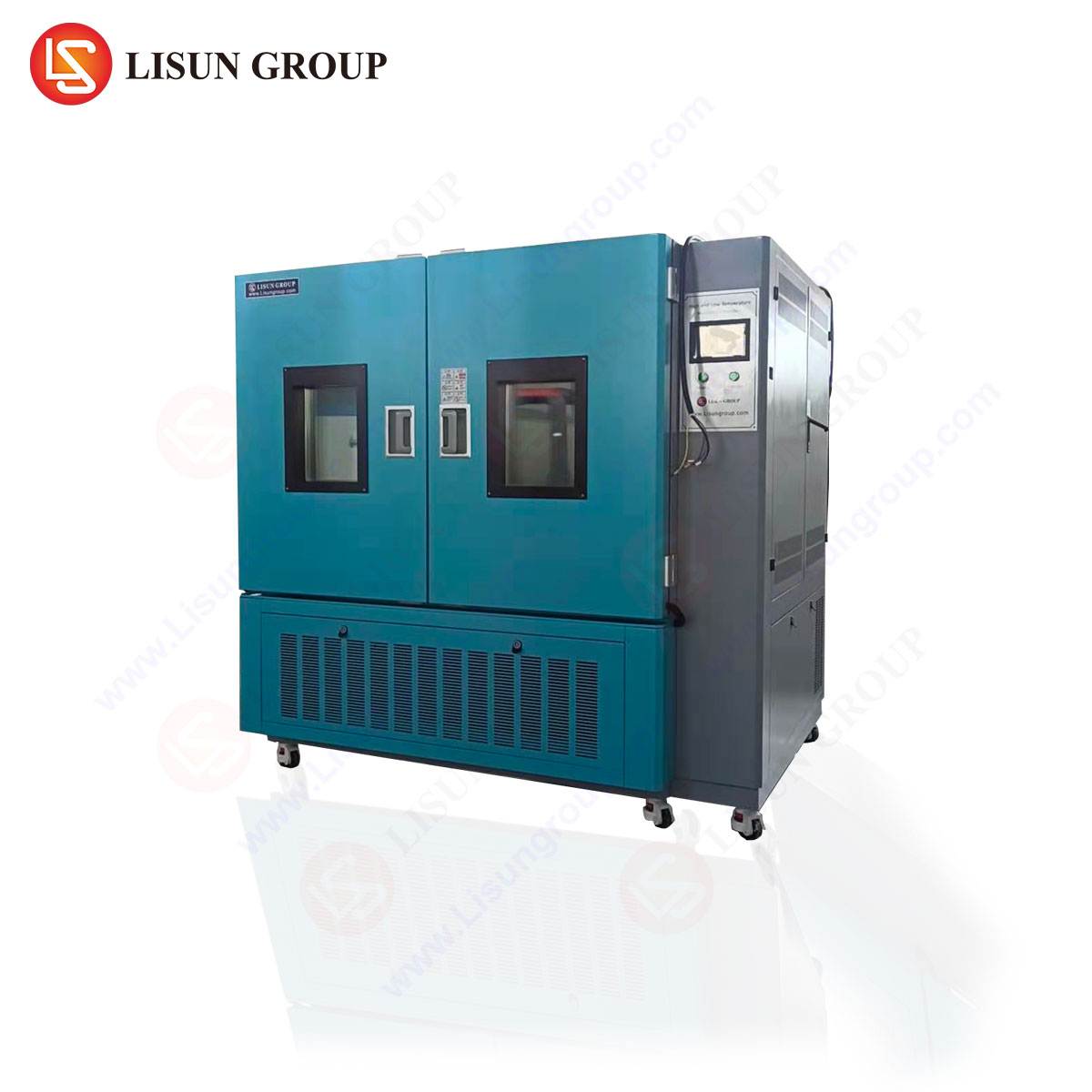
In the development and validation cycles of modern industrial components, the capacity to predict and ensure long-term operational reliability under fluctuating environmental conditions is paramount. Among the most severe stressors encountered by materials and assemblies are rapid, extreme temperature transitions. These transitions induce mechanical stresses due to differential coefficients of thermal expansion between bonded materials, potentially leading to latent defects such as solder joint fractures, ceramic substrate cracking, delamination, and contact failures. To simulate and accelerate these failure mechanisms in a controlled laboratory setting, industry relies on thermal shock testing, a form of accelerated stress screening. This article provides a technical examination of the operational principles, design features, and industrial applications of the HLST-500D Thermal Shock Test Chamber, a three-zone, lift-based system engineered for high-precision thermal transition testing.
Fundamental Operational Principles of the Three-Zone Basket Transfer System
The HLST-500D employs a three-zone architecture, a design superior to two-zone systems for testing efficiency and thermal stability. The system comprises a high-temperature chamber, a low-temperature chamber, and an intermediate ambient zone or storage basket. The device under test (DUT) is mounted on a vertically moving transfer basket. The core testing principle involves the automated, rapid translocation of the DUT between the pre-conditioned extreme temperature zones. The sequence is governed by a pre-programmed controller: the basket, initially at ambient temperature, moves to enclose the DUT and transfers it into the high-temperature chamber for a specified dwell period. Upon completion, the basket rapidly retracts and moves to the low-temperature chamber, immersing the DUT in the contrasting extreme. This cycle repeats for a predetermined number of iterations.
The critical metric is the transition time, defined by standards such as IEC 60068-2-14 and MIL-STD-202G. The HLST-500D is engineered to achieve a transition time of less than 10 seconds, a specification that ensures the thermal shock is delivered to the component, not merely a gradual temperature change. This rapid transfer minimizes temperature stabilization within the product during movement, ensuring the full thermal gradient is experienced across its structure, thereby accurately replicating the stress of field failures.
Core Technical Specifications and System Architecture
The HLST-500D is defined by a set of rigorous technical parameters that dictate its testing capabilities. The following table outlines its primary specifications:
| Parameter | Specification |
|---|---|
| Test Volume | 50 Liters (Standard) |
| Temperature Range | High Temp Zone: +60°C to +150°C; Low Temp Zone: -10°C to -55°C |
| Heating Rate | +25°C to +150°C in ≤ 5 minutes |
| Cooling Rate | +25°C to -55°C in ≤ 5 minutes |
| Transition Time | ≤ 10 seconds (as per standard definition) |
| Temperature Fluctuation | ≤ ±0.5°C |
| Temperature Deviation | ≤ ±2.0°C |
| Control System | Programmable Touchscreen Controller (PID logic) |
| Safety Features | Over-temperature protection, compressor delay, phase loss protection, automatic shut-off on basket fault |
The system architecture integrates several key subsystems. The refrigeration unit typically utilizes a cascade compression system with environmentally compliant refrigerants to achieve the low-temperature set point. The heating system employs nickel-chromium alloy electric heaters with forced air circulation for uniform high-temperature exposure. The transfer mechanism is a critical component, utilizing a high-torque motor, precision guides, and position sensors to ensure swift, reliable, and repeatable basket movement. The chamber interiors are constructed from SUS304 stainless steel for corrosion resistance, while insulation between zones minimizes thermal cross-talk and energy loss.
Material Stress Mechanisms and Failure Mode Induction
The primary value of thermal shock testing lies in its ability to induce and reveal failure modes rooted in thermo-mechanical stress. When a multi-material assembly, such as a printed circuit board assembly (PCBA), experiences a rapid temperature change, each material expands or contracts at a different rate (defined by its Coefficient of Thermal Expansion, or CTE). For instance, a ceramic chip capacitor (low CTE) soldered to an FR-4 PCB (higher CTE) will experience significant shear stress at the solder joints during each transition. Repetitive cycling fatigues these joints, potentially leading to crack initiation and propagation, ultimately resulting in an open circuit.
Similarly, for automotive electronics housed in sealed enclosures, rapid cooling from engine bay heat to cold ambient winter temperatures can cause sealant materials to lose adhesion or housing interfaces to warp, compromising ingress protection. The HLST-500D’s precise and rapid transitions accelerate these failure mechanisms, allowing engineers to identify design weaknesses in plastics, composites, metals, and their interfaces. It is particularly effective at revealing workmanship flaws—poor solder wetting, underfilled components, or micro-cracks in substrates—that might not be detected during standard functional testing at steady-state temperatures.
Industry-Specific Application Contexts and Compliance
The HLST-500D finds critical application across industries where electronic or electromechanical components face harsh operational environments.
Automotive Electronics & Aerospace Components: Modules for engine control, braking systems, and avionics must withstand temperature extremes from desert heat to high-altitude cold. Testing per ISO 16750-4 or DO-160G for thermal shock validates the integrity of conformal coatings, solder interconnects, and housing seals after rapid transitions simulating vehicle start-up in extreme climates or aircraft ascent/descent.
Telecommunications Equipment & Industrial Control Systems: Outdoor base station electronics, PLCs in unregulated industrial settings, and railway control gear are subject to diurnal temperature swings. Testing ensures that connectors, relays, and power semiconductors within this equipment do not fail due to repetitive stress, preventing network outages or production line stoppages.
Medical Devices & Consumer Electronics: Portable diagnostic equipment, implantable device components, and high-end smartphones may be subjected to less extreme but still impactful transitions (e.g., from a warm indoors to a cold car). Thermal shock testing here screens for latent manufacturing defects that could lead to premature field failure, supporting compliance with reliability benchmarks and safety standards.
Lighting Fixtures & Electrical Components: LED-based luminaires and their drivers, as well as switches and sockets, generate heat during operation and cool when off. Rapid cycling tests the integrity of wire bonds within LEDs, the thermal management interfaces, and the plastic housings of electrical components, ensuring longevity and safety.
Comparative Advantages in Precision and Operational Integrity
The HLST-500D design incorporates several features that confer distinct advantages in testing accuracy and operational reliability. The three-zone design itself is a significant benefit; by maintaining the high and low chambers at constant set points, it eliminates the recovery time required by two-zone systems, where the single chamber must swing between extremes. This allows for higher throughput and more consistent application of the thermal extreme at the very beginning of each dwell period.
The precision-guided lift mechanism ensures the transfer basket seals correctly against each chamber opening, minimizing air exchange and temperature loss. The advanced PID controller, with multi-segment programming, allows for complex test profiles, including pre-conditioning soaks and cyclic variations within the shock test. Furthermore, the system’s emphasis on low temperature deviation (±2.0°C) and fluctuation (±0.5°C) guarantees that the stress applied is consistent and repeatable across tests and between different units, a necessity for meaningful comparative reliability data and standards compliance.
Integration within a Comprehensive Reliability Testing Regimen
It is crucial to position thermal shock testing within a broader reliability engineering strategy. The HLST-500D is not a standalone validation tool but a specialized instrument within a sequence. Typically, it follows initial qualification tests like steady-state temperature/humidity cycling (HALT/HASS) and vibration testing. Components that pass these may undergo thermal shock to uncover failures that only manifest under the most severe gradient conditions. The failures induced are then subjected to failure analysis (e.g., SEM microscopy, X-ray inspection) to determine the root cause—whether design, material selection, or manufacturing process. The insights gained feed directly back into the design-for-reliability (DfR) loop, enabling product hardening before volume production and field deployment.
Conclusion: Ensuring Robustness in an Interconnected World
As products become more electronically integrated and are deployed in increasingly diverse and demanding environments, the role of precise, reliable environmental stress screening grows in importance. The HLST-500D Thermal Shock Test Chamber represents a critical tool for this endeavor. By faithfully replicating the severe thermal transients experienced in real-world applications, from the engine compartment to outer space, it enables engineers to proactively identify and mitigate failure modes. This process not only enhances product longevity and customer satisfaction but also underpins safety, reduces warranty costs, and fortifies brand reputation in competitive markets across automotive, aerospace, telecommunications, and medical technology sectors. Its technical design, emphasizing speed, precision, and repeatability, makes it an indispensable asset in the modern reliability laboratory.
Frequently Asked Questions (FAQ)
Q1: What is the key difference between thermal shock testing and temperature cycling?
A1: The primary distinction is the rate of temperature change. Temperature cycling (often per IEC 60068-2-14, Test Nb) involves slower, controlled ramp rates between extremes, focusing on fatigue over many cycles. Thermal shock (Test Na) features an extremely rapid transition, typically achieved by moving the product between two pre-conditioned chambers, inducing acute mechanical stress due to instantaneous thermal gradients within the product structure. It is a more severe test designed to uncover different types of latent defects.
Q2: For a product rated for -20°C to +70°C operation, why would we test it at the more extreme limits (-55°C to +150°C) of the HLST-500D?
A2: This practice is a cornerstone of accelerated life testing and stress screening. Testing beyond specified operational limits applies greater stress in a shorter time, accelerating the manifestation of potential failure modes. A solder joint with a minor flaw might survive 1,000 cycles within the operational range but fail after 100 cycles at the more extreme test limits. This provides a safety margin and reveals weaknesses that could lead to early-life failures in the field.
Q3: How do you determine the appropriate dwell time for the product in each temperature zone during a test cycle?
A3: Dwell time is not arbitrary; its purpose is to allow the entire product, especially its slowest-thermal-mass component (e.g., a large metal heatsink or a potting compound), to stabilize at the target chamber temperature. This is often verified by attaching a thermocouple to the thermal laggard within the product. Standards may specify a minimum dwell time (e.g., until thermal stability is reached), or it may be defined by the product specification. Insufficient dwell time means the core of the product does not experience the full thermal extreme, invalidating the test.
Q4: Can the HLST-500D accommodate products that generate heat during operation (live testing)?
A4: Standard thermal shock testing is typically performed on non-operational (passive) units. The chamber is designed to impose a specific ambient temperature on the external surfaces of the DUT. If the DUT is powered and generating internal heat, it creates an uncontrolled thermal variable, making it impossible to ensure the prescribed temperature gradient is applied uniformly and per the standard. Functional testing under temperature is usually conducted in a separate, steady-state climate chamber.
Q5: What maintenance is critical for ensuring the long-term accuracy and reliability of the chamber?
A5: Regular preventive maintenance is essential. Key tasks include: cleaning the air filters to maintain proper airflow and temperature uniformity; checking and calibrating temperature sensors (typically annually); inspecting the door seals and basket gaskets for wear or damage to prevent thermal leakage; monitoring refrigerant levels and compressor performance; and verifying the mechanical alignment and smooth operation of the lift mechanism to ensure consistent sub-10-second transfer times.