




Methodological Considerations for Environmental Testing Equipment Selection in Product Validation
The validation of product durability and reliability under simulated environmental stressors constitutes a critical phase in the design and manufacturing lifecycle. Environmental testing equipment, therefore, is not merely a quality control tool but a fundamental instrument for risk mitigation, compliance verification, and lifecycle prediction. The selection of appropriate apparatus demands a rigorous, multi-faceted analysis that aligns technical specifications with overarching product requirements and regulatory frameworks. This document delineates the principal factors governing this selection process, with a focused examination on dust and sand ingress testing, exemplified by the LISUN SC-015 Dust Sand Test Chamber.
Defining the Environmental Stress Profile
The initial and most consequential step in equipment selection is the precise definition of the environmental stress profile the end product will encounter throughout its service life. This profile is derived from a combination of intended use, deployment geography, and industry-specific failure modes. A medical device designed for a sterile operating theatre presents a vastly different profile from an automotive control unit mounted within a wheel well, yet both may require ingress protection validation.
For electrical enclosures, connectors, and external housings, particulate ingress—dust and sand—represents a pervasive threat. Particulates can abrade surfaces, interfere with mechanical actuation, clog ventilation pathways, compromise thermal management, and create conductive bridges across insulated terminals, leading to short circuits, signal interference, or catastrophic failure. Industries such as Automotive Electronics, Aerospace and Aviation Components, and Telecommunications Equipment, where products are deployed in deserts, construction sites, or unpaved environments, must prioritize this testing modality. Similarly, Household Appliances like outdoor air conditioning units or Industrial Control Systems in manufacturing plants are susceptible to performance degradation from accumulated dust.
The stress profile must be quantifiable. This involves specifying particulate composition (e.g., silica sand, fine dust), concentration, particle size distribution, airflow velocity, test duration, and the specific performance criteria for the device under test (DUT) post-exposure. These parameters are almost invariably codified within international standards.
Alignment with International Standards and Compliance Mandates
Equipment selection is fundamentally constrained by the need to demonstrate compliance with recognized test standards. These standards provide reproducible methodologies, ensuring comparability of results across suppliers and laboratories. Key standards for dust and sand testing include:
- IEC 60529: The International Electrotechnical Commission’s standard for Degrees of Protection provided by enclosures (IP Code). IP5X and IP6X tests specifically address dust ingress, with IP6X requiring “dust-tight” performance.
- IEC 60068-2-68: Details test methods for dust and sand, including blowing and settling dust tests.
- ISO 20653: The automotive-specific equivalent for road vehicles, defining IP protection levels.
- MIL-STD-810G, Method 510.7: The U.S. military standard for environmental engineering considerations, covering blowing dust and sand, often referenced in Aerospace and Aviation and ruggedized telecommunications applications.
A competent test chamber must not only claim adherence to these standards but provide the mechanical and control systems necessary to fulfill their precise stipulations. For instance, achieving the required air velocity and particulate concentration for a sustained period is a non-negotiable technical requirement for valid IP5X/IP6X certification.
Technical Specifications and Chamber Capabilities
With the stress profile and standards defined, evaluation of the equipment’s technical specifications becomes a targeted exercise. Critical parameters for dust and sand test chambers include:
- Chamber Volume and Workspace Dimensions: Must accommodate the DUT without causing airflow obstruction or recirculation anomalies. For large items like complete Lighting Fixtures or Office Equipment enclosures, sufficient space is paramount.
- Particulate System: The design of the dust injection mechanism, the fluidization system to keep particulates airborne, and the recirculation pathway. A uniform distribution of dust concentration throughout the workspace is essential for a valid test.
- Airflow Velocity and Control: Must be adjustable and maintainable within the tolerances specified by the relevant standard (e.g., 2-3 m/s for certain sand tests). This requires a robust blower system and precise airflow management.
- Particulate Type and Filtration: The chamber should be compatible with standard test dusts (like Arizona Fine Dust) and incorporate high-efficiency filtration on the exhaust to prevent laboratory contamination and allow for safe particulate recovery.
- Control and Monitoring System: A programmable logic controller (PLC) or sophisticated software interface to automate test cycles, log parameters (velocity, temperature, humidity if applicable), and ensure repeatability.
- Construction Materials: Interior surfaces must be resistant to abrasion and facilitate easy cleaning. Stainless steel is a common requirement.
The LISUN SC-015 Dust Sand Test Chamber: A Technical Analysis
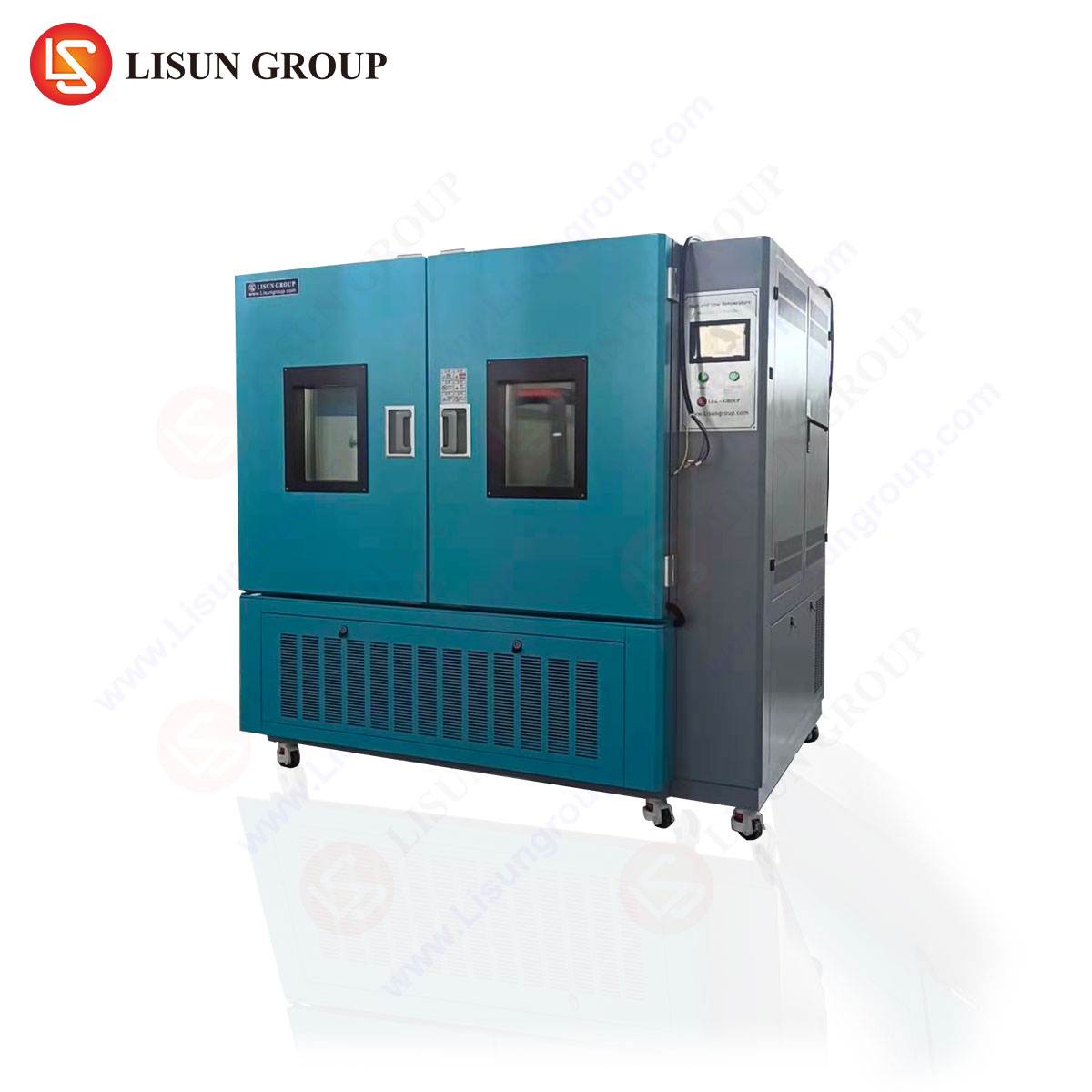
The LISUN SC-015 exemplifies a modern solution engineered to meet the rigorous demands of particulate ingress testing across the industries previously enumerated. Its design philosophy centers on precision, repeatability, and user-centric operation.
Testing Principles and Operational Methodology: The SC-015 operates on the principle of controlled, recirculating airflow laden with standardized particulates. A centrifugal blower generates a consistent vertical laminar flow within the cylindrical test workspace. The test dust is injected into this airstream via a specialized fluidized injection system, ensuring an even suspension. The DUT is mounted on a turntable (typically rotating at 1-3 rpm) to present all surfaces uniformly to the dust-laden flow, eliminating test bias. After the prescribed exposure period, the DUT is removed and inspected for ingress, often followed by functional testing per the product’s performance specifications.
Key Specifications and Competitive Advantages:
- Standards Compliance: Engineered explicitly for IEC 60529 (IP5X, IP6X), IEC 60068-2-68, ISO 20653, and related standards.
- Precision Particulate Control: Features an integrated fluidized bed dust injection system with vibratory feed control. This allows for highly consistent dust concentration within the workspace, a critical factor often inadequately addressed in less sophisticated chambers.
- Fully Automated Operation: The microcomputer-based controller automates the entire test cycle—turntable rotation, dust injection, test duration, and post-test purging—minimizing operator intervention and potential for error.
- Enhanced Safety and Containment: Incorporates a two-stage high-efficiency filtration system on the exhaust. This not only protects laboratory personnel and the environment but also allows for the recovery of expensive test dust, reducing consumable costs.
- Robust Construction: The interior is constructed of 304 stainless steel, providing durability against abrasive wear and simplifying decontamination between tests.
- Versatile Application: Its design accommodates a wide range of product sizes and types, from small Electrical Components (switches, sockets) and Consumer Electronics to larger assemblies from Cable and Wiring Systems or Industrial Control panels.
Industry Use Cases:
- Automotive Electronics: Validating the sealing integrity of engine control units (ECUs), sensors, and infotainment systems for off-road or all-weather vehicles.
- Telecommunications Equipment: Testing outdoor base station enclosures, ruggedized routers, and connectors intended for deployment in arid, dusty regions.
- Aerospace and Aviation: Qualifying components for aircraft operating in desert environments or on unpaved runways.
- Lighting Fixtures: Ensuring outdoor, industrial, and roadway luminaires resist internal dust accumulation that could impair light output or cause overheating.
- Medical Devices: Testing equipment designed for field hospitals, ambulances, or non-clinical environments where sterility cannot be guaranteed.
Integration into Broader Testing Regimes and Lifecycle Analysis
Selecting a dust test chamber cannot occur in isolation. It must be considered as part of a broader environmental testing strategy. Often, products undergo sequential or combined environmental stresses. For example, a device may first be subjected to thermal cycling to stress seals and materials, followed by dust ingress testing, and finally vibration testing to simulate dislodged particulates causing internal abrasion. The data derived from the SC-015, or similar equipment, feeds into Failure Mode and Effects Analysis (FMEA) and reliability growth models, informing design iterations and predicting field failure rates.
Furthermore, the quantitative results—such as the precise mass of dust ingested or the location of ingress points—provide invaluable forensic data for engineering teams. This moves quality assurance from a pass/fail paradigm to a continuous improvement feedback loop, strengthening product design and material selection for future generations.
Economic and Operational Considerations
Beyond capital expenditure, the total cost of ownership includes factors such as consumable (test dust) usage, maintenance requirements, energy consumption, and required laboratory footprint. Chambers with efficient dust recirculation and recovery systems, like the SC-015, offer significant long-term savings on consumables. Ease of cleaning and maintenance directly impacts downtime and operational throughput. Additionally, the reliability and accuracy of the equipment protect the organization from the far greater costs associated with false certifications, product recalls, or field failures.
Conclusion
The selection of environmental testing equipment, particularly for particulate ingress evaluation, is a systems engineering decision with direct implications for product reliability, regulatory compliance, and brand reputation. A methodical approach—beginning with a detailed environmental stress profile, referencing applicable standards, and rigorously evaluating technical capabilities—is essential. Equipment such as the LISUN SC-015 Dust Sand Test Chamber represents a convergence of these requirements, offering standardized, repeatable, and forensically valuable testing for a wide spectrum of industrial and consumer products. By investing in precise simulation capabilities, organizations effectively de-risk product launches and build a foundational pillar of long-term quality and customer trust.
FAQ: Dust and Sand Ingress Testing
Q1: What is the fundamental difference between IP5X and IP6X dust testing?
IP5X, “Dust Protected,” permits a limited amount of dust ingress provided it does not interfere with safe operation or impair performance. IP6X, “Dust Tight,” requires that no dust enters the enclosure whatsoever. The test method for IP6X is generally more severe, often involving a partial vacuum inside the enclosure to draw particulates inward, simulating pressure differentials that can occur in real-world conditions.
Q2: Can standard “talcum powder” or building sand be used for this testing?
No. Reproducible and internationally recognized tests require the use of standardized test dust. The most common is “Arizona Fine Test Dust,” which has a tightly controlled particle size distribution and chemical composition (primarily silica). Using non-standard particulates invalidates the test against compliance standards and produces non-comparable results.
Q3: How is the test result evaluated after exposure in a chamber like the SC-015?
The evaluation is two-fold. First, a visual inspection is conducted for any visible ingress of dust into the enclosure interior. Second, and more critically, the device undergoes full functional testing per its performance specification. For electrical items, this includes dielectric strength tests, insulation resistance checks, and operational verification. The performance criteria are defined by the product standard, not solely the test equipment standard.
Q4: Our product includes moving parts (like a cooling fan). Should it be operating during the dust test?
This is a critical test parameter that must be defined based on the product’s real-use scenario. Often, tests are performed both with the device powered off (simulating storage or transport) and powered on with all functions active (simulating operation). A running fan can create internal pressure differentials that may increase ingress risk, providing a more conservative and realistic assessment.
Q5: How often does the test dust need to be replaced in a recirculating chamber?
Dust does not typically “expire,” but it can degrade through mechanical breakdown (creating an altered particle size distribution) or contamination. Best practice involves periodic sieving of the dust to remove agglomerations and monitoring the particle size distribution. A well-designed chamber with effective filtration, like the SC-015, minimizes loss and contamination, extending the usable life of the test dust significantly.