




A Technical and Economic Analysis of Salt Spray Chamber Cost Determinants
The salt spray (fog) test, standardized under methods such as ASTM B117, ISO 9227, and JIS Z 2371, remains a cornerstone of accelerated corrosion testing. It provides a controlled, corrosive environment to evaluate the relative corrosion resistance of materials and protective coatings. For manufacturers and testing laboratories across sectors like Automotive Electronics, Aerospace, and Medical Devices, selecting a salt spray chamber is a significant capital investment. The cost of these chambers is not a single variable but a complex function of interrelated technical, material, and performance specifications. This analysis delineates the primary factors influencing salt spray chamber cost, providing a framework for informed procurement decisions aligned with specific testing rigor and operational longevity requirements.
Chamber Construction and Material Integrity
The foundational cost driver is the physical construction of the chamber. Chambers designed for continuous, aggressive salt fog exposure must resist pervasive corrosion to ensure test integrity and apparatus longevity. Low-cost models may utilize thin-gauge, coated mild steel or basic stainless steel grades, which are susceptible to pitting and crevice corrosion over time, leading to chamber failure and test contamination.
High-integrity chambers employ premium materials such as 316L or higher-grade austenitic stainless steel for the inner liner, reservoir, and fog dispersion tower. This alloy’s enhanced molybdenum content provides superior resistance to chloride-induced pitting, a critical failure mode in this environment. Furthermore, the fabrication technique—including welded seam quality, reinforcement of structural supports, and the absence of material imperfections—directly impacts durability. Advanced chambers often feature computer numerical control (CNC)-formed, continuously welded interiors with polished, rounded corners to eliminate salt accumulation points and facilitate cleaning. The external housing, while less critical for corrosion resistance, contributes to cost through material choice (e.g., powder-coated carbon steel vs. stainless steel) and aesthetic finish. The door sealing mechanism, typically a robust gasket system, must maintain a consistent seal over thousands of cycles; higher-grade silicone or fluorosilicone gaskets with precision-clamping systems add cost but prevent costly salt fog leakage and environmental contamination.
Precision and Stability of the Corrosive Environment
The core value of a salt spray test lies in the reproducibility and standardization of the corrosive environment. The systems responsible for generating and maintaining this environment are paramount to cost. The heart of the system is the air saturator, or tower, which heats and humidifies compressed air before it atomizes the salt solution. Economical chambers may use simple, uninsulated saturators with basic temperature control, leading to fluctuations in chamber temperature and relative humidity, which violate standard parameters (e.g., 35°C ± 2°C and near-saturation humidity).
Premium chambers incorporate precisely controlled, double-jacketed air saturators that maintain water temperature within ±0.5°C. This ensures the incoming air is fully saturated at the correct temperature, preventing evaporation of the salt fog droplets within the chamber workspace, which would alter droplet salinity and deposition rate. The atomization system itself—comprising the nozzle, air pressure regulation, and solution feed—must produce a consistent fog of specified droplet size and settlement rate (typically 1.0 to 2.0 ml/80cm²/hour). Ceramic nozzles, known for wear resistance and consistent orifice geometry, are more costly than plastic alternatives but ensure long-term stability of the fog output. Integrated, calibrated collection funnels with graduated cylinders are essential for periodic verification of this settlement rate, and their inclusion as a standard, precision component adds to the base cost.
Control System Sophistication and Data Integrity
The evolution from analog dials and manual valves to digital microprocessor-based control represents a significant cost stratification. A basic control system may offer simple setpoint adjustment for temperature with manual salt solution level management. In contrast, advanced systems provide fully automated, programmable control over all test parameters.
High-cost drivers in this domain include touchscreen Human-Machine Interfaces (HMIs) with data logging capabilities, allowing for the storage of temperature, humidity, and test duration history—a critical feature for audit trails in ISO 17025-accredited laboratories. Programmability enables complex cyclic corrosion tests (CCT), which may alternate between salt spray, humidity, and drying phases, requiring sophisticated software logic. Connectivity options such as Ethernet, USB, or RS-485 for integration into Laboratory Information Management Systems (LIMS) or for remote monitoring also contribute to cost. Furthermore, the quality and redundancy of sensors (Pt100 RTDs for temperature, for instance) and the control algorithms (PID with adaptive tuning) affect both the purchase price and the long-term cost of calibration and maintenance.
Compliance with International Testing Standards
Not all salt spray chambers are created equal in their adherence to promulgated international standards. A chamber marketed as “ASTM B117 compliant” must demonstrably meet every geometric and performance criterion outlined in the standard. Key dimensions, such as the distance from nozzle(s) to test specimens, and the prohibition of condensate drip onto specimens, dictate chamber internal design.
Chambers intended for rigorous, certifiable testing incorporate design features that directly address standard requirements. These include properly baffled fog dispersion to prevent direct impingement on samples, optimized chamber geometry to ensure uniform fog distribution, and dedicated, non-corrodible specimen supports. The cost of third-party certification or extensive validation data packages from the manufacturer, proving compliance across the entire workspace volume, is inherently factored into the price. Chambers lacking such validated design may be lower in initial cost but carry a high risk of producing non-conforming, disputable test results.
Operational Efficiency and Lifecycle Economics
The total cost of ownership extends far beyond the purchase order. Operational efficiency factors significantly influence long-term economics. Chamber heating rate and thermal stability are energy-intensive considerations. Models with high-efficiency, low-watt-density heaters and superior insulation (e.g., mineral wool) achieve setpoint temperature faster and maintain it with less energy expenditure, reducing operating costs.
Automated systems for salt solution replenishment and pH adjustment eliminate manual intervention, reducing labor costs and improving consistency. Similarly, automated level controls for the saturator tower prevent run-dry conditions that damage heaters. The ease of maintenance—such as accessible drain systems, tool-less access panels, and corrosion-resistant fasteners—reduces downtime and service labor hours. While these features increase initial capital expenditure, they yield a lower total cost of ownership over a typical 10-15 year service life, especially in high-throughput laboratory environments.
Application-Specific Configurations and Accessories
The base cost of a chamber is often just the starting point. Application-specific requirements necessitate optional configurations that substantially affect the final price. For testing large or irregularly shaped items like Automotive Electronics control units or Aerospace component assemblies, a walk-in or large-scale chamber is required, dramatically increasing cost due to material volume and enhanced structural requirements.
Specialized testing needs drive accessory costs. For example, testing Electrical Components and Cable Systems may require specialized racks or jigs to hold multiple samples without shielding. Testing of Lighting Fixtures or Household Appliances with internal electronics might necessitate a chamber capable of operating as a humidity cabinet without salt spray. Additional instrumentation, such as independent monitoring sensors, video recording systems for remote observation, or integrated solution preparation systems, are all cost-additive. The requirement for corrosive exhaust scrubbing or neutralization systems to meet environmental health and safety regulations is another significant potential cost factor.
Case Study: The LISUN YWX/Q-010 Salt Spray Test Chamber
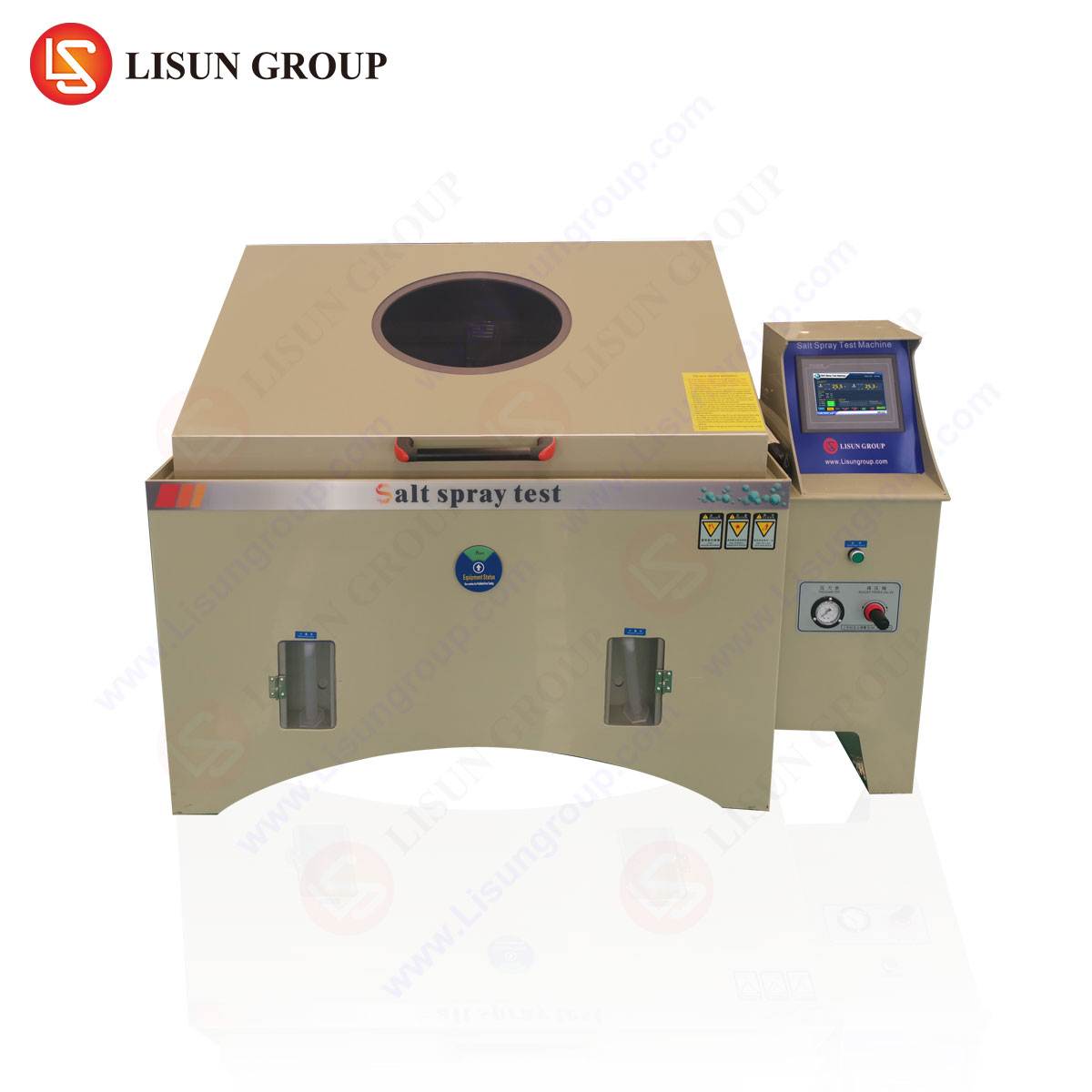
To contextualize these cost factors, an examination of a specific implementation is instructive. The LISUN YWX/Q-010 Salt Spray Test Chamber embodies a design philosophy that balances rigorous performance with operational pragmatism, targeting industries requiring dependable, standards-compliant testing.
Specifications and Testing Principle: The YWX/Q-010 features a chamber workspace constructed from imported corrosion-resistant Polyvinyl Chloride (PVC) plastic sheet, offering a cost-effective yet highly durable alternative to solid stainless steel for many applications. Its operating temperature range is ambient to +55°C, with a saturated barrel temperature range of ambient to +65°C, controlled via a digital PID controller. The chamber utilizes an air pressure-regulated, tower-type atomization system with a ceramic nozzle to generate a consistent salt fog. The principle of operation adheres to the neutral salt spray (NSS) test, where a 5% NaCl solution is atomized in a saturated, heated environment to create a uniform corrosive fog that settles on specimens under test.
Industry Use Cases: This model is particularly suited for the quality assurance and failure analysis departments within the Electrical and Electronic Equipment, Consumer Electronics, and Electrical Components sectors. It is employed to test the efficacy of conformal coatings on printed circuit boards (PCBs) used in Industrial Control Systems and Telecommunications Equipment. Manufacturers of Automotive Electronics (e.g., sensors, connectors) use it to validate the corrosion resistance of plated finishes and housings. In the Lighting Fixtures industry, it tests the exterior finishes of luminaires and the integrity of gasketed seals. Office Equipment manufacturers assess the durability of metal chassis and external components.
Competitive Advantages: The YWX/Q-010’s cost structure is optimized through material selection (PVC) without sacrificing core performance integrity where it matters most—in the corrosive zone. Its advantages include a compact footprint suitable for bench-top use in space-constrained facilities, reducing indirect costs. The digital PID controller ensures parameter stability compliant with major standards. The transparent lid allows for visual inspection without interrupting the test environment. From a total cost of ownership perspective, its simple maintenance requirements and energy-efficient design contribute to lower operational expenses. For companies in the aforementioned industries that require reliable, repeatable NSS testing without the need for the extreme durability of a full stainless-steel chamber for high-temperature CCT testing, the YWX/Q-010 presents a strategically balanced cost-to-performance ratio.
Conclusion
The procurement of a salt spray chamber is a technical decision with direct financial implications. A holistic evaluation must transcend initial purchase price to consider the intricate matrix of construction quality, environmental control precision, regulatory compliance, and long-term operational efficiency. As demonstrated, specifications directly dictate capability; a chamber intended for qualifying Medical Device enclosures or Aerospace and Aviation Components for long-term service life will inherently command a higher investment than one used for comparative ranking of coatings in Household Appliances. By systematically analyzing the factors outlined herein—from the metallurgy of the inner liner to the sophistication of the control logic—organizations can align their investment with the required level of test severity, data integrity, and apparatus longevity, ensuring the chamber serves as a reliable asset in the product validation lifecycle rather than a source of variable test results and recurring maintenance cost.
Frequently Asked Questions (FAQ)
Q1: Can the LISUN YWX/Q-010 chamber be used for tests other than the standard Neutral Salt Spray (NSS) test?
A1: The YWX/Q-010 is primarily designed and optimized for the Neutral Salt Spray (NSS) test per ASTM B117, ISO 9227, and similar standards. It is not configured for Acetic Acid Salt Spray (AASS) or Copper-Accelerated Acetic Acid Salt Spray (CASS) tests, which require additional chemical resistance and ventilation considerations. For cyclic tests involving humidity or drying steps, a specialized cyclic corrosion chamber would be required.
Q2: How is the settlement rate of the salt fog verified and calibrated in such a chamber?
A2: The settlement rate, a critical parameter, is verified using dedicated collection funnels (typically with an 80 cm² opening) placed within the chamber workspace. These funnels channel condensed fog into graduated cylinders. Over a minimum 16-hour period, the average collection rate is measured and must fall within 1.0 to 2.0 ml per hour per funnel. Calibration involves adjusting the atomization air pressure, solution feed rate, and tower temperature to achieve this specified range. The chamber’s design should facilitate this routine verification.
Q3: What are the key maintenance routines required to ensure the long-term accuracy of a salt spray chamber like the YWX/Q-010?
A3: Essential maintenance includes: regular cleaning of the chamber interior and nozzle to prevent salt buildup; periodic inspection and replacement of the atomization nozzle (ceramic) if wear is observed; ensuring the salt solution reservoir is cleaned and refilled with fresh, pH-adjusted solution for each test; checking and cleaning the air saturator tower water to prevent scale; and verifying all sensor calibrations (temperature) at intervals defined by the laboratory’s quality system, typically annually.
Q4: For testing printed circuit board assemblies (PCBAs) with conformal coating, what specific sample mounting considerations are important?
A4: PCBAs must be mounted at an angle (typically 15° to 30° from vertical) as per standard guidelines to allow fog to settle uniformly and prevent pooling. They must be electrically isolated from the chamber rack and from each other to avoid galvanic corrosion effects. The mounting should not shield any critical area of the board, and components on the board should not create drip points onto other sensitive areas below. Non-corrosive, inert supports like plastic clips or coated racks are mandatory.
Q5: How does chamber size selection impact testing costs and outcomes?
A5: Undersizing a chamber leads to overcrowding, which can cause uneven fog distribution, shielding of samples, and altered condensation patterns, invalidating tests. Oversizing increases initial capital cost, energy consumption to heat and saturate the larger volume, and salt solution usage. The optimal size allows for consistent spacing between samples (recommended by the standard) and accommodates the largest anticipated test item without requiring the chamber to operate near minimum load, which can also affect environmental stability.