




A Comprehensive Analysis of Factors Influencing Environmental Chamber Costs
Environmental test chambers represent a critical capital investment for research and development laboratories, quality assurance departments, and production facilities across a diverse spectrum of industries. These sophisticated instruments simulate a vast array of atmospheric and climatic conditions to validate product reliability, durability, and compliance with international standards. The procurement cost of an environmental chamber is not a singular figure but a composite reflection of numerous interdependent technical, performance, and operational factors. A nuanced understanding of these variables is essential for stakeholders to make informed acquisition decisions that align with precise testing requirements and long-term operational objectives. This analysis delineates the primary cost drivers, integrating specific product exemplars and cross-industry applications to provide a framework for evaluation.
Defining Performance Envelopes: Temperature and Humidity Extremes
The most fundamental cost determinants are the specified ranges for temperature and humidity. Chambers are engineered to achieve and maintain defined setpoints, and the breadth of these parameters directly influences system complexity. A standard bench-top unit designed for a modest range of -20°C to +150°C employs a single-stage mechanical refrigeration circuit and conventional heating elements. In contrast, a chamber required to reach -70°C necessitates a cascade refrigeration system involving two separate, interdependent refrigerant circuits—a significant increase in compressor hardware, control logic, and energy consumption. Similarly, achieving ultra-low humidity levels (e.g., <5% RH) demands specialized desiccant or dry-air purge systems, while generating high humidity (e.g., 95–98% RH) at elevated temperatures requires precise steam injection or water bath humidifiers with sophisticated anti-condensation controls.
The rate of change between temperature setpoints, often specified as °C/minute, is another critical performance metric with cost implications. Rapid ramping requires oversized heating and cooling capacities to overcome the thermal mass of the chamber workspace and the test specimens. This necessitates higher-wattage heaters, more powerful compressors, and enhanced airflow systems, all contributing to a higher initial purchase price and operational energy costs. For instance, a chamber rated for a 3°C/min ramp rate is mechanically and electrically less demanding than one rated for 10°C/min over the same range.
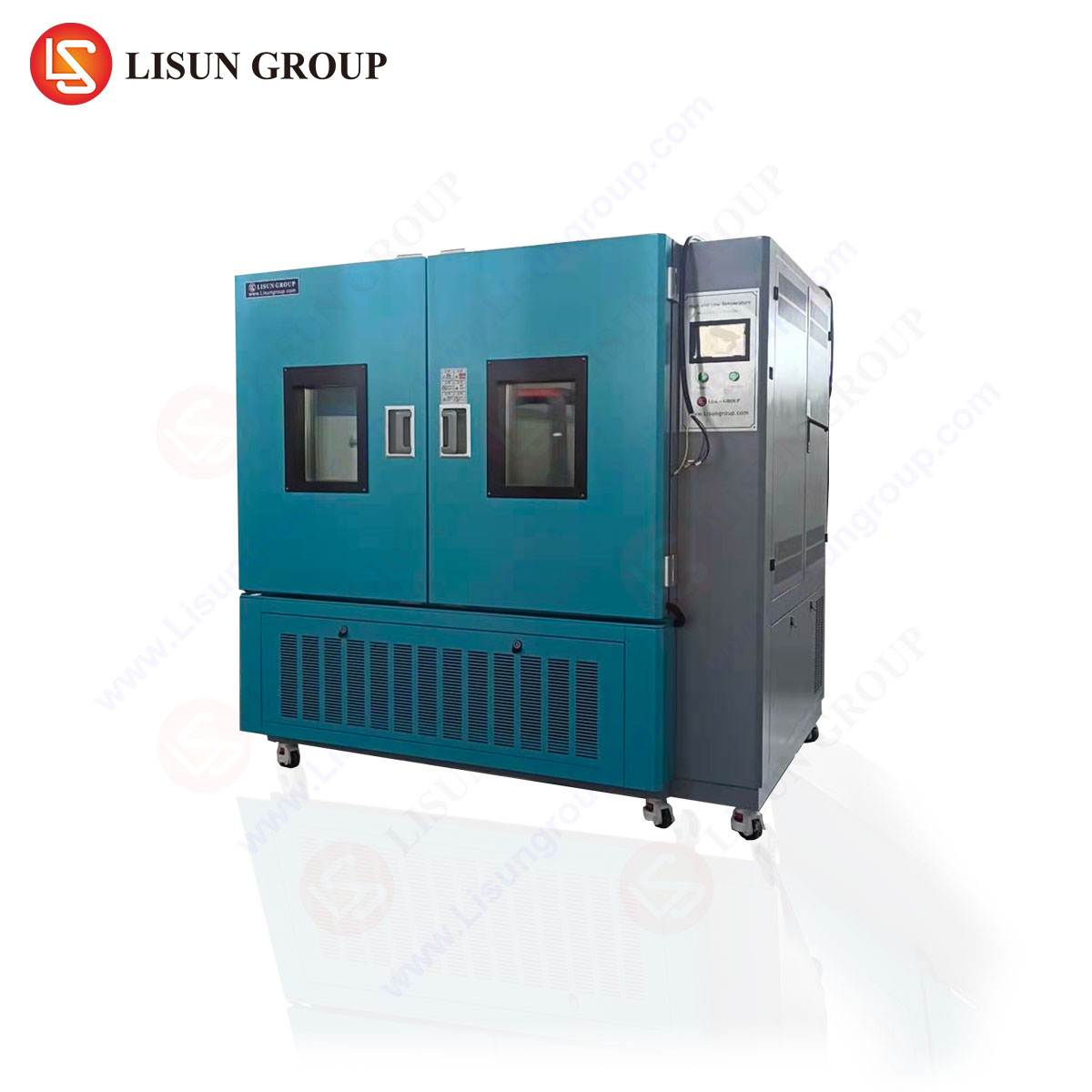
Product Exemplar: LISUN GDJS-015B Temperature Humidity Test Chamber
The GDJS-015B model illustrates a balanced performance envelope suited for rigorous compliance testing. It offers a temperature range of -70°C to +150°C and a humidity range of 20% to 98% RH. This range encompasses the majority of test conditions stipulated by common standards such as IEC 60068-2-1 (cold), IEC 60068-2-2 (dry heat), and IEC 60068-2-78 (damp heat). Its capability to reach -70°C confirms the integration of a cascade refrigeration system, while the broad humidity range indicates a comprehensive humidification and dehumidification system. Such a chamber is directly applicable for testing automotive electronics (e.g., engine control units underhood conditions), telecommunications equipment for outdoor deployment, and aerospace and aviation components that must endure rapid atmospheric changes during ascent and descent.
Chamber Volume and Load Capacity Considerations
The internal workspace volume, measured in liters or cubic feet, is a primary structural and cost factor. Larger volumes require more interior materials (typically stainless steel), larger insulated panels, more extensive sealing systems, and greater refrigerant charges. More significantly, the thermal load capacity—the system’s ability to maintain setpoints when dissipating heat from test specimens—must scale accordingly. A chamber designed for testing a few electrical components like switches or sockets may have a minimal heat load rating (e.g., 0–500W). Conversely, a chamber validating full household appliances or powered industrial control systems may need to accommodate dynamic loads exceeding 2000W. Managing this internal heat load requires a proportional oversizing of the cooling capacity, impacting compressor size, condenser design, and electrical service requirements.
The spatial distribution of temperature and humidity uniformity (±0.5°C, ±2.0% RH vs. ±2.0°C, ±3.5% RH) also becomes more challenging and costly to guarantee in larger volumes. Achieving tight uniformity demands advanced airflow engineering, strategically placed sensors, and responsive control algorithms, adding to the sophistication and cost of the chamber.
Mechanical Design and Construction Integrity
The materials and build quality of the chamber constitute a significant portion of its base cost. The interior workspace is universally constructed of corrosion-resistant stainless steel (grades 304 or 316), with the latter commanding a premium for its superior resistance to harsh humid environments or corrosive test specimens. The exterior casing, often cold-rolled steel with a powder-coated finish, varies in gauge and durability. The insulation between the inner and outer skins is critical for thermal efficiency and stability; high-density fiberglass or polyurethane foam with low thermal conductivity (k-value) is standard, with thickness scaling for extreme temperature applications.
The sealing system, particularly for the access door, is paramount. A double-sealed door with a silicone rubber gasket and an internal thermal break prevents frost formation and heat leakage. Viewing windows, if specified, incorporate multiple layers of electrically heated glass to prevent condensation and maintain visibility, representing an added cost option. The structural integrity of the chamber frame directly impacts long-term reliability, door alignment, and seal integrity, with welded steel frames offering greater robustness than bolted assemblies.
Control System Sophistication and Data Acquisition
The control system is the operational center of the chamber, and its capabilities span a wide cost spectrum. Basic microprocessor-based controllers with simple setpoint programming and PID tuning suffice for fundamental steady-state tests. However, advanced applications demand programmable controllers with multi-segment, ramp-and-soak profiling capabilities, allowing for the simulation of complex diurnal cycles or mission profiles. Touchscreen interfaces with graphical display of real-time curves and historical data logs are now industry expectations.
Integration of comprehensive data acquisition (DAQ) features adds further cost. This includes the number and type of built-in sensors (e.g., additional PT100 temperature sensors, capacitive humidity sensors), channels for external sensor input (to monitor device-under-test, or DUT, parameters), and the software for real-time monitoring, alarm management, and report generation in formats compliant with 21 CFR Part 11 for medical device validation. Network connectivity (Ethernet, USB) for remote monitoring and control is another increasingly standard but cost-adding feature.
Specialized Testing Modalities and Accessories
Chambers designed for specific test protocols incorporate specialized engineering that substantially influences cost. The most pronounced example is the thermal shock chamber, which subjects products to rapid transitions between extreme hot and cold environments.
Product Exemplar: LISUN HLST-500D Thermal Shock Test Chamber
The HLST-500D employs a three-zone (high-temperature zone, low-temperature zone, test zone) basket transfer system. This design principle involves separate, pre-conditioned hot and cold chambers, between which a basket containing the test specimens is mechanically shuttled. Transition times are typically specified at less than 10 seconds. The cost drivers here are multiplicative: the chamber effectively contains two complete, independent environmental systems (one for high temperature, one for low temperature) built into a single unit, plus a robust mechanical transfer mechanism, enhanced structural framing to support the moving mass, and complex interlocking safety and control systems. This chamber is indispensable for testing consumer electronics for resilience against sudden environmental changes, lighting fixtures for outdoor use, and electrical components in automotive applications where a component may move from a hot engine bay to a cold ambient environment rapidly.
Other specialized modalities include salt spray/corrosion testing (requiring corrosion-resistant construction and misting systems), solar/UV radiation testing (integrating high-intensity lamp arrays), and altitude/low-pressure testing (requiring vacuum-rated construction and pressure control systems). Each adds layers of mechanical and control complexity.
Compliance with Industry-Specific Standards
Mandated adherence to specific testing standards directly informs chamber design and validation, impacting cost. Chambers used for aerospace and aviation components must often comply with RTCA/DO-160, which specifies rigorous requirements for temperature altitude, and humidity testing. Automotive electronics testing frequently references ISO 16750 or SAE J1455, which define specific test profiles for power cycling and combined environmental stress. A chamber sold as compliant with these standards must undergo more rigorous factory acceptance testing (FAT), include traceable and calibrated sensors, and often feature specific programming templates, all of which contribute to its development and manufacturing cost.
Energy Efficiency and Total Cost of Ownership
The initial purchase price is only one component of the total cost of ownership (TCO). Operational costs, dominated by energy and water consumption, are a critical long-term consideration. Chambers with inefficient refrigeration compressors, poor insulation, or outdated control systems can incur exorbitant utility expenses. Modern chambers increasingly incorporate variable-speed drives (VSDs) on compressors and fans, which modulate power draw based on real-time demand rather than operating in a simple on/off cycle. While VSD technology increases the upfront cost, it can reduce energy consumption by 20-40% over the lifecycle of the chamber. Similarly, water-cooled condensers may have a higher installation cost but offer superior efficiency and stability in climates with high ambient temperatures compared to air-cooled systems.
After-Sales Support and Service Lifecycle
The cost of ownership is inextricably linked to the manufacturer’s support infrastructure. This includes the availability and cost of preventative maintenance contracts, the mean time to repair (MTTR), the proximity of certified service engineers, and the long-term availability of spare parts. A chamber from a manufacturer with a global service network and comprehensive parts inventory may command a premium over a lesser-supported alternative, but this investment mitigates the risk of prolonged, costly downtime. The warranty period and terms (e.g., coverage of the refrigeration system, labor inclusions) are direct financial considerations that factor into the procurement evaluation.
Integration into Broader Test Systems
Finally, chambers are increasingly not standalone devices but nodes within a larger automated test executive system. The cost of necessary communication interfaces (digital I/O, Ethernet, Profibus, etc.), software drivers for integration with LabVIEW, Python, or other test sequencing software, and physical integration for handling robotic arms or conveyor systems must be considered. Chambers designed with such integration in mind from the outset, featuring standardized communication protocols and reinforced structural points, provide lower total integration costs despite a potentially higher unit price.
Conclusion
The procurement of an environmental test chamber is a technical decision with significant financial implications. A systematic evaluation of the factors outlined—performance envelopes, volume, construction, controls, specialization, standards compliance, energy efficiency, and lifecycle support—enables organizations to specify a chamber that precisely meets their technical requirements without over-engineering or under-specification. By aligning chamber capabilities with the specific failure modes and test profiles relevant to their products, whether they are medical devices, cable and wiring systems, or office equipment, engineers and procurement specialists can optimize both capital expenditure and long-term operational efficacy, ensuring reliable product validation and accelerated time-to-market.
FAQ Section
Q1: What is the primary functional difference between a standard temperature/humidity chamber like the GDJS-015B and a thermal shock chamber like the HLST-500D?
A: The fundamental difference lies in the rate and method of temperature transition. The GDJS-015B provides a controlled, programmable ramp rate between temperature setpoints within a single workspace, suitable for steady-state or gradual cyclic testing. The HLST-500D is designed for extreme thermal transients, utilizing separate hot and cold zones and a mechanical transfer system to subject specimens to near-instantaneous temperature changes, as required by tests such as IEC 60068-2-14 (Test N: Change of temperature).
Q2: For testing automotive electronic control units (ECUs), which chamber type is more appropriate, and why?
A: Both types are often used in conjunction. A thermal shock chamber (HLST-500D) is critical for evaluating the robustness of solder joints and material interfaces against the rapid temperature swings experienced when a vehicle starts in a cold environment. A temperature humidity chamber (GDJS-015B) is subsequently used for longer-duration damp heat and thermal cycling tests to evaluate performance degradation, condensation resistance, and corrosion over time, as per standards like ISO 16750.
Q3: How critical is the humidity range specification for testing telecommunications equipment intended for outdoor cabinets?
A: Extremely critical. Outdoor cabinets are prone to condensation and high humidity. Testing to standards such as GR-63-CORE (NEBS) requires precise control at high humidity levels (e.g., 85-95% RH) across a wide temperature range to assess corrosion, electrical leakage, and signal integrity. A chamber must reliably maintain these conditions without saturation or excessive dry-out, making the dehumidification system’s performance a key selection criterion.
Q4: What maintenance is typically required for the cascade refrigeration system in a chamber capable of reaching -70°C?
A: Regular preventative maintenance is essential. This includes periodic checks of refrigerant charge levels and pressures in both the high-stage and low-stage circuits, cleaning of air-cooled condensers (or checking water-cooled systems for scale), inspection of oil levels in compressors, and verification of system alarms and safety cut-offs. An annual professional service by a qualified technician is recommended to ensure longevity and performance stability.
Q5: Can a chamber like the GDJS-015B be used for burn-in testing of powered industrial control systems?
A: Yes, provided the chamber’s specified heat load capacity is not exceeded by the total power dissipation of the units under test. The chamber must be able to remove the internally generated heat to maintain the set temperature. This requires careful review of the chamber’s wattage rating at the intended test temperature and possibly the use of auxiliary cooling or reduced loading to prevent the chamber from going into a constant cooling overload condition.