




A Comprehensive Analysis of Factors Influencing Needle Flame Test Equipment Pricing
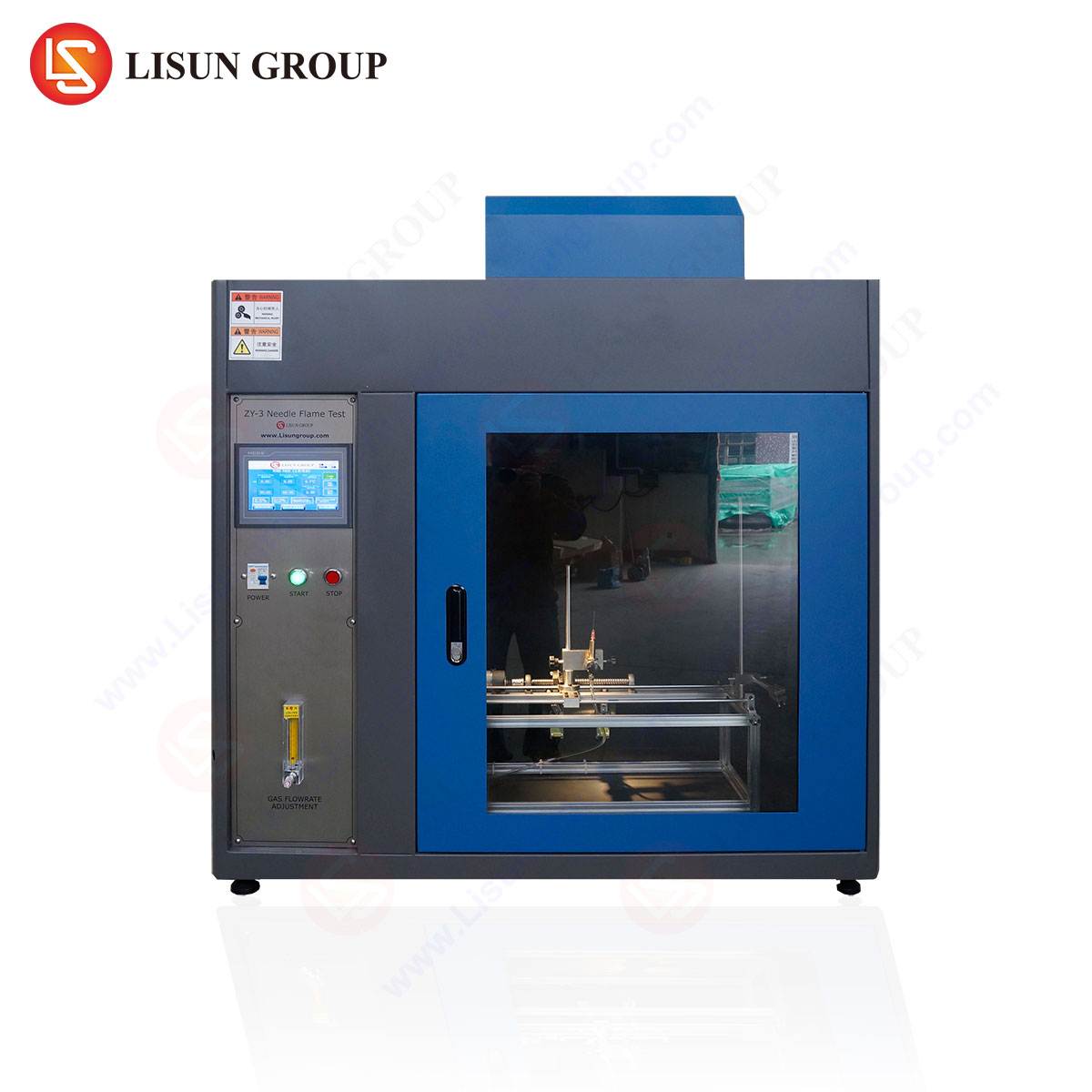
The imperative to ensure the fire safety of materials and components is a non-negotiable aspect of product design and manufacturing across a multitude of industries. Within this critical framework, the needle flame test stands as a specialized and indispensable procedure for assessing the flammability of small, solid electrical insulating materials and other components when subjected to a small, controlled flame. The procurement of equipment to conduct this test, however, represents a significant capital investment. The pricing of such apparatus is not arbitrary but is governed by a complex interplay of technical specifications, regulatory adherence, manufacturing quality, and market dynamics. This article provides a detailed, objective examination of the primary factors that determine the cost structure of needle flame test equipment, with particular reference to the operational principles and value proposition of the LISUN ZY-3 Needle Flame Test Apparatus.
Technical Specifications and Construction Integrity as Primary Cost Drivers
The foundational cost of needle flame test equipment is intrinsically linked to its technical specifications and the integrity of its construction. These are not mere features but are direct determinants of testing accuracy, repeatability, and long-term operational reliability.
The heart of the system is the burner assembly. Pricing escalates with the precision engineering required to produce a consistent, compliant flame. The burner must be constructed from materials resistant to high-temperature degradation, such as stainless steel alloys, and must incorporate a precision needle valve and flow meter for butane gas. The ability to maintain a flame height of 12mm ± 1mm with a specific thermal output, as stipulated by standards like IEC 60695-11-5, requires meticulous calibration and high-quality gas regulation components. Variations in machining tolerances or the use of inferior regulators directly impact flame consistency and, consequently, test validity.
The test chamber’s construction is another significant factor. A chamber fabricated from anodized aluminum or stainless steel, featuring a heat-resistant viewing window (often tempered glass or polycarbonate with specific optical properties) and integrated lighting for clear observation, commands a higher price than units with basic sheet metal enclosures. Internal dimensions must be sufficient to prevent oxygen starvation during testing, and the design must facilitate the smooth flow of exhaust gases to a fume extraction port, a necessary safety feature that adds to complexity and cost.
The timing and positioning mechanisms are critical for procedural accuracy. Automated systems that control the precise application duration of the flame (e.g., 30 seconds ± 1 second) and ensure repeatable positioning of the burner relative to the specimen eliminate operator-induced variables. Equipment incorporating servo-motors or precision linear guides for burner movement, digital timers with millisecond accuracy, and programmable logic controllers (PLCs) for test sequencing will reside at a higher price point than manually operated units with simple mechanical timers.
Compliance with International Standards and Certification Requirements
Needle flame testing is not an arbitrary procedure; it is strictly defined by international and national standards. The cost of equipment is profoundly influenced by the breadth and depth of its compliance. Primary standards include IEC 60695-11-5, GB/T 5169.5, and their regional equivalents (e.g., UL 746A, CSA C22.2 No. 0.17). True compliance extends beyond basic dimensional checks.
Manufacturers investing in rigorous third-party certification and calibration for their equipment absorb those costs into the product price. An apparatus supplied with a full calibration certificate traceable to national metrology institutes, verifying flame temperature profile (typically a nominal 1000°C at the tip), thermal output, and timing accuracy, provides documented assurance of validity. This is paramount for testing laboratories seeking accreditation to ISO/IEC 17025. The engineering required to meet the exacting environmental conditions specified in the standards—such as a controlled draft-free test chamber—also contributes to development and manufacturing expenses.
The LISUN ZY-3: A Case Study in Integrated Specification and Value
Examining a specific instrument elucidates how these factors coalesce into a market offering. The LISUN ZY-3 Needle Flame Test Apparatus is engineered to meet the specifications of IEC 60695-11-5 and GB/T 5169.5. Its design incorporates several features that justify its position in the market.
The apparatus utilizes a high-precision brass burner with a stainless steel needle, coupled with a fine-adjustment gas flow meter and a pressure-stabilizing valve to ensure exceptional flame consistency. The test chamber is constructed from stainless steel and features a large tempered glass observation window with a scale for accurate flame height adjustment. A key operational advantage is its automated test sequence: the burner advances to the test position, applies the flame for the preset duration (0-999.9 seconds adjustable), and retracts automatically, minimizing operator influence. It includes a digital timer, a specimen holder with adjustable angle, and standard connectivity for external fume extraction.
In terms of industry application, the ZY-3 is deployed to evaluate the flame retardancy of critical components. In Automotive Electronics, it tests connectors, sensor housings, and PCB substrates. Household Appliance manufacturers use it for switch housings, thermostat bodies, and internal wiring ducting. For Lighting Fixtures, it assesses the flammability of LED driver casings, socket insulation, and diffuser materials. Its use in testing Electrical Components like miniature circuit breakers, relay housings, and socket bodies is widespread. The apparatus’s competitive advantage lies in its balance of automated functionality, robust construction compliant with core international standards, and a design focused on reproducible results, positioning it as a viable solution for quality control laboratories and third-party testing facilities.
Software Integration, Data Acquisition, and Ancillary Systems
Modern test equipment increasingly incorporates digital data acquisition and software control, which represents a substantial layer of added value and cost. Basic units may only include manual controls and visual observation. Mid-to-high-tier equipment, however, often features integrated software for test parameter programming, real-time monitoring, and result logging.
Systems that include temperature profiling via a thermocouple positioned on a specified copper block (as per the standard), with software that records the temperature curve and calculates critical parameters, are inherently more complex and expensive. The development of intuitive, reliable software that complies with data integrity requirements for accredited labs (e.g., audit trails, secure storage) requires significant investment. Furthermore, integration with Laboratory Information Management Systems (LIMS) or network connectivity for centralized data management are premium features that elevate the system’s price and utility in high-throughput environments, such as those serving the Telecommunications Equipment or Consumer Electronics sectors.
Manufacturing Overheads, Quality Assurance, and Supply Chain Dynamics
The “bill of materials” is only one component of the final price. The cost structure is heavily influenced by manufacturing philosophy. A manufacturer employing skilled technicians, implementing rigorous quality assurance protocols at each assembly stage (including in-house calibration and validation testing), and using high-grade commercial components will incur higher overheads than one utilizing a purely cost-minimization approach.
Supply chain stability for specialized components—precision pressure regulators, optical-grade viewing windows, calibrated thermocouples—affects both cost and lead time. Manufacturers with vertically integrated production of key subsystems or long-term contracts with high-quality suppliers can better manage these costs but may reflect this stability in the product price. Additionally, the cost of compiling comprehensive documentation, including detailed user manuals, calibration procedures, and certificates of conformity, is factored into the final product.
After-Sales Support, Service Lifecycle, and Total Cost of Ownership
The initial purchase price is a single point in the total cost of ownership (TCO). Astute purchasers evaluate the long-term value, where after-sales support becomes a critical pricing differentiator. Equipment priced higher may include a comprehensive warranty, access to readily available spare parts (e.g., replacement burners, gas hoses, viewing windows), and responsive technical support.
The availability of on-site calibration and repair services, or detailed service manuals for user maintenance, reduces long-term downtime—a crucial consideration for production-line testing in Industrial Control Systems or Aerospace and Aviation Components manufacturing. Manufacturers investing in a global service network and training for support engineers embed these costs into their pricing model, offering buyers reduced operational risk over the equipment’s decade-plus lifespan.
Market Positioning and Competitive Landscape
Finally, pricing is shaped by the competitive landscape. Manufacturers position their equipment for specific market segments. Entry-level models, often with more manual operation and basic construction, target educational institutions or factories performing routine pass/fail checks. Mid-range models, like the LISUN ZY-3, aim at the broad market of independent testing labs and manufacturer QC departments needing reliable, standards-compliant automation. High-end systems, with full software integration, advanced data acquisition, and bespoke configurations for specialized applications (e.g., testing unique Medical Device components or materials for Office Equipment in high-risk environments), command premium prices.
The presence of well-established brands with long reputations allows for price premiums based on perceived reliability and historical performance. Newer entrants or brands competing on value must demonstrate comparable technical capability and compliance at a more competitive price point, often by optimizing manufacturing efficiency or focusing on core features without extensive ancillary systems.
Conclusion
The pricing of needle flame test equipment is a multidimensional function of engineering quality, standards compliance, system integration, and long-term serviceability. It reflects the critical role this equipment plays in validating product safety across industries where material flammability poses a tangible risk. From the precision of its burner to the sophistication of its software and the robustness of its support network, each cost component contributes to the apparatus’s ability to generate accurate, reproducible, and legally defensible test data. As material science advances and safety regulations evolve, the factors influencing pricing will continue to emphasize technical rigor, data integrity, and operational reliability over mere initial cost.
FAQ Section
Q1: What is the primary purpose of the needle flame test, and how does it differ from other flammability tests like the glow-wire test?
A1: The needle flame test is designed to simulate the effect of a small, localized flame that may result from an electrical fault, such as a short circuit, on small, solid insulating materials or other components. It uses a precise 12mm high flame. In contrast, the glow-wire test (IEC 60695-2-10/11/12/13) assesses the ignition risk of materials and products from heated elements or overloaded components by applying a glowing wire at a specific temperature. The tests address different fire hazard sources: the needle flame addresses small open flames, while the glow-wire addresses hot surfaces.
Q2: For the LISUN ZY-3, what are the critical calibration points that must be verified to ensure testing compliance?
A2: To maintain compliance with IEC 60695-11-5, the key parameters requiring periodic verification are: 1) Flame Height: Must be adjustable and maintainable at 12mm ± 1mm. 2) Flame Temperature: Verified using a specified thermocouple, the temperature measured on a copper block should align with the standard’s requirements. 3) Application Time: The automated timer controlling flame exposure must be accurate to within ± 0.5 seconds over the typical test duration (e.g., 30s). 4) Burner Positioning: The repeatability and accuracy of the burner’s travel to the test position.
Q3: In which specific industries is needle flame testing mandated or highly recommended for component approval?
A3: Needle flame testing is widely mandated or specified in safety standards for: Electrical and Electronic Equipment (IEC/EN 62368-1), Household Appliances (IEC/EN 60335 series), Automotive Electronics (various OEM specifications derived from ISO 20653), Lighting Fixtures (IEC/EN 60598-1), and Information Technology Equipment (IEC/EN 60950-1, superseded by 62368-1). It is also critical in the evaluation of components for Telecommunications Equipment, certain Medical Devices (IEC 60601-1), and internal components of Office Equipment.
Q4: Can the LISUN ZY-3 be used to test non-solid materials, such as foams or fabrics?
A4: No. The needle flame test, as defined by IEC 60695-11-5, is explicitly intended for testing small, solid electrical insulating materials, parts of devices, and other solid combustible materials. It is not suitable for testing foams, loose fill materials, textiles, or other non-rigid specimens, as the test fixture and flame application methodology are not designed for them. Such materials require different flammability tests, such as vertical/horizontal burn tests (UL 94) or specific material standards.
Q5: What are the essential laboratory safety requirements when operating a needle flame test apparatus like the ZY-3?
A5: Essential safety protocols include: 1) Adequate Ventilation: The apparatus must be connected to an external fume extraction system to remove combustion products. 2) Fire Safety: A CO2 or dry powder fire extinguisher must be readily available. The test chamber should be placed on a non-combustible surface. 3) Gas Safety: Use only specified butane gas. Check all gas connections for leaks before operation. Ensure the gas supply is turned off after testing. 4) Personal Protective Equipment (PPE): Operators should wear safety glasses, heat-resistant gloves, and a lab coat. 5) Specimen Handling: Use tongs to handle specimens post-test, as they will be hot and may be dripping or flaming.