



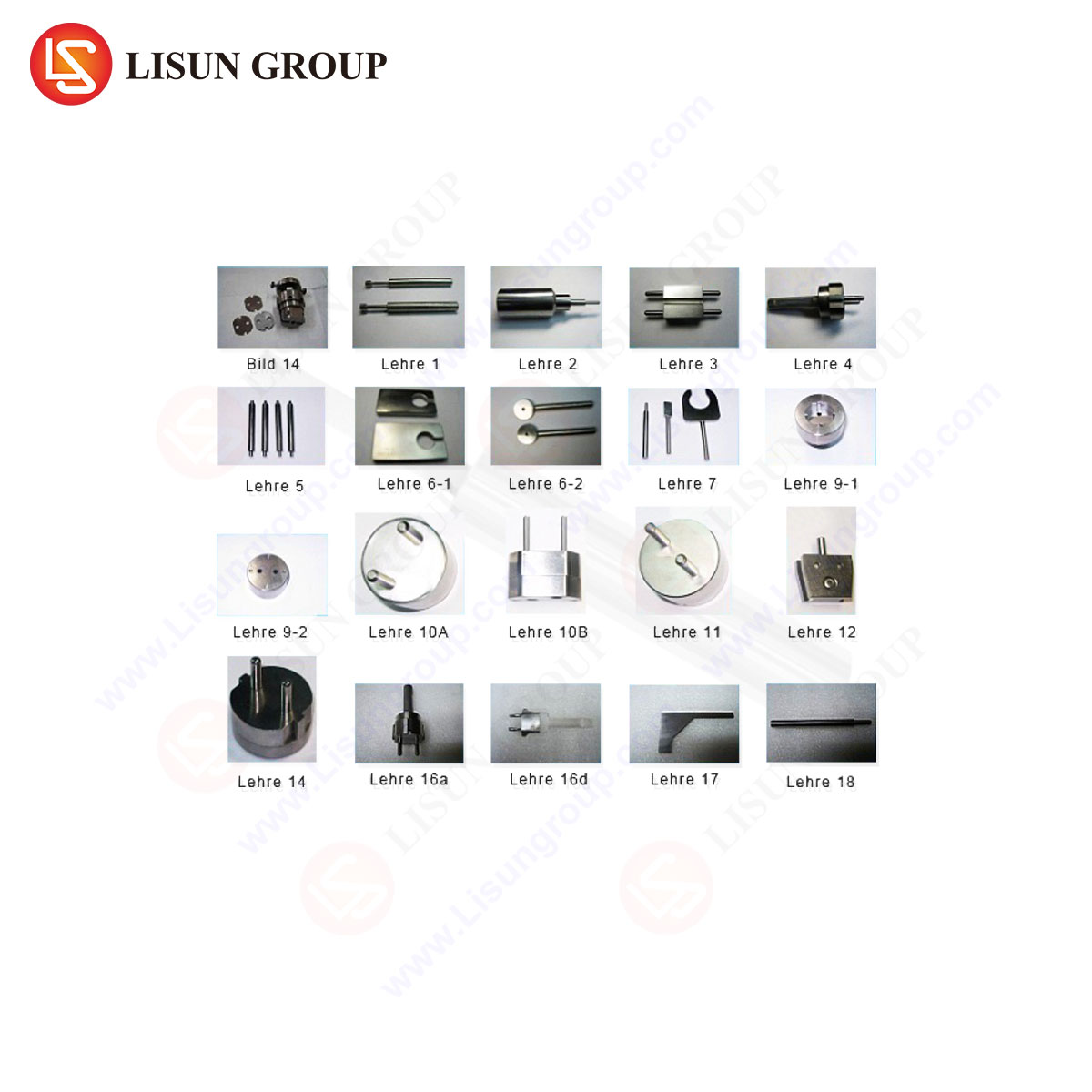



Figure 25: A Comprehensive Analysis of Accessibility and Hazard Mitigation Testing for Enclosures and Openings
Introduction to Enclosure Integrity and User Safety
The proliferation of electrical and electronic equipment across diverse sectors has precipitated a concomitant focus on user safety and operational reliability. A critical, yet often understated, aspect of this safety paradigm is the integrity of equipment enclosures. These enclosures serve as the primary barrier between users—ranging from trained technicians to untrained consumers and children—and potentially hazardous live parts, moving components, or high-temperature surfaces. The international standards framework, notably the IEC 61032 standard “Protection of persons and equipment by enclosures – Probes for verification,” provides the definitive methodology for verifying this integrity. This document delineates the technical specifications, application principles, and industry-specific implications of the standardized test tools mandated by this framework, with particular emphasis on the LISUN Test Finger, Test Probe, and Test Pin.
Anthropomorphic Probes: Simulating Real-World Access Scenarios
The philosophy underpinning IEC 61032 is not one of abstract electrical measurement, but of simulated human interaction. The standard defines a series of articulated probes designed to model the dimensions and probing actions of various parts of the human body. These probes are not arbitrary but are statistically derived to represent a high percentile of the population, ensuring a conservative safety assessment. Their application answers a fundamental safety question: Can a hazardous part be contacted under foreseeable conditions of use or misuse? The LISUN portfolio of compliance probes, engineered to the exacting dimensional and force specifications of IEC 61032, serves as the physical embodiment of this question, providing a reproducible and objective means of assessment.
The LISUN Test Finger (IEC 61032 Probe 11-B): Simulating Adult Access
The LISUN Test Finger, conforming to Probe 11-B, is the most frequently deployed tool in enclosure safety testing. It simulates the finger of an adult or older child. Its design is deceptively sophisticated, consisting of three jointed segments that replicate the articulation of a human finger, coupled with a simulated palm and wrist structure. This articulation is critical, as it allows the probe to explore openings with a natural “hooking” or “prodding” motion that a rigid tool would not achieve.
- Technical Specifications & Testing Principle: The probe is constructed from metal, typically aluminum or steel, with joint tolerances specified to ensure consistent articulation. A standardized “joint stop” prevents hyperextension, ensuring a uniform test radius. During testing, the probe is inserted into any opening in the enclosure with a force of 10 N ± 10%. It is then articulated through its full range of motion in every possible direction. The test is conducted both with and without the probe being electrically connected to a signal circuit (often 40-50V). The pass/fail criterion is binary: if the probe contacts a hazardous live part (as indicated by the signal circuit) or a hazardous moving part (like a fan blade), or if it fails to contact a part but cannot be withdrawn without reversal of its articulation, the enclosure design is deemed non-compliant.
- Industry Use Cases:
- Household Appliances & Consumer Electronics: Testing openings for ventilation, button interfaces, and seams in products like blenders, power supplies, and gaming consoles.
- Electrical Components: Verifying that live terminals within switches, sockets, and circuit breakers cannot be touched through knock-outs or terminal openings.
- Industrial Control Systems: Assessing access to hazardous areas within control panel doors, operator interfaces, and motor drives.
- Lighting Fixtures: Checking that live parts within a luminaire cannot be accessed through gaps in the housing or lens assembly.
- Office Equipment: Ensuring safety in printers, copiers, and power strips where user-accessible openings are common.
The LISUN Test Probe (IEC 61032 Probe 13): Object Penetration and Child Safety
While the Test Finger simulates deliberate finger access, the LISUN Test Probe (Probe 13) addresses the scenario of object penetration, often related to child curiosity. This probe is a rigid, straight rod with a hemispherical end. It is designed to represent objects like sticks, tools, or toys that a child might push into an opening.
- Technical Specifications & Testing Principle: The probe is 100mm in length. Its diameter is precisely defined (2.5mm for some standards, 1.0mm for others like IEC 60598-1 for lighting), making it suitable for testing smaller openings that a finger cannot enter. The test is performed with a force of 1 N ± 10%. The probe is inserted into any opening and does not need to be articulated. Similar to the finger test, it may be connected to a contact indicator. Any contact with a hazardous live part constitutes a failure. This probe is particularly stringent for products accessible to children.
- Industry Use Cases:
- Toy and Children’s Products Industry: Paramount for battery compartments, speaker grilles, and charging ports on electronic toys to ensure small objects cannot bridge live parts.
- Household Appliances: Testing small ventilation slots or drainage holes in appliances like hair dryers, humidifiers, and coffee makers.
- Telecommunications Equipment: Verifying the safety of ports (e.g., RJ11, RJ45) and ventilation slots on routers, modems, and set-top boxes.
- Lighting Fixtures: Specifically mandated by luminaire safety standards for testing openings in Class I, II, and III fixtures.
- Cable and Wiring Systems: Assessing connector housings and junction boxes for potential access to conductive parts.
The LISUN Test Pin (IEC 61032 Probe 12): Assessing Resistance to Steady Force
The LISUN Test Pin (Probe 12) serves a distinct purpose: it evaluates the mechanical strength of an enclosure and its resistance to a steady, concentrated force. This simulates a person leaning against or applying pressure to a surface with a pointed object, such as a tool or a piece of jewelry.
- Technical Specifications & Testing Principle: The probe features a cylindrical shaft culminating in a hemispherical tip of a specified radius (e.g., 3mm). The key parameter is the applied force, which is significantly higher than that used for the finger or object probe—typically 30 N, 10 N, or 3 N, depending on the specific product standard and the nature of the enclosure (e.g., hand-held vs. stationary equipment). The force is applied perpendicularly to the enclosure surface for a duration of 5 seconds. The test assesses whether the enclosure provides adequate protection against deformation that could lead to contact with hazardous parts or a reduction in creepage/clearance distances below safe limits.
- Industry Use Cases:
- Automotive Electronics: Testing infotainment screens, control panels, and connector housings within the vehicle interior for resistance to accidental pressure from occupants or objects.
- Medical Devices: Critical for portable monitors, handheld diagnostics, and bedside equipment where mechanical robustness is essential for safety.
- Aerospace and Aviation Components: Verifying the structural integrity of non-metallic enclosures in cabin electronics and control units against impact and pressure.
- Industrial Control Systems: Assessing the front panels of HMIs (Human-Machine Interfaces) and instrumentation.
- Consumer Electronics: Evaluating the strength of plastic housings on tablets, remote controls, and wearable devices.
Competitive Advantages of Precision-Engineered Test Equipment
The use of standardized, high-fidelity test equipment like the LISUN probes is not a mere procedural formality; it is a critical determinant of test validity and, by extension, product safety certification. The competitive advantages of utilizing such calibrated tools are multifaceted:
- Standards Compliance and Certification Acceptance: Regulatory bodies (UL, CSA, TÜV, Intertek) and certification schemes explicitly require testing with tools that conform to the dimensional, material, and force specifications of IEC 61032. LISUN probes are manufactured to these tolerances, ensuring test results are recognized and accepted globally, facilitating market access.
- Repeatability and Reduced Test Uncertainty: The articulated joints of the Test Finger, for instance, must exhibit consistent friction and range of motion. Precision manufacturing minimizes variance between individual probes and test iterations, yielding objective, repeatable data. This reduces the “test engineer subjectivity” that can plague safety assessments.
- Risk Mitigation and Liability Management: Demonstrating due diligence in safety testing requires the use of appropriate, traceable equipment. Utilizing properly calibrated and documented probes provides a defensible technical foundation in the event of a product safety investigation or liability claim.
- Design Feedback and Iteration: Early integration of probe testing into the product development cycle provides clear, physical feedback on design flaws. Engineers can identify problematic openings or weak points before tooling is finalized, saving significant cost and time in redesigns.
Integration into a Holistic Product Safety Strategy
The application of accessibility probes must be integrated into a broader product safety strategy. This strategy is informed by the product’s classification, its intended and unintended use environment, and the relevant collateral standards. For example:
- Medical Devices (governed by IEC 60601-1): Require stringent application of the Test Finger and Test Probe, often with additional consideration for ingress of fluids (IP testing).
- Information Technology Equipment (IEC 60950-1 / IEC 62368-1): Employ these probes to verify “hazardous energy” levels are inaccessible, a core tenet of the hazard-based safety engineering approach.
- Household Appliances (IEC 60335-1): Specify detailed probe testing sequences for openings that may be encountered during cleaning, maintenance, or normal operation.
A simplified decision matrix for probe selection is presented below:
| Probe Type | Simulates | Primary Force | Key Assessment | Typical Application Standard Reference |
|---|---|---|---|---|
| LISUN Test Finger (11-B) | Adult/child finger | 10 N | Access to hazardous parts via articulation | IEC 61032, IEC 60598-1, IEC 62368-1 |
| LISUN Test Probe (13) | Rigid object (stick, tool) | 1 N | Penetration through small openings to contact live parts | IEC 61032, IEC 60598-1, IEC 62115 (Toys) |
| LISUN Test Pin (12) | Concentrated steady force | 3 N, 10 N, or 30 N | Enclosure deformation and degradation of safety distances | IEC 61032, IEC 62368-1, IEC 60601-1 |
Conclusion
Figure 25 and the standardized probes it represents are not merely illustrative diagrams in a technical standard; they are the operational nexus between theoretical safety requirements and practical, verifiable product design. The LISUN Test Finger, Test Probe, and Test Pin serve as essential, non-negotiable instruments in the validation of enclosure safety. Their correct application across industries—from the stringent environments of medical and aerospace to the high-volume production of consumer electronics and toys—provides a universal language of safety verification. By translating the abstract concept of “hazardous part accessibility” into a repeatable, physical test, these tools empower manufacturers to design with confidence, ensure regulatory compliance, and ultimately fulfill their paramount obligation: to place safe and reliable products into the global marketplace.
Frequently Asked Questions (FAQ)
Q1: Our product is a fully enclosed metal housing with only cable glands and a ventilation mesh. Do we still need to perform probe testing?
A1: Yes. Probe testing is required for any opening that permits access to the interior. Cable gland entries must be assessed with the Test Finger to ensure a live part cannot be contacted if a cable is not present. Ventilation mesh must be tested with both the Test Finger (for larger openings) and the Test Probe (for smaller openings) to verify that the mesh grid is sufficiently fine to prevent penetration to hazardous parts.
Q2: How often should our LISUN test probes be calibrated or verified for wear?
A2: While IEC 61032 does not specify a calibration interval, best practice in accredited testing laboratories is to perform dimensional verification at least annually, or more frequently if the probes are in heavy use. The joints of the Test Finger are particularly susceptible to wear, which can affect its articulation and test radius. Regular verification against a calibrated gauge set ensures ongoing compliance with the standard’s specifications.
Q3: The standard mentions applying the test force “without undue force.” How is this quantified?
A3: The phrase “without undue force” is contextual. For the Test Finger and Test Probe, the standard specifies the exact force (10 N ± 10% and 1 N ± 10%, respectively). The “undue force” clause typically applies to the initial insertion and manipulation, cautioning the tester not to exceed the specified force in an attempt to force the probe into an opening. The use of a calibrated push-pull gauge is recommended to apply the force accurately and reproducibly.
Q4: Our product has a removable cover for service by instructed persons. How does this affect testing?
A4: Enclosures intended to be opened by instructed persons (e.g., service technicians) are tested differently. With the cover removed as intended, the accessible parts are assessed. However, the cover itself, when in place, must still provide protection against accidental contact by the user. Therefore, the exterior of the cover and any openings in it when closed must still be tested with the appropriate probes (typically the Test Finger) to ensure basic safety for the end-user during normal operation.
Q5: Can a product pass the Test Finger test but fail the Test Probe test, or vice-versa?
A5: Absolutely. These are complementary tests for different hazards. A product may have openings too small for the Test Finger to enter or articulate within, thus passing that test. However, the same opening may be large enough to admit the smaller-diameter Test Probe, which could then contact a live part, resulting in a failure. Conversely, a large opening might be easily explored by the Test Finger, failing that test, but the live part may be recessed such that the shorter Test Probe cannot reach it. Both tests are mandatory for a complete assessment.